
How Do Dental Implants Work?
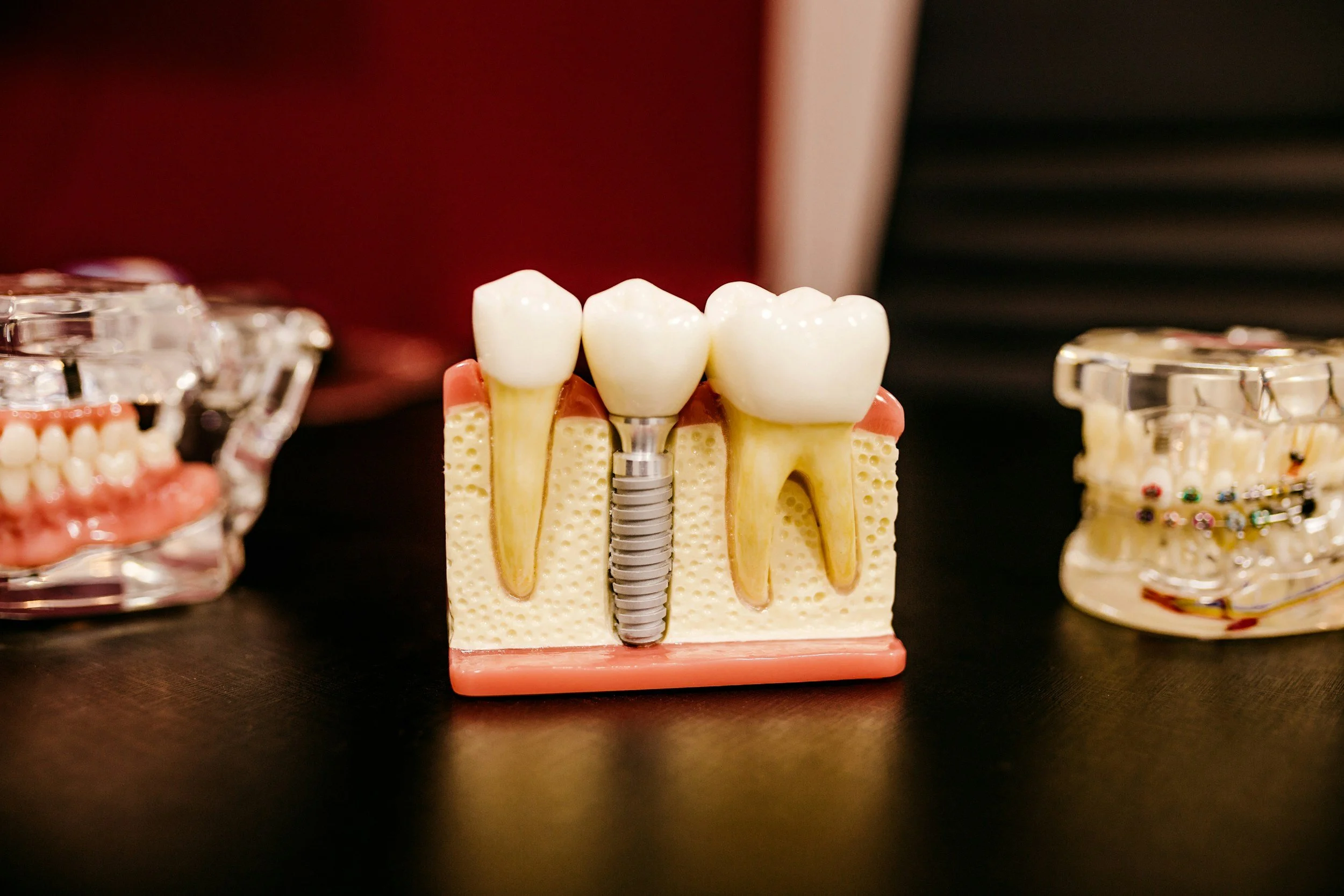
A dental implant supports a replacement tooth by providing a foundation in the jawbone. The implant, its connector and the visible restoration have different roles. An evaluation determines whether this approach suits the missing tooth and your health history.
Dental implants are one of the most predictable and durable ways to replace missing teeth — but only when they are planned and executed correctly. While implants are often described simply as “artificial tooth roots,” the reality is more nuanced. Successful implant treatment depends on biology, mechanics, and long-term planning, not just placing a screw in bone.
This overview explains how dental implants work, what determines their success, and why planning matters as much as the procedure itself.
What are the parts of a dental implant?
A dental implant is a small titanium post placed into the jawbone to replace the root of a missing tooth. Over time, the surrounding bone integrates with the implant surface in a process called osseointegration, creating a stable foundation for a crown, bridge, or full-arch restoration.
Once integrated, the implant functions much like a natural tooth root — transferring chewing forces into the bone and helping preserve jaw structure.
Why does an implant need time to heal?
Unlike dentures or traditional bridges, dental implants rely on living bone for support. This is both their greatest strength and their greatest vulnerability.
For an implant to succeed long term, several conditions must be met:
Adequate bone volume and density
Healthy surrounding tissue
Proper positioning relative to bite forces
Controlled healing during integration
When any of these factors are overlooked, implants may still “work” in the short term — but problems often appear years later in the form of bone loss, loosening, or fracture.
What should be evaluated before implant treatment?
Implants are not interchangeable parts, and treatment should never be one-size-fits-all.
Thoughtful implant planning considers:
Bite forces and chewing patterns
Bone quality and anatomy
Existing dental restorations
Long-term maintenance and hygiene
Overall health, medications, and medical history
In medically complex patients — including those with dry mouth, autoimmune conditions, or a history of cancer treatment — this planning becomes even more critical. The goal is to plan for function and maintenance over time; long-term stability cannot be guaranteed.
How does the implant support the visible tooth?
After the implant has integrated with the bone, a connector called an abutment is attached. This supports the visible portion of the restoration — typically a crown that is shaped, shaded, and designed to function like a natural tooth.
A well-designed implant crown:
Distributes forces evenly
Protects surrounding bone
Maintains gum health
Blends naturally with adjacent teeth
This restorative phase is just as important as the surgical phase. Poorly designed crowns can overload even a well-placed implant.
Single Implants vs. Full-Mouth Reconstruction
Dental implants can be used to replace:
A single missing tooth
Multiple missing teeth
An entire arch of teeth
Full-mouth implant reconstruction requires a higher level of coordination, diagnosis, and sequencing. Bone health, bite alignment, and long-term wear must all be addressed together. When done well, these restorations can dramatically improve function, comfort, and quality of life.
How Long Do Dental Implants Last?
When properly planned and maintained, dental implants can last many years — often decades. Longevity depends on:
Initial diagnosis and placement
Restoration design
Oral hygiene and follow-up care
Changes in health over time
Implants are not “set and forget” dentistry. They require thoughtful oversight and periodic evaluation to ensure continued stability.
Is a Dental Implant Right for Everyone?
Not every patient is an immediate implant candidate. Factors such as bone loss, medical conditions, smoking, or previous radiation therapy may require additional evaluation or alternative approaches.
A comprehensive evaluation is essential to determine whether implants are appropriate — and if so, how they should be placed and restored to support long-term success.
A Deliberate Approach to Implant Dentistry
Dental implants work best when they are treated as part of a larger system — not as isolated procedures. Success is measured not by placement alone, but by how well the implant performs years down the line.
For patients considering implant treatment, the most important step is not the surgery itself — it’s the planning that comes before it.
What should I ask about implant treatment in Jacksonville?
Ask who will complete the surgery and restoration, how healing will be assessed, what alternatives are available and how maintenance is planned. A comprehensive dental examination is the starting point. Our crown guide explains restorative planning, while medically involved dental care addresses relevant health considerations.
Contact C.J. Henley, DMD on Hendricks Avenue near San Marco to discuss your missing-tooth concerns. Bring your medication list and any previous imaging or treatment recommendation.
Further reading: FDA: dental implants.
Updated October 1, 2026