

Before & After Smile Transformations in Jacksonville, FL
Real Patients. Real Results.
At CJ Henley, DMD, we take pride in creating exceptional, life-changing smiles. Every case you see below represents real patients and real results completed by Dr. CJ Henley and his Jacksonville dental team.
Our practice specializes in cosmetic, implant, and restorative dentistry, including veneers, teeth whitening, hybrid dentures, and full-arch dental implants. Each transformation is designed with precision, artistry, and evidence-based planning to ensure your new smile looks natural and lasts for years.
Whether you’re seeking a subtle enhancement or a complete smile makeover, Dr. Henley combines advanced digital design, trusted dental labs, and compassionate care to achieve consistently beautiful outcomes.
Explore the gallery below to see what’s possible when science and aesthetics come together.
“This dental practice is outstanding. Doctor Henley provides the highest quality dental care and are perfectionists in their work. Pamela Jensen is the best dental hygienist you will ever find. The entire office is friendly, caring and entirely patient-focused. I have been a patient for over 20 years and can honestly say that you could not find a better practice to care for your dental health.”
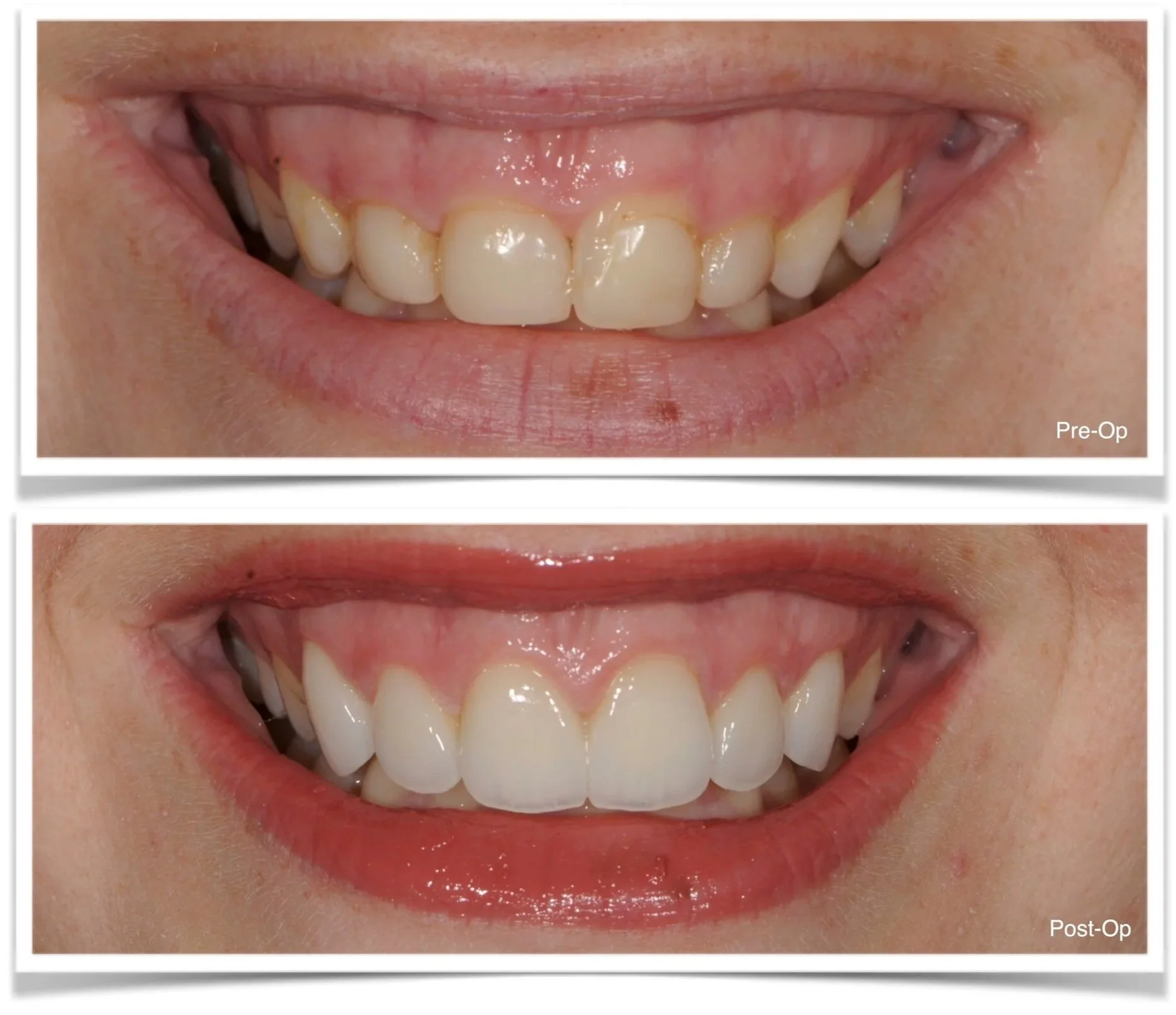
This smile makeover combined diode laser crown lengthening with beautifully layered e.max restorations to improve both gum display and tooth proportions. The anterior teeth were carefully crown lengthened with a diode laser to reduce the appearance of a “gummy” smile and create a more balanced frame for the final restorations.
Once the gumline was improved, e.max restorations were used to enhance the shape, color, and overall harmony of the smile. E.max is an excellent choice for highly esthetic anterior cases because it allows for natural light transmission, layering effects, and subtle incisal edge translucency.
Notice the detail in the final restorations: the layered ceramic creates depth, while the translucent incisal edges help the teeth look natural rather than flat or opaque. These small esthetic details are what give a smile makeover a realistic, lifelike result.
This case shows how laser gum contouring and e.max restorations can work together to create a brighter, more balanced, and natural-looking smile.

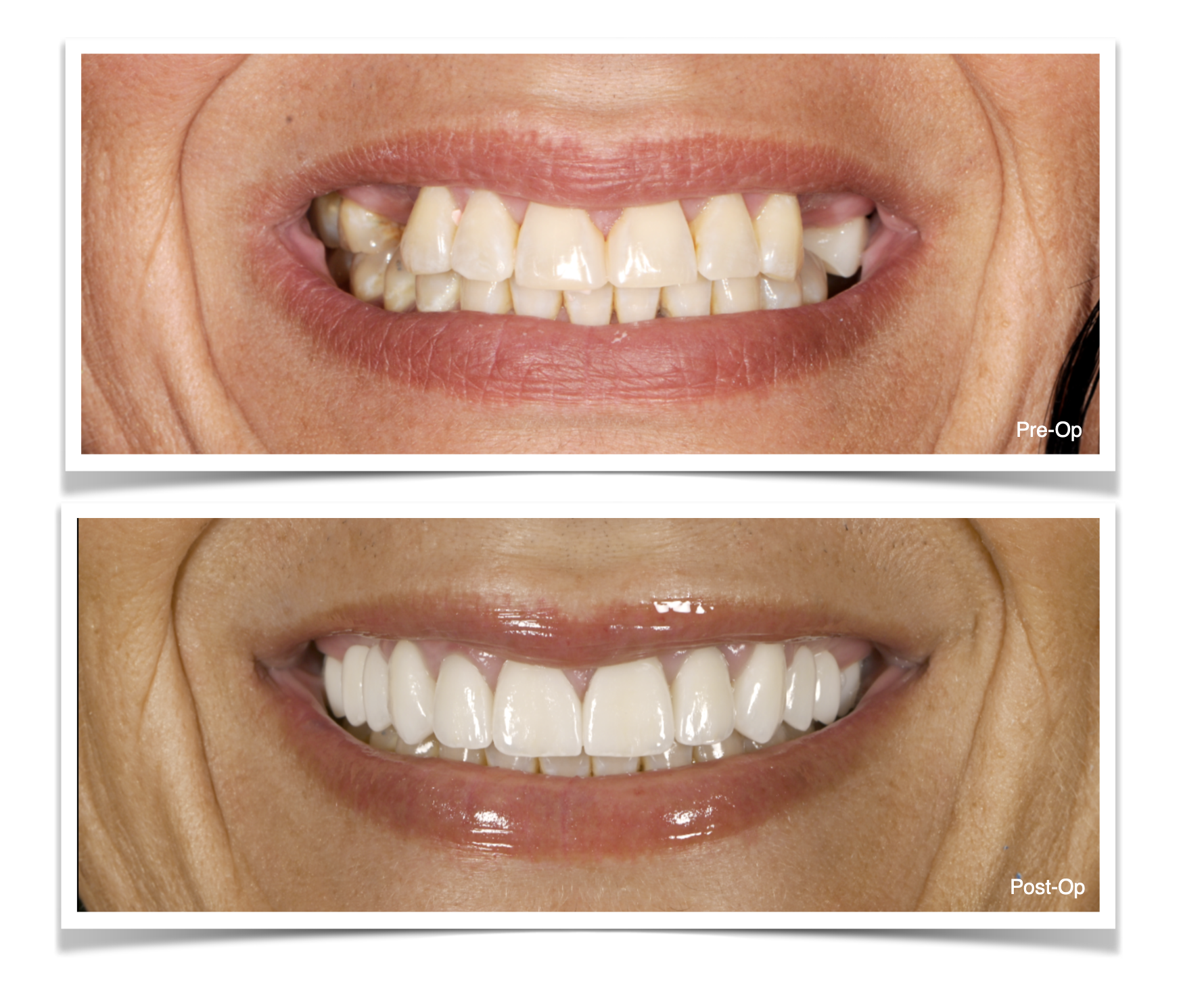
This before-and-after case shows a full zirconia smile restoration designed intentionally for strength, function, and long-term durability. In cases with heavy bite forces or higher fracture risk, materials like e.max or layered zirconia may not always be the best choice, as they can be more prone to chipping or fracture under stress. Full-contour zirconia provides the strength needed while still allowing for a beautiful, natural-looking result.
The key to making zirconia crowns look realistic is in the details. Notice the secondary anatomy, subtle surface texture, line angles, embrasures, and natural contours that help the teeth reflect light like real enamel. These small refinements prevent the restorations from looking flat or artificial and give the smile a more lifelike appearance.
This case demonstrates how modern full zirconia restorations can combine durability with esthetics, creating a strong, functional, and natural-looking smile transformation.
This case involved significant enamel damage and tooth wear related to a history of a severe eating disorder. Before beginning the final restorations, the patient was referred to a local orthodontist to carefully move the teeth and create the prosthetic space needed for a more ideal restorative outcome.
Once the teeth were properly positioned, e.max ceramic restorations were used to restore strength, shape, color, and overall smile harmony. E.max was selected for its beautiful esthetic properties, especially in a case where natural light reflection, translucency, and lifelike surface detail were essential.
The secondary anatomy is a key part of this result. Subtle line angles, surface texture, incisal edge detail, and natural contours allow the restorations to reflect light the way real enamel does. These details help the teeth avoid looking flat or artificial.
The goal of cosmetic dentistry should never be for someone to say, “Your crowns look nice.” The goal is for people to think, “Your natural teeth are amazing.” This case shows how orthodontics, careful planning, and layered e.max restorations can restore a smile in a way that looks healthy, natural, and beautifully real.