


Paul Revere: The first American forensic dentist
Paul Revere inadvertently became America’s first forensic dentist when he was given the gruesome task of identifying the body of Dr. Joseph Warren, the man who sent him on his famous “midnight ride.” Warren was struck down by a British bullet during the Battle of Bunker Hill on June 17, 1775 and his corpse was buried in a mass grave. When Warren’s family unearthed the grave nine months later, visual identification of the bodies inside was near impossible because they had decomposed. So Revere, the man who crafted the slain officer’s false teeth, was asked to locate Warren’s remains by finding the ivory dentures he crafted and wired to Warren’s jaw.
Read the full article at Strange Remains
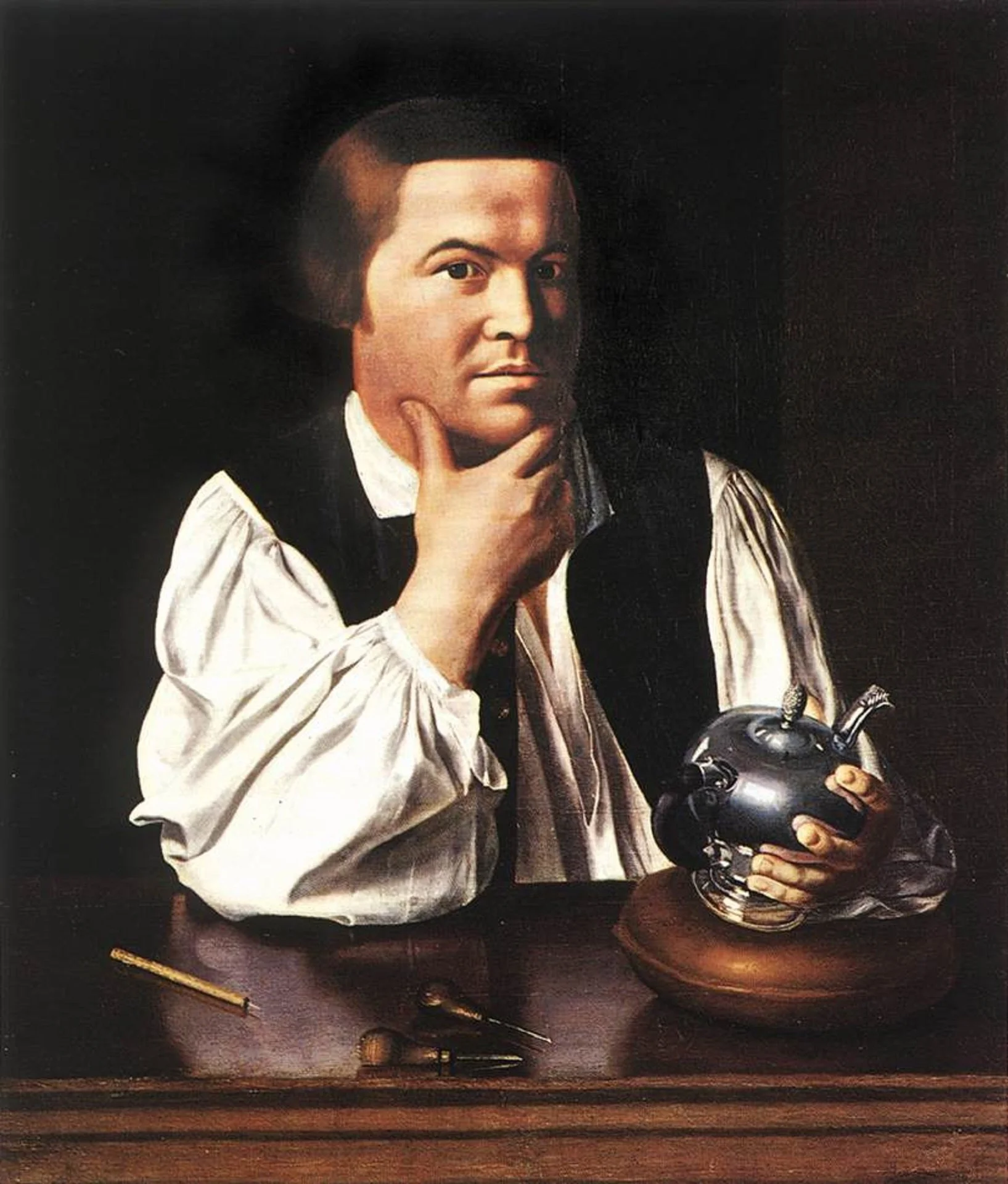
Paul Revere, silversmith and patriot, is widely regarded as America’s first forensic dentist after identifying Dr. Joseph Warren through dental prosthetics following the Battle of Bunker Hill.
Paul Revere is best known for his midnight ride that helped ignite the American Revolution, but few people realize he also played a pivotal role in the early history of forensic dentistry. In fact, Paul Revere is widely regarded as America’s first forensic dentist—long before the field had a name.
Revere’s contribution to forensic identification occurred after the death of his close friend, Dr. Joseph Warren. Warren, a respected physician, patriot, and leader of the revolutionary movement, was killed by a British musket ball during the Battle of Bunker Hill on June 17, 1775. His body was buried hastily in a mass grave alongside other fallen soldiers.
Nine months later, Warren’s family sought to recover his remains. By that time, decomposition had made visual identification nearly impossible. Facial features, clothing, and other distinguishing characteristics were no longer reliable. What remained identifiable, however, was something far more durable than soft tissue: dentistry.
Paul Revere had crafted Warren’s dental prosthetics—ivory dentures wired directly to the jaw, a common practice in 18th-century dentistry. When the grave was exhumed, Revere was asked to examine the remains. He located the body by identifying the custom dentures he himself had fabricated. This moment is widely considered the first documented case of dental identification used for forensic purposes in the United States.
Why this matters today
This event marks the foundation of what we now call forensic odontology—the use of dental science to identify human remains. Teeth and dental restorations are among the most durable structures in the human body. They withstand decomposition, fire, and trauma better than most tissues, making them invaluable in forensic investigations.
Modern forensic dentistry builds on the same principle Revere used over 250 years ago: individualized dental characteristics can uniquely identify a person. Today, this includes dental charts, radiographs, restorations, implants, bite patterns, and even microscopic enamel features.
The evolution of forensic dentistry
What began with hand-carved ivory dentures has evolved into a highly specialized field used worldwide. Forensic dentists now assist in identifying victims of natural disasters, aviation accidents, criminal investigations, and mass casualty events. Digital radiography, 3D imaging, and advanced dental materials have dramatically increased accuracy and reliability—but the core concept remains unchanged.
Dentistry’s role beyond teeth
This story also highlights an often overlooked truth: dentistry has always been deeply connected to medicine, anatomy, and public service. Dentists are trained to recognize patterns, document structures, and work with precision—skills that translate directly into forensic science.
From the American Revolution to modern disaster victim identification, dental science has played a quiet but critical role in history.
Reviewrd and Updated January 2026