
CJ Henley, DMD, PA / San Marco, Jacksonville, Florida
Oral lichen planus treatment in Jacksonville, FL.
White, lacy patches and sore gums, diagnosed and watched with care.
Oral lichen planus is a long-term inflammatory condition of the lining of the mouth. It shows up as white, lacy lines or as red, sore areas that can burn with spicy or acidic food. It isn’t contagious, and most people keep it under control with the right diagnosis, gentle care, and regular checks at our San Marco office.
- About 1%of people worldwide have oral lichen planus, more often after age 401
- 75%of patients in a large U.S. series were women2
- 40%had the erosive (sore, red) form when first seen2
- 0.44–1.43%became cancer in two systematic reviews, depending on how strictly cases were counted3,4
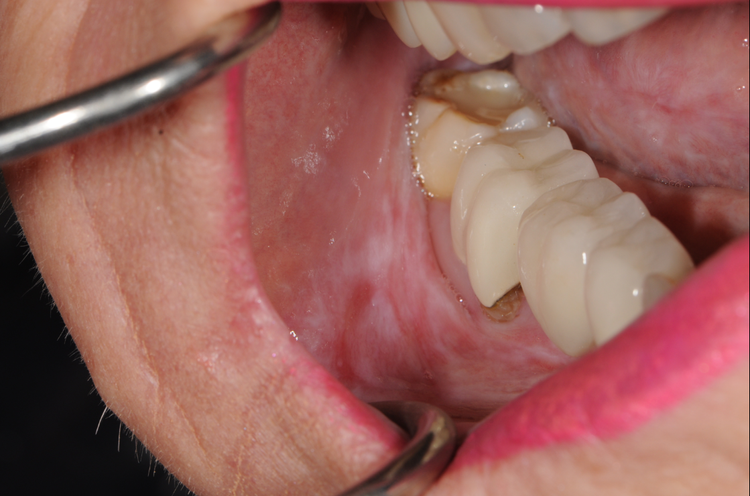
What is oral lichen planus?
Oral lichen planus: what you need to know.
Oral lichen planus (OLP) is a chronic inflammatory condition in which the immune system attacks the lining of the mouth. It often appears as white, lacy patches or as red, swollen areas, and it tends to flare and settle over years. It isn’t contagious, and it isn’t cancer, but it needs a proper diagnosis and regular monitoring.
Lichen planus in the mouth most often shows up on the inside of both cheeks, but it can also affect the tongue, gums, lips, and palate. Some people never feel it and only learn about it at a checkup. Others have burning or soreness, especially when eating spicy or acidic foods. At CJ Henley, DMD, PA in Jacksonville, we offer personalized care for oral lichen planus to manage symptoms and protect your oral health.
Dr. CJ Henley is a general dentist with advanced training in oral medicine, the area of dentistry that diagnoses and manages diseases of the mouth’s lining, and he serves on the Head & Neck Tumor Board at Baptist MD Anderson. He sees every patient himself, so the person who photographs your patches is the same person who compares them at your next visit.
Not sure it’s lichen planus? White patches can also be leukoplakia, thrush, or cheek biting. Compare photos in our mouth conditions guide, or answer a few questions in the Mouth Spot Checker.
Types of oral lichen planus
Reticular, erosive, and the other forms of oral lichen planus.
Oral lichen planus comes in several forms, and many people have more than one at once. The reticular form (white, lacy lines) is the most common and usually causes no pain. The erosive form (raw, red areas or ulcers) is the one that hurts and the one we watch most closely.
Reticular
Fine white, lacy lines, often on both cheeks. Usually no symptoms. This is the pattern in the photo above.
Erosive (ulcerative)
Raw, red areas or open sores, often edged with white lines. Painful, especially with food. In a series of 723 patients, erosive lichen planus was the main form in 40% at their first visit.2
Plaque
A solid, raised white patch, more often on the tongue. It can look like leukoplakia, so it is often biopsied.
Atrophic
Thin, red, shiny tissue, often on the gums or tongue. It can burn and is easily irritated by brushing.
Bullous
Rare. Small fluid-filled blisters that break and leave sores. Blisters also raise the question of other blistering diseases, so a biopsy matters here.
Papular
Tiny white dots, usually seen early or alongside the reticular form. Rarely causes symptoms.
Common symptoms
Symptoms of oral lichen planus, and when to get checked.
The common symptoms of oral lichen planus are white, lacy patches, red or swollen tissue, burning or pain with spicy or acidic foods, and sores that come and go. If you notice any of these, early evaluation is key.
a sore lasts more than two weeks without settling, a patch becomes thick, hard, raised, or speckled red, a lump appears, or one area looks different from the rest. These can be signs of something other than lichen planus. Call us at 904.398.1549; for trouble breathing or swallowing, go to an emergency department. See signs of oral cancer and emergency dental care.
Who gets it, and what causes it?
Who gets oral lichen planus, and what triggers a flare.
Oral lichen planus affects about 1 in 100 people, mostly adults over 40, and women more than men. The exact cause is unknown. It is an immune reaction in the lining of the mouth, and no single trigger has been found. Stress can make symptoms worse. Some medications and dental fillings cause a lookalike called a lichenoid reaction, which can settle once the cause is removed. Hepatitis C has been linked to it, though rarely in the U.S.
Who gets it
A worldwide review of studies put the pooled prevalence at 1.01%, rising significantly from age 40.1 In a U.S. series of 723 people with biopsy-proven oral lichen planus, three in four were women.2 It is uncommon in children. It isn’t contagious and you can’t pass it to a partner or family member.
Stress
Stress doesn’t cause oral lichen planus, but it is one of the most common flare triggers patients report, along with certain foods, dental procedures, illness, and poor oral hygiene.2 Reducing stress when possible is part of the plan.
Medications (lichenoid reactions)
Certain medications, like NSAIDs or beta-blockers, can cause a reaction that looks like lichen planus, called a lichenoid drug reaction. Bring your full medication list; never stop a prescribed drug without talking to your physician.
Dental materials
Dental materials such as amalgam (silver fillings) can cause a lichenoid reaction in the tissue that touches them. When a patch sits right against an old filling, replacing that filling can help. See dental fillings.
Hepatitis C and oral lichen planus
Infections like hepatitis C have been linked to oral lichen planus, though rarely in the U.S. A meta-analysis of 19 studies found people with OLP were about six times more likely to test positive for hepatitis C than controls, with large differences by region.5 In a large American series, none of the 195 patients screened had hepatitis C antibodies.2 Separately, the CDC recommends that every adult be tested for hepatitis C at least once.7 If you’ve never been tested, ask your physician; we’re happy to send a note.
Thyroid disease and other autoimmune conditions
Autoimmune thyroid disease, such as Hashimoto’s thyroiditis, has the strongest evidence of a link. A 2022 review of 153 studies and more than 23,000 patients found that about 8% of people with oral lichen planus had thyroid disease, roughly twice the odds of people without it. Diabetes showed a similar, smaller link.10 The same review found the evidence for Sjögren’s syndrome, lupus, and other autoimmune diseases too weak to say whether they are truly connected. If you have thyroid symptoms or haven’t been checked in a while, mention it to your physician. We keep your medical history current at every visit, and our physician referral process makes it easy to share findings.
Lookalikes
What else can look like lichen planus in the mouth?
The conditions most often mistaken for oral lichen planus are leukoplakia, oral thrush, lichenoid reactions to fillings or medications, lupus, blistering diseases such as pemphigoid, and cheek biting. The table below shows how each one differs. Some are harmless and some need treatment of their own, which is why a proper exam, and often a biopsy, comes before treatment.
| Condition | How it differs | Learn more |
|---|---|---|
| Leukoplakia | A white patch with no other cause, usually on one side, often flat and solid rather than lacy. Higher cancer risk than OLP. | Leukoplakia |
| Oral thrush | A creamy white yeast coating that wipes off, leaving red tissue. It can also appear on top of lichen planus during steroid treatment. | Oral thrush |
| Lichenoid reaction | Looks like OLP but is caused by a filling material or a medication, often on one side, next to an amalgam filling. | Fillings |
| Lupus | White and red patches, often with radiating white lines, usually alongside other lupus symptoms. | Lupus mouth sores |
| Pemphigoid and pemphigus | Blisters that break into sores; on the gums, they look like the same red, peeling gums OLP can cause. | Autoimmune mouth blisters |
| Erythroplakia | A velvety red patch with no other cause. Rare and more serious; it is biopsied, not watched. | Erythroplakia |
| Cheek biting | Shaggy white lines where the teeth meet the cheek. Harmless. | Mouth conditions guide |
Diagnosis and biopsy
How oral lichen planus is diagnosed, and why a biopsy helps.
Classic white, lacy lines on both cheeks can often be recognized on exam. To accurately diagnose oral lichen planus, we sometimes take a small tissue sample (biopsy) to examine under a microscope. This helps distinguish it from other similar conditions, such as leukoplakia, lupus, or oral cancer, and checks for abnormal cells (dysplasia).
01 History
Your story
When it started, what makes it flare, your medications, other health conditions, and any skin or genital symptoms.
02 Exam
The whole mouth
Every surface, plus the neck, as part of an oral cancer screening.
03 Photos
A baseline record
Each area is photographed so later visits compare against a record, not memory.
04 Biopsy
When needed
A small sample, taken in our office under local anesthetic and sent to a pathologist.
When a biopsy is the right call
A biopsy makes sense when the diagnosis isn’t clear, when there is a red, erosive, or plaque-like area, when a patch is on one side only, or when an area changes. It confirms the diagnosis and, just as important, shows whether there is dysplasia, which raises the cancer risk.4 Our biopsy aftercare instructions explain healing.
What a biopsy is like
The area is numbed, a small piece of tissue is removed, and the site is usually closed with a stitch or two. Most people need only an over-the-counter pain reliever for a day or two. When a surgeon or another team is the better choice, we refer you and stay involved.
What oral lichen planus looks like under the microscope (histology)
Key histological features of oral lichen planus:
- Saw-tooth rete ridges: the interface between the epithelium and connective tissue shows a jagged, saw-tooth appearance.
- Band-like lymphocytic infiltrate: a dense collection of immune cells (mainly T-lymphocytes) hugs the basement membrane zone, causing inflammation.
- Basal cell degeneration: the basal layer of the epithelium shows damage or destruction, often described as liquefaction degeneration.
- Civatte bodies: degenerated keratinocytes (epithelial cells) found in the lower layers of the epithelium or in the connective tissue.
These findings confirm the immune-mediated nature of the disease and help guide treatment.
Is oral lichen planus cancerous?
Oral lichen planus and cancer: the honest numbers.
Oral lichen planus is not cancer, and the great majority of people with it never develop cancer. It does carry a small increased risk: about 0.44% to 1.43% of cases became cancer in two large systematic reviews. That is why it is monitored instead of ignored.
The two reviews disagree mostly about which cases count. One, using strict rules to confirm both the lichen planus and the cancer site, found 0.44% of 12,838 patients developed cancer.3 The other, pooling 101 studies and 38,083 patients, found 1.43%, and 5.13% when the biopsy also showed dysplasia.4 Either way, the risk is low, and it is not spread evenly. In plain terms, British oral medicine and dermatology groups put it at about 1 in 100 people over 10 years.12
One honest caution: the 2024 review found that its better-designed studies reported higher rates than weaker ones, and its authors think the true figure is probably underestimated.4 We would rather tell you that than round the risk down to zero. It is the reason we keep photos, recheck, and biopsy anything that changes.
| Group | Share that became cancer |
|---|---|
| OLP, strict diagnostic criteria (Idrees 2021) | 0.44% |
| OLP, all included studies (González-Moles 2024) | 1.43% |
| Lichenoid reactions (same review) | 1.20% |
| OLP with dysplasia on biopsy (same review) | 5.13% |
What raises the risk
Smoking or other tobacco, alcohol, hepatitis C, red (atrophic or erosive) forms, lesions on the tongue, and dysplasia on a biopsy were all linked to a higher risk.3,4 If you use tobacco, quitting is the single biggest change you control.
Monitoring schedule
There is no single agreed schedule. Every checkup includes an exam of the patches against your photos. Erosive or red forms, tongue lesions, dysplasia, or any new change get closer rechecks, and anything that stops behaving like lichen planus is biopsied. Dr. Henley sets your schedule at the first visit. Read more on oral cancer screening.
Lichen planus on the gums
Desquamative gingivitis: when lichen planus affects the gums.
When oral lichen planus affects the gums, they turn red, shiny, and raw, and the surface can peel. This is called desquamative gingivitis. It is often mistaken for ordinary gum disease, but it needs gentle care, not more aggressive cleaning.
In the large U.S. series, 8.6% of patients had lichen planus on the gums only.2 Sore gums make brushing and flossing hard, plaque builds up, and plaque makes the gums worse. Good oral hygiene and gentle dental care break that cycle.
- Gentle cleanings. Our hygienists numb sore areas when needed and use mild, unflavored products, so tell us where it hurts before we start. See dental cleanings.
- Soft brushing, every day. An extra-soft brush and a mild, SLS-free toothpaste keep plaque down without scraping the tissue.
- Separate it from gum disease. Plaque-driven gingivitis and gum disease can exist alongside lichen planus, and each is treated differently.
- Other causes. Pemphigoid and pemphigus can look identical on the gums, so a biopsy is often needed.
How we treat it
Oral lichen planus treatment: calming flares and preventing new ones.
There is no overnight cure for oral lichen planus, and no permanent one, so treatment aims to control symptoms and prevent flare-ups. For a painful erosive or ulcerative flare, a topical corticosteroid gel or rinse is the usual first step and the fastest route to relief. Reticular lichen planus that causes no symptoms often needs only monitoring, and gentle dental care helps every type. We tailor your care plan to your needs.
Biopsy to confirm the diagnosis
Treatment starts with knowing what it is. A biopsy determines the proper diagnosis when the picture isn’t clear.
Topical corticosteroids
Steroid gels, ointments, or rinses reduce inflammation and pain. A Cochrane review found topical steroids may relieve pain better than placebo, with low-certainty evidence from small trials.6 They work best when they stay on the sore area, so follow the application instructions closely. Dr. Henley most often prescribes clobetasol gel, fluocinonide gel, or a dexamethasone rinse when several areas are sore.
Custom medication trays for the gums
When lichen planus affects the gums, a gel is hard to keep in place. We make thin, custom trays from a model of your teeth that hold the steroid gel against the gums, so the medicine stays where it is needed.
Anti-inflammatory rinses or gels
Rinses or gels to calm soreness. When a steroid isn’t enough or isn’t a good fit, Dr. Henley can prescribe topical tacrolimus, a non-steroid anti-inflammatory ointment. To be upfront: tacrolimus carries an FDA boxed warning because of rare reports of cancer in people using it, though a direct cause has not been shown.11 We use it when the benefit is worth it, and we keep watching the area at every visit.
Watching for thrush
Steroids can let yeast grow. If oral thrush appears, it is treated so the lichen planus can settle again.
Removing irritants
Smoothing a sharp tooth or denture edge, and replacing an old filling when a lichenoid patch touches it. Good oral hygiene and gentle dental care keep plaque from feeding inflammation.
Comfort before meals
During a bad flare, a numbing rinse or gel a few minutes before eating, plus over-the-counter pain relief if your physician says it’s safe for you, can make meals manageable while the steroid does its work.13 Ask us what fits your health history.
Regular monitoring
Regular monitoring for changes, especially if lesions are erosive. Photos at each visit make small changes visible.
What to expect after you start treatment
Every mouth responds at its own pace, but this is the usual arc for a sore flare treated with a topical steroid.13,14
Day 1
Exam, photos, plan
We examine the whole mouth, photograph the patches, decide whether a biopsy is needed, and show you exactly how to use your gel, rinse, or trays.
Weeks 1–2
Soreness starts to ease
Eating usually gets easier first. Call us if you notice new white, cottony patches that wipe off, burning that gets worse, or a sore that grows.
About 4 weeks
Clear relief, or a new plan
Most people notice major improvement in about a month. If you don’t, tell us; we may change the medicine, add a tray, or biopsy again.
After that
Taper and a flare plan
We step down to the least medicine that keeps things quiet, and you leave with a plan for the next flare so you can start treatment early.
How to use a steroid gel or rinse
- After meals and at bedtime. Brush gently first so the medicine touches clean tissue.
- Dry the spot. Pat the sore area with gauze or a clean tissue; gel sticks far better to dry tissue.
- A thin layer. Dab a small amount on with a clean finger or cotton swab. More is not better.
- Then wait. Don’t eat, drink, or rinse for the time on your instructions, often about 30 minutes.
- Rinses: swish and spit. Hold a steroid rinse over the sore areas for the full time, then spit it out. Don’t swallow it unless we tell you to.
- Trays: wear as directed. A thin ribbon of gel along the gum edge of the tray, worn for the time we set, then rinse the tray and let it dry.
Always follow the label and Dr. Henley’s directions for your prescription.
Working with your physicians
Severe or widespread lichen planus sometimes needs medicine by mouth, such as a short course of prednisone, or longer-term medicines like hydroxychloroquine, methotrexate, or mycophenolate that need blood-test monitoring.12 We coordinate these with your physician or dermatologist. Many of our patients with lichen planus also take several medications or manage other conditions; see complex and medically involved dental care. Steroid rinses, other medications, and dry mouth can all make the tissue more tender, so we look at the whole picture.
The same oral medicine and diagnosis care covers related problems: burning mouth, jaw stiffness after radiation (radiation-induced trismus), osteoporosis medications and your dental health, and GLP-1 medications and your teeth.
Beyond the mouth
Lichen planus on the skin, nails, and genitals.
Lichen planus can also affect the skin, scalp, nails, and genital area. Some people with oral lichen planus have it in more than one place, and the mouth is sometimes where it is noticed first.8,9
On the skin it usually looks like itchy, flat-topped, purplish bumps, often on the wrists or ankles. In the genital area it can cause soreness, pain with intercourse, or white patches. Tell us about any of these, even if they feel unrelated; they help confirm the diagnosis, and you may need a dermatologist or gynecologist as part of your care team.
What you can do at home
Living with oral lichen planus: what to do and what to avoid.
Most flares can be eased at home: avoid spicy, acidic, or rough-textured foods, quit tobacco, cut back on alcohol, reduce stress when possible, and use a gentle toothpaste free of sodium lauryl sulfate.
Do
- Brush gently twice a day with an extra-soft brush.
- Use gentle toothpaste (free of sodium lauryl sulfate); see our toothpaste guide.
- Choose mild, soft foods during a flare.
- Reduce stress when possible: sleep, exercise, and breaks.
- Keep every checkup and recheck, even when it feels fine.
- Check your mouth monthly and tell us about any change.
Avoid
- Spicy, acidic, or rough-textured foods (citrus, tomato, chips, crusty bread).
- Tobacco in any form; quit tobacco products.
- Alcohol, including alcohol-based mouthwash; reduce alcohol intake.
- Strong cinnamon or mint flavors in gum, toothpaste, and rinses.
- Very hot or very cold drinks, coffee and other caffeinated drinks, and salty snacks during a flare.
- Stopping a prescribed medicine on your own.
| Instead of | Try |
|---|---|
| Orange juice, lemonade, citrus | Milk, pear or apple juice, melon, bananas |
| Tomato sauce, salsa, ketchup | Olive oil and herbs, pesto, cream or cheese sauces |
| Chips, crackers, crusty bread, nuts | Soft bread, pasta, rice, oatmeal, mashed potatoes |
| Hot sauce, curry, chili, pepper | Mild seasoning: basil, parsley, a little garlic |
| Coffee, soda, very hot tea | Water, lukewarm decaf or herbal tea, milk |
| Cinnamon or mint gum and candy | Sugar-free gum or lozenges in mild fruit flavors, if you tolerate them |
| Wine, cocktails, beer | Skip during a flare; keep it light at other times |
An OLP-friendly bathroom shelf
- Brush: extra-soft manual, or a sonic brush on its gentlest setting.
- Toothpaste: SLS-free, mild or unflavored, no cinnamon or strong mint. Our toothpaste guide explains the labels.
- Between teeth: unflavored floss, small interdental brushes, or a water flosser on low.
- Rinse: alcohol-free only, and only if it doesn’t sting. A plain salt-water or baking-soda rinse is a gentle option.
- Lips: a plain, unflavored lip balm.
- Dentures, retainers, guards: bring them to every visit so we can check for rough or pressure spots that keep a patch irritated.
We name product types, not brands; what calms one mouth can irritate another, so change one thing at a time and write it in your flare diary.
Coping and support
Living well with a condition that comes and goes.
Oral lichen planus is usually long-term, and living with flares, food limits, and worry about cancer wears on people. That is normal, and it is worth treating too. Stress can trigger flares, so caring for your mood is part of caring for your mouth.9
- Know that it is common and controllable. About 1 in 100 adults has it, and most keep it quiet with a plan.1 Painful flares are not a sign that something is going wrong.
- Have a flare plan. Knowing what to do on day one of a flare, and having your medicine at home, takes away much of the fear. Use the flare diary below to spot your triggers.
- Talk to someone. If pain, anxiety, low mood, or poor sleep build up, tell your physician; counseling and stress-management programs help many people with chronic conditions.
- Connect with others. Mayo Clinic’s free online patient community, Mayo Clinic Connect, has active discussions from people living with oral lichen planus.
- Research studies. New treatments are being tested. You can search current oral lichen planus studies on ClinicalTrials.gov, and we are glad to talk through whether one makes sense for you.
- Eat well anyway. If sore spots are making you eat less or lose weight, tell us. That is a reason to treat more actively.
Preparing for your appointment
Your first oral lichen planus visit in Jacksonville: what to bring and ask.
Bring a list of every medicine and supplement you take, any earlier biopsy reports or photos, your dentures or mouthguards, and notes on when flares happen. A little preparation lets Dr. Henley sort out lichen planus from its lookalikes and make a plan at the first visit at our San Marco office.
What to bring
- All medicines, vitamins, and supplements, with doses (some cause lichenoid reactions).
- Earlier biopsy or pathology reports, and the name of the lab.
- Phone photos of your mouth during a flare, with dates.
- Your toothpaste, mouthwash, and any gum you use.
- Dentures, retainers, night guards, or other appliances.
- Your physician’s and dermatologist’s names, and any hepatitis C test results.
- Your flare diary, if you have kept one.
What Dr. Henley will ask
- When did you first notice it, and does it come and go?
- Does it hurt, burn, or bleed? What makes it worse?
- Any new medicines in the months before it started?
- Any rash, itchy bumps, nail changes, or genital soreness?
- Do you smoke, vape, chew tobacco, or drink alcohol?
- Any trouble swallowing or weight loss?
- What have you already tried, and did it help?
Questions worth asking us
- Do I need a biopsy, and why or why not?
- Which type of lichen planus do I have?
- What is my own cancer risk, and how will you watch it?
- How often should I come back, and what should make me call sooner?
- How do I use my medicine, and for how long?
- Could a filling, crown, or denture be part of the problem?
- Should I see a dermatologist or my physician too?
New to the practice? Read what to expect as a new patient, or request an oral medicine visit. Patients come to us from across Jacksonville, from Riverside and Mandarin to the Beaches and St. Augustine.
Free printable
Oral lichen planus flare diary.
Two weeks of simple notes is often enough to show what sets off your oral lichen planus flares: a food, a toothpaste, a stressful week, or a rough tooth. Print this diary, fill in one line a day, and bring it to your visit.
| Day | Pain 0–10 | Where in the mouth | Foods and drinks | Toothpaste, rinse, gum | Stress or sleep | Medicine used | Photo taken? |
|---|---|---|---|---|---|---|---|
| 1 | |||||||
| 2 | |||||||
| 3 | |||||||
| 4 | |||||||
| 5 | |||||||
| 6 | |||||||
| 7 | |||||||
| 8 | |||||||
| 9 | |||||||
| 10 | |||||||
| 11 | |||||||
| 12 | |||||||
| 13 | |||||||
| 14 |
Tip: take a phone photo of the same spot in the same light every few days. Please bring photos to your visit rather than texting them, since our text line isn’t for health information.
Cost and insurance
Does insurance cover oral lichen planus care?
The exam and rechecks are dental visits, a biopsy is a separate procedure, and the pathology lab that reads it may bill you or your insurance directly. We explain the fees before anything is done.
We are an out-of-network practice. Some dental plans cover part of exams and biopsies, often with a frequency limit. We can help you understand how to use your benefits; you are responsible for amounts your plan does not pay. Call our team with your plan details to ask about fees and payment arrangements. Read what patients should know about out-of-network dental insurance.
Oral lichen planus care near you
Oral lichen planus treatment in San Marco, for all of Jacksonville.
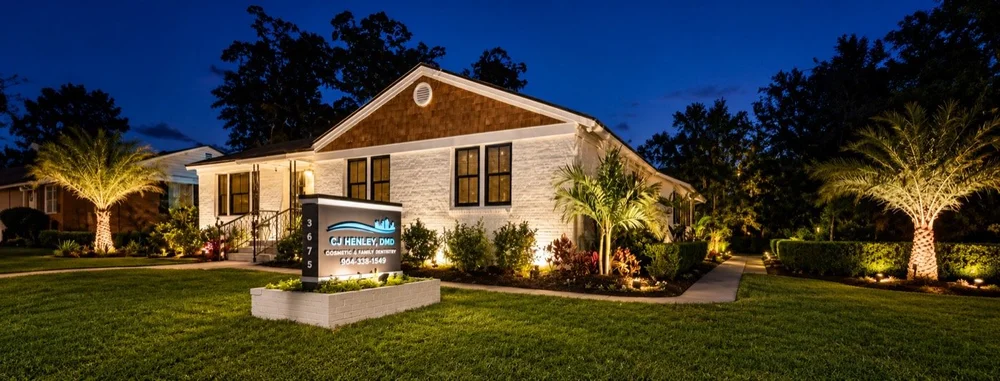
Dr. CJ Henley is a general dentist with advanced training in oral medicine who serves on the Head & Neck Tumor Board at Baptist MD Anderson. Patients come to our San Marco office for oral lichen planus diagnosis, biopsy, and long-term monitoring from across Jacksonville and Northeast Florida. You can meet our team before your first visit.
Call to book a visit, read our reviews, learn about our San Marco dental office, or start with our new-patient forms. Physicians can use our physician referral information.
San Marco and Southbank
On Hendricks Avenue, in the neighborhood
A recheck fits into a lunch hour; Downtown is just across the river.
Riverside, Avondale, and Ortega
Across the St. Johns River on the Fuller Warren Bridge
See our Riverside and Avondale page.
San Jose and Mandarin
North on San Jose Boulevard, which becomes Hendricks Avenue
See our Mandarin page.
Jacksonville Beach, Neptune Beach, and Atlantic Beach
West on Atlantic Boulevard or Beach Boulevard
See our Jacksonville Beaches page.
Ponte Vedra and Nocatee
West on J. Turner Butler Boulevard, then north on I-95
See our Ponte Vedra page.
Orange Park and Fleming Island
North on US-17 to I-95, then across the Fuller Warren Bridge
See our Orange Park and Fleming Island page.
St. Augustine
North on I-95
Rechecks booked ahead, so you make one trip at a time. See our St. Augustine page.
Frequently asked questions
Questions about oral lichen planus.
What is oral lichen planus?
Oral lichen planus is a chronic inflammatory condition in which the immune system attacks the lining of the mouth. It usually appears as white, lacy lines on the inside of the cheeks, and sometimes as red, sore areas on the cheeks, tongue, or gums. It tends to come and go over years.
What does oral lichen planus look like?
The classic look is a web of fine white, lacy lines (Wickham’s striae), most often on both inner cheeks. Other forms are solid white plaques, thin red patches, raw red erosions or ulcers, and, rarely, blisters. Many people have a mix of white and red areas.
What can be mistaken for oral lichen planus?
Leukoplakia, oral thrush, lichenoid reactions to fillings or medications, lupus, pemphigoid and pemphigus, erythroplakia, and cheek biting can all look like oral lichen planus. Thrush wipes off, leukoplakia is usually one solid patch, and a lichenoid reaction often sits next to an old filling. When the picture isn’t clear, a biopsy settles it.
Is oral lichen planus contagious?
No. Oral lichen planus is an immune reaction, not an infection, so you can’t catch it or pass it on by kissing, sharing utensils, or any other contact.
Is oral lichen planus cancerous, or can it turn into cancer?
It isn’t cancer, and most people with it never develop cancer. The risk is small but real: about 0.44% to 1.43% of cases became cancer in two systematic reviews, and more when a biopsy shows dysplasia. Tobacco, alcohol, red or erosive forms, and tongue lesions raise the risk, so we monitor it.
Is oral lichen planus an autoimmune disease?
It is an immune-mediated condition: T-lymphocytes attack the cells at the base of the mouth’s lining, which is exactly what a biopsy shows under the microscope. The trigger isn’t known. It isn’t caused by anything you did.
What autoimmune disease is linked to oral lichen planus?
Autoimmune thyroid disease, such as Hashimoto’s, has the strongest evidence of a link: a large 2022 review found people with oral lichen planus had about twice the odds of thyroid disease. Diabetes showed a smaller link. Evidence for Sjögren’s syndrome and lupus is less conclusive. Tell us about any thyroid or autoimmune diagnosis.
What triggers an oral lichen planus flare-up?
The underlying cause is unknown, but stress can make it worse. Other common triggers are spicy or acidic foods, dental work, illness, and plaque buildup from sore gums that are hard to clean. Some medications and old fillings can cause a lookalike lichenoid reaction. Keeping a short flare diary helps you and Dr. Henley spot your own triggers.
Can oral lichen planus go away on its own?
It can quiet down for long periods, and some people go years without symptoms, but oral lichen planus usually lasts for many years and tends to flare again. The goal of treatment is control: fewer, milder flares and regular checks.
What is the best treatment for oral lichen planus?
For painful, erosive oral lichen planus, topical corticosteroid gels or rinses are the usual first choice, along with gentle oral hygiene and avoiding triggers. Reticular lichen planus that causes no symptoms often needs only monitoring. Severe cases may need other medicines, coordinated with your physician or dermatologist.
How do you get rid of oral lichen planus fast?
There’s no overnight cure, and oral lichen planus usually can’t be cured for good. Treatment controls symptoms. For a painful erosive or ulcerative flare, a prescription topical corticosteroid gel or rinse, used exactly as directed, is the usual first step. A mild SLS-free toothpaste and skipping spicy, acidic, and crunchy foods help it settle.
Do I need a biopsy for oral lichen planus?
Not always. Classic lacy lines on both cheeks can often be recognized on exam. A biopsy is recommended when the diagnosis is uncertain, when there are red, erosive, or plaque-like areas, when a patch is on one side only, or when something changes. It also checks for dysplasia. Dr. Henley performs biopsies in our office.
How often should oral lichen planus be checked?
At every checkup, at minimum, with your patches compared against photos. Erosive or red forms, tongue lesions, dysplasia, or any new change call for closer rechecks. Don’t wait for your next visit if a sore lasts more than two weeks or a patch becomes thick, hard, or speckled red.
Can lichen planus affect my gums?
Yes. On the gums it causes red, shiny, peeling tissue called desquamative gingivitis, which stings when you brush. It needs gentle cleanings, an extra-soft brush, a mild toothpaste, and often a topical steroid, which we can hold against the gums with custom medication trays. It can look like gum disease or other blistering diseases, so the cause should be confirmed.
What foods should I avoid with oral lichen planus?
During a flare, avoid spicy foods, citrus, tomatoes, vinegar, rough or crunchy foods like chips and crusty bread, strong cinnamon or mint, alcohol, and very hot drinks. Soft, mild foods are easier. When things are calm, many people can eat normally.
What toothpaste is best for oral lichen planus?
A mild toothpaste free of sodium lauryl sulfate (SLS), ideally without strong mint or cinnamon flavoring, with fluoride. Avoid alcohol-based mouthwashes. Our toothpaste guide covers SLS-free options.
Is oral lichen planus linked to hepatitis C?
There is a link in some parts of the world: in a meta-analysis, people with OLP were about six times more likely to have hepatitis C antibodies, with big regional differences. It appears uncommon in American patients. The CDC recommends every adult be tested for hepatitis C at least once, so ask your physician if you never have been.
Should I see a dentist or a dermatologist for lichen planus in the mouth?
Start with a dentist trained in oral medicine, who can examine the whole mouth, take a biopsy, and treat the gums gently. If you also have skin, scalp, nail, or genital symptoms, a dermatologist or gynecologist joins the team, and we coordinate with them.
How long does oral lichen planus last?
Oral lichen planus is usually long-term. It tends to flare and calm down over many years, and it sometimes fades on its own. You may read that lichen planus clears in one to two years; that figure applies mainly to lichen planus on the skin, not in the mouth.
How long does a steroid gel take to work for oral lichen planus?
Most people notice the soreness easing within the first week or two and major improvement in about a month. If you see little change by four weeks, tell us; the medicine, the way it is applied, or the diagnosis may need another look.
Can oral lichen planus affect the throat?
Rarely, lichen planus involves the esophagus and can narrow it. If food sticks, swallowing hurts, or you are losing weight, tell us and your physician, who may refer you to a gastroenterologist.
What should I bring to my first oral lichen planus appointment?
Bring a full list of medicines and supplements, any earlier biopsy reports, dated phone photos of flares, your toothpaste and mouthwash, any dentures or mouthguards, and a flare diary if you have one. You can print a free two-week flare diary from this page.
Is there a support group for oral lichen planus?
Most dedicated support groups have closed, but Mayo Clinic Connect, a free online patient community, has active oral lichen planus discussions. Your physician can also suggest counseling or stress-management programs if flares are wearing you down.
Does insurance cover oral lichen planus treatment?
Exams and rechecks are dental visits; a biopsy and the pathology lab’s report are separate. We are an out-of-network practice and can help you understand how to use your benefits. Call our team with your plan details to ask about fees before scheduling.
Where can I get oral lichen planus treatment in Jacksonville?
CJ Henley, DMD, PA sees patients with oral lichen planus at 3675 Hendricks Avenue, Jacksonville, FL 32207, in San Marco. Patients come from Mandarin, Southside, Riverside, the Beaches, Ponte Vedra, Orange Park, and St. Augustine. Call 904.398.1549 to book a visit.
Where can I learn more? The American Academy of Oral Medicine · Mayo Clinic · Causes of a white tongue
Your next step
White patches or a sore mouth? Let’s find out what it is.
If you’ve noticed white, lacy patches, sore gums, or burning that keeps coming back, call our Jacksonville office for an exam. If you already know you have oral lichen planus, we can take over monitoring and help you get flares under control.
CJ Henley, DMD, PA3675 Hendricks Avenue
Jacksonville, FL 32207
Prefer a nonurgent text? 904.762.5616 is our practice on-call and text line. Please don’t send sensitive health information by text, and call for anything urgent.
Related pages
Sources
- González-Moles MÁ, Warnakulasuriya S, González-Ruiz I, et al. Worldwide prevalence of oral lichen planus: a systematic review and meta-analysis. Oral Dis. 2021;27(4):813-828.
- Eisen D. The clinical features, malignant potential, and systemic associations of oral lichen planus: a study of 723 patients. J Am Acad Dermatol. 2002;46(2):207-14.
- Idrees M, Kujan O, Shearston K, Farah CS. Oral lichen planus has a very low malignant transformation rate: a systematic review and meta-analysis using strict diagnostic and inclusion criteria. J Oral Pathol Med. 2021;50(3):287-298.
- González-Moles MÁ, Ramos-García P. An evidence-based update on the potential for malignancy of oral lichen planus and related conditions: a systematic review and meta-analysis. Cancers (Basel). 2024;16(3):608.
- Alaizari NA, Al-Maweri SA, Al-Shamiri HM, Tarakji B, Shugaa-Addin B. Hepatitis C virus infections in oral lichen planus: a systematic review and meta-analysis. Aust Dent J. 2016;61(3):282-7.
- Lodi G, Manfredi M, Mercadante V, Murphy R, Carrozzo M. Interventions for treating oral lichen planus: corticosteroid therapies. Cochrane Database Syst Rev. 2020;2:CD001168.
- Schillie S, Wester C, Osborne M, Wesolowski L, Ryerson AB. CDC recommendations for hepatitis C screening among adults: United States, 2020. MMWR Recomm Rep. 2020;69(2):1-17.
- American Academy of Oral Medicine. Oral lichen planus (patient condition information).
- Mayo Clinic. Oral lichen planus: symptoms and causes.
- De Porras-Carrique T, Ramos-García P, Aguilar-Diosdado M, Warnakulasuriya S, González-Moles MÁ. Autoimmune disorders in oral lichen planus: a systematic review and meta-analysis. Oral Dis. 2023;29(4):1382-1394.
- Mayo Clinic. Oral lichen planus: diagnosis and treatment.
- British Association of Dermatologists. Oral lichen planus (patient information leaflet, 2023).
- Cleveland Clinic. Oral lichen planus (reviewed April 2025).
- American Academy of Dermatology. Lichen planus: diagnosis and treatment and self-care (updated January 2025).