
Why does toothpaste and orange juice taste so bad?!
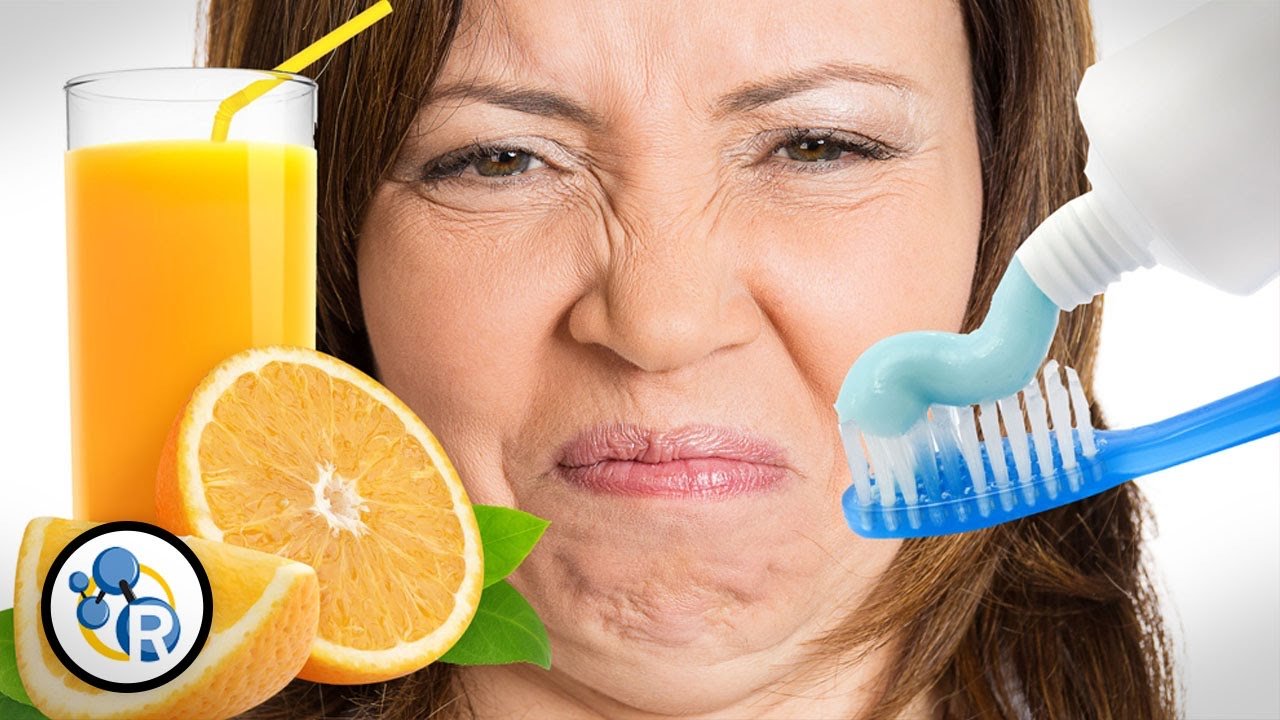
Why Does Orange Juice Taste Terrible After Brushing Your Teeth?
If you’ve ever taken a sip of orange juice right after brushing and thought, “Why does this taste so awful?” you’re not imagining it. It’s a real, predictable effect — and it has more to do with chemistry than the orange juice itself.
The main culprit is a common toothpaste ingredient called sodium lauryl sulfate (SLS). SLS is a foaming agent that helps loosen plaque and debris, but it also temporarily changes how your taste buds perceive flavor.
Here’s what’s happening:
SLS dulls sweetness and amplifies bitterness
SLS can temporarily reduce your ability to taste sweet flavors. At the same time, it makes bitter notes taste stronger. Orange juice has natural bitter compounds and acids — normally they’re balanced by sweetness. After brushing, the sweetness gets muted and the bitterness becomes more obvious.SLS disrupts “taste smoothing” in orange juice
Orange juice contains compounds (including phospholipids) that help coat your mouth and soften bitter flavors. SLS can interfere with that effect, which further lets the bitter taste come through.Mint and citrus don’t play nicely
Many toothpastes leave a strong mint aftertaste. Mint plus acidic citrus can create a weird flavor clash — not the main reason, but it can make the experience worse.
How Long Should You Wait?
A simple fix is to wait about 20–30 minutes after brushing before drinking orange juice or other acidic beverages. This gives saliva time to wash away and dilute residual toothpaste ingredients and lets your taste perception normalize.
If you really want orange juice sooner:
• Rinse your mouth well with water after brushing
• Or brush after breakfast instead of before
Bottom line: nothing is “wrong” with the orange juice — your toothpaste is temporarily changing how your mouth tastes it.