

The Ultimate Toothpaste Guide 2.0 | What Dentists Really Use | CJ Henley, DMD
Jacksonville dentist Dr. CJ Henley, DMD shares what dentists actually use at home. Learn how to choose the best toothpaste for sensitivity, whitening, and long-term oral health.
You can find thousands of toothpaste reviews online—celebrity endorsements, “top 10” lists, even influencers claiming coconut oil changed their lives. But how many of those voices actually treat real mouths every day? Let’s change that. This is the honest, dentist’s version of the ultimate toothpaste guide—what actually matters, what doesn’t, and what I personally use in my own bathroom cabinet.
The Myth of the “Perfect Toothpaste”
Here’s the truth: there’s no single best toothpaste for everyone. The right choice depends on your mouth—your enamel, your diet, your habits, and even your medical history. Still, most patients (and even some dentists) underestimate how much toothpaste can make or break your daily routine. It’s not just a flavor or foam preference. The right toothpaste can reduce sensitivity, prevent cavities, and even help preserve dental work for years.
What Dentists Look for in a Toothpaste
Forget the commercials for a second. Here’s what actually matters when you read that label:
1. Fluoride: The backbone of every effective toothpaste. It strengthens enamel and reverses early decay. Sodium fluoride or stannous fluoride—both are solid choices.
2. Abrasiveness (RDA): Abrasives remove surface stains but can also wear enamel or restorations. I avoid anything over 100 RDA for most patients.
3. Active Ingredients: Potassium nitrate for sensitivity. Stannous fluoride for gum health. Nano-hydroxyapatite for remineralization. Each serves a purpose.
4. The Stuff You Don’t Need: Charcoal, “natural” whitening agents, and oil pulling trends often sound appealing but can be misleading. If it’s overly abrasive, skip it.
What I Actually Use at Home
People always ask, “So, Dr. Henley, which toothpaste do you use?”
Here’s my honest rotation:
For everyday care: A fluoride toothpaste with mild abrasiveness (like Pronamel or Colgate Total).
For sensitivity: A desensitizing option like Sensodyne Repair & Protect.
For dry mouth or post-radiation patients: Biotène or any SLS-free fluoride toothpaste.
For whitening: I don’t use “whitening” toothpaste. They rarely change intrinsic color; professional whitening is the only way to do that safely.
When Toothpaste Alone Isn’t Enough
Even the best toothpaste can’t overcome bad habits. Brush twice a day for two minutes, use a soft brush, and floss (or use interdental brushes) daily. If your toothpaste feels like it’s not helping—bleeding gums, persistent sensitivity, discoloration—come see me. Sometimes, your mouth is trying to tell you something toothpaste can’t fix.
Bonus: Toothpaste Tips Most People Don’t Know
• Less is more. A pea-sized amount is plenty for adults. More foam doesn’t mean more cleaning.
• Don’t rinse immediately. Spit, don’t rinse—let fluoride stay on the enamel a bit longer.
• Match your needs. Post-cancer therapy, enamel wear, implants—all require specific formulations.
My Takeaway
If your toothpaste isn’t supporting your smile, it’s time to switch. Don’t fall for hype—look for ingredients that protect, strengthen, and heal. At the end of the day, toothpaste should work as hard as you do. And if you’re still unsure which one is best for your mouth, that’s what I’m here for. Schedule a visit, and we’ll create a personalized care plan that goes way beyond the tube.

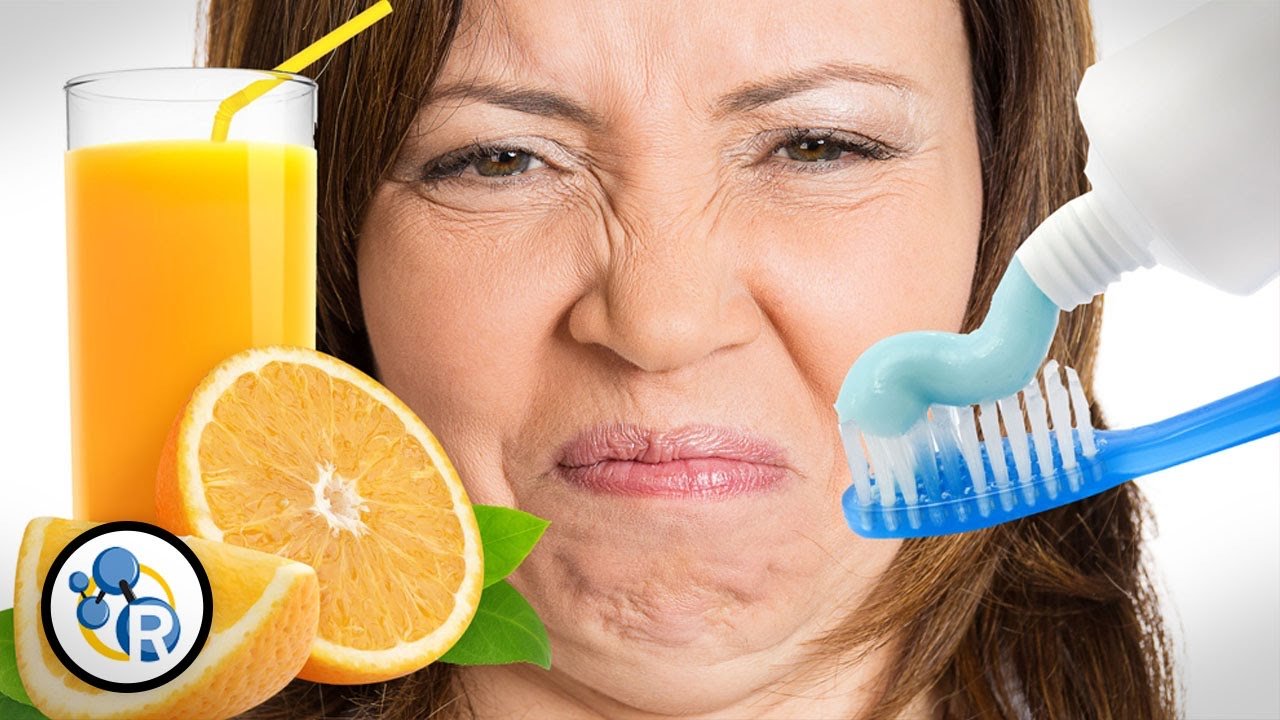
Why does toothpaste and orange juice taste so bad?!
Learn the science behind why OJ tastes gross after brushing your teeth
Why Does Orange Juice Taste Terrible After Brushing Your Teeth?
If you’ve ever taken a sip of orange juice right after brushing and thought, “Why does this taste so awful?” you’re not imagining it. It’s a real, predictable effect — and it has more to do with chemistry than the orange juice itself.
The main culprit is a common toothpaste ingredient called sodium lauryl sulfate (SLS). SLS is a foaming agent that helps loosen plaque and debris, but it also temporarily changes how your taste buds perceive flavor.
Here’s what’s happening:
SLS dulls sweetness and amplifies bitterness
SLS can temporarily reduce your ability to taste sweet flavors. At the same time, it makes bitter notes taste stronger. Orange juice has natural bitter compounds and acids — normally they’re balanced by sweetness. After brushing, the sweetness gets muted and the bitterness becomes more obvious.SLS disrupts “taste smoothing” in orange juice
Orange juice contains compounds (including phospholipids) that help coat your mouth and soften bitter flavors. SLS can interfere with that effect, which further lets the bitter taste come through.Mint and citrus don’t play nicely
Many toothpastes leave a strong mint aftertaste. Mint plus acidic citrus can create a weird flavor clash — not the main reason, but it can make the experience worse.
How Long Should You Wait?
A simple fix is to wait about 20–30 minutes after brushing before drinking orange juice or other acidic beverages. This gives saliva time to wash away and dilute residual toothpaste ingredients and lets your taste perception normalize.
If you really want orange juice sooner:
• Rinse your mouth well with water after brushing
• Or brush after breakfast instead of before
Bottom line: nothing is “wrong” with the orange juice — your toothpaste is temporarily changing how your mouth tastes it.

October is National Dental Hygiene Month
Five practical oral hygiene habits for Jacksonville patients: gentle brushing, cleaning between teeth, fluoride toothpaste, and regular dental visits.

5 Simple Habits for a Lifetime of Dental Health
Master the Two-Minute Drill
Brush twice a day with fluoride toothpaste. Replace your toothbrush (or electric head) every 3-4 months. Frayed bristles don't clean—they just move bacteria around.
Floss Like a Boss
Brushing only cleans 60% of your teeth. Use floss or a water flosser daily to hit the hidden spots where cavities start.
The Power of the Rinse
Antibacterial mouthwash reaches your cheeks and tongue, killing the germs that brushing misses and keeping your breath fresh longer.
Eat for Your Enamel
Fuel up on calcium-rich foods and avoid "grazing." Constant snacking keeps your mouth acidic; give your saliva time to naturally protect your teeth.
Partner with the Pros
Professional cleanings remove tartar that home brushing can't. Regular exams catch small issues before they become big, expensive ones.
What is bruxism or teeth grinding?
Bruxism means grinding or clenching your teeth. It can happen while you are awake or asleep, and you may notice the effects before you notice the habit. A dental examination can help identify tooth wear, damage, and other possible causes of jaw discomfort.
How can I tell if I grind my teeth?
Possible signs include worn or chipped teeth, tired jaw muscles, morning jaw soreness, and sensitivity. A sleeping partner may hear grinding. These signs do not prove bruxism: decay, a cracked tooth, and other conditions can cause similar symptoms. Start with a dental examination rather than diagnosing the problem yourself.
Does a night guard stop teeth grinding?
A professionally fitted guard can help protect teeth from grinding forces. It does not guarantee that grinding will stop. The appropriate approach depends on your symptoms, existing restorations, and whether clenching occurs during the day or at night. Our bruxism care page explains how we evaluate tooth grinding and discuss protection.
What can I do about daytime clenching?
Notice when your teeth are touching during concentration or stress, and discuss that pattern with your dentist. Keeping a short record of when symptoms occur can make your visit more useful. If symptoms began after a medication change, tell your prescriber and dentist; do not stop prescribed medication on your own.
When should I have grinding symptoms checked?
Arrange an evaluation for repeated jaw soreness, new sensitivity, chipped teeth, or damage to a filling or crown. If a tooth hurts when you chew, our guide to common causes of tooth pain explains why an examination matters. Discuss snoring or breathing concerns during sleep with your medical clinician as well.
Where can I get help with teeth grinding in Jacksonville?
Dr. C.J. Henley's office is at 3675 Hendricks Avenue, Jacksonville, FL 32207, near San Marco. Bring any current guard and describe when you notice symptoms. We can assess your teeth and restorations and discuss next steps. Contact our office to arrange an evaluation.
Further reading: National Institute of Dental and Craniofacial Research: Bruxism.
Updated October 1, 2026.

How to Deal With a Dental Emergency
Got a cracked tooth or a cut in your mouth? It could require immediate dental care. Find out what to do in these 11 dental emergencies.
For a knocked-out permanent tooth, a significant dental injury, severe tooth pain or painful swelling, contact a dentist promptly. Difficulty breathing or swallowing, rapidly spreading facial or neck swelling, or serious uncontrolled bleeding requires emergency medical care.
Should I call a dentist or go to the emergency department?
Call 911 or go to an emergency department for breathing or swallowing difficulty, rapidly spreading swelling or a serious injury. For a painful tooth or broken restoration without these danger signs, contact a dentist for guidance. Our emergency dental care page explains the office contact route; availability must be confirmed.
What should I do with a knocked-out tooth?
For a permanent tooth, hold the crown—the part normally visible in the mouth—rather than the root. If dirty, rinse it gently without scrubbing. If it can safely be placed back in the socket, do so without forcing it. Otherwise keep it moist in milk or an appropriate tooth-preservation solution and seek a dentist immediately. Do not delay while waiting for a preferred appointment.
Do not put a knocked-out baby tooth back into its socket. A child still needs prompt dental evaluation after the injury.
What if a tooth cracks or a crown comes out?
Keep any recovered crown or fragment and contact the dentist. Do not use household glue. Avoid chewing on the affected tooth until you receive instructions. Read why a damaged tooth may need a crown for background after the urgent problem is assessed.
What can I do for a toothache while arranging care?
Gently clean around the tooth and remove trapped food with floss if you can do so comfortably. Do not place aspirin against the tooth or gums. Read our tooth-pain guide to help describe the symptoms; it does not replace an examination.
How do I contact the Jacksonville office?
Contact C.J. Henley, DMD at 3675 Hendricks Avenue, Jacksonville, FL 32207, near San Marco. Explain the injury or symptoms, when they began and whether there is swelling. If you cannot reach a dentist and the problem is urgent, seek another available dental provider; do not wait through worsening symptoms.
Sources: ADA dental emergency guidance, AAE knocked-out tooth guidance and American Academy of Pediatrics tooth injury guidance.
Updated October 1, 2026.
Causes of a white tongue and how to get rid of it
White tongue is a term used to describe any area of the tongue that has a grayish-white coating on it. The coating may cover the entire tongue, or it may appear in patches.
A white tongue may be a surface coating or a change in the tissue itself. The appearance alone does not establish the cause. Persistent white patches, pain or a change that keeps returning should be examined.
Is a coating different from a white patch?
A coating can collect on the surface of the tongue. A white patch that remains in one area may need a different evaluation. Do not repeatedly scrape a sore area to test it; describe the change to your dentist instead.
Can dry mouth contribute?
Persistent dry mouth changes the oral environment and can increase the risk of fungal infection. Tell your dentist about medication changes, mouth breathing and any history of cancer treatment. Do not stop a prescribed medicine on your own.
Could it be thrush or oral lichen planus?
Oral thrush and oral lichen planus can cause white areas, but they need different treatment. A photograph or a description is not enough to choose an antifungal or another medication. Our oral medicine and diagnostic evaluation page explains the role of an examination.
What can I safely do at home?
Use a soft toothbrush and clean the tongue gently if it is comfortable. Avoid tobacco and anything that irritates the area. Persistent patches need evaluation even if oral hygiene is good; do not assume garlic, probiotics or vigorous scrubbing will treat the cause.
Does a white tongue mean cancer?
A white tongue does not by itself mean cancer. Some persistent tissue changes need further investigation. Oral cancer screening can identify an area that needs attention; a diagnosis may require additional testing.
Where can I have a tongue change checked in Jacksonville?
Contact C.J. Henley, DMD on Hendricks Avenue near San Marco. Note when the change began, whether it hurts and whether it has changed. Bring your medication list and relevant medical history.
Further reading: NHS: sore or white tongue and NIDCR: dry mouth.
Updated October 1, 2026.

Fluoride Toothpaste and Jacksonville’s Water: Benefits, Safety, and Common Questions
How fluoride toothpaste protects teeth, how Jacksonville’s naturally occurring water fluoride fits into prevention, and when to discuss your individual needs.
Fluoride toothpaste helps prevent cavities by strengthening enamel and supporting the repair of early mineral loss. Brushing twice daily with fluoride toothpaste is recommended for children and adults, with small, age-appropriate amounts for young children. American Dental Association’s fluoride guidance
Here in Jacksonville, patients often have another question: does our drinking water already contain fluoride? For residents served by JEA, the answer is yes—it occurs naturally.
Understanding your toothpaste, drinking water, and individual cavity risk can help you make informed choices about daily dental care.
What is fluoride, and why is it in toothpaste?
Fluoride is a mineral that occurs naturally in rocks, soil, and water. It is included in many toothpastes because it helps protect teeth against decay. National Institute of Dental and Craniofacial Research
Bacteria in dental plaque use sugars from food and drinks to produce acids. Those acids remove minerals from enamel, the protective outer surface of your teeth. Repeated acid attacks can eventually lead to cavities.
Fluoride helps enamel regain minerals through a process called remineralization. It also makes teeth more resistant to future acid attacks. Early decay may be stopped or reversed before a cavity forms, but toothpaste cannot rebuild tooth structure once a hole has developed. NIDCR’s explanation of the tooth decay process
Does Jacksonville’s drinking water naturally contain fluoride?
Yes. Jacksonville residents served by JEA receive drinking water containing naturally occurring fluoride from the Floridan aquifer. JEA states that it does not—and has never—added fluoride to its drinking water. JEA’s water constituent information
Groundwater picks up minerals as it moves through underground formations. This means fluoride can be present in drinking water without being added during treatment.
The concentration can vary depending on the water system. Consult JEA’s water quality reports for reported testing results rather than assuming every Jacksonville household receives the same amount.
If your home uses a private well or another utility, check that source separately. JEA’s information applies to its own water supply.
Do I still need fluoride toothpaste if my water contains fluoride?
Yes. Drinking water containing fluoride does not replace brushing with fluoride toothpaste. Toothpaste delivers fluoride directly to the tooth surface, helping protect enamel where decay begins. The ADA recommends fluoride toothpaste even when drinking water contains fluoride. ADA’s fluoride guidance
Is fluoride toothpaste safe?
Fluoride toothpaste is recommended for routine cavity prevention when used as directed. Spit it out after brushing, and supervise young children to help them avoid swallowing it. ADA’s brushing recommendations
For children, one concern is dental fluorosis, an enamel change that can develop when they repeatedly consume too much fluoride while teeth are forming beneath the gums. Fluoride intake from all sources matters—not just toothpaste.
Mild fluorosis usually appears as faint white lines or streaks on teeth. Using the appropriate amount of toothpaste and supervising brushing helps reduce the risk. ADA’s fluorosis guidance
What about fluoride and other health concerns?
Fluoride research requires attention to the amount, source, and duration of exposure.
The National Toxicology Program concluded with moderate confidence that higher fluoride exposure, such as drinking water containing more than 1.5 milligrams per liter, is associated with lower IQ in children. An association does not establish cause and effect.
Its subsequent analysis also found associations at lower exposures in some studies, while noting uncertainty when examining drinking-water concentrations below 1.5 milligrams per liter. There were insufficient data to determine whether drinking water at 0.7 milligrams per liter affects children’s IQ.
These findings deserve careful discussion. They do not establish that brushing with fluoride toothpaste as directed causes those outcomes, nor do they resolve every question about lower exposures. National Toxicology Program’s fluoride assessment
How much fluoride toothpaste should children use?
Begin brushing with fluoride toothpaste when the first tooth appears.
Younger than age 3: Use a smear no larger than a grain of rice.
Ages 3–6: Use no more than a pea-sized amount.
Supervise brushing: Help children brush thoroughly and teach them to spit out toothpaste.
Keep toothpaste out of reach between brushings. Children younger than 6 should not use fluoride mouthwash unless a dentist recommends it. ADA’s recommendations for children
Before starting a fluoride supplement, discuss your child’s drinking-water source and other fluoride exposure with their dentist or pediatrician. Naturally occurring fluoride counts toward total intake, too. ADA’s fluorosis prevention guidance
How do you choose the right toothpaste?
Start with a fluoride toothpaste intended for cavity prevention. Products bearing the ADA Seal of Acceptance offer another way to identify evaluated dental-care products. ADA’s fluoride and product guidance
Your other symptoms matter as well. Tooth sensitivity, recurring cavities, or persistent mouth dryness are useful reasons to discuss your home-care routine with a dentist.
For example, dry mouth can increase cavity risk because saliva helps protect teeth. Choosing toothpaste should be part of a plan that also considers why your mouth is dry, including medications or medical conditions.
Common questions about fluoride toothpaste
Do adults benefit from fluoride toothpaste?
Yes. Adults can develop cavities, including decay on exposed tooth roots. Brushing twice daily with fluoride toothpaste remains part of preventive care throughout adulthood. NIDCR’s oral hygiene guidance
Does fluoride toothpaste replace flossing?
No. Brushing and cleaning between teeth address different surfaces. Fluoride toothpaste supports cavity prevention, while daily interdental cleaning helps remove plaque from areas a toothbrush cannot adequately reach. NIDCR’s oral hygiene guidance
Can fluoride toothpaste repair a cavity?
It can help repair early mineral loss before a hole forms. An established cavity represents permanent damage that needs dental evaluation and usually restorative treatment. NIDCR’s tooth decay guidance
Do I need additional fluoride if I have dry mouth?
Possibly. Additional topical fluoride may be appropriate when dry mouth raises your decay risk. The recommendation should follow an assessment of your symptoms, medical history, and dental findings. Our dry-mouth evaluation and treatment page explains that approach.
Toothpaste and preventive-care advice in Jacksonville
The right daily routine should reflect your oral health, medical history, and drinking-water source.
At CJ Henley, DMD, we help patients understand concerns such as recurring cavities, persistent dry mouth, and tooth sensitivity. If you have questions about toothpaste or fluoride exposure, contact our Jacksonville office to discuss the next step.
CJ Henley, DMD
3675 Hendricks Avenue
Jacksonville, FL 32207
Call 904-398-1549

Best Foods for Healthy Teeth
Is what you eat good for your teeth? Find out which foods help promote healthy teeth and gums.
A varied diet, water as your usual drink, and fewer frequent sugary snacks can support dental health. Food choices work alongside brushing, cleaning between teeth, and dental examinations; no food or supplement treats a cavity or replaces care for gum disease.
Which foods support healthy teeth and gums?
Build meals around a variety of vegetables, fruit, protein foods, and sources of calcium. Whole fruit usually makes a more useful snack than repeatedly sipping juice. Plain dairy foods or suitable fortified alternatives can contribute calcium; check labels for added sugar. Choose foods that fit your medical needs, allergies, and ability to chew.
Why does how often I snack matter?
Repeated exposure to sugary drinks and snacks gives the mouth less time between acid challenges. Consider the pattern across your day, including sweetened coffee, sports drinks, juice, and foods that linger around teeth. Water with meals and between meals is a practical starting point. Read our sparkling-water guide if flavored or carbonated drinks are part of your routine.
Can low vitamin C cause bleeding gums?
Severe vitamin C deficiency can affect gum health, but bleeding gums have several possible causes, including plaque-related inflammation. Do not assume that a supplement will solve the problem. A limited diet is worth discussing with your medical clinician; persistent bleeding also deserves a dental examination. Peppers, kiwifruit, broccoli, and strawberries are examples of foods containing vitamin C.
Should I take vitamins for my teeth?
Discuss supplements with your clinician if you have a deficiency, restricted diet, medical condition, or difficulty eating. Taking extra vitamins without identifying a need is not a substitute for dental treatment. Bring a list of supplements and medications to your appointment, especially if you receive care for complex medical needs.
What else helps prevent cavities?
Brush with fluoride toothpaste and clean between teeth each day. Our toothpaste guide explains how to compare products. Dry mouth changes cavity risk, so tell us if eating or swallowing feels dry; see our dry-mouth information.
Discuss diet and dental health in Jacksonville
At CJ Henley, DMD on Hendricks Avenue near San Marco, a comprehensive examination can connect your food habits with what we find in your mouth. Contact the office for an appointment. Bring specific questions about snacks, drinks, bleeding, or sensitivity.
Sources: ADA: Nutrition's impact; ADA: Bleeding gums; NIH: Vitamin C.
Updated October 1, 2026.

10 Biggest Causes of Tooth Sensitivity
Are your teeth tender? From acidic foods to certain toothpastes, a number of culprits could be to blame.
Sensitive teeth can hurt with cold drinks, hot foods or brushing. There is more than one possible cause, so the useful first step is to identify the trigger and have persistent symptoms checked.
What can cause tooth sensitivity?
Ten possibilities to discuss with your dentist include:
Exposed roots from gum recession.
Loss of enamel protection.
Brushing too forcefully.
Acid exposure.
Tooth decay.
A cracked tooth.
A worn or damaged filling.
Gum disease.
Recent restorative treatment.
Recent whitening.
These are possibilities, not a diagnosis or a ranking of which cause is most likely for you. Tell the dentist whether one tooth or several are affected and whether the discomfort stops quickly or lingers.
Can toothpaste help?
Desensitizing toothpaste can help some forms of sensitivity, but it does not repair a crack or cavity. Use it as directed and discuss persistent symptoms. Our toothpaste guide explains how to compare products.
What if the sensitivity began after a filling?
Recent treatment belongs in the history. Read our specific guide to pain after a filling and contact the treating dentist if the symptoms worsen, linger or occur when you bite. Do not assume every new symptom is part of normal healing.
What if I also grind my teeth?
Mention clenching, morning jaw discomfort and changes in your bite at the appointment. Our bruxism information explains how tooth wear and jaw symptoms are evaluated. A guard does not substitute for finding the cause of a painful tooth.
When should I have sensitive teeth checked?
Arrange an examination for recurring sensitivity, a single painful tooth or discomfort that interferes with eating. Review urgent dental care if pain is severe or accompanied by swelling.
Discuss sensitive teeth in Jacksonville
Contact C.J. Henley, DMD on Hendricks Avenue near San Marco. Bring the names of products you use and explain when the symptoms started. A comprehensive dental examination can connect the symptom pattern with the condition of the teeth and restorations.
Further reading: American Dental Association: sensitive teeth.
Updated October 1, 2026.

8 Foods to Avoid If You Have Sensitive Teeth
Leaving certain foods off of your menu — think hot, cold, sugary, sticky, and acidic — may help ease tooth sensitivity.
Having sensitive teeth is common: As many as 40 million Americans report having some pain in their teeth when eating or drinking hot, cold, acidic, sticky, or sugary foods, according to the Academy of General Dentistry (AGD). Women and young adults as well as those with receding gum lines reported the most tooth sensitivity in a study of nearly 800 patients at dental practices in the northwestern United States that was published in The Journal of the American Dental Association in March 2013.
While foods that are very hot or very cold can cause tooth pain, avoiding these eight foods in particular may help you find relief:
1. Soda. This is one of the top foods to avoid for sensitive teeth, says John T. Grbic, DMD, a professor of dental medicine and director of the division of foundational sciences at Columbia University College of Dental Medicine in New York City. Soda has two ingredients that can irritate exposed teeth nerves: sugar and acid, he says, "so it’s a double whammy.”
2. Ice cream. “Ice cream is not only cold, but it has sugar that can cause teeth to be more sensitive,” says Jordan Taylor, DMD, a dentist with Stonecreek Dental Care in Huntsville, Alabama. People with sensitive teeth lack the enamel layer that acts as a protective barrier. “Without that layer of enamel to insulate your nerves, the temperature of the food can be more aggravating,” he says.
3. Hot coffee. Hot foods can also cause your teeth to hurt, and sweetening your steaming coffee with sugar can make pain even worse. Dr. Taylor suggests adding some milk to your coffee. The milk helps to slightly lower the temperature of the coffee as well as its acidity, so it’s less damaging to your teeth, he says.
4. Hard candy. When you have sensitive teeth, skip hard candy such as lollipops, peppermints, and suckers. Not only are they full of sugar that can cause tooth pain, but they could also cause teeth to chip or break, according to the American Dental Association.
5. Sticky candy. These sweet treats, such as toffee, caramel, gummy bears, and licorice, have a few strikes against them, especially for people with tooth sensitivity. Besides being full of sugar, they can stick to your teeth.“Extremely sweet and sticky foods can stimulate the nerves in the dentine, which is similar to tooth enamel but not as hard, and has tiny microscopic holes to further expose the nerves,” says Eugene Gamble, MClinDent, a periodontics specialist and oral surgeon in the United Kingdom.
6. Citrus fruits. Pineapple, grapefruit, lemons, and limes are all highly acidic fruits, and the acid can make your teeth more sensitive, according to the AGD. This is because they wear away at tooth enamel. Keep in mind that both eating these fruits and drinking the fruit juice can trigger tooth sensitivity and pain.
7. Tomatoes. Although tomatoes are a good source of vitamins, especially vitamin C, they're also highly acidic, so be sure to avoid them if your teeth are sensitive, says Victoria Veytsman, DDS, of Cosmetic Dental Studios in New York City. Note that tomato sauce as well as raw tomatoes can trigger tooth sensitivity.
8. Ice. Even if you can tolerate cold drinks, resist the habit of chewing ice, Dr. Grbic says. Ice can be problematic for sensitive teeth, because it's both cold and hard.
If you have sensitive teeth and symptoms persist for more than a few weeks or become unbearable, be sure to talk to your dentist. Sensitive teeth may be a sign of a more serious health issue, such as a cavity or abscess that needs to be treated, according to the Oral Health Foundation.