


Was Paul Revere a Dentist? The First American Forensic Dental Identification
Paul Revere inadvertently became America’s first forensic dentist when he was given the gruesome task of identifying the body of Dr. Joseph Warren, the man who sent him on his famous “midnight ride.” Warren was struck down by a British bullet during the Battle of Bunker Hill on June 17, 1775 and his corpse was buried in a mass grave. When Warren’s family unearthed the grave nine months later, visual identification of the bodies inside was near impossible because they had decomposed. So Revere, the man who crafted the slain officer’s false teeth, was asked to locate Warren’s remains by finding the ivory dentures he crafted and wired to Warren’s jaw.
Read the full article at Strange Remains
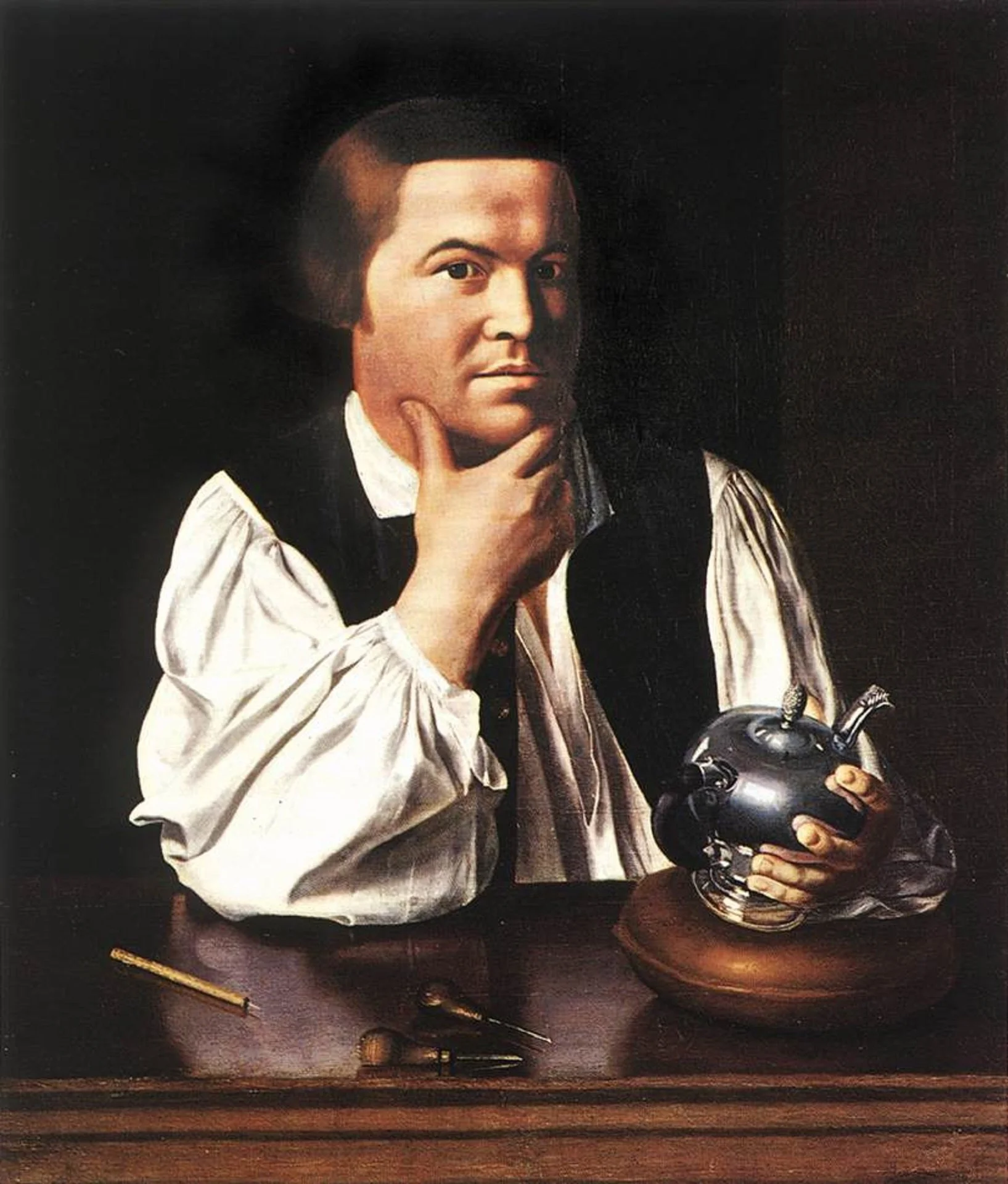
Paul Revere, silversmith and patriot, is widely regarded as America’s first forensic dentist after identifying Dr. Joseph Warren through dental prosthetics following the Battle of Bunker Hill.
Yes. Paul Revere, the Boston silversmith remembered for his midnight ride, also made and fitted artificial teeth. In 1776 he identified the remains of his friend Dr. Joseph Warren by recognizing a dental bridge he had made for him. Historians often describe it as the first forensic dental identification in America.
How did Paul Revere become a dentist?
Revere was a skilled metalworker, and in colonial Boston that made dental work a natural sideline. He learned to make and fit false teeth from John Baker, a surgeon-dentist working in Boston. When Baker left for New York, Revere advertised in 1768 that he could care for Baker's work, and he placed dental advertisements again in 1770. His notices said his artificial teeth looked natural and let people speak normally. [1] [2]
His dentistry was simple by today's standards. He carved replacement teeth from ivory or animal tooth and fastened them to neighboring natural teeth with wire. He did not do fillings or surgery as a modern dentist would.
How did Revere identify Joseph Warren?
Dr. Joseph Warren was a Boston physician and a leader of the patriot cause. Shortly before the war began, Revere made him a small bridge that replaced his upper left canine and first premolar with ivory teeth held in place by wire. [1]
Warren was killed at the Battle of Bunker Hill on June 17, 1775, and was buried with other soldiers in a shallow grave. After the British left Boston in March 1776, Warren's family and friends went looking for his body. By then, about nine months after the battle, his face could not be recognized. Revere examined the remains and found the bridge he had made. Warren was reburied with honors in April 1776. [1] [3]
Why does this story matter to dentistry today?
Teeth and dental work are among the most durable parts of the body. They survive heat, time and trauma better than most tissues, and every mouth is different. That is the basis of forensic odontology, the use of dental evidence to identify people.
Modern forensic dentists compare dental records, X-rays, fillings, crowns and implants with remains. They help identify victims of disasters, accidents and crimes. The tools are far better than Revere's memory of his own handiwork, but the idea is the same: the details of a person's teeth and dental work are individual.
It is also a reminder of why careful records matter. In our office, photographs, X-rays and, when they are clinically needed, 3D images document your teeth so we can see how they change over time.
Sources
National Museum of Health and Medicine. Paul Revere and Joseph Warren: an early case of forensic identification. Retrieved October 6, 2026.
Paul Revere Memorial Association. Revere House Radio: Paul Revere and dentistry. Retrieved October 6, 2026.
History.com. How Paul Revere used dentistry to identify a fallen patriot.
About the author. CJ Henley, DMD, is a general dentist in Jacksonville, Florida. Meet Dr. Henley.
CJ Henley, DMD, PA · 3675 Hendricks Avenue, Jacksonville, FL 32207 · 904-398-1549
Updated October 2026.