

How Do Dental Implants Work?
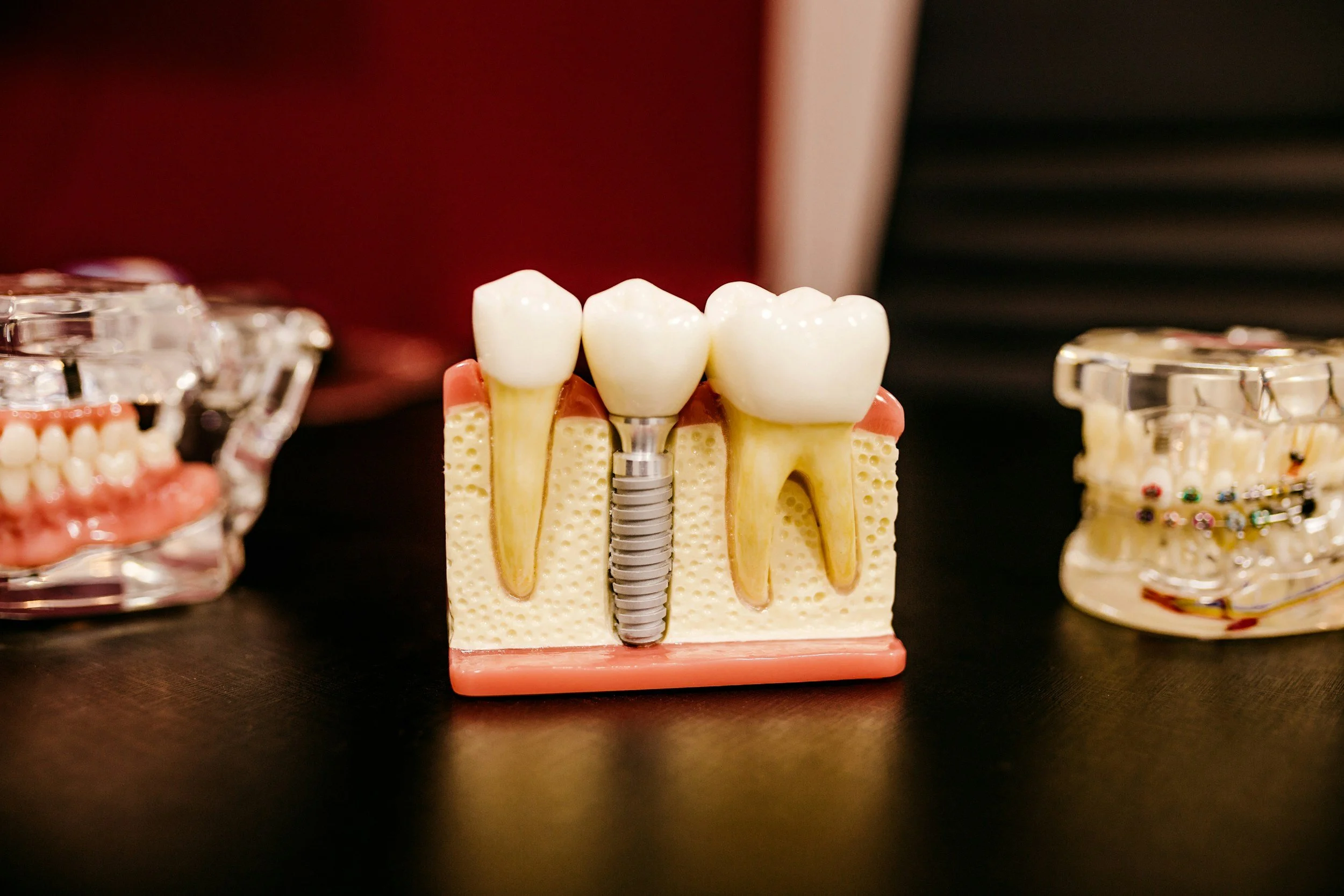
Dental implants are one of the most predictable and durable ways to replace missing teeth — but only when they are planned and executed correctly. While implants are often described simply as “artificial tooth roots,” the reality is more nuanced. Successful implant treatment depends on biology, mechanics, and long-term planning, not just placing a screw in bone.
This overview explains how dental implants work, what determines their success, and why planning matters as much as the procedure itself.
What a Dental Implant Actually Is
A dental implant is a small titanium post placed into the jawbone to replace the root of a missing tooth. Over time, the surrounding bone integrates with the implant surface in a process called osseointegration, creating a stable foundation for a crown, bridge, or full-arch restoration.
Once integrated, the implant functions much like a natural tooth root — transferring chewing forces into the bone and helping preserve jaw structure.
Why Bone Integration Matters
Unlike dentures or traditional bridges, dental implants rely on living bone for support. This is both their greatest strength and their greatest vulnerability.
For an implant to succeed long term, several conditions must be met:
Adequate bone volume and density
Healthy surrounding tissue
Proper positioning relative to bite forces
Controlled healing during integration
When any of these factors are overlooked, implants may still “work” in the short term — but problems often appear years later in the form of bone loss, loosening, or fracture.
The Role of Planning in Implant Success
Implants are not interchangeable parts, and treatment should never be one-size-fits-all.
Thoughtful implant planning considers:
Bite forces and chewing patterns
Bone quality and anatomy
Existing dental restorations
Long-term maintenance and hygiene
Overall health, medications, and medical history
In medically complex patients — including those with dry mouth, autoimmune conditions, or a history of cancer treatment — this planning becomes even more critical. The goal is not just to place an implant, but to ensure it remains functional and stable for decades.
How the Implant Restoration Works
After the implant has integrated with the bone, a connector called an abutment is attached. This supports the visible portion of the restoration — typically a crown that is shaped, shaded, and designed to function like a natural tooth.
A well-designed implant crown:
Distributes forces evenly
Protects surrounding bone
Maintains gum health
Blends naturally with adjacent teeth
This restorative phase is just as important as the surgical phase. Poorly designed crowns can overload even a well-placed implant.
Single Implants vs. Full-Mouth Reconstruction
Dental implants can be used to replace:
A single missing tooth
Multiple missing teeth
An entire arch of teeth
Full-mouth implant reconstruction requires a higher level of coordination, diagnosis, and sequencing. Bone health, bite alignment, and long-term wear must all be addressed together. When done well, these restorations can dramatically improve function, comfort, and quality of life.
How Long Do Dental Implants Last?
When properly planned and maintained, dental implants can last many years — often decades. Longevity depends on:
Initial diagnosis and placement
Restoration design
Oral hygiene and follow-up care
Changes in health over time
Implants are not “set and forget” dentistry. They require thoughtful oversight and periodic evaluation to ensure continued stability.
Is a Dental Implant Right for Everyone?
Not every patient is an immediate implant candidate. Factors such as bone loss, medical conditions, smoking, or previous radiation therapy may require additional evaluation or alternative approaches.
A comprehensive evaluation is essential to determine whether implants are appropriate — and if so, how they should be placed and restored to support long-term success.
A Deliberate Approach to Implant Dentistry
Dental implants work best when they are treated as part of a larger system — not as isolated procedures. Success is measured not by placement alone, but by how well the implant performs years down the line.
For patients considering implant treatment, the most important step is not the surgery itself — it’s the planning that comes before it.
Reviewed and updated January 2026
Periodontal Disease and Breast Cancer: Understanding the Possible Connection

Periodontal disease is a chronic inflammatory condition that affects the gums and supporting structures of the teeth. While it is commonly discussed in the context of oral health, research over the past decade has explored whether chronic inflammation in the mouth may be linked to broader systemic conditions — including certain cancers.
Breast cancer is one area where a possible association has been studied. It’s important to approach this topic carefully: research suggests a potential link, not a direct cause-and-effect relationship. Still, the findings are worth understanding.
What Is Periodontal Disease?
Periodontal disease begins as gingivitis, marked by gum inflammation and bleeding. If left untreated, it can progress to periodontitis, where inflammation leads to loss of bone and connective tissue supporting the teeth.
This condition is driven by:
bacterial biofilm beneath the gums
a sustained inflammatory immune response
changes in the oral microbiome
Because periodontal disease is chronic and inflammatory, researchers have long questioned whether its effects extend beyond the mouth.
Why Inflammation Matters
Chronic inflammation plays a role in many systemic diseases. Persistent inflammatory signaling can influence immune function, hormone regulation, and cellular behavior throughout the body.
Periodontal disease contributes to:
elevated inflammatory markers
intermittent bacteremia (bacteria entering the bloodstream)
immune system activation over long periods of time
These mechanisms are what prompted researchers to explore associations between gum disease and conditions such as cardiovascular disease, diabetes, and certain cancers.
What the Research Suggests About Breast Cancer
Several large observational studies have reported an association between periodontal disease and an increased incidence of breast cancer. Importantly:
These studies show correlation, not causation
Periodontal disease does not cause breast cancer
Many shared risk factors exist, including smoking, inflammation, hormonal influences, and immune response differences
Some researchers hypothesize that chronic oral inflammation or changes in oral bacteria may influence systemic inflammatory pathways. Others suggest periodontal disease may simply be a marker of overall inflammatory burden rather than a direct contributor.
At present, no evidence supports the idea that treating periodontal disease prevents breast cancer — but maintaining oral health remains an important part of overall wellness.
What This Means for Patients
The takeaway is not fear — it’s perspective.
Good periodontal health:
reduces chronic inflammation
supports immune system balance
protects oral structures long term
contributes to overall health awareness
For patients with a history of cancer, those undergoing treatment, or those managing complex medical conditions, maintaining healthy gums is especially important. Cancer therapies can affect oral tissues, saliva production, and healing capacity, making prevention and early management essential.
Oral Health as Part of Whole-Body Care
Dentistry does not exist in isolation from the rest of the body. Periodontal disease is one example of how oral health and systemic health intersect — not through simple cause-and-effect relationships, but through shared biological pathways.
Understanding these connections allows care to be more thoughtful, individualized, and preventative rather than reactive.
A Thoughtful, Evidence-Based Approach
Claims about oral health and cancer should always be evaluated carefully. Sound care is grounded in evidence, context, and restraint — not headlines or fear-based messaging.
Maintaining healthy gums is an important part of long-term health, but it is one piece of a much larger picture that includes genetics, lifestyle, medical care, and preventive screening.
About the Author
CJ Henley, DMD, is a dentist in private practice in the San Marco area of Jacksonville, Florida. A graduate of the University of Florida College of Dentistry, he has served as Courtesy Faculty for his alma mater and is a former President of the Northeast District Dental Association.
Beyond private practice, Dr. Henley serves on the Head and Neck Tumor Board at the MD Anderson Cancer Center, where he collaborates with oncologists and specialists to manage the complex oral health needs of patients undergoing cancer treatment. He is dedicated to an evidence-based approach that recognizes the vital connection between periodontal health and whole-body wellness.
Reviewed and updated January 2026