


Philadelphia Inquirer: HPV is causing an oral cancer epidemic in men by outwitting natural defenses
Five years ago, when actor Michael Douglas candidly revealed that his throat cancer was linked to having oral sex, two things happened.
He made headlines that mortified his family. And he helped publicize the fact that a pervasive, sexually transmitted virus called HPV was unleashing an epidemic of oral cancer among men.
Compared with women, men are more likely to get infected with HPV — including “high-risk” cancer-causing strains. They also are less able to wipe out infection on their own, and more likely to get reinfected. The reasons are unclear.
Your dentist should play a key role in detecting oral cancer. Having an thorough oral cancer screening is the first step to catching this dangerous cancer early.
Did you know that Dr. Henley is the ONLY general dentist in Jacksonville that serves on the Head and Neck Tumor Board at Baptist MD Anderson? The tumor board is a multi-specialty group that works together using the latest in dentistry and medicine to ensure that cancer patients have the best possible outcomes.
Five years ago, when actor Michael Douglas candidly revealed that his throat cancer was linked to having oral sex, two things happened.
He made headlines that mortified his family. And he helped publicize the fact that a pervasive, sexually transmitted virus called HPV was unleashing an epidemic of oral cancer among men.
Compared with women, men are more likely to get infected with HPV — including “high-risk” cancer-causing strains. They also are less able to wipe out infection on their own, and more likely to get reinfected. The reasons are unclear.
Your dentist should play a key role in detecting oral cancer. Having an thorough oral cancer screening is the first step to catching this dangerous cancer early.
Did you know that Dr. Henley is the ONLY general dentist in Jacksonville that serves on the Head and Neck Tumor Board at Baptist MD Anderson? The tumor board is a multi-specialty group that works together using the latest in dentistry and medicine to ensure that cancer patients have the best possible outcomes.
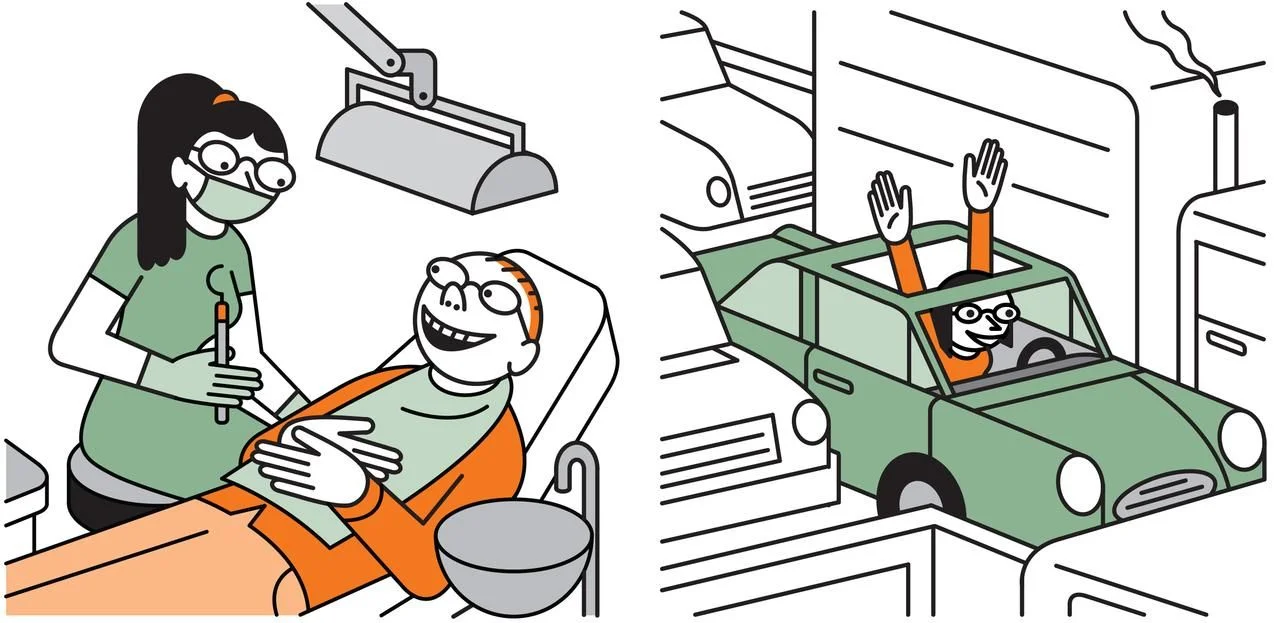
NYT: An Escape to the Dentist? Parents Confess Their Secret Ways to Get Alone Time
Peter J. Strauss’s life as an attorney, speaker and single father of four children ages 1 to 10 leaves him little time for himself.
He catches a break in a place most people try to avoid: “I love going to the dentist,” says Mr. Strauss, of Hilton Head Island, S.C. “It’s 45 minutes when I know nobody is going to interrupt me. You can’t reach me and you can’t ask for anything,” says Mr. Strauss, author of a book on self-insurance for businesses. Although he has perfect teeth, he gets them cleaned three times a year instead of the usual two. The visits are so dull that he sometimes falls asleep in the chair.
Peter J. Strauss’s life as an attorney, speaker and single father of four children ages 1 to 10 leaves him little time for himself.
He catches a break in a place most people try to avoid: “I love going to the dentist,” says Mr. Strauss, of Hilton Head Island, S.C. “It’s 45 minutes when I know nobody is going to interrupt me. You can’t reach me and you can’t ask for anything,” says Mr. Strauss, author of a book on self-insurance for businesses. Although he has perfect teeth, he gets them cleaned three times a year instead of the usual two. The visits are so dull that he sometimes falls asleep in the chair.

Dr. Henley's Donation Recognized by the Mayor of Jacksonville
Dr. Henley's donation of toothbrushes to help support Dental Health Month was recognized by Jacksonville's Mayor Lenny Curry.
Dr. Henley's donation of toothbrushes, to help support Dental Health Month, was recognized by Jacksonville's Mayor Lenny Curry.


Red wine compound could help tooth decay and gum disease
Red wine has previously been linked to a range of supposed health benefits, from helping the heart to lowering the risk of diabetes.
Now a new study suggests it contains chemicals that can help in the fight against tooth decay and gum disease.
Researchers found compounds from the drink, known as polyphenols, helped fend off harmful bacteria in the mouth.
Red wine has previously been linked to a range of supposed health benefits, from helping the heart to lowering the risk of diabetes.
Now a new study suggests it contains chemicals that can help in the fight against tooth decay and gum disease. Researchers found compounds from the drink, known as polyphenols, helped fend off harmful bacteria in the mouth. But experts warned that the findings do not offer a "green light" to drink more red wine.
Previous studies have suggested that the health benefits of polyphenols are linked to them being antioxidants that protect the body from harmful free radicals. However, recent studies have indicated that polyphenols might also boost health by working with "good bacteria" in our gut. For this study, in the Journal of Agricultural and Food Chemistry, scientists looked into whether wine polyphenols might also be good for oral health.
Researchers compared the effects of two polyphenols from red wine against grape seed and red wine extract supplements on bacteria that stick to teeth and gums and cause dental plaque, cavities and gum disease. They found the wine polyphenols and extracts all reduced the bacteria's ability to stick to the cells, but the polyphenols - caffeic and p-coumaric acids - were more effective.
When combined with the Streptococcus dentisani - believed to be an oral probiotic, which stimulates the growth of good bacteria - the polyphenols were even better at inhibiting the pathogenic bacteria. The findings, they said, could ultimately lead to new dental treatments.
Red wine is rich in polyphenols but they are also found in a range of other drinks and foods.
- Drinks
- Coffee
- Green tea
- Black tea
- Cider
- Orange juice and lemon juice
- Foods
- Blueberries
- Raspberries
- Kiwis
- Black grapes
- Cherries
- Beans
Wine in moderation
The report's authors acknowledge that their study was limited by the fact it was done outside of the human body with cells that simulated gum tissue. And they said further research was needed to determine more about what was causing the bacteria to be inhibited. They said metabolites which form when the digestion of polyphenols begins in the mouth could also be responsible for some of the effects in the study.
The British Dental Association's scientific adviser, Professor Damien Walmsley, said the study was "interesting" but it did not mean people should start drinking more. "In fact, the acidic nature of wine means that consuming a lot of these drinks will damage the enamel of the teeth," he said. "Therefore, until the benefits of this research are shown clinically, it is best to consume wine in moderation and with a meal to minimise the risk of tooth erosion."
Naveed Sattar, professor of metabolic medicine at the University of Glasgow, said the research was "interesting" but still "very preliminary". "However, the findings do not support drinking more red wine to stop people getting infections," he said. "There is no good evidence that drinking wine per se is overall good for health - on the contrary, more and more evidence from other sources now suggests the less wine or alcohol one drinks, the lower the risks of range of disease and the lower the mortality risks."

Paul Revere: The first American forensic dentist
Paul Revere inadvertently became America’s first forensic dentist when he was given the gruesome task of identifying the body of Dr. Joseph Warren, the man who sent him on his famous “midnight ride.” Warren was struck down by a British bullet during the Battle of Bunker Hill on June 17, 1775 and his corpse was buried in a mass grave. When Warren’s family unearthed the grave nine months later, visual identification of the bodies inside was near impossible because they had decomposed. So Revere, the man who crafted the slain officer’s false teeth, was asked to locate Warren’s remains by finding the ivory dentures he crafted and wired to Warren’s jaw.
Read the full article at Strange Remains
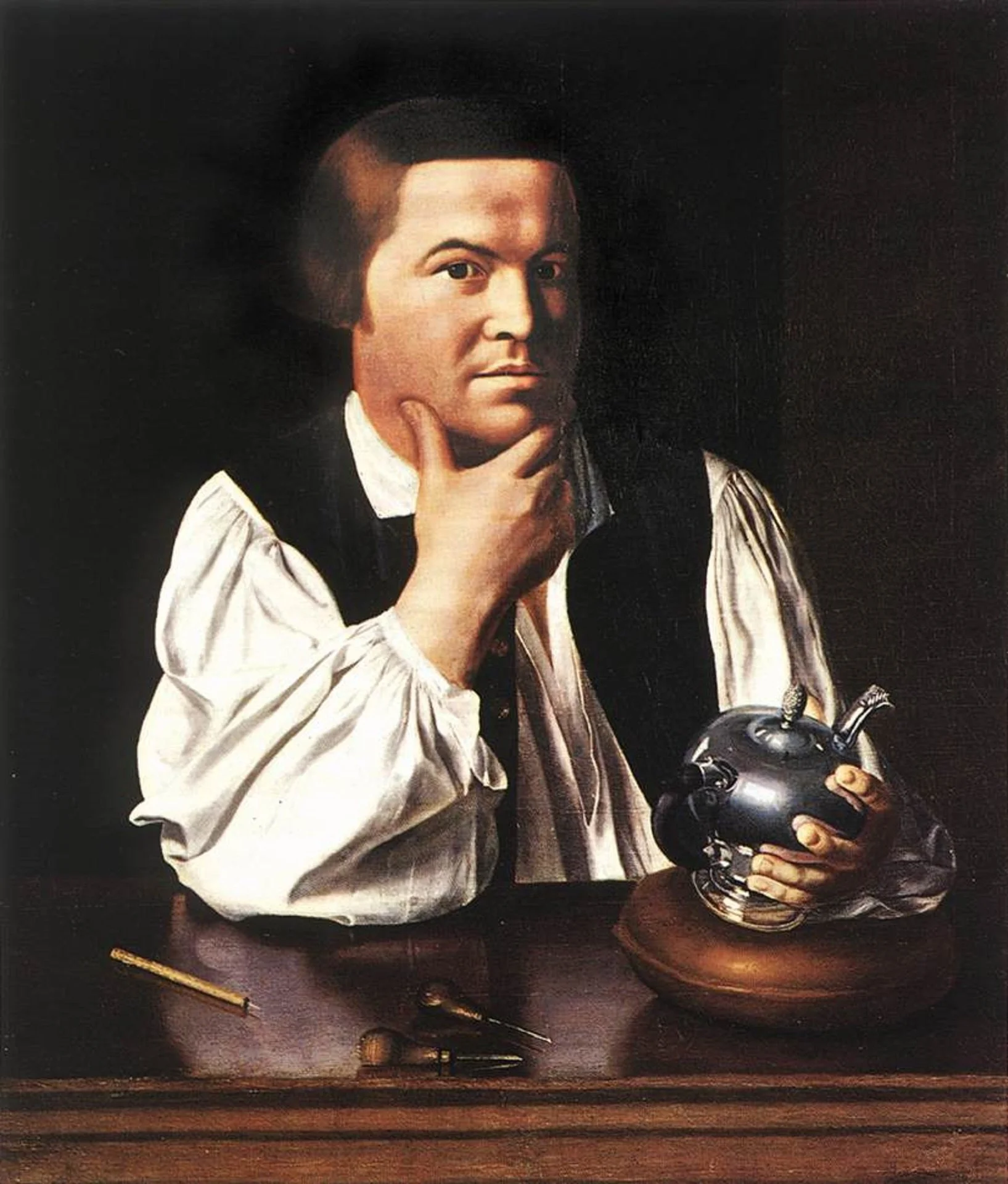
Paul Revere, silversmith and patriot, is widely regarded as America’s first forensic dentist after identifying Dr. Joseph Warren through dental prosthetics following the Battle of Bunker Hill.
Paul Revere is best known for his midnight ride that helped ignite the American Revolution, but few people realize he also played a pivotal role in the early history of forensic dentistry. In fact, Paul Revere is widely regarded as America’s first forensic dentist—long before the field had a name.
Revere’s contribution to forensic identification occurred after the death of his close friend, Dr. Joseph Warren. Warren, a respected physician, patriot, and leader of the revolutionary movement, was killed by a British musket ball during the Battle of Bunker Hill on June 17, 1775. His body was buried hastily in a mass grave alongside other fallen soldiers.
Nine months later, Warren’s family sought to recover his remains. By that time, decomposition had made visual identification nearly impossible. Facial features, clothing, and other distinguishing characteristics were no longer reliable. What remained identifiable, however, was something far more durable than soft tissue: dentistry.
Paul Revere had crafted Warren’s dental prosthetics—ivory dentures wired directly to the jaw, a common practice in 18th-century dentistry. When the grave was exhumed, Revere was asked to examine the remains. He located the body by identifying the custom dentures he himself had fabricated. This moment is widely considered the first documented case of dental identification used for forensic purposes in the United States.
Why this matters today
This event marks the foundation of what we now call forensic odontology—the use of dental science to identify human remains. Teeth and dental restorations are among the most durable structures in the human body. They withstand decomposition, fire, and trauma better than most tissues, making them invaluable in forensic investigations.
Modern forensic dentistry builds on the same principle Revere used over 250 years ago: individualized dental characteristics can uniquely identify a person. Today, this includes dental charts, radiographs, restorations, implants, bite patterns, and even microscopic enamel features.
The evolution of forensic dentistry
What began with hand-carved ivory dentures has evolved into a highly specialized field used worldwide. Forensic dentists now assist in identifying victims of natural disasters, aviation accidents, criminal investigations, and mass casualty events. Digital radiography, 3D imaging, and advanced dental materials have dramatically increased accuracy and reliability—but the core concept remains unchanged.
Dentistry’s role beyond teeth
This story also highlights an often overlooked truth: dentistry has always been deeply connected to medicine, anatomy, and public service. Dentists are trained to recognize patterns, document structures, and work with precision—skills that translate directly into forensic science.
From the American Revolution to modern disaster victim identification, dental science has played a quiet but critical role in history.
Reviewrd and Updated January 2026

A Parent's Guide To Early Childhood Dental Issues
In order to help your child have a healthy, a happy smile for their entire life, start thinking about dental care at an early age. You can help keep your child’s teeth healthy by practicing good dental hygiene and visiting dentist no later than your child’s first birthday. Check out the infographic for more information.


How To Brush Correctly
Here is a simple video from Colgate that will help you brush better!

The End Of Root Canals?
Stem cell-stimulating fillings could change dentistry and save your teeth
What if damaged teeth could heal themselves? That's the inspiration behind a new project from Harvard and the University of Nottingham to create stem cell stimulating fillings.
Dentists treat hundreds of millions of cavities each year by drilling out the decay and putting in a filling.
But 10 to 15 percent of those fillings fail, says Adam Celiz, a therapeutic biomaterials researcher from University of Nottingham. And that leads to millions of root canals to remove the tooth's pulp, the soft tissue in the center of the tooth that contains the blood vessels, nerves, and connective tissue. A root canal can weaken the tooth, which may eventually need to be pulled.
Celiz and his fellow researchers have developed a new kind of filling made from synthetic biomaterial that can stimulate the growth of stem cells in the pulp of the tooth. Just like regular fillings, the biomaterial is injected into the tooth and hardened with a special light.
In in vitro testing, the fillings stimulated the proliferation and differentiation of stem cells into dentin, the bony tissue that forms the bulk of the tooth under the white enamel. The researchers believes that if used in a damaged tooth, those stem cells can repair the kind of damage that often comes from the installation of a filling. In essence, the biomaterial filling would allow the tooth to heal itself.
In the future, Celiz says, all fillings could be made of such regenerative material so that damaged teeth could heal themselves, lowering the failure rate of fillings, and potentially even eliminating the need for most root canals.
The team took second prize in the materials category of the Royal Society of Chemistry’s Emerging Technologies Competition this year.

Is Sparkling Water Bad for My Teeth?
Is the satisfying fizz of your favorite sparkling water putting you at risk for tooth decay? Because any drink with carbonation—including sparkling water—has a higher acid level, some reports have questioned whether sipping sparkling water will weaken your tooth enamel (the hard outer shell of your teeth where cavities first form).
Is the satisfying fizz of your favorite sparkling water putting you at risk for tooth decay? Because any drink with carbonation—including sparkling water—has a higher acid level, some reports have questioned whether sipping sparkling water will weaken your tooth enamel (the hard outer shell of your teeth where cavities first form).
So, Is Sparkling Water Affecting My Teeth?
According to available research, sparkling water is generally fine for your teeth—and here's why. In a study using teeth that were removed as a part of treatment and donated for research, researchers tested to see whether sparkling water would attack tooth enamel more aggressively than regular lab water. The result? The two forms of water were about the same in their effects on tooth enamel. This finding suggests that, even though sparkling water is slightly more acidic than ordinary water, it's all just water to your teeth.
Tips for Enjoying Sparkling Water—and Protecting Your Teeth
- Sparkling water is far better for your teeth than sugary drinks. In addition, be sure to drink plenty of regular, fluoridated water, too—it’s the best beverage for your teeth. Water with fluoride naturally helps fight cavities, washes away the leftover food cavity-causing bacteria feast on and keeps your mouth from becoming dry (which can put you at a higher risk of cavities).
- Be mindful of what’s in your sparkling water. Citrus-flavored waters often have higher acid levels that does increase the risk of damage to your enamel. Plan to enjoy these in one sitting or with meals. This way, you aren’t sipping it throughout the day and exposing your teeth over and over again to the slightly higher level of acid it contains.
- Sparkling water brands with added sugar can no longer be considered just sparkling water. They are a sugar-sweetened beverage, which can contribute to your risk of developing cavities. So remember—sparkling or not—plain water is always the best choice.

What You Don't Know About Your Mouth
The mouth is an interesting place. Here are some interesting facts you probably don't know!
Did you know that a sore jaw, when combined with chest pain, can signal a heart attack – especially in women.
32% of Americans cite bad breath as the least attractive trait of their co-workers.
38.5 = the total days an average American spends brushing their teeth over a lifetime.
73% of Americans would rather go grocery shopping than floss.
Dentists have recommended that a toothbrush be kept at least six feet away from a toilet to avoid airborne particles resulting from the flush.
A toothpick is the object most often choked on by Americans.
Every year, kids in North America spend close to half a billion dollars on chewing gum.
The number of cavities in the average mouth is down and people are keeping their teeth longer. People, on average, have healthier mouths than even 10 years ago. Specifically:
—The decline in tooth decay was greatest among kids but holds across every age group.
—Only 40% of young people age 6 to 19 had ever had cavities. That’s down from 50% a decade ago.
—Over the last ten years the proportion of people age 60 who’d lost all their teeth had decreased from 33% to 25%.
—Use of dental sealants, which block tooth decay on the chewing surfaces of kids’ vulnerable molars, was up 64%. 30% of kids had had at least one sealed tooth.
—Adults with post high school degrees had an average of three more teeth than those without a high school diploma.
—Smokers remain three times more likely than non-smokers to lose all their teeth. This figure has not changed from a decade ago.
—Socio-economic status plays a definite role in one’s general and dental health; 33% of low-income adults have untreated decay. This is compared with 16% of middle- and higher-income adults. 19% of kids living in poverty have untreated decay compared with 8% of wealthier kids.
More people use blue toothbrushes than red ones.
Like fingerprints, everyone’s tongue print is different.
The average toothbrush contains about 2,500 bristles grouped into about 40 tufts per toothbrush. The tufts are folded over a metal staple and forced into pre-cored holes in the head and fused into the head with heat. The handle is made of at least two materials, usually plastic and rubber. The grips used for the handle is: precision, power, spoon, oblique and distal oblique.
The average woman smiles about 62 times a day! A man? Only 8!
Kids laugh around 400 times a day. Grown-ups laugh about 15 times.