

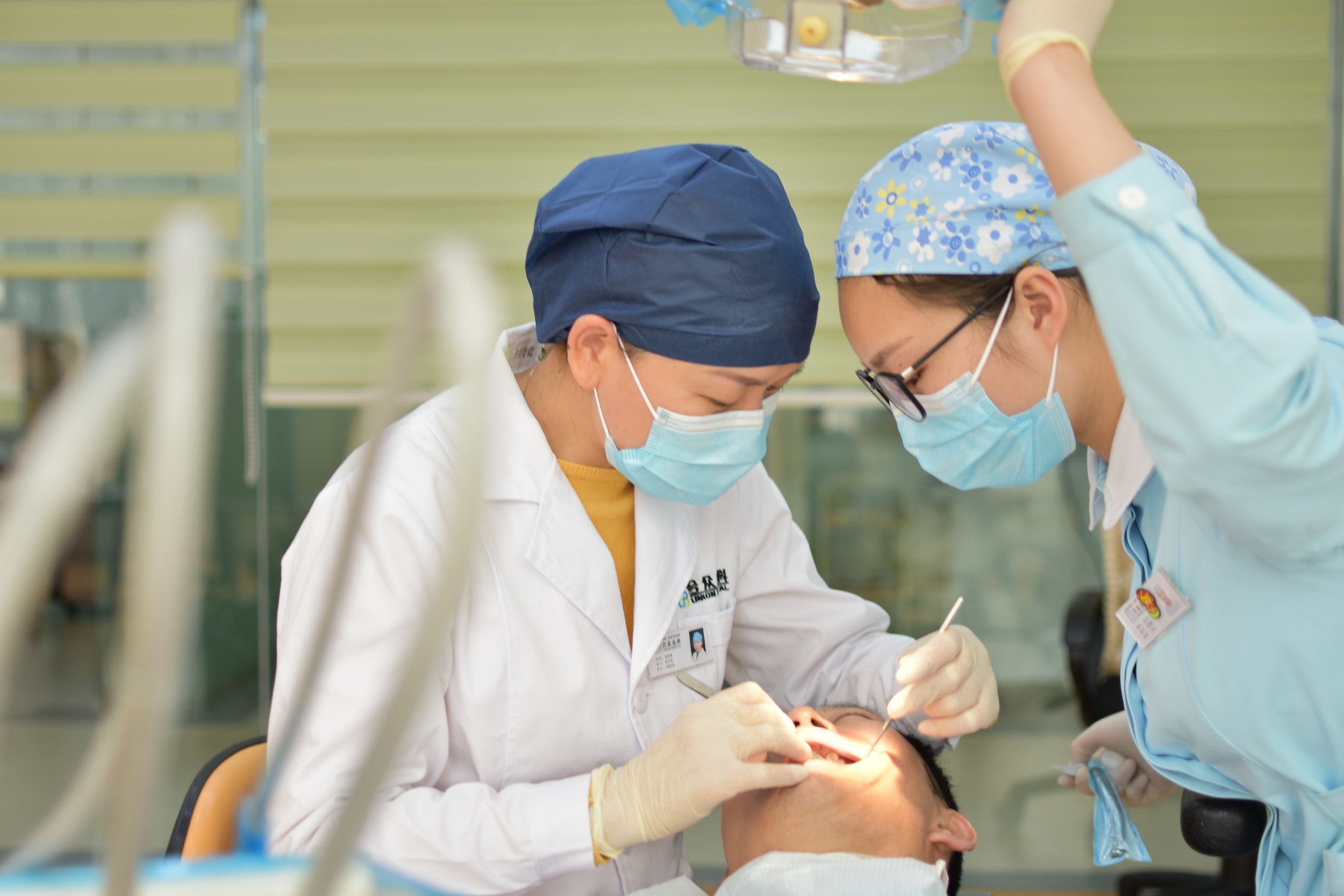
Could the cure for IBD be inside your mouth?
A new collaborative study reveals that inflammatory bowel disease (IBD) may be the latest condition made worse by poor oral health via a clash between the mouth and gut microbiomes.
A new collaborative study from the U-M Medical and Dental Schools reveals that inflammatory bowel disease (IBD), which included Crohn's disease and ulcerative colitis and afflicts an estimated 3 million adults in the U.S., may be the latest condition made worse by poor oral health.
Nobuhiko Kamada, Ph.D., assistant professor of internal medicine in the division of gastroenterology, has been studying the gut microbiome -- the collection of bacteria that are normally present in the gut -- for years. He noted an emerging link in research literature between an overgrowth of foreign bacterial species in the guts of people with IBD -- bacteria that are normally found in the mouth. "I decided to approach the dental school to ask the question, does oral disease affect the severity of gastrointestinal diseases?" says Kamada.
The new mouse study, published in Cell, shows two pathways by which oral bacteria appear to worsen gut inflammation.
In the first pathway, periodontitis, the scientific name for gum disease, leads to an imbalance in the normal healthy microbiome found in the mouth, with an increase of bacteria that cause inflammation. These disease-causing bacteria then travel to the gut.
However, this alone may not be enough to set off gut inflammation. The team demonstrated that oral bacteria may aggravate gut inflammation by looking at microbiome changes in mice with inflamed colons.
"The normal gut microbiome resists colonization by exogenous, or foreign, bacteria," says Kamada. "However, in mice with IBD, the healthy gut bacteria are disrupted, weakening their ability to resist disease-causing bacteria from the mouth." The team found that mice with both oral and gut inflammation had significantly increased weight loss and more disease activity.
In the second proposed pathway, periodontitis activates the immune system's T cells in the mouth. These mouth T cells travel to the gut where they, too, exacerbate inflammation. The gut's normal microbiome is held in balance by the action of inflammatory and regulatory T cells that are fine-tuned to tolerate the resident bacteria. But, says Kamada, oral inflammation generates mostly inflammatory T cells that migrate to the gut, where they, removed from their normal environment, end up triggering the gut's immune response, worsening disease.
"This exacerbation of gut inflammation driven by oral organisms that migrate to the gut has important ramifications in emphasizing to patients the critical need to promote oral health as a part of total body health and wellbeing," says co-author William Giannobile, DDS, the William K and Mary Anne Najjar professor of dentistry and chair of the department of periodontics and oral medicine at the U-M School of Dentistry.
The study has implications for novel treatments for IBD, necessary because "far too many patients still fail medications, leading to reduced quality of life and eventual surgery," says study co-author Shrinivas Bishu, M.D., assistant professor of gastroenterology. "This study importantly implies that clinical outcomes in IBD may be improved by monitoring oral inflammation -- an intriguing concept."
Harnessing pickle power to promote dental health
A research team evaluated 14 different types of Sichuan pickles from southwest China. They extracted 54 different strains of Lactobacilli and found that one, L. plantarum K41, significantly reduced the incidence and severity of cavities.
Can a probiotic derived from Chinese pickles prevent cavities? That seems to be the case, according to a study by researchers at Ben-Gurion University of the Negev and Chengdu University in China.
Pickles are an integral part of the diet in the southwest of China. When fruits and vegetables are fermented, healthy bacteria break down the natural sugars. These bacteria, also known as probiotics, not only preserve foods but offer numerous benefits, including immune system regulation, stabilization of the intestinal microbiota, reducing cholesterol levels, and now inhibiting tooth decay.
According to the study published in Frontiers in Microbiology, a strain of Lactobacilli (L. plantarum K41) found in Sichuan pickles reduced S. mutans by 98.4%. Dental caries (cavities) are caused by Streptococcus mutans, (S. mutans) commonly found in the human oral cavity as plaque and is a significant contributor to tooth decay.
Prof. Ariel Kushmaro of the BGU Avram and Stella Goldstein-Goren Department of Biotechnology Engineering and the Chinese research team evaluated 14 different types of Sichuan pickles from southwest China. They extracted 54 different strains of Lactobacilli and found that one, L. plantarum K41, significantly reduced the incidence and severity of cavities. K41 was also highly tolerant of acids and salts, an additional benefit as a probiotic for harsh oral conditions. It also could have potential commercial value when added to dairy products.
According to Doug Seserman, chief executive officer of American Associates, Ben-Gurion University of the Negev based in New York City, "the researchers currently have no plans to evaluate Jewish deli pickles."

How Seniors Can Prevent Tooth Loss?
Sadly, about 27% of seniors over the age of 65 have no remaining teeth, as per the NIDCR. A study by CW Douglas indicated that in 2000, 35.4 million people in the US wore dentures, and the number will increase to 37.9 million by 2020.
Sadly, about 27% of seniors over the age of 65 have no remaining teeth, as per the NIDCR. A study by CW Douglas indicated that in 2000, 35.4 million people in the US wore dentures, and the number will increase to 37.9 million by 2020. The Silberg Center for Dental Science advises that loss of tooth among seniors has a lot of effects including affecting their social life adversely. Therefore, in your senior years, it is better to use natural and non-invasive ways to strengthen your teeth. Just like there are various ways to ensure that kids brush their teeth, there are specific constraints that seniors should heed to improve their dental health and more importantly, to beat tooth loss. Below are some natural and lifestyle tips that can help you in curbing the loss of teeth as you age.

What to know about dental veneers
Dental veneers are thin, custom-made shells that dentists can place on the front of the teeth to improve their appearance. Veneers can hide stained, chipped, and uneven teeth.
Dental veneers help improve the appearance of a person’s teeth. They may be beneficial for people who want a long-term solution to persistent cosmetic concerns — particularly those that do not respond to other dental treatments, such as teeth whitening, braces, or retainers.
During the placement process, a dentist will typically remove a small amount of enamel, which is the thin protective outer covering of the teeth. Because of this, once the dentist places the veneers, a person cannot remove them or choose not to use them.
Dental veneers, crowns, and implants can all improve the cosmetic appearance of the teeth. However, there are differences between them.
One difference between veneers, crowns, and implants is the area of the tooth that each option covers.
Dental veneers mainly cover the front of a tooth. By contrast, crowns cover the entire tooth, including the front, back, and all the sides. As a result, dentists use crowns to repair broken teeth, including teeth that have little structure left. Crowns can also help strengthen the teeth they cover.
Implants, meanwhile, are bolt-like structures that attach to the jawbone to replace missing teeth.
When necessary, a dentist may use an implant to secure a crown in the mouth. This may be the case if a person is missing a tooth or a tooth is irreparable because it is too badly broken down and requires removal.
Essentially, dentists use crowns to build up teeth that are badly damaged, whereas implants replace missing teeth. Veneers improve the appearance of teeth that are mostly still intact.

What to know about sticking the tongue out
Sticking the tongue out can have many meanings. Children may use it as a sign of silliness, while people might do it to express disgust. A person may also stick their tongue out if they need to concentrate.
Sticking the tongue out can have many meanings. Children may use it as a sign of silliness, while people might do it to express disgust. A person may also stick their tongue out if they need to concentrate.
A baby who sticks their tongue out could be learning about their body, or it may indicate an underlying issue.
Some conditions have symptoms that can cause someone to stick their tongue out. These signs tend to accompany other symptoms, depending on the underlying issue.

Tongue microbes provide window to heart health
Microorganisms on the tongue could help diagnose heart failure, according to new research. 'The tongues of patients with chronic heart failure look totally different to those of healthy people,' said one of the researchers.
Microorganisms on the tongue could help diagnose heart failure, according to research presented today on HFA Discoveries, a scientific platform of the European Society of Cardiology (ESC).1
"The tongues of patients with chronic heart failure look totally different to those of healthy people," said study author Dr. Tianhui Yuan, No.1 Hospital of Guangzhou University of Chinese Medicine. "Normal tongues are pale red with a pale white coating. Heart failure patients have a redder tongue with a yellow coating and the appearance changes as the disease becomes more advanced."
"Our study found that the composition, quantity and dominant bacteria of the tongue coating differ between heart failure patients and healthy people," she said.
Previous research has shown that microorganisms in the tongue coating could distinguish patients with pancreatic cancer from healthy people.2 The authors of that study proposed this as an early marker to diagnose pancreatic cancer. And, since certain bacteria are linked with immunity, they suggested that the microbial imbalance could stimulate inflammation and disease. Inflammation and the immune response also play a role in heart failure.
Materials scientists drill down to vulnerabilities involved in human tooth decay
Researchers have cracked one of the secrets of tooth decay. The materials scientists are the first to identify a small number of impurity atoms in human enamel that may contribute to the material's strength but also make it more soluble. They also are the first to determine the spatial distribution of the impurities with atomic-scale resolution. The discovery could lead to a better understanding of human tooth decay as well as genetic conditions that affect enamel formation.
Researchers have cracked one of the secrets of tooth decay. The materials scientists are the first to identify a small number of impurity atoms in human enamel that may contribute to the material's strength but also make it more soluble. They also are the first to determine the spatial distribution of the impurities with atomic-scale resolution. The discovery could lead to a better understanding of human tooth decay as well as genetic conditions that affect enamel formation.

What Is Beauty?
Sheila Samton is the author-illustrator of many award-winning books for children, as well as a designer and muralist. Her first children’s book, “The World from My Window” (Crown, 1985), also dealt with the subject of beauty. Ms. Samton has two sons and lives in New York City.
This is the “golden ratio,”a.k.a. the “golden mean,”the “golden section,” and the “divine proportion.” It is a proportional relation obtained by dividing a line, or a plane figure, so that the shorter part is to the longer part as the longer part is to the whole. If you take a “golden rectangle” — one whose length-to-breadth is in the golden ratio — and snip out a square, what remains is another, smaller golden rectangle. What makes the golden ratio special to mathematicians is the number of properties it possesses. But what makes it extraordinary to the world is its relation to beauty. The golden ratio has been evoked through the ages to express perfection.
Examples abound. The Egyptians called it the “sacred ratio,” and applied it to the building of the pyramids.
The Greeks used it in the construction of the Parthenon. It is said that daVinci painted the face of the Mona Lisa to fit inside a golden rectangle. People like the architect Corbusier and the composer Bartók have consciously embodied it in their work. And daily in art and science classrooms students discover that geometric forms expressing the golden ratio are simply the most appealing to the eye.

What Does Your Teeth Affect On Photo Day?
Despite the marvels of modern technology, tooth decay is still a prevalent disease on a global scale. Around 64 million Americans have a serious gum condition called periodontitis which is known to lead to other health issues. This equates to around half of the population over the age of 30.
Despite the marvels of modern technology, tooth decay is still a prevalent disease on a global scale. Around 64 million Americans have a serious gum condition called periodontitis which is known to lead to other health issues. This equates to around half of the population over the age of 30. While gum disease has been linked to serious conditions, these aren’t always obvious right away as internal examinations are often required. Sometimes, however, these conditions are serious enough to manifest on the outside.
One of the most surprising areas affected by a tooth disease is the nailbed, particularly those of the toes. Tooth and Nail Syndrome have an ectodermal dysplasia which is often seen in the teeth, nails, hair, and/or skin. Signs to look out for are problems with the scalp or hair and a lack of growth in especially the toenails. The biggest indicator, however, lies in the teeth. Some teeth may be missing which is a condition referred to as hypodontia, or the teeth are seriously malformed.

How to Deal With ‘Keto Breath’ While Following the Keto Diet
Many people who follow the Keto Diet experience an unwanted side effect, which is having unpleasantly fruit-scented “Keto Breath”. While a scientific study published in the BMC Oral Health journal showed that following a low-carb diet, such as the Keto Diet, which includes omega-3 fatty acids, vitamin D and vitamin C, reduces periodontal inflammation and gingivitis by a whopping fifty percent, many people dread Keto Breath. Most want to find practical solutions to this common problem
Many people who follow the Keto Diet experience an unwanted side effect, which is having unpleasantly fruit-scented “Keto Breath”. While a scientific study published in the BMC Oral Health journal showed that following a low-carb diet, such as the Keto Diet, which includes omega-3 fatty acids, vitamin D and vitamin C, reduces periodontal inflammation and gingivitis by a whopping fifty percent, many people dread Keto Breath. Most want to find practical solutions to this common problem
This diet gets major press because a lot of people lose a significant amount of weight while they’re on it. Like the Atkins Diet, the Keto Diet is about eschewing carbs. When carb intake is dramatically curtailed, the body goes into a state called Ketosis, which causes the body to burn stored fat and produce ketones. The ketones are utilized as fuel. Ketosis tends to trigger “Keto Breath”, which is harmless but undesirable.
When you follow this diet, your body won’t handle electrolytes and water the way that it usually does. This may lead to dehydration. This first phase of the diet is a time when many people do get a little bit dehydrated, because their bodies are shifting from converting carbs to energy to converting fats to energy. Dehydration triggers dry mouth and this sets the stage for Keto Breath. Drinking more water during all phases of the diet, and especially during the first phase, is one of the secrets of banishing Keto Breath.