
CJ Henley, DMD, PA / San Marco, Jacksonville, Florida
Post-op instructions and home care.
Our care doesn’t stop when you leave.
Every patient goes home with written post-op instructions for the treatment they had today. All of them are below as printable PDFs, from tooth extraction aftercare to dental implant recovery and new dentures. If you lose your sheet at 9 p.m., this page is where to find it. And after surgery, Dr. Henley calls you himself that evening.
- TonightDr. Henley personally calls after surgery, sedation, and larger cases
- Tomorrowour team checks in by text or phone
- After hoursan on-call phone and text line for our patients
- 23 guidesprintable post-op instructions, reviewed by Dr. Henley
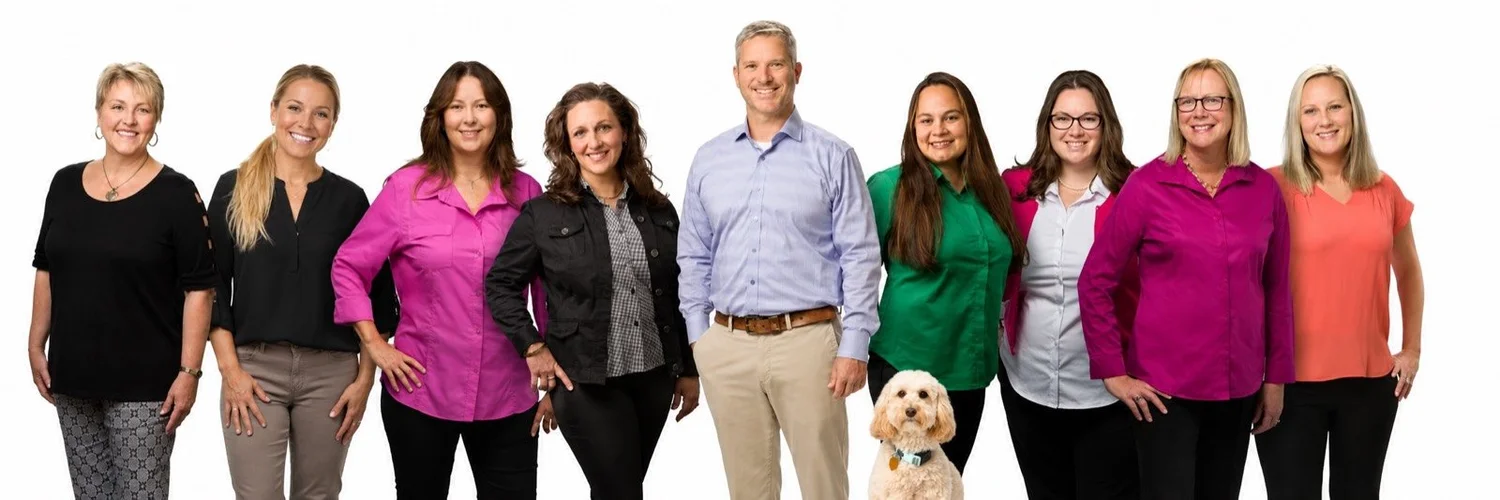
Concierge care, after the appointment
What happens after you go home.
Most dental offices hand you a sheet and say “call if you need anything.” We follow up first. Dr. Henley sees every patient himself, so when he calls after surgery, it’s the dentist who did your treatment and knows exactly what was done.
Printable PDFs
Dental post-op instructions by treatment.
Find the treatment you had and open the PDF. Each one links to a page with more about that treatment. If your instructions from the office differ from these, follow the ones Dr. Henley gave you; they were written for your mouth and your health.
Surgery, extractions and implants
Tooth extraction and oral surgery
Post-op instructions after a tooth extraction or oral surgery.
Bone graft and socket preservation
Aftercare following a bone graft or socket preservation.
Full-arch implants (All-on-X)
Aftercare for fixed full-arch implant teeth (All-on-X).
Fillings, root canals, crowns and veneers
New crown or bridge
Care after a permanent crown or bridge is cemented.
Temporary veneers
Instructions for temporary veneers after preparation.
Dentures and partials
New dentures and partials
Adjusting to and caring for a new complete denture or partial.
Gums, whitening and appliances
Deep cleaning (scaling and root planing)
Aftercare following scaling and root planing.
Night guard
How to wear and clean a night guard or occlusal splint.
Fluoride trays
Custom fluoride carriers for head and neck radiation patients.
Sedation, children and jaw pain
Oral sedation (before and after)
Before-and-after instructions for minimal oral sedation.
Your child’s visit
Instructions for parents after a child's fillings, crowns, or extraction.
Botox for jaw pain
Aftercare following Botox for jaw muscle pain, TMJ, or clenching.
After any procedure
The first 24 hours: what helps and what to skip.
These basics apply to most dental treatment, from a filling to an extraction. Your specific sheet adds what matters for your procedure.
Do
- Wait until the numbness wears off before eating or drinking anything hot. Children need watching so they don’t chew a numb lip; see how long dental numbness lasts.
- After surgery, hold an ice pack on your face, 20 minutes on and 20 off.
- Take pain relievers on schedule for the first day or two if you can take them, before pain builds.
- Start gentle warm salt-water rinses the day after surgery.
- Keep brushing your other teeth. Clean teeth heal better.
- Sleep with your head raised the first night after surgery.
Avoid
- Smoking, vaping, straws, and spitting for 72 hours after an extraction. They are the main causes of dry socket.
- Hard, sticky, or crunchy food on a temporary crown or new work.
- Poking the area with your tongue or fingers.
- Alcohol on the day of surgery or sedation, and with prescription pain medicine.
- Driving after oral sedation, even if you feel fine.
- Hard exercise for the rest of the day after surgery.
Normal healing vs. a problem
When to call us after dental work.
Some soreness, swelling that peaks on day 2 or 3, light oozing on the first day, and short-lived sensitivity are all part of normal healing. A bite that feels “high” after a filling or crown is not something to live with; a quick adjustment fixes it. Call us if things are getting worse instead of better.
bleeding soaks through gauze after an hour of firm pressure, pain or swelling gets worse after day 3, you have a fever over 101°F or a bad taste or pus, numbness hasn’t worn off by the next day, or a temporary crown, healing cap, or stitches come loose. Call 904.398.1549; after hours, our patients can call or text 904.762.5616. For trouble breathing or swallowing, or swelling spreading toward your eye or neck, call 911 or go to an emergency department. See emergency dental care.
Between visits
Daily home care that protects your dental work.
Brush twice a day with fluoride toothpaste and clean between your teeth once a day with floss, a water flosser, or small interdental brushes. Crowns, implants, veneers, and bonding last longest in a healthy mouth.
Choosing a toothpaste
Fluoride matters more than flavor or whitening claims. If you have veneers or bonding, pick a non-abrasive paste. Our toothpaste guide compares the options.
Mouthwash doesn’t replace brushing
A rinse can help with a specific problem, but it can’t remove plaque the way a brush and floss do. Ask which kind is right for you, especially if you have dry mouth. See the ADA’s overview of mouthwash.
Bad breath or bleeding that won’t go away
Persistent bad breath or bleeding gums are worth an exam rather than masking them. They often point to gum disease, which a deep cleaning can treat.
Protect your work at night
If you grind or clench, a custom night guard protects crowns, veneers, and implants. Read about teeth grinding, and bring your guard to every checkup.
Keep your checkups
At your exams and cleanings we check the edges of crowns and fillings, the gums around implants, and the fit of dentures, and catch small problems while they’re still small.
After head and neck radiation
Daily fluoride trays protect teeth for life after radiation. See fluoride trays for radiation caries and dental care during cancer treatment.
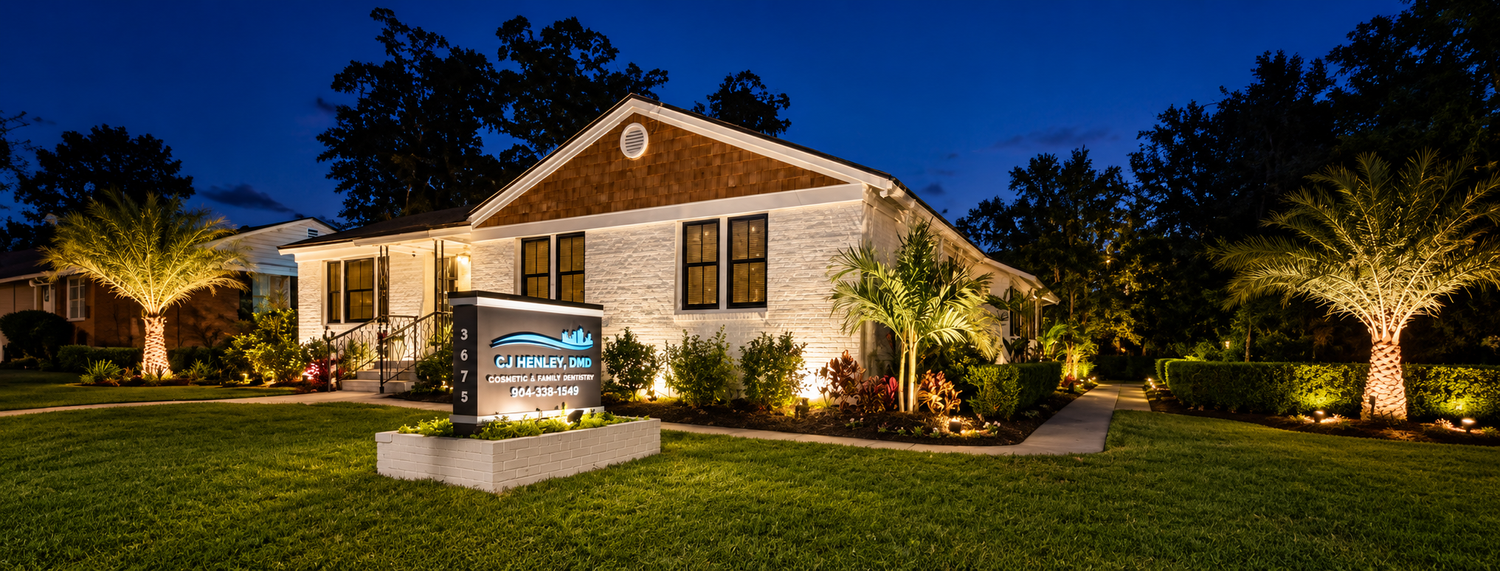
Follow-up care near you
Post-op follow-up in San Marco, Jacksonville.
Dr. CJ Henley places and restores implants, makes dentures, and does veneers, crowns, and family dentistry in one office, so the dentist who treats you is the one who follows up. If healing needs a look, we see you here.
Our office on Hendricks Avenue is easy to reach from San Marco, Southbank, San Jose, Riverside, Avondale, Ortega, St. Nicholas, Downtown, and Mandarin. Patients with complex medical histories, including head and neck cancer survivors, are welcome; read about our complex and medically involved care.
See what patients say in our reviews, or learn more about our San Marco dental office.
Frequently asked questions
Questions about recovery after dental work.
How long does pain last after a tooth extraction?
The first two days are usually the most uncomfortable, and most people feel clearly better by day 3. Swelling peaks around day 2 or 3. Pain that gets worse around day 3 to 5 instead of better can be a dry socket, so call us; a soothing dressing helps quickly. Full gum healing takes a few weeks. See our tooth extraction page.
When can I eat after a filling?
As soon as the numbness wears off, usually in 2 to 4 hours. Tooth-colored fillings are fully hardened before you leave. Waiting protects you from biting your cheek or tongue or burning yourself. Mild sensitivity to cold for a few days is normal. If your bite feels high, call us for a quick adjustment. More on tooth pain after a filling.
What should I do if my temporary crown falls off?
Keep the temporary, put a little Vaseline or denture adhesive inside it, and gently slide it back on. Then call us so we can re-cement it. Don’t leave the tooth uncovered for days, because the tooth can shift or become sensitive. Avoid sticky and hard foods on that side until your final crown is placed.
When can I smoke after a tooth extraction or implant?
Wait at least 72 hours, and longer is better. The suction and heat from smoking or vaping can pull out the blood clot and cause a dry socket, and smoking is one of the biggest risks for a new dental implant. If you have been thinking about quitting, this is a good time.
What can I eat after dental implant surgery?
Cool, soft foods on the first day, such as yogurt, smoothies with a spoon, eggs, and mashed potatoes. Chew on the other side and keep food off the implant until Dr. Henley says it’s ready. After full-arch implants, stay with fork-tender foods for about 3 months while the implants bond to the bone.
Is swelling normal after oral surgery?
Yes. Swelling usually peaks on day 2 or 3 and then fades. Ice on the outside of the face for the first 24 hours and sleeping with your head raised help. Swelling that keeps growing after day 3, or comes with fever, needs a call. Swelling that spreads toward your eye or neck, or makes it hard to breathe or swallow, needs an emergency room.
How long should I leave an immediate denture in?
Leave it in for the first 24 hours, including the first night, and don’t take it out until your next-day visit. It acts like a bandage over the sockets, and swelling can keep it from going back in. After that visit you’ll take it out to clean it and at night. Read more about dentures.
Can I exercise after dental surgery?
Rest for the rest of the day after an extraction, implant, or graft, and skip hard exercise and heavy lifting for 2 to 3 days. Raising your heart rate can restart bleeding and add to swelling. Walking is fine. After a filling, crown, or cleaning, you can return to normal activity right away.
Who do I call after hours if something goes wrong?
Our patients can call or text Dr. Henley’s on-call line at 904.762.5616. During office hours, call 904.398.1549. For trouble breathing or swallowing, or swelling spreading toward the eye or neck, call 911. New to our office with a dental emergency? Call during office hours; see emergency dental care.
Are post-op instructions different if I take blood thinners?
Sometimes. We plan surgery around blood thinners with your prescribing physician, and you may need longer gauze pressure or extra steps to control bleeding. Don’t stop a blood thinner on your own. Bone medications and cancer treatment can also change your instructions. Read about our complex and medically involved care.
Where can I get post-op follow-up care in Jacksonville?
CJ Henley, DMD, PA sees patients for post-op checks and follow-up care at 3675 Hendricks Avenue, Jacksonville, FL 32207, in San Marco. Call 904.398.1549 during office hours. Our existing patients can reach the on-call line at 904.762.5616 after hours.
More reading: Dry socket · Dental numbness · Dental FAQ
Your next step
Questions about your recovery? Call us.
If something doesn’t feel right, please don’t wait and wonder. Call us and we’ll talk it through or get you in. If a tooth has broken or you have new pain or swelling, see emergency dental care.
CJ Henley, DMD, PA3675 Hendricks Avenue
Jacksonville, FL 32207
Prefer a nonurgent text? 904.762.5616 is our practice on-call and text line. Please don’t send sensitive health information by text, and call for anything urgent.