


Was Paul Revere a Dentist? The First American Forensic Dental Identification
Paul Revere inadvertently became America’s first forensic dentist when he was given the gruesome task of identifying the body of Dr. Joseph Warren, the man who sent him on his famous “midnight ride.” Warren was struck down by a British bullet during the Battle of Bunker Hill on June 17, 1775 and his corpse was buried in a mass grave. When Warren’s family unearthed the grave nine months later, visual identification of the bodies inside was near impossible because they had decomposed. So Revere, the man who crafted the slain officer’s false teeth, was asked to locate Warren’s remains by finding the ivory dentures he crafted and wired to Warren’s jaw.
Read the full article at Strange Remains
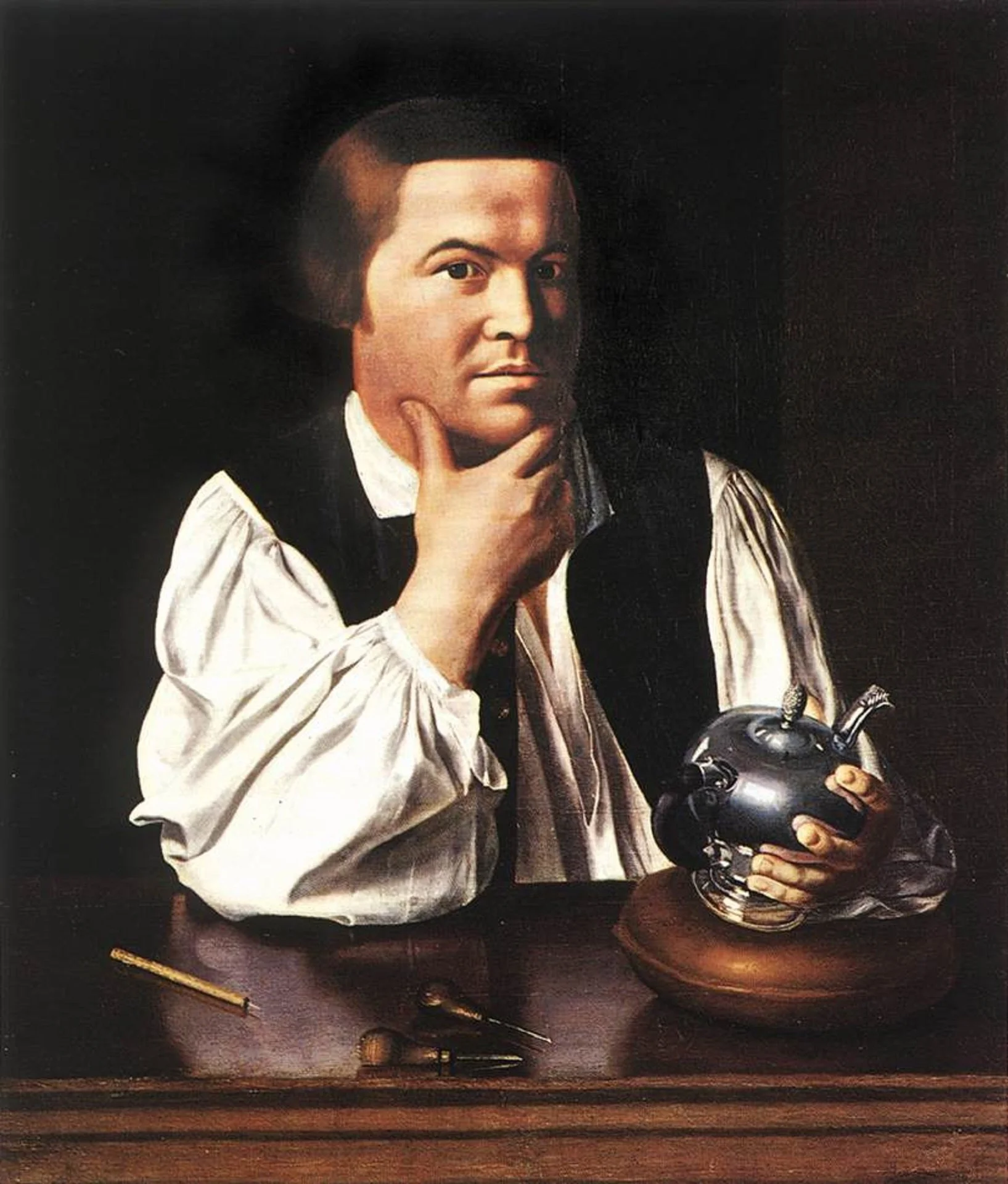
Paul Revere, silversmith and patriot, is widely regarded as America’s first forensic dentist after identifying Dr. Joseph Warren through dental prosthetics following the Battle of Bunker Hill.
Yes. Paul Revere, the Boston silversmith remembered for his midnight ride, also made and fitted artificial teeth. In 1776 he identified the remains of his friend Dr. Joseph Warren by recognizing a dental bridge he had made for him. Historians often describe it as the first forensic dental identification in America.
How did Paul Revere become a dentist?
Revere was a skilled metalworker, and in colonial Boston that made dental work a natural sideline. He learned to make and fit false teeth from John Baker, a surgeon-dentist working in Boston. When Baker left for New York, Revere advertised in 1768 that he could care for Baker's work, and he placed dental advertisements again in 1770. His notices said his artificial teeth looked natural and let people speak normally. [1] [2]
His dentistry was simple by today's standards. He carved replacement teeth from ivory or animal tooth and fastened them to neighboring natural teeth with wire. He did not do fillings or surgery as a modern dentist would.
How did Revere identify Joseph Warren?
Dr. Joseph Warren was a Boston physician and a leader of the patriot cause. Shortly before the war began, Revere made him a small bridge that replaced his upper left canine and first premolar with ivory teeth held in place by wire. [1]
Warren was killed at the Battle of Bunker Hill on June 17, 1775, and was buried with other soldiers in a shallow grave. After the British left Boston in March 1776, Warren's family and friends went looking for his body. By then, about nine months after the battle, his face could not be recognized. Revere examined the remains and found the bridge he had made. Warren was reburied with honors in April 1776. [1] [3]
Why does this story matter to dentistry today?
Teeth and dental work are among the most durable parts of the body. They survive heat, time and trauma better than most tissues, and every mouth is different. That is the basis of forensic odontology, the use of dental evidence to identify people.
Modern forensic dentists compare dental records, X-rays, fillings, crowns and implants with remains. They help identify victims of disasters, accidents and crimes. The tools are far better than Revere's memory of his own handiwork, but the idea is the same: the details of a person's teeth and dental work are individual.
It is also a reminder of why careful records matter. In our office, photographs, X-rays and, when they are clinically needed, 3D images document your teeth so we can see how they change over time.
Sources
National Museum of Health and Medicine. Paul Revere and Joseph Warren: an early case of forensic identification. Retrieved October 6, 2026.
Paul Revere Memorial Association. Revere House Radio: Paul Revere and dentistry. Retrieved October 6, 2026.
History.com. How Paul Revere used dentistry to identify a fallen patriot.
About the author. CJ Henley, DMD, is a general dentist in Jacksonville, Florida. Meet Dr. Henley.
CJ Henley, DMD, PA · 3675 Hendricks Avenue, Jacksonville, FL 32207 · 904-398-1549
Updated October 2026.

A Parent's Guide to Early Childhood Dental Problems
In order to help your child have a healthy, a happy smile for their entire life, start thinking about dental care at an early age. You can help keep your child’s teeth healthy by practicing good dental hygiene and visiting dentist no later than your child’s first birthday. Check out the infographic for more information.

The most common dental problem in young children is tooth decay, and it can start as soon as the first tooth appears. Brush twice a day with a rice-grain smear of fluoride toothpaste from the first tooth, put only milk, formula or water in bottles, don't let your baby fall asleep with a bottle, and book the first dental visit when the first tooth comes in and no later than the first birthday. Those habits prevent most early problems.
When should a child first see a dentist?
The American Academy of Pediatric Dentistry and the American Dental Association recommend a first dental visit when the first tooth appears and no later than age one. Most of that first visit is prevention: a quick look at the teeth and gums, a check for early decay, and practical advice on brushing, feeding and fluoride. Starting early also lets your child get used to dental visits before anything needs treating.
What does early tooth decay look like?
Early decay often starts as chalky white spots or lines on the front teeth near the gums. Left alone, those areas can turn yellow or brown and break down into cavities. Lift your child's upper lip once a month and look. If you see white or brown spots, book a dental visit.
Baby teeth matter even though they fall out. They hold space for adult teeth, help with chewing and speech, and decay in them can cause pain and infection.
How much fluoride toothpaste should a young child use?
From the first tooth until age three: a smear about the size of a grain of rice.
From three to six: no more than a pea-sized amount.
Brush twice a day, help your child brush until they can do it well on their own, and teach them to spit out the toothpaste. Before teeth arrive, wipe your baby's gums with a clean, damp cloth after feedings. Jacksonville's JEA water contains naturally occurring fluoride, but toothpaste is still recommended. Our article on fluoride toothpaste and Jacksonville's water explains why.
What bottle and sippy cup habits protect teeth?
Bottles: only formula, milk or breast milk. No juice, soda or sweetened drinks.
Bedtime: finish the bottle before your child falls asleep. A bottle in bed keeps milk sugars on the teeth all night.
Not a pacifier: don't let your child carry a bottle around to sip from all day.
Cups: encourage drinking from a cup by the first birthday.
Sippy cups: treat them like a bottle. Fill them with water between meals. A cup of juice or milk sipped all day exposes teeth to sugar for hours.
Pacifiers: keep them clean, and never dip them in sugar or honey.
Cavity-causing bacteria can pass from a caregiver's mouth to a baby's. Avoid sharing spoons or cleaning a pacifier in your own mouth.
What other problems should parents mention at a dental visit?
Thumb or pacifier habits that continue as permanent teeth get closer
Falls and bumps to the front teeth, which are common in toddlers. Call a dentist after any injury that loosens, chips or pushes a tooth out of place. Don't try to put a knocked-out baby tooth back in.
Teething discomfort that seems unusual or comes with fever or other symptoms. Ask your pediatrician about those.
How can snacks and drinks protect a child's teeth?
How often a child has sugar matters as much as how much. Keep sweets to mealtimes and make water the everyday drink. Our article on sugary snacks and kids' teeth has six practical ideas.
Where can parents find care in Jacksonville?
Our office is at 3675 Hendricks Avenue, near San Marco. To ask whether a visit with us fits your child's age and needs, contact the office at 904-398-1549, or see a pediatric dentist. When your child is ready for a visit, our guide on how to prepare your child for a dental visit can help.
Sources
American Dental Association, MouthHealthy. Baby bottle tooth decay. Retrieved 2026-10-06.
American Academy of Pediatric Dentistry. Perinatal and infant oral health care. Reference Manual of Pediatric Dentistry 2026-2027, revised 2025. Retrieved 2026-10-06.
American Dental Association, MouthHealthy. Fluoride. Cited for toothpaste amounts by age.
About the author. CJ Henley, DMD, is a general dentist in Jacksonville whose practice focuses on cosmetic and restorative dentistry, dental implants and dental care around head and neck cancer. Meet Dr. Henley.
CJ Henley, DMD, PA · 3675 Hendricks Avenue, Jacksonville, FL 32207 · 904-398-1549
Updated October 2026.