
CJ Henley, DMD, PA / San Marco, Jacksonville, Florida
General and family dentistry in Jacksonville.
Everyday care for children, teens, and adults.
General and family dentistry at our San Marco office covers the care most families need over a lifetime: children’s dental care, fillings, root canal treatment, tooth extractions, gum disease treatment, TMJ/TMD care, and bite adjustment. We see children, teens, and adults at 3675 Hendricks Avenue, explain what we find in plain language, and coordinate with specialty offices when a case calls for it.
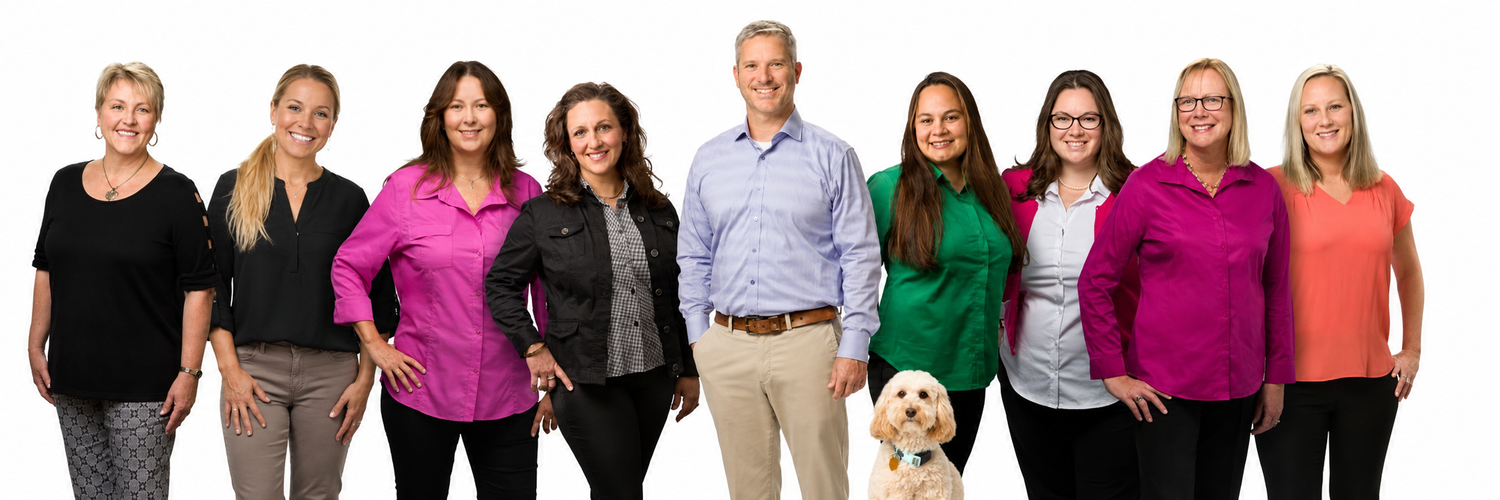
Family dentistry in San Marco
One dental home for the whole family.
We provide family dentistry for children, teens, and adults, with an emphasis on prevention, lasting relationships, and clear communication.
Most of what keeps teeth healthy is ordinary: regular exams and cleanings, good home care, and small problems treated early. When one office cares for parents and children over many years, we know each person’s history and can spot changes sooner.
Every new patient starts with a comprehensive dental exam. Recommendations for any of the treatments below come from that exam, from your medical history, and from a conversation about your goals. We explain what is urgent, what can be watched, and the reasonable alternatives, and you decide what happens next.
Your health history matters in everyday dentistry too. Bone medications, blood thinners, diabetes, GLP-1 medications, and past head and neck radiation can all change how we plan a filling, an extraction, or gum treatment. Patients with more involved histories can read about our complex and medically involved care.
- Children’s dental carePrevention, education, and a welcoming first experience
- Dental fillingsRepairing cavities while preserving healthy tooth
- Root canalsSaving a natural tooth when the nerve is inflamed or infected
- Tooth extractionsWhen removal is the right treatment
- Gum disease treatmentMeasuring, treating, and maintaining gum health
- TMJ/TMD treatmentJaw pain, stiffness, and clicking
- Bite adjustmentOcclusal adjustment and equilibration, when indicated
- Something hurts now?Emergency dental care
Children’s dental care
Children’s dental care built on prevention and a good experience.
Our San Marco office provides children’s dental care focused on prevention, education, and a welcoming experience. We explain findings to parents, discuss home care and treatment needs, and recommend pediatric specialty care when appropriate.
We see children as part of the families we care for. A child’s visit is a chance to catch problems early, to build habits that last, and to make the dental office a place a child is comfortable coming back to. We usually begin seeing children around age 2 to 3.
What a children’s visit covers
- A gentle look at the teeth, gums, and bite, and at how the teeth and jaws are developing.
- Checking for early decay. X-rays are taken only when they will answer a real question.
- Brushing and flossing coaching for the child and the parent, including how much fluoride toothpaste to use. Young children should be supervised while brushing and should not swallow toothpaste.
- A conversation about snacks, drinks, and habits that affect the teeth.
- Time for parents’ questions, with findings and any treatment needs explained clearly.
Helping children feel at ease
We explain each step before we do it and go at the child’s pace. Children often connect right away with Snapper, our dental therapy dog, who visits when scheduling allows and a visit is welcome. If your child is numbed for treatment, watch closely afterward so they do not bite their lip or cheek. Our page on how long dental numbness lasts has tips for parents.
Teens
As children become teenagers, we keep watching for decay, gum changes, grinding, and developing wisdom teeth, and we make custom sports mouthguards for children and teens who play contact sports. Grinding is common in children and adolescents; see tooth grinding and bruxism.
When we recommend a pediatric dentist
Some children are better served by a pediatric dentist, who has additional training in treating children. We may recommend pediatric specialty care when a young child needs extensive treatment, when treatment would be hard for a child to manage comfortably in our setting, or when a child has special health care needs. We explain why and help with the referral. For toothpaste choices by age, see our toothpaste guide.
Dental fillings
Dental fillings that repair cavities and keep healthy tooth structure.
We provide dental fillings in Jacksonville to repair cavities and selected tooth damage. Treatment is planned to preserve healthy tooth structure, restore function, and create a comfortable bite, with materials chosen for your individual needs.
A filling repairs a tooth that has been damaged by decay or by a small chip or worn area. We remove the decayed or weakened part, keep as much sound tooth as possible, and rebuild the tooth so it chews normally and meets the opposing teeth comfortably.
Signs you may need a filling
- Sensitivity to sweets, cold, or biting on one tooth.
- Food catching in the same spot, or floss that shreds.
- A rough edge, a dark spot, or a hole you can feel with your tongue.
- An old filling that is cracked, chipped, or loose.
Many cavities cause no symptoms at all until they are large, which is why they are often found at a routine exam.
What to expect
Most fillings are done with local anesthetic. You may feel pressure or vibration, but you should not feel pain; tell us right away if you do. After the tooth is repaired, we check your bite with marking paper and adjust the filling so the tooth does not hit first. Numbness usually wears off within a few hours.
Mild sensitivity after a filling is common and often settles within one to two weeks. A bite that feels high, sharp pain when chewing, or throbbing pain is different and deserves a call. Our guide to tooth pain after a filling explains what is normal and when to call.
Materials, and when a filling is not enough
The material depends on the size and location of the repair, your bite, and your preferences. We place tooth-colored composite fillings and, in the right situations, amalgam (silver) fillings, which can still be a durable choice for some back teeth. We explain the trade-offs so you can choose. Intact silver fillings do not need to be replaced just because of their color or material. When a cavity or crack has weakened too much of a tooth, a crown may protect it better than a large filling. When decay reaches the nerve, the tooth may need root canal treatment.
Root canal treatment
Root canal treatment to help save a natural tooth.
We provide root canal treatment for appropriate cases at our Jacksonville office to help preserve natural teeth. We evaluate the tooth, explain treatment and restoration needs, and coordinate endodontic referral when the complexity calls for it.
Root canal treatment removes inflamed or infected tissue (the pulp) from inside a tooth, cleans and disinfects the canals in the roots, and seals them. It treats the inside of the tooth so the tooth itself can be kept.
Signs a tooth may need a root canal
- Pain with hot or cold that lingers after the drink or food is gone.
- Throbbing pain that starts on its own or wakes you at night.
- Pain when you bite down, or a tooth that feels tender to touch.
- Swelling, or a pimple-like bump on the gum near a tooth.
- A tooth that has darkened after an injury.
Sometimes there are no symptoms, and the problem shows up on an X-ray.
How we evaluate the tooth
We review your symptoms, test how the tooth responds, and take the X-rays needed to see the roots and surrounding bone. When a standard X-ray cannot answer the question, 3D imaging may help. We also ask whether the tooth can be restored afterward: enough sound tooth, healthy gums, and good bone support. If the tooth cannot be predictably saved, we will say so and talk about extraction and replacement instead.
What to expect
The tooth is numbed and kept clean and dry while the canals are cleaned, shaped, and filled. The tooth may be tender for a few days afterward. Back teeth usually need a crown after a root canal to protect them from fracture, and we plan that restoration as part of the treatment.
When we refer to an endodontist
An endodontist is a dentist with advanced training in root canal treatment. We refer most molar root canals to an endodontist, and we coordinate a referral for other teeth when a tooth has very curved, narrowed, or hard-to-find canals, when a previous root canal needs to be redone, when symptoms do not match the findings, or when a surgical approach may be needed.
Tooth extractions
Tooth extractions when removal is the right treatment.
We provide tooth extractions in Jacksonville when removal is the appropriate treatment. We review your medical history, explain alternatives and aftercare, and discuss tooth replacement when needed, with specialty referral for more complex situations.
Keeping a natural tooth is usually the first goal. Removal may be the right choice when a tooth is broken beyond repair, too decayed to restore, loosened by advanced gum disease, or the source of an infection that cannot be treated another way. Before head and neck radiation, some teeth with a poor outlook are removed in advance; see dental care before head and neck cancer treatment.
Your medical history comes first
An extraction involves the jawbone, so we review your health and medications before recommending one. Tell us if any of these apply:
- Bone-modifying medications for osteoporosis or cancer, such as alendronate (Fosamax) or denosumab (Prolia). These carry a small risk of osteonecrosis of the jaw after extractions. See osteoporosis medications and your dental health.
- Past radiation to the head and neck, which raises the risk of osteoradionecrosis when a tooth is removed from irradiated bone. See radiation-induced trismus and our complex and medically involved care.
- Blood thinners. Do not stop them on your own; we coordinate with your prescribing physician when needed.
- GLP-1 medications such as semaglutide or tirzepatide, which can affect nutrition and healing. See GLP-1 medications and your teeth.
Alternatives and replacement
Before removing a tooth, we explain the alternatives, which may include a root canal and crown, gum treatment, or monitoring. If the tooth will be missing, we talk through replacement options such as a dental implant, a bridge, or a removable replacement, and when each makes sense. Sometimes no replacement is needed. When an implant is planned, we sometimes place a bone graft at the time of the extraction to help preserve the site.
Aftercare
You will leave with written instructions; our post-operative instructions include oral surgery aftercare. Protecting the blood clot in the first days matters, so follow the instructions about rinsing, spitting, straws, and smoking. Call us for bleeding that will not stop with pressure, pain that gets worse after the first few days, increasing swelling, or fever.
When we refer
We remove some wisdom teeth in our office. We refer more complex situations to an oral and maxillofacial surgeon, such as some impacted wisdom teeth or teeth with roots close to a nerve or the sinus.
Gum disease treatment
Gum disease treatment, from gingivitis to periodontal care.
Our Jacksonville dental team evaluates gum health and plans gum disease care around your needs. We explain findings, discuss treatment and home care, and recommend follow-up or periodontal referral based on the condition of your gums and supporting tissues.
Gum disease is inflammation and infection of the gums and the bone that supports the teeth. In its early form, gingivitis, the gums are red and bleed easily, and the damage can be reversed. In periodontitis, the gums pull away from the teeth and supporting bone is lost. It is common: in a national survey, about 42% of U.S. adults age 30 and older had periodontitis.
Signs of gum disease
- Gums that bleed when you brush or floss.
- Red, swollen, or tender gums.
- Bad breath or a bad taste that does not go away.
- Gums that have pulled back, making teeth look longer.
- Teeth that feel loose or a bite that seems to be changing.
Gum disease is often painless until it is advanced, so measurements matter more than symptoms.
How we evaluate your gums
At every comprehensive exam we measure and record the pockets around every tooth, note bleeding and recession, and use X-rays when needed to look at the bone. Smoking, diabetes, dry mouth, and some medications raise the risk, so we review those too. Bleeding alone does not mean you need a deep cleaning; ask us to show you the findings behind any recommendation.
Treatment and home care
Gingivitis is usually managed with a professional cleaning and better daily cleaning at home. Periodontitis may need scaling and root planing, which removes bacterial deposits below the gumline, followed by a reassessment and a maintenance schedule that is often more frequent than twice a year. Daily home care makes the difference between visits; see our home care instructions.
When we refer to a periodontist
A periodontist has advanced training in treating the gums and supporting bone. We recommend a periodontal referral when there is advanced bone loss, when pockets do not respond to treatment, or when gum surgery may help.
TMJ/TMD treatment
TMJ and TMD care for jaw pain and stiffness, starting conservatively.
We evaluate jaw pain, jaw stiffness, and other TMJ/TMD concerns in Jacksonville. We review your symptoms and medical history, discuss conservative care, and coordinate referral when needed, with treatment guided by your findings and individual needs.
TMD, or temporomandibular disorders, is a group of conditions that cause pain or problems in the jaw joints (the TMJs) and the muscles that move the jaw. People often say “TMJ” to mean the problem, though the TMJ is the joint itself.
Common symptoms
- Pain or tenderness in the jaw, face, or in front of the ear.
- Jaw stiffness, or trouble opening wide.
- Clicking, popping, or a jaw that catches or locks.
- Headaches at the temples or tired jaw muscles, especially in the morning.
- A bite that suddenly feels different.
How we evaluate jaw pain
We ask when the symptoms started and what makes them better or worse, and we review your medical history, sleep, stress, and any injury. The exam includes the jaw muscles and joints, how far and how smoothly your jaw opens, your bite, and signs of clenching or grinding. Imaging is used when it will change the plan. Tooth problems can feel like jaw pain, and jaw problems can feel like a toothache, so we look at both.
Conservative care first
Many TMD symptoms improve with simple, reversible care. Depending on your findings, that may include softer foods for a while, avoiding gum chewing and very wide opening, warm or cold compresses, gentle jaw exercises as directed, over-the-counter pain relievers when they are safe for you, and noticing daytime clenching. When grinding or clenching is part of the picture, a custom night guard can protect the teeth and reduce strain.
When symptoms need more
When conservative care is not enough, we may recommend a custom occlusal splint, prescribe medication when it is safe and appropriate for you, or offer botulinum toxin (Botox) injections for selected cases of jaw muscle pain. Botox is not FDA-approved for TMD, so we discuss the evidence, expected benefits, and limits before recommending it. Permanent changes to the bite are not a first step for TMD.
When we refer
We coordinate referral when pain persists despite conservative care, when the jaw locks, after a jaw injury, or when symptoms suggest something other than TMD. Depending on the problem, that may be an orofacial pain clinician, an oral and maxillofacial surgeon, a physician, or a physical therapist. Chronic facial pain is also part of our oral medicine and diagnosis work. Reduced opening after head and neck radiation is a different condition; see radiation-induced trismus.
Bite adjustment and occlusal equilibration
Bite adjustment, only when a specific problem calls for it.
We evaluate how your teeth and dental restorations meet before recommending bite adjustment in Jacksonville. When indicated, selective adjustment addresses specific contact problems, with a discussion of findings, alternatives, and treatment limits.
A bite adjustment, also called an occlusal adjustment, means selectively reshaping small areas of a tooth or a dental restoration so the teeth meet more evenly. Occlusal equilibration is a more comprehensive, planned version of the same idea, done across several teeth.
When a bite adjustment may help
- A new filling or crown that feels high, or a tooth that hits first and becomes sore. See tooth pain after a filling.
- A restoration that keeps chipping because of a heavy contact.
- A specific contact that interferes when you slide your teeth side to side.
- Planning before crowns, veneers, or larger restorative work, so new restorations meet well.
How we evaluate your bite
We start with what you feel: which tooth, when, and whether it hurts as you bite or as you let go. We then use marking paper to see exactly where teeth touch, check how your jaw moves, and look for cracks or problems inside the tooth that can feel like a bite problem. For larger changes, we may plan with models or digital scans before touching a tooth.
Limits and alternatives
Reshaping enamel is permanent, so we keep adjustments as conservative as possible. When a full occlusal equilibration is needed, we plan it in advance and explain each step. A bite adjustment is not a routine treatment for TMD or grinding; research does not support adjusting the bite to treat or prevent TMD. Depending on the problem, the better answer may be a night guard, repairing or replacing a restoration, or tooth movement with clear aligners.
When it cannot wait
Pain, swelling, or a broken tooth.
Call us promptly for severe tooth pain, new swelling, a broken tooth or filling, a knocked-out permanent tooth, or a dental injury. Call 904.398.1549. When you are in pain, we try to see you the same day when we can. Trouble breathing or swallowing, rapidly spreading swelling, or swelling near the eye needs emergency care: call 911 or go to an emergency department.
See emergency dental care for what to do while you wait to be seen.
Before you schedule
Questions about general and family dentistry.
What is general and family dentistry?
General and family dentistry is the everyday dental care people need through every stage of life: exams, cleanings, fillings, root canal treatment, extractions, gum care, and care for jaw and bite problems. A family dental practice sees children, teens, and adults, with an emphasis on prevention and on knowing each patient over time.
Do you see children?
Yes. We see children and families at our San Marco office. Children’s visits focus on prevention, education, and a welcoming experience, and we explain findings and home care to parents. When a child would be better served by a pediatric dentist, we recommend pediatric specialty care and help with the referral.
Can a general dentist do a root canal?
Yes. General dentists can provide root canal treatment, and we do so for appropriate cases at our office. We evaluate the tooth first, explain the treatment and the crown or filling it will need afterward, and refer to an endodontist when the tooth is more complex, such as very curved or narrowed canals or a previous root canal that needs to be redone.
Is it better to have a root canal or pull the tooth?
It depends on the tooth. If a tooth can be predictably restored, with enough sound structure and healthy gum and bone support, saving it with a root canal and crown is often the better long-term choice. If it cannot, removal and replacement may be wiser. We explain the findings, the alternatives, and what each option involves so you can decide.
Do you do tooth extractions in the office?
Yes, when removal is the appropriate treatment. We review your medical history and medications, explain the alternatives and aftercare, and discuss replacing the tooth when needed. More complex situations, such as some impacted wisdom teeth, are referred to an oral and maxillofacial surgeon.
Can I have a tooth pulled if I take osteoporosis medication or had head and neck radiation?
Often, yes, but it needs careful planning. Bone-modifying medications such as alendronate or denosumab carry a small risk of osteonecrosis of the jaw after extractions, and past radiation to the jaw raises the risk of osteoradionecrosis. Tell us about current and past use and treatment dates. Do not stop a medication on your own; we coordinate with your physicians when needed.
How do I know if I have gum disease?
Bleeding gums, persistent bad breath, gums that have pulled back, and loose teeth are common signs, but gum disease is often painless. The reliable way to know is a periodontal evaluation: we measure and record the pockets around every tooth at each comprehensive exam and use X-rays when needed to check the bone.
Can a dentist treat TMJ?
Yes. Dentists commonly evaluate jaw pain, stiffness, and clicking, because the teeth, bite, jaw muscles, and jaw joints work together. We review your symptoms and history, start with conservative and reversible care such as self-care and, when appropriate, a night guard, and coordinate referral when symptoms persist or need another kind of care.
Why does my new filling feel high, and can the bite be adjusted?
A new filling or crown can touch the opposing tooth before the others, which makes biting sore. We check where the teeth meet and reshape the high spot when that is the cause. Sharp pain can also come from a crack or a problem inside the tooth, so pain that continues after an adjustment deserves another look.
Do you take dental insurance?
We are an out-of-network practice. We can help you understand how to use your benefits. You are responsible for amounts your plan does not pay. Call our team with your plan details before scheduling to ask about fees and payment arrangements.
More questions? Read our dental FAQ. · New-patient forms · Meet Snapper
Your next step
Start with an exam and a real conversation.
Whether you need a dental home for your family or have a tooth that has started to bother you, the first step is the same: a careful exam, then a plain-language talk about your options.
CJ Henley, DMD, PA3675 Hendricks Avenue
Jacksonville, FL 32207
Prefer a nonurgent text? 904.762.5616 is our practice on-call and text line. Please don’t send sensitive health information by text, and call for anything urgent.
Related pages
Sources
- Eke PI, et al. Periodontitis in US adults: National Health and Nutrition Examination Survey 2009-2014. J Am Dent Assoc. 2018;149(7):576-588.
- National Institute of Dental and Craniofacial Research. TMD (temporomandibular disorders).
- Koh H, Robinson PG. Occlusal adjustment for treating and preventing temporomandibular joint disorders. Cochrane Database Syst Rev. 2003;(1):CD003812.
- Ruggiero SL, et al. American Association of Oral and Maxillofacial Surgeons’ position paper on medication-related osteonecrosis of the jaws, 2022 update. J Oral Maxillofac Surg. 2022;80(5):920-943.
- National Institute of Dental and Craniofacial Research. Gum (periodontal) disease.