

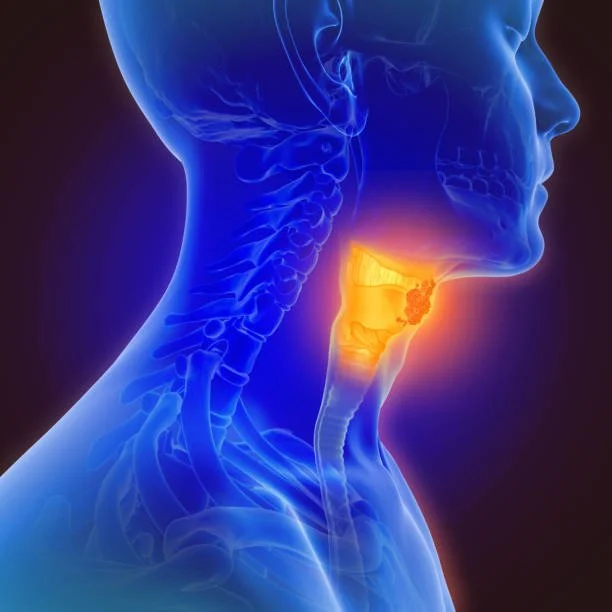
The 7 Warning Signs of Mouth Cancer
Oral cancer often develops quietly, appearing as nothing more than a stubborn sore or a faint patch of color. However, early detection is the single most important factor in successful treatment. From persistent mouth sores to subtle changes in your voice, recognizing these 7 warning signs can save your life. Learn what to look for during your monthly self-exam and when it’s time to seek a professional evaluation.
The most common warning signs of mouth cancer are a sore that doesn't heal, a red or white patch, and a new lump or thickening. Early mouth cancer is often painless, which is why changes get overlooked. Most of these changes turn out to be something harmless, but any of them lasting more than two weeks should be examined by a dentist or physician, who can refer you for further tests if needed.
1. A mouth sore that won't heal
Canker sores and bites usually heal within one to two weeks. A sore or ulcer that is still there after two weeks needs to be looked at, especially if it doesn't hurt. Read about evaluation of mouth sores and patches.
2. Red or white patches
A white patch (leukoplakia) or red patch (erythroplakia) on the gums, tongue, cheeks or floor of the mouth can be precancerous. A patch that doesn't wipe off and doesn't go away should be examined.
3. A lump or thickening
A new lump, rough spot or area of thickened tissue in the mouth, or a lump in the neck, deserves an exam. Your dentist or physician will examine it and refer you for further testing if it needs it.
4. A sore throat or hoarseness that lasts
A sore throat that doesn't clear up, a feeling that something is stuck in your throat, or a change in your voice that lasts more than a couple of weeks can be a sign of a problem in the throat. These are worth raising with your physician.
5. Trouble chewing, swallowing or moving the tongue or jaw
New difficulty chewing, swallowing, speaking or moving your tongue or jaw, without a clear cause such as an injury, should be checked.
6. Numbness or pain
Numbness of the tongue, lip or another part of the mouth, mouth pain that doesn't go away, or ongoing pain in one ear can all be signs worth investigating. [1] [2]
7. Loose teeth or dentures that stop fitting
Gum disease is the most common reason teeth loosen. Teeth that loosen without an obvious cause, or dentures that suddenly stop fitting, can also signal a change in the jaw underneath and should be examined. [2]
How do you check your own mouth?
Once a month, in good light and in front of a mirror:
Remove any dentures.
Look at and feel your lips and the inside of your cheeks.
Stick out your tongue and look at the upper surface, sides and underneath. Lift it and look at the floor of your mouth.
Tilt your head back and look at the roof of your mouth.
Feel along both sides of your neck and under your jaw for lumps.
If you notice a change, note the date. If it is still there in two weeks, call your dentist or physician.
What happens at an oral cancer exam?
The dentist looks at and feels the tissues of your lips, mouth, tongue and throat, and feels your neck and jaw for lumps. It is painless and takes a few minutes. If something needs a closer look, the next step may be a recheck or a biopsy. Only a biopsy can confirm or rule out cancer. Learn how oral cancer screening works at our office. It is part of every comprehensive exam.
Where can you have a mouth change checked in Jacksonville?
If you have noticed any of these signs for more than two weeks, don't wait for your next routine cleaning. Contact our office or call 904-398-1549, and tell the staff what you have noticed so we can schedule you appropriately.
Sources
National Institute of Dental and Craniofacial Research. Oral cancer. Retrieved October 6, 2026.
American Cancer Society. Signs and symptoms of oral cavity and oropharyngeal cancers. Last revised March 23, 2026.
About the author. CJ Henley, DMD, is a general dentist in Jacksonville whose practice focuses on cosmetic and restorative dentistry, dental implants and dental care around head and neck cancer. His role is dental care and coordination with your medical team. He does not provide cancer treatment. Meet Dr. Henley.
CJ Henley, DMD, PA · 3675 Hendricks Avenue, Jacksonville, FL 32207 · 904-398-1549
Updated October 2026.

What Patients Should Know About Out-of-Network Dental Insurance
Dental insurance often promises clear coverage, but recent legal action suggests the reality may be far more complicated. A 2026 lawsuit highlights how out-of-network benefits may be calculated using undisclosed internal pricing—leaving patients with unexpected costs. This article explains what patients should know, why transparency matters, and how thoughtful, long-term dental planning fits into the picture.

Out-of-network dental insurance usually still pays something toward your care, but often not the percentage of your dentist's fee that you might expect. Many plans apply their coverage percentage to their own allowed amount, a price the insurer sets, rather than to the fee your dentist charges. You are responsible for the difference, along with any deductible and anything above your annual maximum. Knowing how your plan calculates benefits before treatment starts helps avoid surprises.
What is an allowed amount?
An allowed amount is the price your plan decides to recognize for a given procedure. Plans may call it a maximum allowable charge, a usual and customary fee or something similar. When a plan says it covers 80% of a filling, it may mean 80% of its own allowed amount. If the allowed amount is lower than your dentist's fee, the plan pays less than you might expect, and the remaining balance is yours.
Most dental plans also have an annual maximum, the most the plan will pay in a plan year. Once you reach it, the plan pays nothing more until the next plan year.
What is the Delta Dental lawsuit about?
In January 2026, ADA News reported on a proposed class-action lawsuit filed by patients against Delta Dental entities in federal court in New York. The suit alleges that Delta Dental told members their plans would cover a stated percentage of out-of-network care, but calculated payments from an internal price that it did not disclose, leaving patients with larger balances than they expected.
These are allegations. When this post was updated in October 2026, the case was still open and the court had not decided whether the claims have merit. You can read the ADA News report.
Whatever the outcome, the case highlights a question every patient can ask: how exactly does my plan calculate what it pays?
What does out-of-network mean at our office?
We are an out-of-network practice. We can help you understand how to use your benefits. You are responsible for amounts your plan does not pay.
Your insurance may still contribute to your care when you see an out-of-network dentist. What it contributes depends on your plan's rules, not on our fees. Many patients with complex or medically involved needs want treatment planned around their health first and their benefits second. You can read more about complex and medically involved care.
What should I ask my plan before treatment?
Does my plan cover out-of-network dentists, and at what percentage?
Is that percentage applied to the dentist's fee or to the plan's allowed amount?
Will the plan tell me its allowed amount for a specific procedure before treatment?
What is my deductible, my annual maximum and how much of it have I used?
Are there waiting periods, frequency limits or exclusions that apply to my treatment?
Write down the answers and the date of the call. Plans change, and so do allowed amounts.
Planning care with insurance in mind
The right treatment depends on your mouth and your health, not on your plan's rules. Insurance still matters to most families, though, and it is reasonable to plan timing around it when that is clinically safe. If your plan year ends soon, see whether unused dental benefits expire at the end of the year. If you are planning for retirement or a change in coverage, read about retirement and dental insurance. New patients start with a comprehensive dental exam. See our new-patient information, or call our Jacksonville office at 904-398-1549.
Sources
ADA News. Patient lawsuit alleges Delta Dental misrepresents out-of-network coverage. January 2026. Retrieved October 6, 2026.
Walsh v. Delta Dental Plans Association et al., No. 1:25-cv-10801 (S.D.N.Y., filed December 31, 2025). Docket summary via PacerMonitor. Retrieved October 6, 2026.
About the author. CJ Henley, DMD, is a general dentist in Jacksonville whose practice focuses on cosmetic and restorative dentistry, dental implants and dental care around head and neck cancer. Meet Dr. Henley.
CJ Henley, DMD, PA · 3675 Hendricks Avenue, Jacksonville, FL 32207 · 904-398-1549
Updated October 2026.