


How to Stop Dry Mouth Caused by Diabetes
463 million people in the world have diabetes, according to the International Diabetes Foundation, and diabetes is known to raise the risk of certain dental health issues, including dry mouth. Dry mouth is much more than an annoyance that may make it a little difficult to speak sometimes. Fortunately, there are effective ways to ease or eliminate dry mouth.
Dry mouth is a common symptom in people with diabetes. Keeping your blood sugar in your target range treats the most common cause. While you work on that with your physician, the steps below can ease the dryness and protect your teeth. If the dryness lasts for weeks, have it evaluated, because medications and other conditions can cause it too.
Why does diabetes cause dry mouth?
Dry mouth, called xerostomia, can affect people with type 1 or type 2 diabetes. Several things contribute.
High blood glucose. When blood sugar runs high, the kidneys clear extra glucose in the urine and take water with it. That leaves you dehydrated, with less fluid for saliva.
Less saliva. Studies comparing people with and without diabetes generally find more dry-mouth complaints and lower saliva flow in people with diabetes, although the research quality is mixed. [1]
Medications. Many medicines commonly taken alongside diabetes treatment, including some for blood pressure and depression, list dry mouth as a side effect.
Nerve changes. Diabetic neuropathy may affect the nerves that control the salivary glands.
What does diabetic dry mouth feel like?
A sticky, dry mouth and frequent thirst
Bad breath
Cracked lips, especially at the corners
A dry, rough or burning tongue
A sore throat or hoarse voice
Trouble chewing, swallowing or speaking
Mouth sores or a yeast infection such as thrush
Why does dry mouth matter for your teeth?
Saliva neutralizes acid, washes away food and keeps bacteria and yeast in check. With less of it, cavities can develop faster, especially along the gumline, and gum disease and thrush become more likely. [2] Gum disease can make blood sugar harder to control, so managing dry mouth protects more than your teeth.
How to get rid of dry mouth from diabetes: 9 steps
Keep your blood sugar in your target range. This treats the cause rather than the symptom.
Sip water through the day and keep a glass by your bed.
Chew sugar-free gum or use sugar-free lozenges to stimulate saliva. Xylitol products are a reasonable choice.
Use a saliva substitute or a moisturizing gel, spray or rinse made for dry mouth, especially before bed.
Switch to an alcohol-free mouthwash. Alcohol-based rinses can make dryness worse.
Cut back on caffeine, alcohol and tobacco, which can all reduce saliva.
Run a humidifier at night and breathe through your nose when you can.
Protect your teeth with fluoride. Brush twice a day with fluoride toothpaste and ask your dentist whether a prescription-strength fluoride makes sense for you. We review diabetes and medications at every comprehensive dental exam.
Ask your physician to review your medications. A different drug or dose sometimes helps. Never stop or change a medication on your own.
Why is dry mouth worse at night?
Saliva flow naturally drops during sleep, so dryness is usually worst overnight and first thing in the morning. A moisturizing gel at bedtime, a humidifier and water within reach help most. If you snore or wake with a very dry mouth every day, tell your physician. Mouth breathing and sleep apnea are both common in people with diabetes and are worth checking.
When should you see a dentist about dry mouth?
See a dentist if dryness lasts more than a few weeks, or if you notice new cavities, a burning feeling, white patches or sores that don't heal. Prescription medicines that stimulate saliva, such as pilocarpine and cevimeline, are approved for dry mouth from specific causes like Sjögren's disease or radiation treatment. They are not right for everyone, and some health conditions rule them out, so your physician and dentist would weigh them for your situation. [3]
In our Jacksonville office, I treat dry mouth as something to diagnose rather than just cover up. Saliva, medications, diet and your cavity history all go into the plan. Learn more about dry mouth evaluation and treatment, or call 904-398-1549.
Sources
López-Pintor RM, et al. Xerostomia, hyposalivation, and salivary flow in diabetes patients. J Diabetes Res. 2016;2016:4372852. doi:10.1155/2016/4372852 (retrieved via PubMed)
National Institute of Diabetes and Digestive and Kidney Diseases. Diabetes, gum disease and other dental problems. Last reviewed January 2022.
National Institute of Dental and Craniofacial Research. Dry mouth.
About the author. CJ Henley, DMD, is a general dentist in Jacksonville who evaluates dry mouth and cares for patients whose medical conditions or treatments affect their teeth. Meet Dr. Henley.
CJ Henley, DMD, PA · 3675 Hendricks Avenue, Jacksonville, FL 32207 · 904-398-1549
Updated October 2026.

Cavity Pain: Stages of Tooth Decay and When It Hurts
Cavities, which dentists sometimes call dental caries, are spots of tooth decay. They can range in size from tiny to large enough to break teeth.
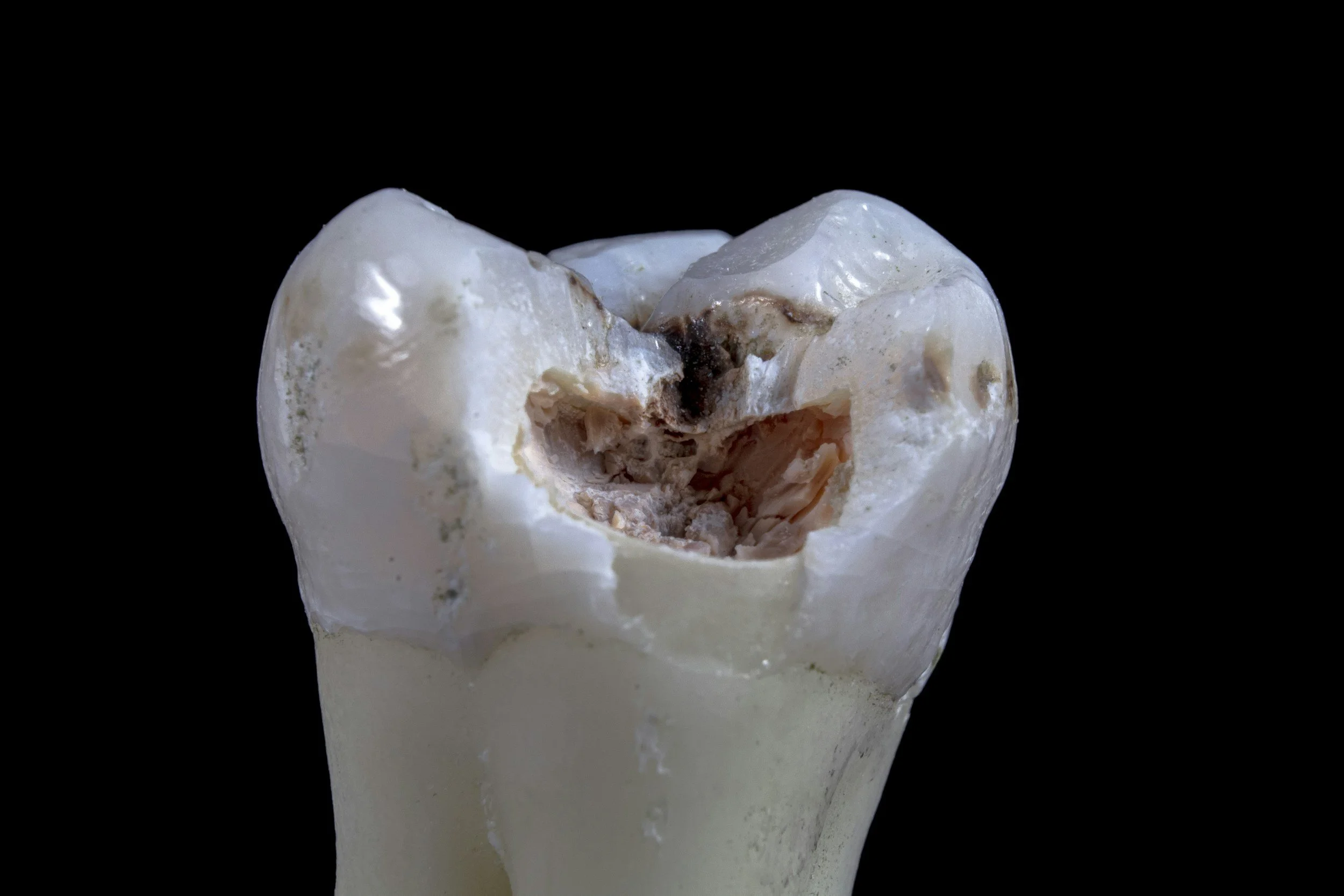
Dental cavity showing tooth decay in enamel and dentin
No, a cavity doesn't always hurt. Early decay in the enamel usually causes no symptoms at all. Pain tends to start once decay reaches the softer dentin underneath, and constant or throbbing pain usually means it has reached the nerve. By the time a cavity hurts, it is generally larger, which is why checkups and X-rays find most cavities before you feel them.
How does tooth decay start?
Bacteria in plaque feed on sugars and starches and make acid. Each time you eat or sip something sugary, that acid pulls minerals out of the enamel. Saliva and fluoride put minerals back between snacks. Decay begins when the losses keep outpacing the repairs. [1]
What are the stages of tooth decay, and when does each one hurt?
1. Early enamel decay (white spot)
The first sign is often a chalky white spot. Enamel has no nerves, so this stage doesn't hurt. It is also the only stage that can be stopped or reversed without a filling. Fluoride toothpaste, a fluoride treatment in the office, fewer sugary snacks and good cleaning can let the enamel remineralize. [1]
2. Decay through the enamel
Once the enamel surface breaks down, a true cavity forms. It may still cause no pain, or you may notice a brief twinge with sweets or cold. A cavity at this stage can't heal on its own and usually needs a filling.
3. Decay into the dentin
Dentin is softer than enamel and full of tiny channels that lead toward the nerve. Decay spreads faster here. Sensitivity to cold, sweets or biting becomes more common. The pain usually stops within a few seconds once the trigger is gone.
4. Decay that reaches the nerve (pulp)
When bacteria reach the pulp, the nerve becomes inflamed. Pain may linger long after a cold drink, throb on its own or wake you at night. At this point the nerve often can't recover, and the choices are usually root canal treatment and a crown, or removing the tooth.
5. Abscess
If the infection spreads past the root tip, it can form an abscess. Signs include severe throbbing pain, swelling of the gum or face, a bad taste, fever and a tooth that hurts to touch. Sometimes the pain eases because the nerve has died, but the infection is still there. A dental abscess needs prompt treatment. [2]
What makes some people more prone to cavities?
Dry mouth. Saliva neutralizes acid and repairs enamel. Many common medicines, including some for blood pressure, anxiety and depression, reduce saliva and can lead to fast decay along the gumline. Learn more about dry mouth.
How often you eat or sip sugar. Frequent snacking or sipping sweet drinks through the day gives enamel little time to recover.
Exposed roots. Root surfaces are softer than enamel and decay more easily.
Existing fillings and crowns. Decay can start again at the edges.
Fluoride exposure. Fluoride toothpaste helps every age group.
When is cavity pain urgent?
Call promptly for swelling in your gum or face, fever, a bad taste with pain, or pain that keeps you awake. Trouble breathing or swallowing, or swelling that spreads quickly toward the eye or neck, needs emergency medical care. Call 911 or go to an emergency department. Our page on dental emergencies covers what to do while you arrange care.
How do I find out if a tooth has a cavity?
If something feels off, or it has been a while since your last exam, call our office at 904-398-1549 or contact us. At a comprehensive dental examination, I look at the teeth and X-rays and also at the reasons decay is happening, such as dry mouth, diet and medications, so that any filling is part of a plan rather than a one-time repair. For other kinds of tooth pain, see why your tooth may hurt.
Sources
National Institute of Dental and Craniofacial Research. Tooth decay. Last reviewed September 2025.
American Association of Endodontists. Tooth pain. Accessed October 6, 2026.
American Dental Association, MouthHealthy. Dietary acids and your teeth. Accessed October 6, 2026.
About the author. CJ Henley, DMD, is a general dentist in Jacksonville whose practice focuses on cosmetic and restorative dentistry, dental implants and dental care around head and neck cancer. Meet Dr. Henley.
CJ Henley, DMD, PA · 3675 Hendricks Avenue, Jacksonville, FL 32207 · 904-398-1549
Updated October 2026.