

Full-Contour Zirconia for a Heavy Bite: Why We Chose It
The secret to making zirconia look real is in the details 👇
✨ Secondary anatomy and subtle surface texture
✨ Line angles that define each tooth
✨ Embrasures and natural contours that catch light like enamel
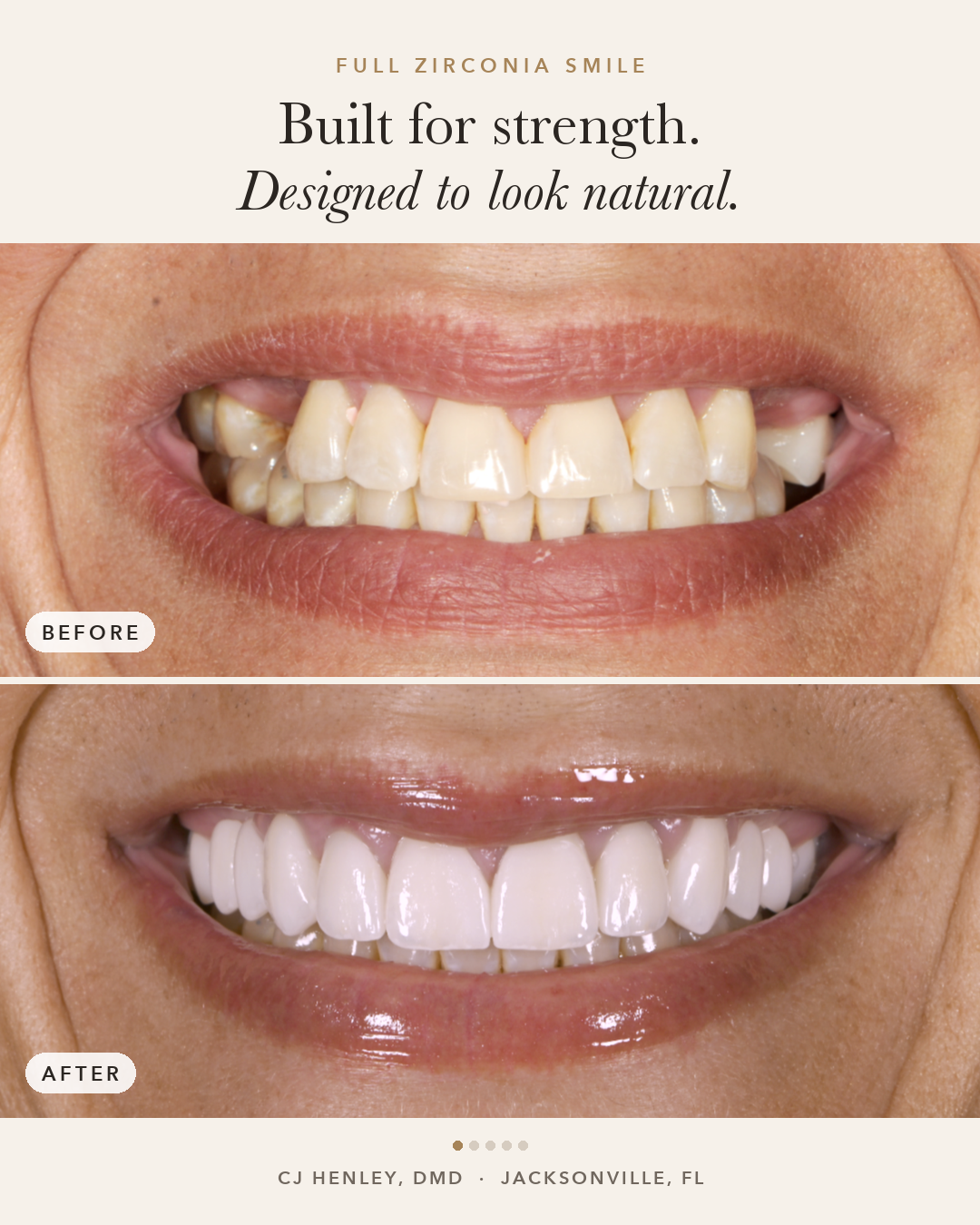
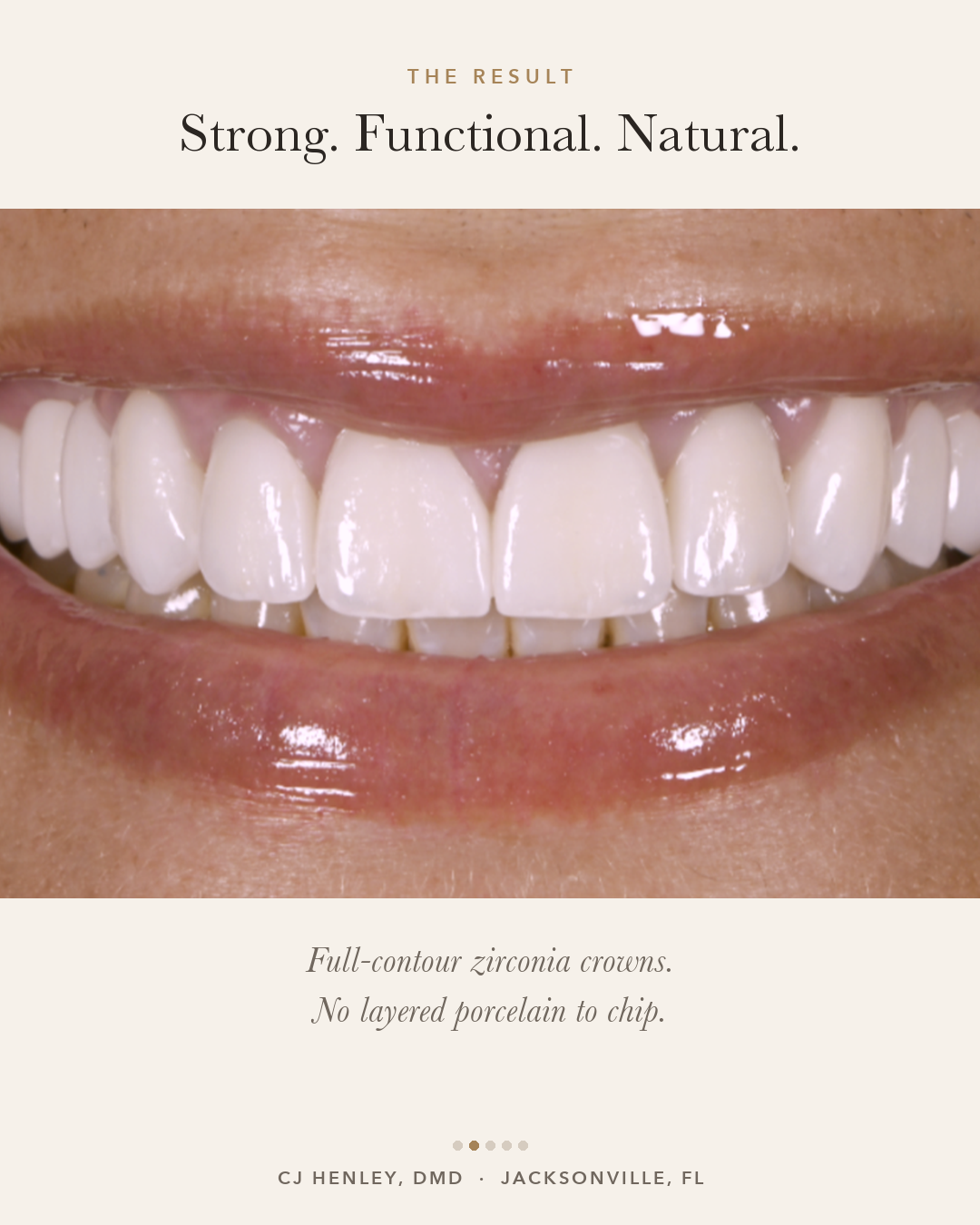
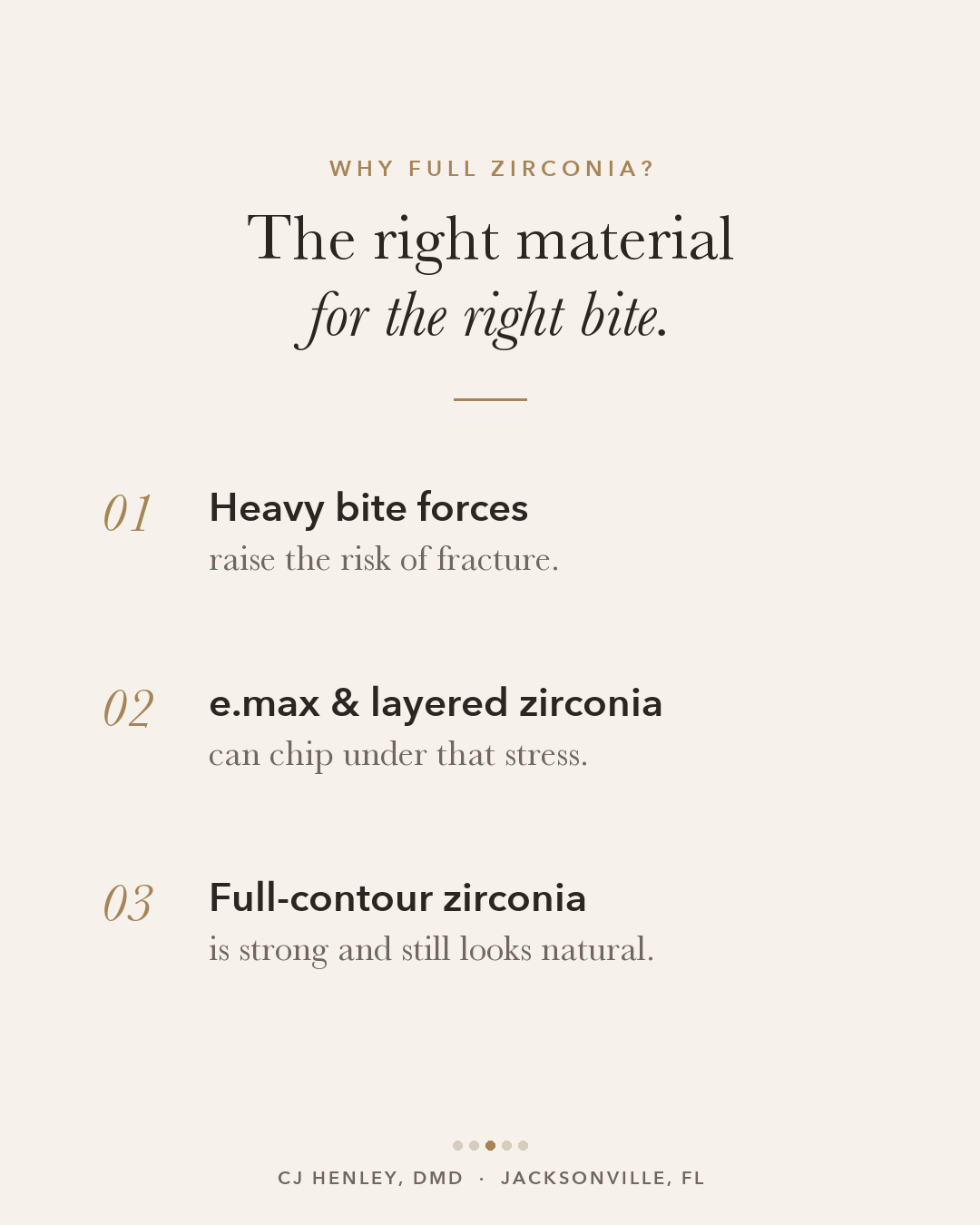
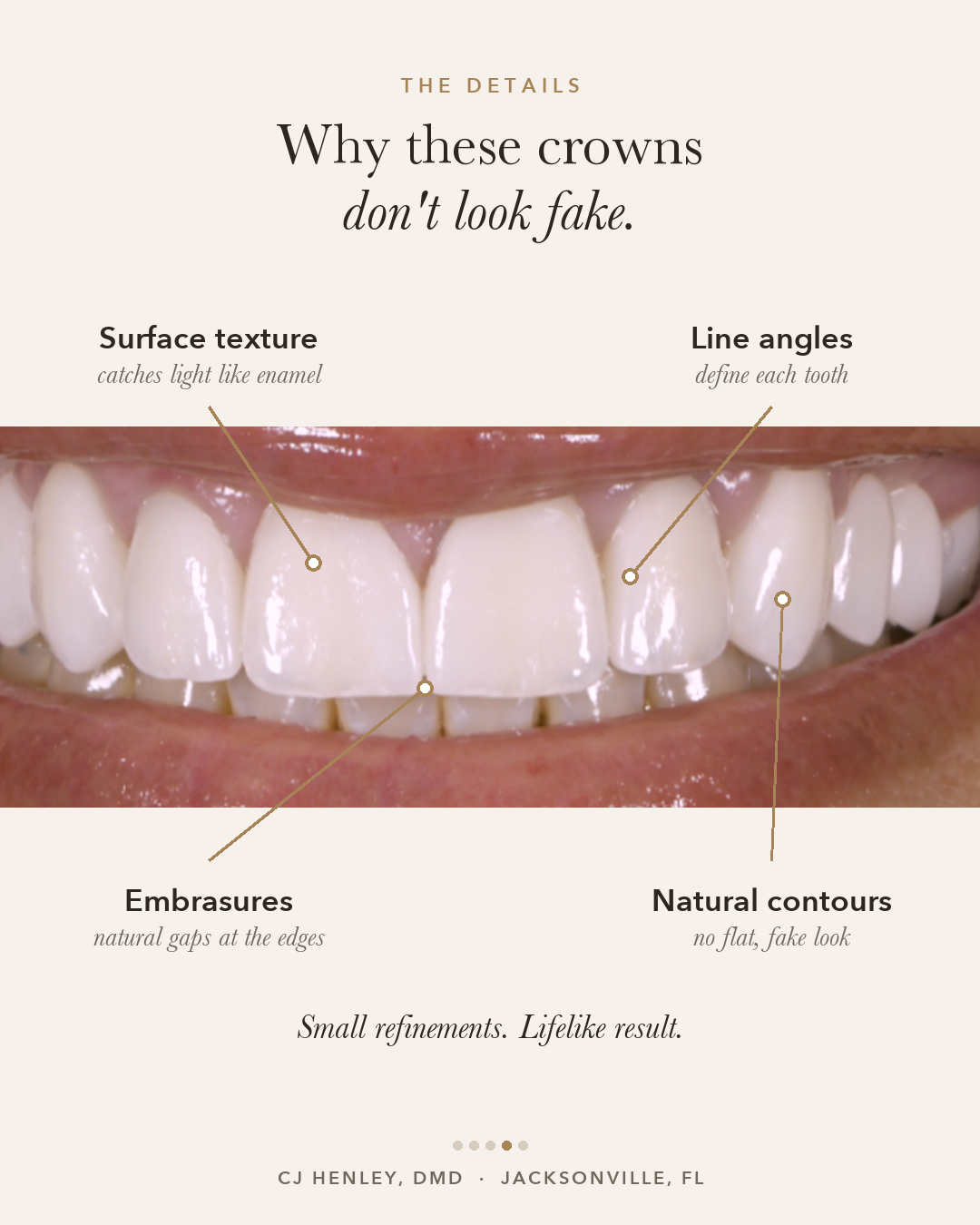
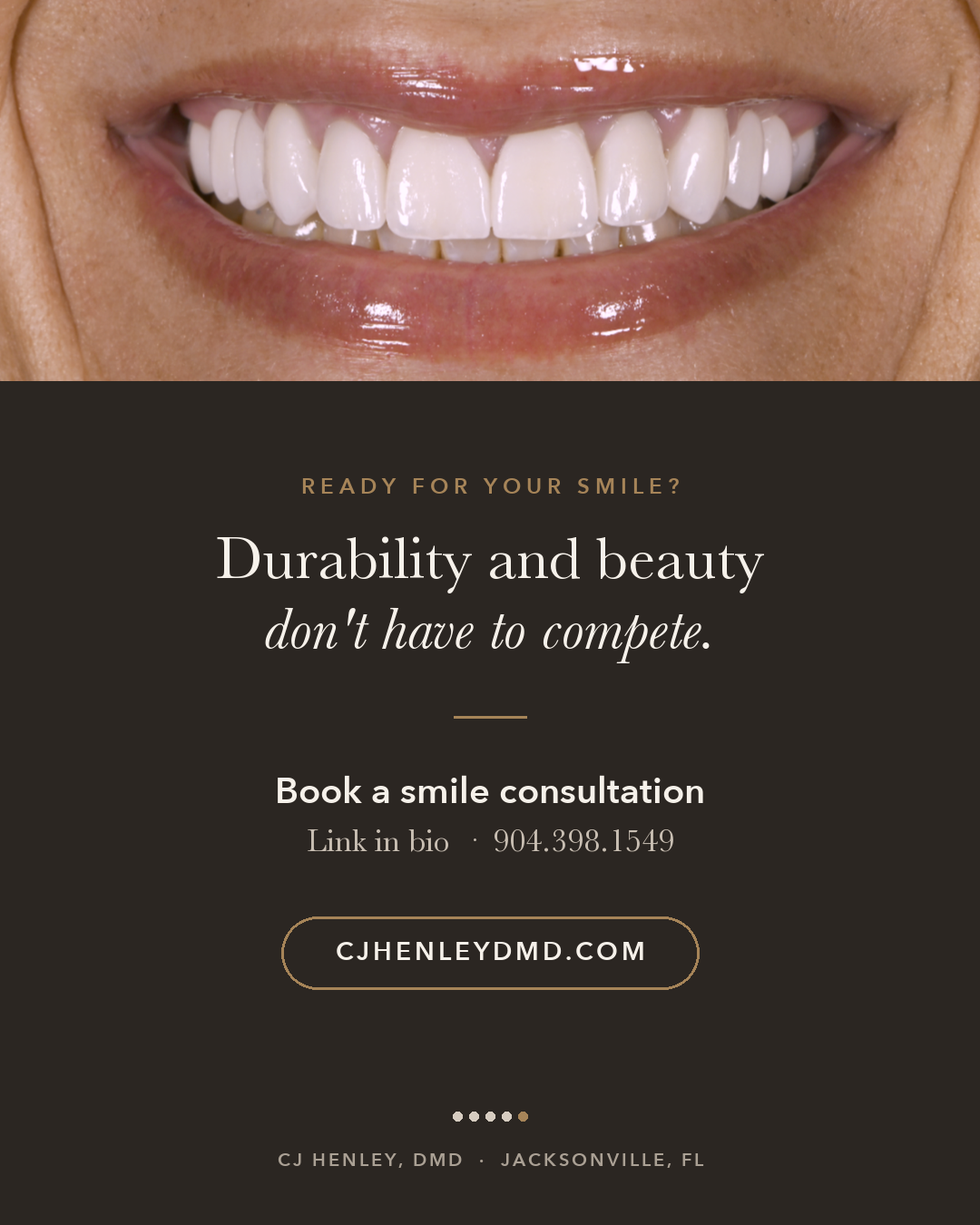
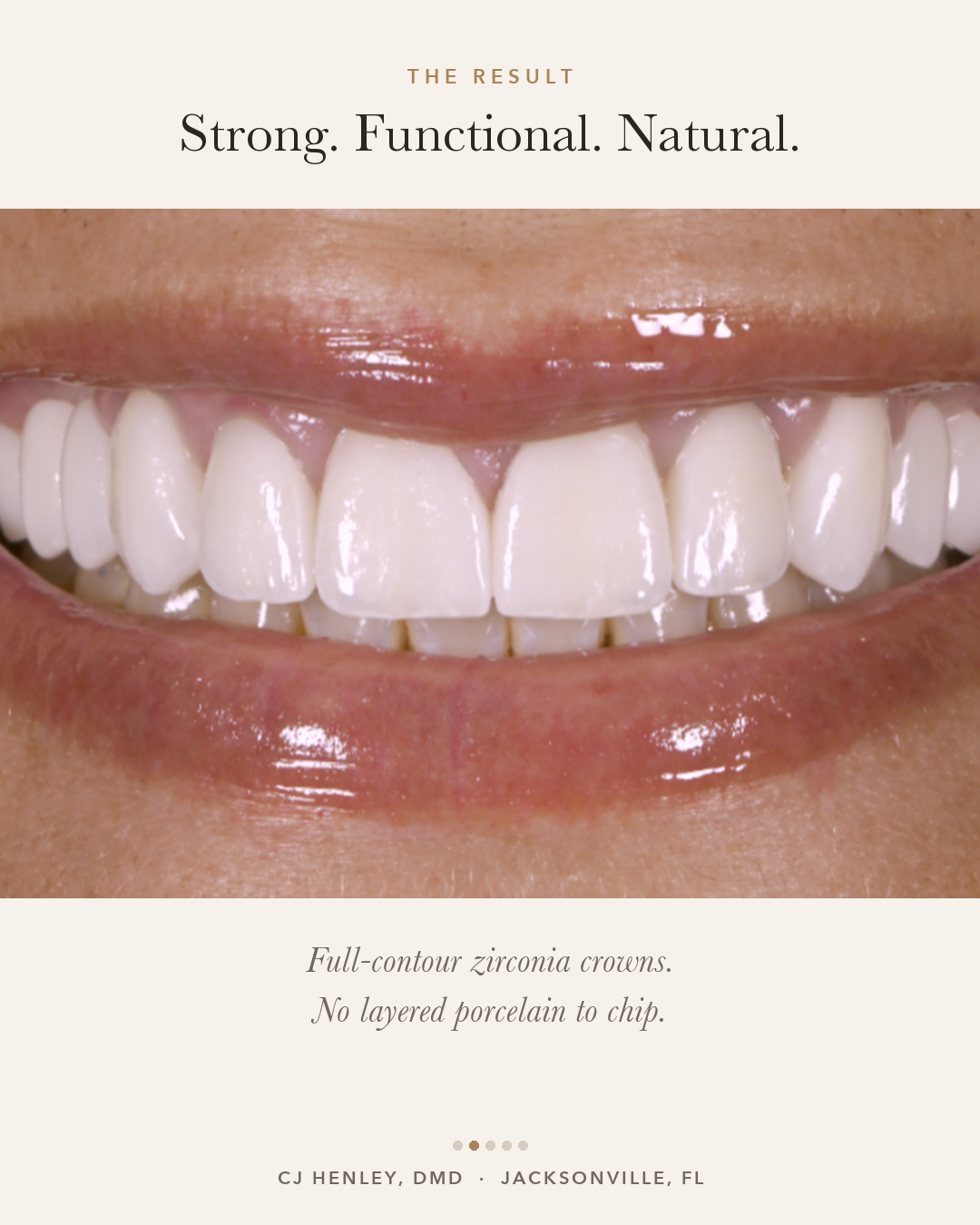
We chose full-contour zirconia for the smile shown here because this patient's bite puts heavy force on the teeth, and resistance to chipping was a priority. Full-contour zirconia is made as one solid piece without a separate porcelain layer that can chip. The photographs show the finished restorations and the surface details that help them look natural.
Why did we choose full-contour zirconia?
Material choice is part of the treatment plan, alongside the condition of the teeth, the available space, appearance and the bite. In this case the plan put strength first.
Earlier zirconia crowns were usually covered with a layer of porcelain for appearance, and that layer was prone to chipping. A large review of crown studies found that zirconia crowns were lost more often than metal-ceramic crowns because the porcelain layer fractured. Full-contour zirconia avoids that weak point because the crown is zirconia all the way through.
That doesn't make zirconia the right choice for every tooth or every patient. Zirconia is generally more opaque than glass ceramics such as e.max, so matching translucency on front teeth takes extra care. When appearance is the main concern and the bite allows it, a glass ceramic may be the better fit, as in our e.max front teeth case. Our dental crown guide explains how a tooth is evaluated and restored.
What makes these restorations look natural?
This case shows secondary anatomy, subtle surface texture, line angles and embrasures, which are the small spaces and contours between teeth. These details help the restorations reflect light the way natural teeth do and avoid a flat, uniform look. Compare the full smile with the closer views in the photographs.
How does a heavy bite affect planning?
The bite belongs in the discussion before a material is chosen. Heavy biting forces, clenching or grinding can chip or wear restorations and natural teeth. A strong material is only part of the answer. Many people with a heavy bite also benefit from a night guard to protect their teeth and restorations while they sleep.
If you're concerned about wear or clenching, read our tooth grinding and bruxism page. An examination is needed to find the cause of wear and which protective or restorative options fit.
Discuss crown options in Jacksonville
At CJ Henley, DMD, on Hendricks Avenue near San Marco, a consultation can connect your concerns about strength and appearance with a treatment plan. See other restorative cases, contact our office or call 904-398-1549. These photographs show one case. Treatment needs and results vary.
Sources
Sailer I, Makarov NA, Thoma DS, Zwahlen M, Pjetursson BE. All-ceramic or metal-ceramic tooth-supported fixed dental prostheses (FDPs)? A systematic review of the survival and complication rates. Part I: Single crowns (SCs). Dent Mater. 2015;31(6):603-623. doi:10.1016/j.dental.2015.02.011 (retrieved via PubMed)
About the author. CJ Henley, DMD, is a general dentist in Jacksonville whose practice focuses on cosmetic and restorative dentistry, dental implants and dental care around head and neck cancer. Meet Dr. Henley.
CJ Henley, DMD, PA · 3675 Hendricks Avenue, Jacksonville, FL 32207 · 904-398-1549
Updated October 2026.

Cosmetic Dentistry vs. Orthodontics: Which Fits Your Smile?
Confused between braces and veneers? Discover the key differences between orthodontics and cosmetic dentistry to find the best path for your perfect smile.
If your teeth are out of position or your bite is off, orthodontics (braces or clear aligners) is usually the right place to start, because it moves teeth without removing tooth structure. If your teeth are well positioned and you're bothered by their color, shape, size or chips, cosmetic treatment such as whitening, bonding or veneers addresses that directly. Many smiles benefit from both, with alignment first and cosmetic work afterward.
What does orthodontics do?
Orthodontics is the area of dentistry that moves teeth and corrects how they fit together.
How it works: braces or clear aligners apply gentle, steady pressure that moves teeth into a better position over time.
What it corrects: crowding, gaps, rotated teeth, overbites, underbites and other bite problems.
How long it takes: usually many months and sometimes longer, depending on how much movement is needed. Retainers are needed afterward to keep teeth in place.
When is orthodontics the better choice?
If your teeth are physically out of place, orthodontics is often the healthier long-term choice. It keeps your natural tooth structure, and teeth that line up well are usually easier to clean. Moving the teeth can also improve how the bite handles chewing forces.
What does cosmetic dentistry do?
Cosmetic dentistry changes how teeth look: their color, shape, length or surface.
How it works: whitening lightens natural teeth. Bonding adds tooth-colored resin. Veneers cover the front of teeth with thin ceramic shells.
What it addresses: chips, worn or uneven edges, deep stains, small gaps and teeth that look too small.
How long it takes: whitening and bonding can often be done in one or two visits. Veneers usually take a few visits, because a laboratory makes them.
When is cosmetic dentistry the better choice?
If your bite is healthy and your teeth are where they should be, but you don't like their color or shape or want to repair a chip, cosmetic treatment is usually the more direct route.
Can veneers fix crooked teeth?
Veneers can make mildly irregular teeth look straighter, but they don't move teeth. When crowding is significant, using veneers to hide it often means removing more enamel and building some teeth out, which can look bulky and create problems later. In those cases I usually recommend aligning the teeth first. Afterward, many people need less cosmetic work than they expected, or none at all.
Can you have both?
Yes. Many people straighten their teeth first and then finish with whitening, bonding or veneers. Planning both together from the start helps, because the final tooth shapes affect where the teeth should be moved.
How do you decide?
A few questions help sort it out:
Are my teeth in the right place? If not, start by thinking about orthodontics.
Is my bite healthy? Wear, chipping or jaw discomfort can point to a bite problem that cosmetic work alone won't fix.
What bothers me most? Color and shape point toward cosmetic treatment. Crowding and gaps point toward alignment.
How much tooth structure would each option remove? Moving teeth removes none. Veneers usually remove some.
A healthy bite is the foundation. I look at the health and position of your teeth and gums before recommending cosmetic changes.
Talk about your options in Jacksonville
Bring photos of what bothers you about your smile and what you'd like to change. Dr. CJ Henley sees patients at 3675 Hendricks Avenue in San Marco. Contact the office or call 904-398-1549 to schedule a visit.
Sources
American Dental Association, MouthHealthy. Veneers.
About the author. CJ Henley, DMD, is a general dentist in Jacksonville whose practice focuses on cosmetic and restorative dentistry, dental implants and dental care around head and neck cancer. Meet Dr. Henley.
CJ Henley, DMD, PA · 3675 Hendricks Avenue, Jacksonville, FL 32207 · 904-398-1549
Updated October 2026.