


Are You Brushing Your Teeth Too Hard?
If you have sensitive teeth, brushing too hard or using the wrong toothbrush altogether can make symptoms worse. Learn the proper technique for brushing your teeth.
Brushing harder does not clean your teeth better. Gentle brushing with a soft-bristled brush helps remove plaque while reducing unnecessary pressure on teeth and gums. If your gums are receding or your teeth are sensitive, have the cause checked rather than simply changing brushes.
How should I brush without scrubbing my gums?
Use a soft-bristled brush, light pressure, and small controlled movements along the gumline. Brush twice a day with fluoride toothpaste and clean between teeth daily. Ask your dental team to watch your technique if you are unsure. A brush with visibly splayed bristles may be a reason to reassess the pressure you use.
Is brushing too hard the only cause of receding gums?
No. Gum disease, tooth position, and other factors can contribute. Recession means the gum margin has moved away from part of the tooth, sometimes exposing the root. The appearance alone does not show why it happened or which treatment is appropriate. A comprehensive dental examination can assess the gums, roots, cleaning habits, and surrounding teeth.
Can receding gums cause sensitivity?
Exposed root surfaces can be sensitive, but decay, cracks, and other problems can also cause discomfort. Our tooth-sensitivity guide explains reasons to seek an evaluation. A toothpaste chosen for your needs may help with symptoms; it does not establish the diagnosis.
What treatments are available for gum recession?
The first step is identifying and addressing the cause. That may involve improving cleaning technique, treating gum disease, managing sensitivity, or discussing specialist care when appropriate. A gum graft is an option in selected cases, rather than an automatic treatment for every receding gum.
Should bleeding gums be checked?
Yes, especially if bleeding persists or concerns you. Bleeding can reflect inflammation, brushing trauma, medication effects, or other factors. Do not assume the solution is harder brushing. Our diet and dental-health guide also explains why supplements do not replace a gum examination.
Get brushing advice in Jacksonville
At CJ Henley, DMD on Hendricks Avenue near San Marco, bring your brush or describe your home routine at your next visit. We can connect practical home-care advice with your examination findings. Contact the office if you notice new recession, bleeding, or sensitivity.
Further reading: ADA: Bleeding gums; ADA: Gum disease.
Updated October 1, 2026.

10 Dental Myths, Debunked
There are many misconceptions about what it takes to keep your teeth healthy. Separate fact from fiction.
When it comes to taking care of your smile, there are plenty of misconceptions out there. But while good oral health can be achieved in just minutes a day, the wrong practices can cause irreversible damage. Here's what you need to know.
Myth: The harder you brush, the cleaner you'll get your teeth.
The real deal: Brushing too hard or with too abrasive of a toothbrush (medium or firm) can actually harm your teeth by eroding some of the hard enamel that protects the inside of the tooth from cavities and decay. "I see it so much where people feel like they're getting them more clean, but actually it wears away enamel and even the gums," says Ana Paula Ferraz-Dougherty, DMD, a dentist in San Antonio, Texas, and a spokesperson for the American Dental Association. "I always recommend a soft-bristled brush."
————————————————————————————————————————————————————-
Myth: Flossing isn't really necessary anymore.
The real deal: The recommendation to floss regularly was recently removed from the government's Dietary Guidelines for Americans based on a lack of strong evidence for the practice. However, a lack of strong evidence doesn’t necessarily mean that flossing is not effective. In fact, many dentists — including Dr. Ferraz-Dougherty — haven't changed their ways or their recommendations. "I totally believe in flossing," she says. "Intuitively, it makes sense that there is buildup you can only remove by flossing, and I see the difference every day." It’s important to still follow your dentist’s recommendation on brushing and flossing.
————————————————————————————————————————————————————-
Myth: Chewing sugar-free gum is just as good as brushing.
The real deal: If only this were true, kids everywhere would jump for joy. Chewing sugar-free gum, especially gum with xylitol, can have a protective effect on the teeth. Gum encourages saliva production, which helps to wash away enamel-eroding acids from foods, drinks, and even stomach acid in the case of issues like acid reflux. And xylitol helps to redouble the effects of saliva.
But chewing gum still doesn't replace brushing and flossing when it comes to removing plaque from all the surfaces of your teeth. You should brush at least twice a day for about two minutes, says Ferraz-Dougherty.
————————————————————————————————————————————————————-
Myth: If your gums bleed when you floss, it's best to leave them alone.
The real deal: "The reason our gums bleed is due to inflammation," explains Ferraz-Dougherty. Often it happens when bacteria and plaque get stuck in between our teeth where toothbrush bristles don't reach properly. Over time the bacteria builds up and causes the gums to become inflamed. Bleeding is part of that process.
If you floss once a month (or just before going to the dentist), it's likely you'll notice your gums bleeding. "That's a sign telling you something is going on there," says Ferraz-Dougherty. Make flossing a daily habit and the inflammation — and the bleeding — will go away with time.
————————————————————————————————————————————————————-
Myth: You've been slacking on brushing and flossing and have a dentist appointment coming up. As long as you brush well before going in, no one will know, right?
The real deal: Sorry to break it to you, but you're not getting away with anything. "We can tell," says Ferraz-Dougherty. Without regular brushing and flossing, hard tartar forms around your teeth and at a certain point you can't get it off with brushing alone. Plus, you can't undo the inflammation in your gums that occurs when plaque and tartar have accumulated over six months with just a few days of flossing. "Bleeding gums and the amount and location of tartar are the giveaways," says Ferraz-Dougherty.
————————————————————————————————————————————————————-
Myth: When it comes to cavities, sugar is the main culprit.
The real deal: When you think of cavities, you might think of lollipops and other sweet and sticky treats. But crackers and chips might be even worse for your teeth, says Ferraz-Dougherty. "It has to do with the starchiness," she explains. "It's carbohydrates in general — they have the sugars that break down the teeth, but they also really stick to your teeth."
————————————————————————————————————————————————————-
Myth: If you have sensitive teeth, it means you have worn away too much of the enamel on your teeth.
The real deal: Sensitivity is a key symptom of the loss of enamel, the hard protective layer on the outside of your teeth. But it can be caused by other factors as well, such as gum recession, or even the use of whitening toothpastes. "The hydrogen peroxide [used for whitening] can penetrate to remove stains," Ferraz-Dougherty says, "And it penetrates through the enamel into the layer beneath, which is the more sensitive part of the tooth." The good news: If your sensitivity is caused by teeth whitening, switching to a more gentle toothpaste can help improve symptoms.
————————————————————————————————————————————————————-
Myth: Gum disease is only a problem for your mouth.
The real deal: Your dentist might be the first one to notice it, but if you have gum disease you're more likely to have health issues such as diabetes and hypertension, as well as certain types of cancers that are related to chronic inflammation, says Ferraz-Dougherty.
————————————————————————————————————————————————————-
Myth: The whiter your teeth are, the healthier they are.
The real deal: This can be true but not always. "Our teeth are naturally white," says Ferraz-Dougherty. And many of the things that cause our teeth to get darker or become yellow are unhealthy, like smoking.
But there are also plenty of things that can darken the color of our teeth that aren't necessarily unhealthy, such as medication, stains from foods and drinks, or just the natural process of aging.
————————————————————————————————————————————————————-
Myth: If nothing is bothering you, you don’t need a dental checkup.
The real deal: "This is one of the biggest misconceptions," says Ferraz-Dougherty. "With a lot of dental issues, you don't necessarily feel pain right away. I have to explain to patients and educate them that with cavities and gum disease you don't always feel it." The problem is once the symptoms appear, it's often a bigger issue. If you wait until a cavity hurts to get it checked out, you could end up needing a root canal or an extraction that could have been prevented with regular checkups.
"The point of going to the dentist is so we can prevent things happening to the teeth to protect them and notice things before they become an issue," says Ferraz-Dougherty.

Factors Affecting Child Behavior at Dental Clinic
Factors Affecting Children’s Behavior at Dental Clinic
INTRODUCTION
“Man is the enemy of what he ignores” is a statement often heard, and is entirely true. Ignorance of a thing leads to fear from it, and fear from a certain event leads to avoiding and not repeating it. However, if a person has to deal with the event, this might lead to negative psychological reactions (disturbances) such as fear, dislike, and rejection. These reactions or disturbances may range between mild to severe, which may express themselves at first by weeping and crying then end by losing consciousness and hysteric convulsions. Yes, this can really happen at the dental clinic or at any place a person finds him- self in a certain psychological crisis. The degree of the reaction of any person depends on his ability to absorb and bear the shock. Yes, the shock!! Can the child’s visit to the dental clinic be a shock? Yes it can. But it can also be a
blessing. It all depends on the dentist and his skill at handling and dealing in a well-studied psychological manner, with the new visitor who comes to that unknown world which is called the dental office.
Let us place the dealing of the dentist with the child and the results of that dealing in the form of an equation similar to the chemical equations that we know and let us see the reaction’s out- comes:
Skillful dentist + child + sound and smooth psychological handling and treatment = high quality treatment + record short time + friendship, love and an absence of fear forever. Yes, this is how dealing and treatment in child dentistry should be. The easiest way to achieve this equation is the psychological approach. We strongly believe, and this is our personal opinion, that this is
the best way to deal with the child, particularly if the child is of a normal cognitive and intellectual standard, with an ability to understand. These abilities normally exist in children between 3 – 6 years of age. The purpose of this research is to study some variables influencing children’s cooperative behavior at the dental clinic. In this study, we will highlight three major factors specifically in order to identify their effects on the behavior of the children at the dental clinic. These three factors are:
(1) Preparing the child at home before visiting the dental clinic.
(2) The presence or absence of the moth- er of the child at the dental clinic.
(3) Using the psychological approach (T.S.D. technique)* in dealing with the child.
* { Tell, show and do}
Materials and Methods
Sixty children, 36 – 60 months old, from among those who come to the children’s unit at the school health center of the ministry of health in the State of Kuwait were selected. For most of these children, that was their first visit to the dental clinic. Most of them came from middle class families, and enjoyed good, normal physical and mental health.
The children were put in three groups of twenty children each. As far as possible, care was taken to ensure that the children in each group were homogeneous in terms of age and sex, i.e. that the number of females would be equal to the number of males in the three groups.
We agreed with the parents and took their permission to having their children participate in this scientific study. We asked them to increase their children awareness and prepare them both psychologically and mentally for the visit to the dentist’s, by explaining to them the benefits of the continuous prevention and treatment of their teeth and the harm that would result from failure to keep their teeth clean. We also requested the parents to put their children to bed early, the night before the visit, so that they may have enough sleep following a light dinner. We also recommended to the parents not to promise their children any gifts to encourage them to agree to go to the dentist, but to postpone this until after the visit.
Each group was given a code: A, B, and C, and each child was given 30 – 45 minutes for the visit so that the dentist could use the TSD technique for dealing with and controlling the child. Two variables and their effects on the child’s behavior at the clinic were studied. The order of the variables within each group was as follows:
Group A: Preliminary psychological preparation at home prior to the visit + the presence of the mother at the operatory room.
Group B: Preliminary psychological preparation at home prior to the visit – the presence of the mother at operatory room.
Group C: No preliminary psychological preparation at home prior to the visit – the presence of the mother at the operatory room.
In this study, as we have stated before, we used the TSD technique in order to find out the effectiveness of this psycho- logical technique in the presence of the other two variables, namely the preliminary preparation at home prior to the children’s visit to the dentist’s and the presence of the mother at the operatory room. All the children in all three groups whose behavior was controlled, were subjected to simple treatment measures, namely clinical examination by using mirror and explorer, oral prophylaxis and applying the fluoride.
Before starting the treatment steps, and as a part of the psychological treatment plan which aims at gaining the child’s confidence and breaking the barrier of fear, we were very careful to call each child by his name and invite him kindly to sit on the dental chair. At the same time, the tools to be used were pre- pared in a simple manner that children like. Each tool was given a pleasant name of a famous cartoon character to bring it close to the mind and imagination of the child. The child was invited to touch and feel those tools by hand. Also, the child was given the chance to hear the unpleasant sounds of surgical suction and the cleaning drill. The child was allowed to experience the feeling of the water and air used in washing and drying, in order to introduce him/her to the general nature of the thing they would be experiencing. Furthermore, the dentist explained to the child the necessary treatment steps, elaborately, but simply and in a language appropriate to the mental ability of the child.
A part of these steps was carried out in the presence of the mother, (group A), and the other part, in her absence (group B and C). It is worth mentioning that, in the events where the mother was present, her role was one of a witness only. She was not allowed to interfere with the work of the dentist or try to influence the behavior of the child, unless she was asked to do so. We asked the mothers about their own educational level, in an attempt to identify the positive or negative effect on the child’s behavior. We also watched the mother’s emotional behavior (maternal anxiety) and the degree of tension in her face. If we found her too tense, we would ask her to step out of the clinic and wait in the waiting room.
This study lasted fifteen days. Children were seen at the rate of 4 cases a day. After each child in each different group was studied, remarks were recorded concerning the behavior of each child for further subjective study.
Results
Remarks concerning each group were recorded as follows:
Group A
Response was different, depending on the age difference. Older children were more able to respond than younger children. Somehow, females responded more positively than males. A number of three-year-old children looked around themselves more frequently looking for their mother, and occasionally cried. There were three cases of total absence of cooperation. Response was generally high.
Group B
Response was varied, depending on age, as it was the case in the previous group. Females were more positive than males. The absence of the mother from the beginning – in this group – was use- ful, because there was less movement and turning around by the child. This helped carry out the work more quickly. There were two cases of total absence of cooperation. Response was generally high.
Group C
In this group, regardless of age, almost all the children were more afraid, tense and hesitating. A longer time was needed to control the children in this group in order to convince them to accept the treatment and to make them feel secure, compared to the other two groups. Females were, as usual, more positive than males. The older children were more cooperative than the younger ones, as was the case in the previous two groups. There were six cases of total absence of cooperation. Response in this group was average compared to the other two groups. More time and effort was needed to control the children and to accomplish the treatment.
Discussion
The results we arrived at were most important in identifying the factors that affect the behavior of children at the clinic. The study has proved beyond doubt that the preliminary preparation of the child by the mother, in a studied mental and psychological way, is important and effective in reducing the fear of the child.1,2,3 This was very clear in the first and second groups, where the child was prepared psychologically before the visit. The children in the third group, who were not prepared at home by their parents, needed more time and effort to control and calm. We believe, this is because man is enemy of what he does not know. It is important to inform the child about the nature of the dentist’s work, and the damage that will result from not going to the dentist. For this reason, it is advised that the child’s first visit to the dentist take place before any teeth problems start.
With regard to age as a factor affecting the child’s behavior at the clinic, we found that there is a direct relationship between age and positive conduct of the child at the clinic. This means that a 6-year-old child is more cooperative
and responsive to the doctor’s instructions than a 3-year-old child. This is so because of the increased cognitive, mental, conceptual and psychological growth.4,5 An elder child is more able to communicate and respond to the dentist’s directions. However, there are exceptions to every role, as can be seen in the higher degree of cooperation by younger children in the first two groups in which there was preliminary preparation prior to their visit to the dental clinic. This means that age is not the only factor affecting the child’s cooperation in the dental clinic, but there are sever- all others. Other factors include such as the educational and cultural level of the parents, the social status of the child within the family and among his broth- ers.6 Is he an only child or not?. Generally, we found that the older the child was, the easier it was to deal with him.
With regard to the factor of sex, we found that females were more responsive than males regardless of the preliminary preparation or presence or absence of the mother at the clinic. This might be because of the more quiet nature of females. This result is different from that reached by Frankl and others.3 The effect of the presence of the mother on the conduct of the child at the clinic was of two different and opposite effects.3,6,7,8 Sometimes we found that it was necessary for the child to be treated in the presence of his mother, in view of the age of the child, his medical and mental status and whether the mother was anxious or not.6,9,10,11 We allowed the mother to be with us as a witness or observer only, with no right to affect the child’s behavior or interfere with the dentist’s work. Meanwhile, when the mother was too anxious, we would ask her to step out of the clinic until we finished our work to avoid any negative effect on her child. Older children were more independent and self-confident. Their behavior was more settled than that of younger children. The presence or absence of their mother did not make any difference. Also, we found that keeping the mother away from the child during the treatment was much better than being with him.6,7 This is because the doctor had to use certain techniques, such as voice control and / or HOME technique (Hand Over Mouth Exercise) to control the unpleasant behavior of an uncooperative child.12 The mother might think that these are punitive measures used with her children, and so she would tend to interfere and sometimes request to stop the treatment.
In addition, in this study, we made two interesting observations: the first is that when the mother was more afraid and anxious, her child would also be more afraid, especially among the younger children.6,7,8,13,14 This is because the fear of the dentist is an acquired rather than native one. Many studies demonstrated many years ago that parents can and do convey their negative attitude (fear) to their children.5
The second is that the children who studied at foreign schools were more responsive and better equipped to adapt to the situation, compared with those who studied at government school. This underlines the necessity of increasing awareness in children.
In this research, we preferred to use the psychological approach rather than other approaches such as the pharmacological approach and/or restricting the movement of the child. We did encounter some children who were too difficult to be controlled by psychological means, particularly within the third group who were not prepared for the visit at home. The existence of uncooperative children is a normal sign, because no doctor can possibly control the behavior of 100% of the children within a period of 30 – 45 minutes. This is because the image of fear, whether that fear was acquired or expressed by the child as a result of unpleasant experience, can stay with a child for a long time, and for this reason a number of uncooperative children were treated under general anesthesia.
We now return again to the reason why we chose the psychological way rather than other available ways; this is because we strongly believe that psychology plays an important role in the child’s management and treatment in the dental clinic. ”Man is the enemy of what he ignores”, and for this reason the doctor’s duty is psychological in the first place and one of the treatment in second place. Unless the doctor is able to gain the confidence and love of the child, he cannot treat him properly. The dentist should be kind and pleasant when he meets the child. He should call him by his name from the start in order to break the barrier of fear in the mind of the child. He should also understand the child’s language and be able to understand and analyze his psychology before starting the treatment, and he should be kind but firm.
Because a child likes to be the object of interest, the dentist should praise the child and his clothes, without exaggeration. That will make the child feel that the doctor is a friend, and will establish a good link of love and confidence between them.16
The TDS technique is the most success- full approach followed by many dentists in dealing with children and has been proven successful.17 However, it is not effective with all children, and not all dentists can use it successfully. Why? Because its success depends on sever- al factors, foremost among which is the personality of the dentist, his under- standing of child psychology, his language skill and his ability to use this skill in talking to the child and opening and maintaining a conversation with him as a first start toward a successful treatment. It is worth mentioning here that language is the magical key to the hearts of all people in general, and the children in particular. For this reason we do not recommend dealing with dentists who do not understand the child’s language and who cannot communicate successfully with children. This failure is a serious obstacle to sound doctor-child communication and conversation.
Conclusions
We came up with the following results through this study:
The responsibility for the child’s health and treatment is a joint one, between the home and the clinic. The well-studied preparation at home by the parents has a huge positive effect on making the child accept the treatment.
The presence of the mother and its effect on the child’s cooperation is controversial. We recommend the absence of the mother at the clinic in general. We would allow it only under certain unusual psychological circumstances of the mother, or in light of the child’s age, and physical and mental health. Another factor is the skill and ability of the doctor in dealing with the child in the presence of the mother. Keeping the mother separated from the child helps the mechanism of treatment and gives the doctor a large area for maneuvering in order to win the battle.
The difference in sex and age is an influencing factor in general to a moderate extent. In this study, females were found to be more responsive than males. The educational level of the mother and\or child is also important. The psychological approach proved to be ideal and most successful because it seeks to address the cause of fear in the child and seeks to change the child’s concept of the dentist. Furthermore, it is the most secure way from both the psychological and physical point of view.
In short, this research is only a small, faithful step toward getting to know the psychology of children and trying to overcome the difficulties faced by the dentist at the clinic. Dentists should give the psychological aspect in treating children more attention. The subject merits more detailed study and research.

Uneven Jaw
An uneven jaw can contribute to issues with eating, sleeping, talking, and breathing. There are a range of causes of an uneven jaw. Some cases can be treated and improved with physical therapy. Others may require corrective surgery.
Overview
An uneven jaw can contribute to issues with eating, sleeping, talking, and breathing. There are a range of causes of an uneven jaw. Some cases can be treated and improved with physical therapy. Others may require corrective surgery.
Read on to learn more about uneven jaw causes, treatments, and more.
Symptoms of an uneven jaw
Symptoms of an uneven jaw are often similar to those of other conditions. They may include:
pain in the temple
pain in the jaw joint area
clicking jaw
tight jaw
pain in shoulder or back
popping in ear
Causes and treatments of an uneven jaw
Jaw function requires tendons, bones, and muscles to work together. An imbalance in any of these structures can lead to the entire jaw becoming uneven.
There are several reasons why your jaw may be uneven, including:
Trauma or broken jaw
Trauma can occur during an accident, fall, assault, or a sports-related injury. Trauma can result in your jaw being broken, fractured, or dislocated.
A slight fracture will usually heal on its own. A major break in the jaw could require surgery to help the jaw heal properly. A dislocated jaw may need to be surgically stabilized.
TMJ disorders
Temporomandibular joint disorders (TMJ) are very common. Trauma or arthritis may be the cause of TMJ. Sometimes the symptoms can occur without an obvious cause, though.
You can treat TMJ by doing the following:
Apply ice to your jaw to reduce pain and inflammation.
Take an over-the-counter pain reliever, such as acetaminophen (Tylenol) or ibuprofen (Advil).
Avoid strenuous jaw movements.
Wear an orthopedic dental appliance to raise your bite and reposition the jaw.
Practice TMJ exercises to reduce pain and improve your jaw’s movement.
Manage and reduce stress to help relax your jaw.
Birth defects
You may have been born with a jaw condition. For example, you may have a naturally crooked jaw. This is also referred to as a “faulty jaw.” A faulty jaw may be corrected with surgery or can be managed with supportive care and lifestyle changes.
Teeth alignment
An uneven jaw may be due to teeth misalignment. Your teeth may not be allowing your jaw to settle in its correct position. Braces or retainers can help correct this. It may take a period of 6 to 18 months for results to show. In severe cases, it may take longer.
Surgery for uneven jaws
Correcting your jaw position sometimes requires surgery. The type of surgery chosen will depend on the underlying cause of your uneven jaw. Your doctor may choose:
Maxillary osteotomy. This is a surgery performed on the upper jaw to correct open bites or cross bites. The upper jaw and teeth are moved forward so they align with the lower jaw and teeth.
Mandibular osteotomy. This surgery corrects issues such as overbite and protruding lower jaw. Your surgeon cuts in the back of your mouth to move the lower jaw forward or backward.
Genioplasty. Genioplasty will fix a small or crooked chin. The jaw and chin are restructured by cutting the chin bone in the front of the jaw.
Jaw wiring. Jaw wiring is used to position the jaw in a certain place or provide support in the case of a fracture or break.
Takeaway
Braces or dental appliances can often treat an uneven jaw. More serious cases often need surgery.
If your jaw is causing you extreme pain, whether chronic or after an injury, see your doctor. They can assess the underlying cause of the pain and work with you to find relief.

How to Stop Dry Mouth Caused by Diabetes
463 million people in the world have diabetes, according to the International Diabetes Foundation, and diabetes is known to raise the risk of certain dental health issues, including dry mouth. Dry mouth is much more than an annoyance that may make it a little difficult to speak sometimes. Fortunately, there are effective ways to ease or eliminate dry mouth.
Dry mouth is one of the most common oral symptoms of diabetes. High blood sugar pulls fluid from your tissues and reduces saliva flow, so the most effective long-term fix is keeping your glucose in range. In the meantime, the steps below can bring real relief and protect your teeth.
Why Does Diabetes Cause Dry Mouth?
Dry mouth, also called xerostomia, can affect people with both type 1 and type 2 diabetes. Several things contribute:
High blood glucose. When blood sugar is high, your kidneys remove the extra glucose through urine and take fluid with it. The result is dehydration and less saliva.
Changes in the salivary glands. Studies show that people with diabetes, especially when it is poorly controlled, tend to produce less saliva.
Medications. Many medicines commonly taken alongside diabetes treatment, including some for blood pressure and depression, list dry mouth as a side effect.
Nerve damage. Diabetic neuropathy can affect the nerves that control the salivary glands.
Symptoms of Diabetic Dry Mouth
A sticky, dry feeling in the mouth and frequent thirst
Bad breath
Cracked lips, especially at the corners
A dry, rough or burning tongue
Sore throat or hoarseness
Difficulty chewing, swallowing or speaking
Mouth sores or fungal infections such as thrush
Why Dry Mouth Matters for Your Teeth
Saliva neutralizes acids, washes away food and keeps bacteria and fungi in check. Without enough of it, cavities develop faster, especially along the gumline, and gum disease and thrush become more likely. Gum disease in turn can make blood sugar harder to control, so treating dry mouth helps protect more than your teeth.
How to Get Rid of Dry Mouth From Diabetes: 9 Steps
Keep your blood sugar in your target range. This is the most important step, because it treats the cause rather than the symptom.
Sip water throughout the day, and keep a glass at your bedside.
Chew sugar-free gum or use sugar-free lozenges, ideally with xylitol, to stimulate saliva.
Use a saliva substitute or a moisturizing gel, spray or rinse made for dry mouth, especially before bed.
Switch to an alcohol-free mouthwash. Alcohol-based rinses dry the mouth further.
Cut back on caffeine, alcohol and tobacco. All three reduce saliva.
Run a humidifier at night and try to breathe through your nose rather than your mouth.
Protect your teeth with fluoride. Brush twice a day with a fluoride toothpaste, and ask your dentist whether a prescription-strength fluoride is right for you.
Ask your physician to review your medications. A different drug or dose sometimes helps. Never stop or change a medication on your own.
Dry Mouth at Night With Diabetes
Saliva flow naturally drops during sleep, so dry mouth is usually worst overnight and first thing in the morning. A moisturizing gel at bedtime, a humidifier and water within reach make the biggest difference. If you snore or wake with a very dry mouth every day, mention it to your physician, since mouth breathing and sleep apnea are both common with diabetes.
When to See a Dentist
See a dentist if dry mouth lasts more than a few weeks, or if you notice new cavities, a burning sensation, white patches or sores that do not heal. For some patients, prescription medications that stimulate saliva, such as pilocarpine or cevimeline, are an option your dentist or physician can discuss with you.
In our Jacksonville office we treat dry mouth as a diagnostic issue, not just a symptom to mask. Learn more about dry mouth evaluation and treatment with Dr. Henley, or call 904.398.1549 to schedule a visit.
Reviewed and updated September 2026 by C.J. Henley, DMD.
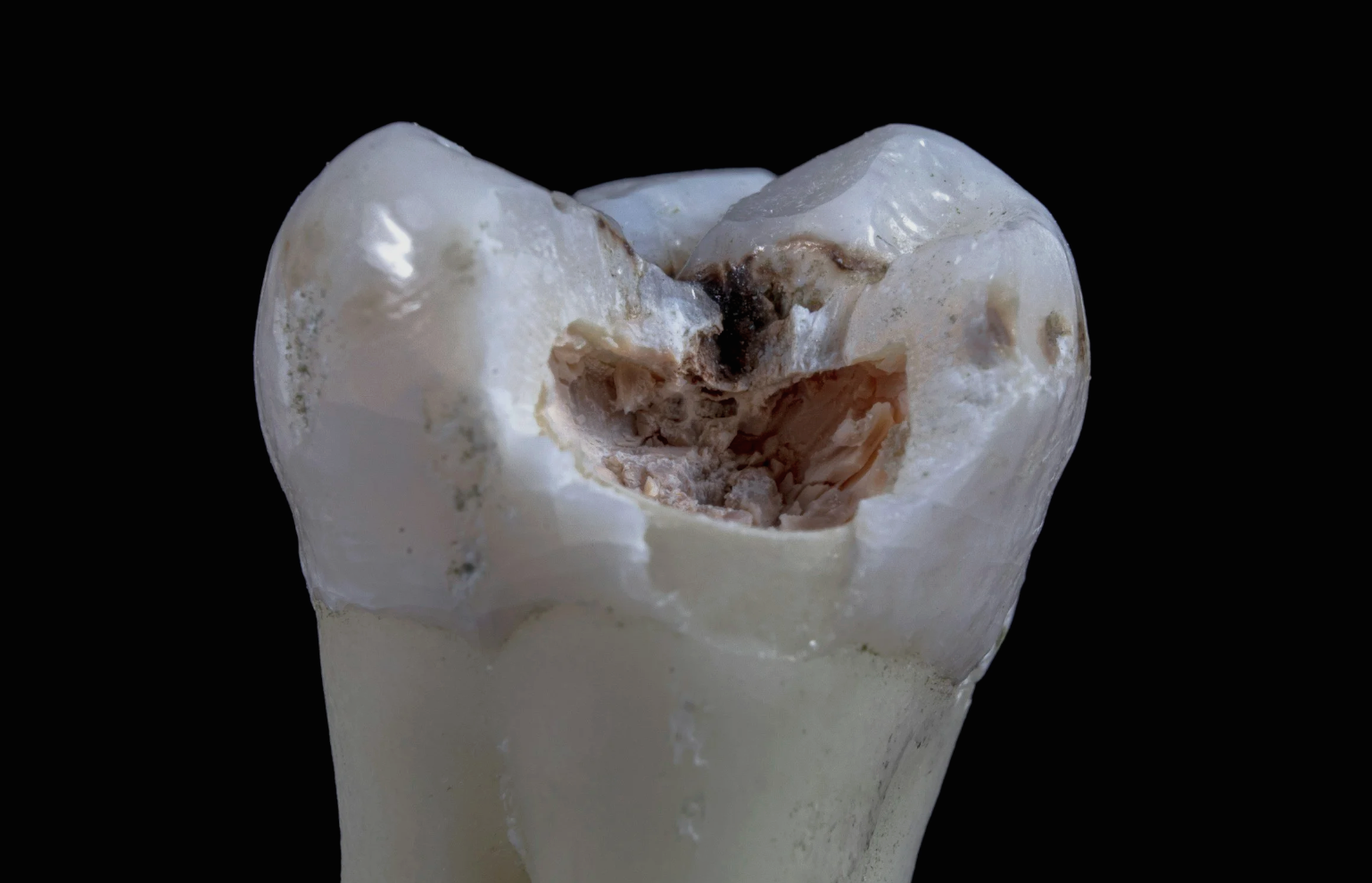
Beyond the Surface: Understanding Dental Caries and Clinical Longevity
Cavities, which dentists sometimes call dental caries, are spots of tooth decay. They can range in size from tiny to large enough to break teeth.
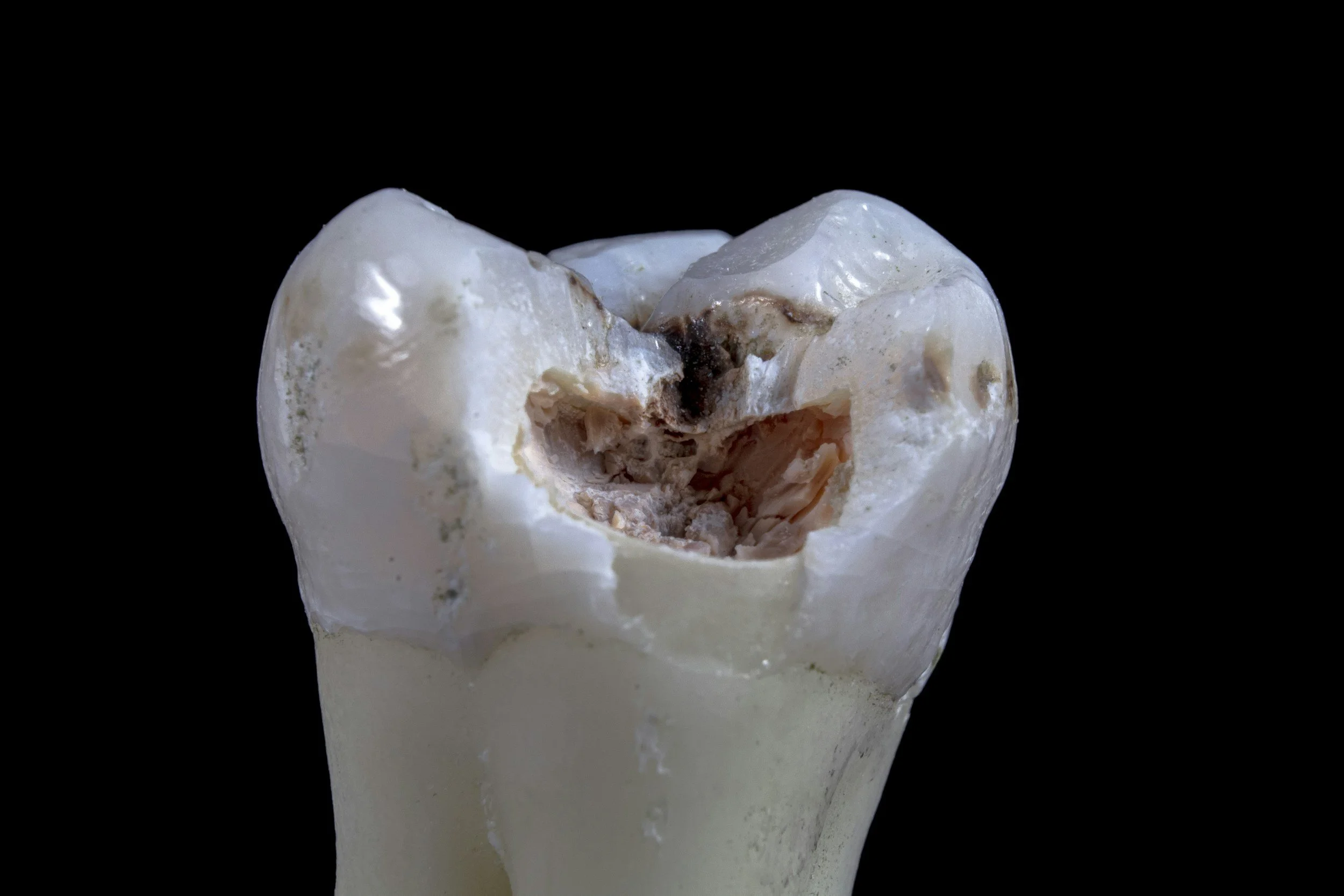
Dental cavity showing tooth decay in enamel and dentin
Dental caries (cavities) are not merely a result of poor hygiene; they are the byproduct of a complex, dynamic shift in your oral microbiome. While common, they represent an active disease process that can compromise both your oral and systemic health if not treated with a focus on long-term stability.
At CJ Henley, DMD, we don't just "fill holes." We practice medically-informed restorative dentistry, diagnosing the root cause of decay to ensure your treatment holds up for years, not months.
The Physiology of Decay: Why Teeth Fail
Enamel is the hardest substance in the human body, yet it is vulnerable to sustained acidic environments. Decay typically progresses through three distinct layers:
The Enamel Barrier: In the early stages, decay is often painless because enamel lacks nerves. However, this is the most critical time for conservative intervention.
Dentin Infiltration: Once decay breaches the enamel and enters the dentin, sensitivity to temperature and sweets begins. Dentin is porous, allowing bacteria to migrate more quickly toward the center of the tooth.
Pulpal Involvement: When bacteria reach the pulp (the nerve and blood supply), pain becomes throbbing and persistent. At this stage, coordination with specialists may be required to save the natural tooth structure.
High-Authority Risk Factors: The Systemic Link
Not all "sugar bugs" are created equal. Your susceptibility to cavities is heavily influenced by factors that many high-volume practices overlook:
The Saliva Factor: Saliva is your mouth’s natural defense, neutralizing acid and remineralizing enamel. For patients taking medications for blood pressure or anxiety, medication-induced dry mouth (Xerostomia) can cause rapid, "rampant" decay regardless of hygiene habits.
The Microbial Balance: Your oral microbiome is unique. Research indicates that certain bacterial strains can be more aggressive, making some individuals naturally more prone to decay.
Restorative Longevity: A restoration is only as good as the diagnosis behind it. We focus on longevity and function, choosing biocompatible materials and precise techniques that respect the integrity of your natural tooth.
When Treatment Becomes Urgent
If decay is left unmanaged, it can lead to dental abscesses—serious infections that can spread to the surrounding bone or even enter the bloodstream. Signs of advanced infection include:
Severe, unrelenting throbbing pain
Swelling of the gums or face
Fever or a general feeling of systemic illness
A Higher Standard of Care
We believe that patients deserve more than a rushed 15-minute filling. We prioritize an unhurried, two-hour new patient evaluation to identify your unique risk factors and design a care plan focused on clinical longevity.
Reviewed and Updated February 2026

Sinus infection and tooth pain: What is the connection?
A sinus infection, or sinusitis, occurs when viruses or bacteria infect the sinus linings. The results can be uncomfortable symptoms, including facial pain and pressure, runny nose, headache, and, sometimes, tooth pain.
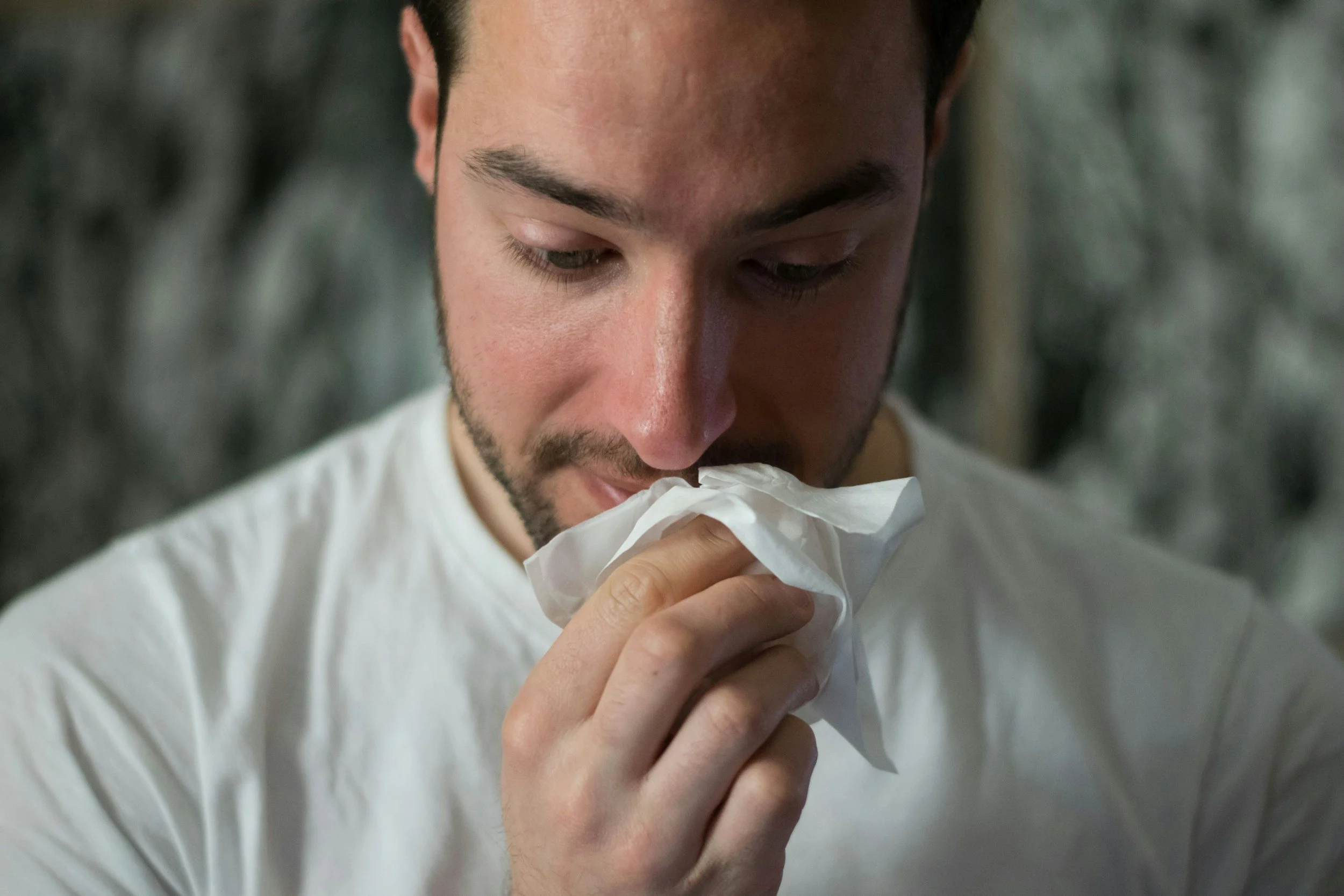
Sinus infections, also known as sinusitis, commonly cause facial pressure, congestion, headaches, and nasal drainage. Less commonly—but often more confusing for patients—they can also cause tooth pain. Understanding why this happens can help distinguish sinus-related discomfort from a true dental problem.
How Sinuses and Teeth Are Connected
The sinuses are air-filled cavities within the bones of the face and skull. The maxillary sinuses, located behind the cheeks and above the upper teeth, are the sinuses most closely associated with dental pain.
The roots of the upper premolars and molars often sit very close to the floor of the maxillary sinuses. In some individuals, the roots are separated from the sinus cavity by only a thin layer of bone or tissue. Because of this close anatomical relationship, inflammation or pressure within the maxillary sinus can be perceived as pain in the upper teeth.
The sinuses, teeth, and surrounding facial structures also share common nerve pathways. When the sinus lining becomes inflamed or swollen during an infection, pressure can be transmitted through these shared nerves, creating pain that feels dental in origin even when the teeth themselves are healthy.
Why Sinus Infections Can Cause Tooth Pain
During a sinus infection, the sinus lining becomes inflamed and swollen, and normal drainage of mucus is impaired. As pressure builds within the maxillary sinuses, it can compress nearby nerves and tissues.
This pressure most often presents as:
• A dull, aching pain in the upper back teeth
• Pain affecting multiple teeth on one side
• Discomfort that worsens when bending forward or lying down
• Tooth pain accompanied by congestion, facial pressure, or headache
Unlike dental pain caused by decay or infection, sinus-related tooth pain is usually not triggered by chewing, temperature changes, or biting pressure.
Can Tooth Problems Cause Sinus Infections?
The relationship between teeth and sinuses can also work in the opposite direction. Infections of the upper teeth—particularly abscesses involving the molars—can sometimes spread into the maxillary sinuses. This is known as odontogenic sinusitis and requires treatment of the underlying dental source in addition to managing sinus inflammation.
Because symptoms can overlap, distinguishing between a sinus infection and a dental problem often requires a clinical examination and, in some cases, dental imaging.
When to See a Dentist vs. a Physician
Dental evaluation is recommended if:
• Tooth pain is localized to a single tooth
• Pain worsens with chewing or biting
• There is swelling of the gums or face
• Symptoms persist after sinus symptoms improve
Medical evaluation is appropriate if:
• Tooth pain is accompanied by congestion, nasal discharge, or facial pressure
• Pain affects multiple upper teeth
• Symptoms worsen when bending forward
• There is a recent history of sinus infection or upper respiratory illness
In some cases, both dental and sinus evaluations are necessary to identify the true source of discomfort.
Getting an Accurate Diagnosis
Because sinus infections and dental problems can mimic each other, self-diagnosis is unreliable. A thorough dental examination allows evaluation of the teeth, gums, and surrounding structures to determine whether pain is dental in origin or referred from the sinuses. When dental causes are ruled out, appropriate medical treatment can be pursued with confidence.
If you are experiencing persistent tooth pain or facial discomfort, professional evaluation is the best way to identify the cause and guide proper treatment.
Torus Palatinus: Causes, Cancer Risk, and When Treatment Is Needed
Learn what torus palatinus is, whether it is cancerous, when a hard bump needs a dental exam, and when removal may be recommended.
Oral health • CJ Henley, DMD • Jacksonville, Florida
A torus palatinus is a benign bony growth in the middle of the roof of the mouth. It is usually painless and often needs no treatment.
Torus palatinus is not oral cancer. However, not every lump on the roof of the mouth is a torus. A dental examination can confirm the diagnosis, especially if the bump is newly noticed, changing, painful, bleeding, or associated with a sore that does not heal.
Quick answers
- What is it? An outgrowth of normal bone in the center of the hard palate, also called a palatal torus.
- Is it cancer? No. A confirmed torus palatinus is benign; an unexplained lump still needs an examination.
- Does it hurt? Usually not, although the thin tissue covering it can become irritated.
- Does it need removal? Usually not. Treatment is considered when it interferes with comfort, function, or a dental appliance.
What is torus palatinus?
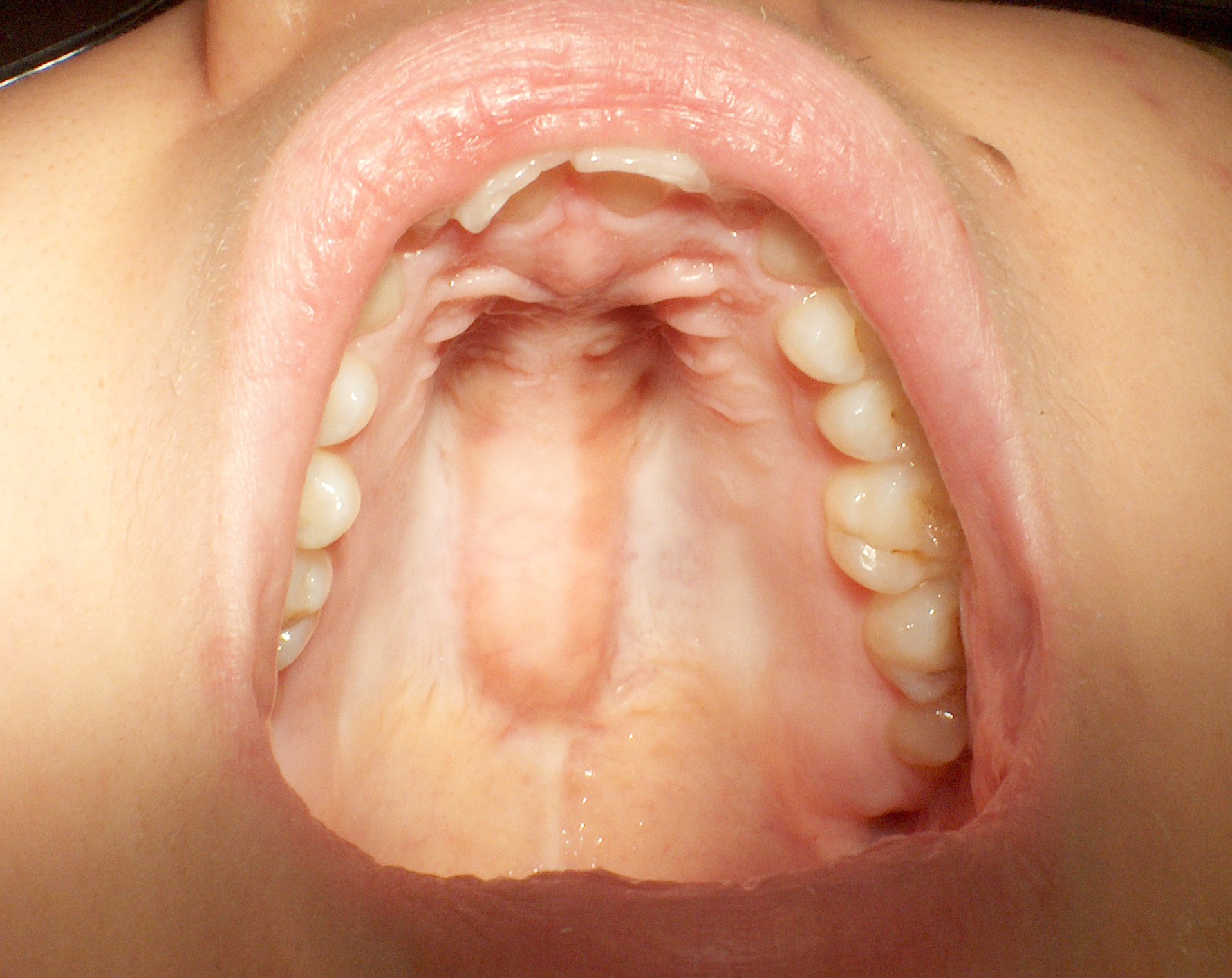
A torus palatinus is a firm outgrowth of normal, mature bone along the midline of the hard palate—the bony front portion of the roof of your mouth. The plural is palatal tori. It usually develops slowly and is considered an anatomical variation rather than a disease.
Some tori form a smooth dome; others look like a broad ridge or a cluster of rounded lobes. They are more common in women. Estimates of how many people have them vary substantially between populations and studies. [1] [2]
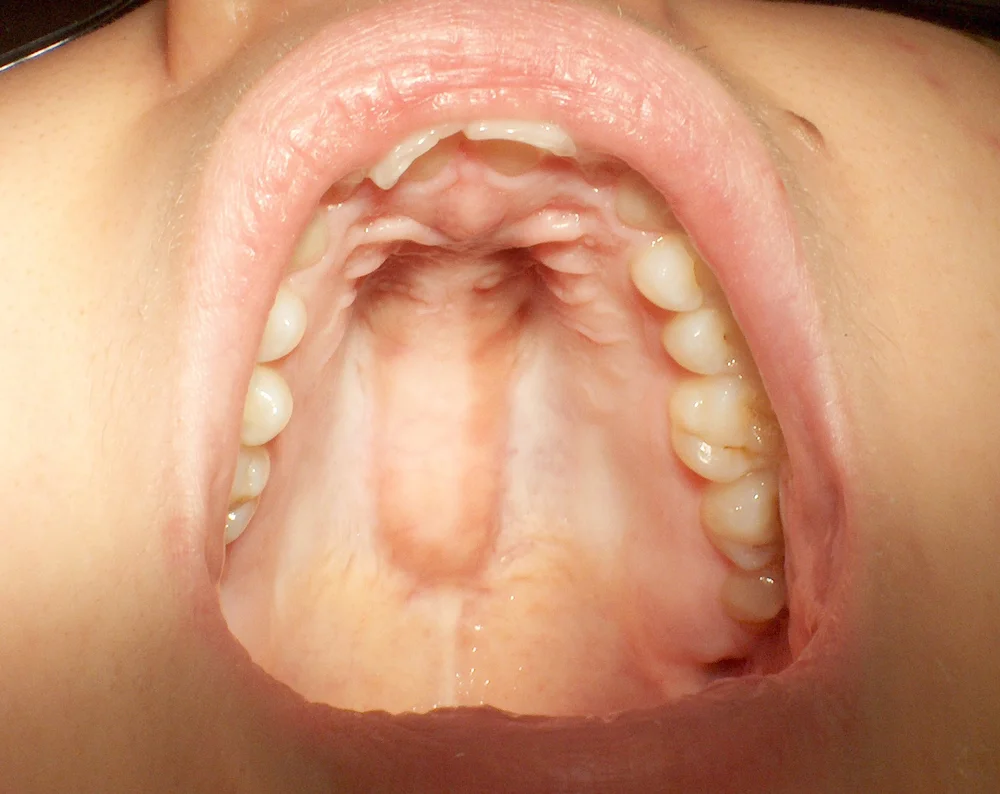

A typical palatal torus
- Centered on the hard palate
- Hard and bony
- Usually covered by intact tissue
- Stable or slowly growing
Changes to have checked
- Rapid enlargement or a new swelling
- Unexplained pain, bleeding, or numbness
- A sore that does not heal
- Persistent red or white patches
These features help explain what a dentist looks for. They are not a self-diagnosis checklist.
Is torus palatinus cancerous?
No. Torus palatinus is a benign bony growth, not oral cancer. The important step is confirming that a lump really is a torus. Other conditions can develop on the palate, and their appearances can overlap.
An oral cancer screening includes examining the mouth for concerning changes. If an area is suspicious, further testing or a biopsy may be needed; an examination alone cannot definitively rule out every condition.
When should a bump be examined?
- A newly noticed or changing lump, particularly one growing quickly.
- A swelling that is off-center, soft, or fluid-filled.
- A sore, ulcer, or red or white patch that persists for more than two weeks.
- Unexplained bleeding, numbness, or persistent pain.
These findings do not automatically mean cancer, but they deserve evaluation. Do not wait two weeks if symptoms are rapidly worsening. [4]
Seek urgent care for rapidly spreading swelling or difficulty breathing or swallowing.
Why an examination matters
A dentist considers the location, texture, history, surrounding teeth, and tissue over the bump. Our oral medicine evaluations help assess unusual lumps, sores, and other changes in the mouth.
| Condition | Possible features | Why evaluation matters |
|---|---|---|
| Palatal torus | A hard, usually slow-growing prominence in the center of the hard palate. | Often needs no treatment once the diagnosis is confirmed. |
| Salivary gland growth | A swelling that may occur toward the side or back of the palate; it can be painless. | Salivary gland tumors can be benign or malignant. A biopsy may be needed. |
| Dental abscess | Palatal swelling associated with an infected tooth; pain may occur. | Needs dental treatment to address the infection. |
| Nasopalatine duct cyst | A swelling near the front of the palate, sometimes in the midline. | A midline location alone does not establish that a lump is a torus. |
Further reading: National Cancer Institute: salivary gland tumors; diagnosis and management of nasopalatine duct cysts.
A typical torus can often be identified through examination. If the findings are unusual or surgery is planned, imaging may help assess the underlying anatomy. A CBCT scan provides a three-dimensional view when clinically indicated; it is not routinely needed for every torus. A biopsy is generally unnecessary for a typical torus but may be recommended when the diagnosis is uncertain.
Palatal and mandibular tori: a visual comparison
Palatal tori occur on the roof of the mouth. Mandibular tori occur on the inner surface of the lower jaw, beside the tongue. These photographs show examples in different people.


Tori vary in size and shape. Comparing your mouth with a photograph cannot confirm a diagnosis. Have a new or changing lump examined.
What causes torus palatinus?
The precise cause is not fully understood. Research points to a combination of inherited traits and environmental or functional influences. [3]
- Genetics: Tori can run in families.
- Bite forces: Teeth grinding and clenching, called bruxism, may contribute. They are not an established single cause of palatal tori.
- Other influences: Age, population differences, diet, and bone density have been studied, but their roles are not fully settled.
A palatal torus does not by itself prove that you grind your teeth or need a night guard.
Can torus palatinus cause pain or irritation?
Most palatal tori cause no discomfort. The tissue covering the bone is relatively thin, however, and hard or sharp foods can scratch it. Hot foods can burn the tissue, and an appliance that rubs the area can cause soreness.
A prominent torus may also interfere with the comfort or fit of an upper denture. Grooves between lobes can collect food, requiring attention during oral hygiene.
If the area becomes painful, have the cause assessed rather than assuming the torus explains every symptom. Avoid foods that repeatedly scrape the area, keep it gently clean, and have a rubbing appliance checked.
When is torus palatinus removal recommended?
Most people do not need removal. Surgery may be considered when the torus causes a specific problem: [1]
- It prevents a planned upper denture from fitting or functioning properly.
- It causes recurrent painful tissue injury that does not respond to conservative care.
- Its size interferes with speech, chewing, or swallowing.
The decision depends on your symptoms, anatomy, medical history, and dental treatment needs. A denture can sometimes be designed around a torus. Removal is not automatic simply because you need a denture.
What does removal involve?
When appropriate, an oral surgeon or another appropriately trained dentist lifts the overlying tissue, reduces and smooths the excess bone, and closes the area with sutures. Local anesthesia is used, with sedation considered according to the procedure and your needs.
A protective surgical stent may be used while the palate heals. Your surgeon will discuss risks such as bleeding, infection, wound-healing problems, and an opening into the nasal cavity. The nearby anatomy matters when planning surgery. [5]
Recovery varies with the size of the torus, the extent of surgery, and your health. Your dental team will provide instructions about food, cleaning, pain control, and follow-up. Initial comfort and complete tissue healing are not the same milestone.
Noticed a new bump on the roof of your mouth?
Schedule an examination with C.J. Henley, DMD at our Hendricks Avenue office in Jacksonville. We can assess the area and discuss whether observation, treatment, or a referral is appropriate.
3675 Hendricks Avenue, Jacksonville, FL 32207 · Contact and directions
Frequently asked questions
Does torus palatinus go away on its own?
A torus is made of bone and generally does not disappear on its own. If it causes no problems, it can usually be left alone and checked during routine dental visits.
Can a torus palatinus grow back after surgery?
Regrowth has been reported. Removal does not guarantee that a torus will never return. Your surgeon can discuss the likelihood in your situation and what to watch for afterward.
Can teeth grinding cause a bump on the roof of the mouth?
Grinding and clenching may contribute to the development of oral tori, but the relationship is not a proven single cause. An examination can assess both the bump and any evidence of grinding.
Does a palatal torus affect braces or clear aligners?
A torus does not necessarily prevent orthodontic treatment. Its size and position can affect appliances that contact the palate, such as some retainers and expanders. Your dentist or orthodontist will assess the fit and treatment plan.
Are bony bumps beside the tongue related?
Similar growths on the inner surface of the lower jaw are called mandibular tori. They often occur on both sides, beside the tongue. Like palatal tori, they are made of normal bone and usually need no treatment unless they cause problems. Not every lump in this area is a torus.
Can I remove or shrink a torus at home?
No home remedy has been shown to remove a palatal torus. Do not try to file, cut, or puncture it. If it bothers you, a dentist can determine whether treatment is needed.
About C.J. Henley, DMD
C.J. Henley, DMD is a general dentist in Jacksonville, Florida, whose practice includes cosmetic and restorative dentistry, oral medicine, and complex, medically involved dental care. He is a member of the Head & Neck Tumor Board at Baptist MD Anderson Cancer Center. Learn about his approach to dental care for patients with head and neck cancer.
References and further reading
- García-García AS, et al. Current status of the torus palatinus and torus mandibularis. Med Oral Patol Oral Cir Bucal. 2010;15(2):e353–e360.
- Haugen LK. Palatine and mandibular tori. A morphologic study in the current Norwegian population. Acta Odontol Scand. 1992;50(2):65–77.
- Loukas M, et al. The tori of the mouth and ear: a review. Clin Anat. 2013;26(8):953–960.
- National Institute of Dental and Craniofacial Research. Oral cancer: signs, symptoms, and diagnosis.
- Treatment of the Partially Edentulous Maxilla in the Presence of Tori. Dentistry Today. August 1, 2005.
- Torus palatinus: symptoms, causes and treatment. Cleveland Clinic.

The Stress-Oral Connection: How Mental Wellness Impacts Clinical Dental Outcomes
Stress and anxiety can physically damage your smile through cortisol spikes and medication-induced dry mouth. Discover our medically-informed dental approach.
The relationship between mental health and dental health is a complex, bidirectional pathway. While behavioral changes are often the first sign of struggle, the physiological effects of stress and anxiety can cause significant, long-term damage to your teeth and supporting structures.
At CJ Henley, DMD, we provide a judgment-free environment focused on Complex & Medically Involved Care, helping patients navigate dental recovery alongside their mental health journey.
The Physiology of Stress: Cortisol and Inflammation
Stress is not just "in your head"—it is a systemic hormonal event. High levels of the stress hormone cortisol can suppress the immune response, making it easier for pathogenic bacteria to invade the gingival tissues. This can lead to:
Accelerated Periodontal Disease: Chronic inflammation that is harder to treat due to a compromised immune system.
Delayed Healing: Slower recovery times after routine or surgical dental procedures.
Recurrent Oral Lesions: Stress-induced aphthous ulcers (canker sores) that can impact nutrition and comfort.
Medication Side Effects: The "Dry Mouth" Challenge
Many life-saving antidepressants and anti-anxiety medications carry a common clinical side effect: Xerostomia, or chronic dry mouth. Saliva is the mouth’s natural defense mechanism, responsible for neutralizing acids and remineralizing enamel. When saliva flow is reduced, the risk for "rampant decay" increases significantly. Our practice specializes in Medically Informed Protocols to protect patients on these medications, utilizing specialized fluoride therapies and biocompatible materials designed for high-risk environments.
Bruxism and Mechanical Wear
Anxiety often manifests physically as Bruxism (teeth grinding or clenching), particularly during sleep. This mechanical force can result in:
Loss of Vertical Dimension: Permanently wearing down essential molars.
Fractured Restorations: Breaking existing crowns or fillings due to excessive force.
TMJ Dysfunction: Chronic jaw pain and headaches that impact quality of life.
For patients exhibiting severe wear, our approach to Advanced Restorative Dentistry focuses on rebuilding function and protecting your smile with custom-engineered occlusal guards.
A Humane, Unhurried Approach
We understand that visiting the dentist can be a source of anxiety itself. This is why we prioritize an unhurried, two-hour new patient evaluation. We take the time to listen to your history, review your medications, and design a care plan that respects both your dental needs and your mental well-being.
Reviewed and Updated February 2026
How to get rid of tonsil stones
The tonsils are located in the back of the throat and serve as part of the body's lymphatic and immune systems. Tonsil stones are small stones that form there. They can cause infection and symptoms such as bad breath.
Ideally, the tonsils capture and catch bacteria before they can go deeper into a person's oral cavity.
However, the tonsils have small folds, in which bacteria and food can collect to form small, stone-like substances that doctors call tonsil stones or tonsilloliths.
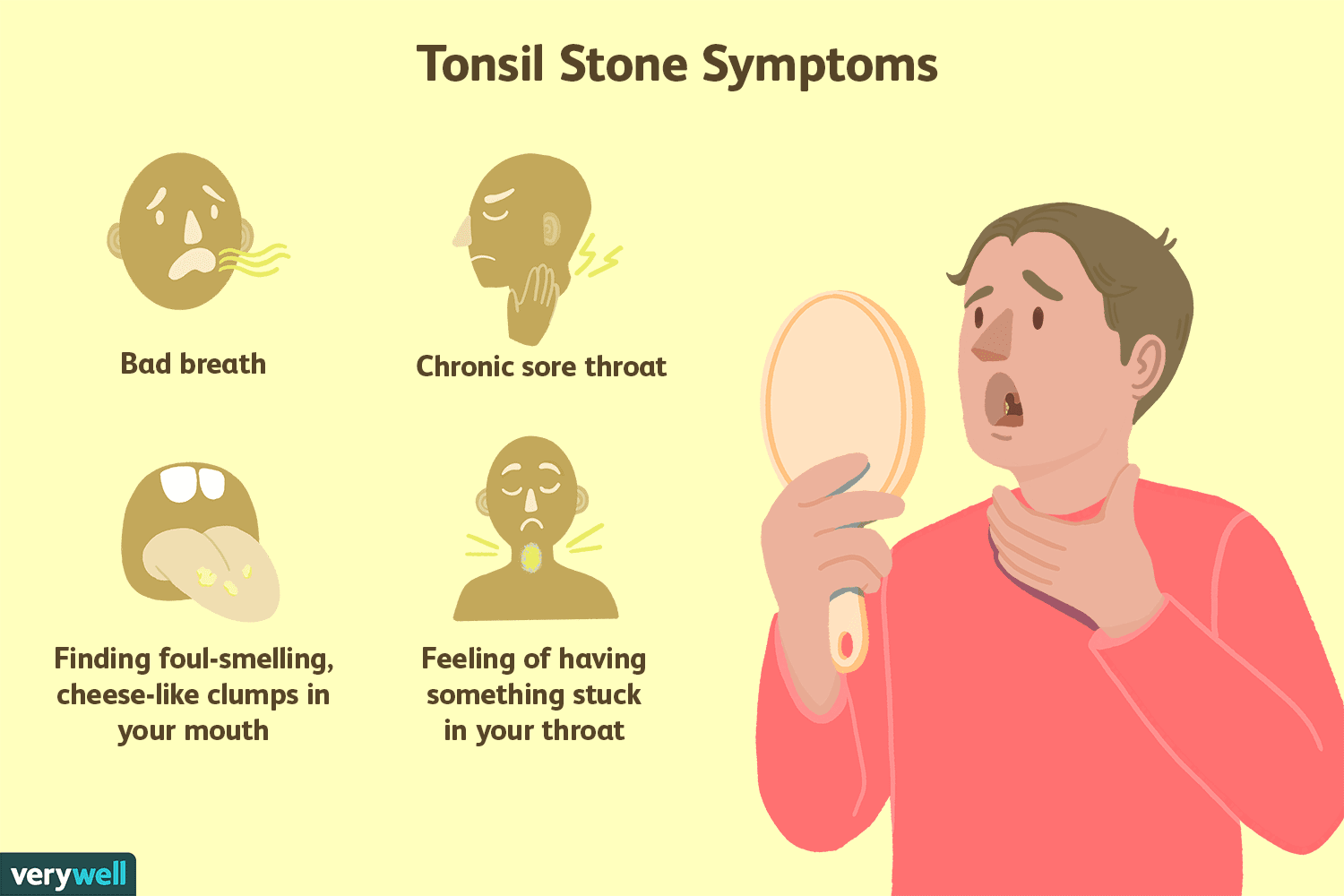
In addition to bad breath, these stones can cause a sore throat, painful swallowing, hoarseness, and inflamed, red tonsils.
In this article, learn how to get rid of tonsil stones at home, as well as when to see a doctor.
See the full article at Medical News Today
The tonsils are located in the back of the throat and serve as part of the body's lymphatic and immune systems. Tonsil stones are small stones that form there. They can cause infection and symptoms such as bad breath.
Ideally, the tonsils capture and catch bacteria before they can go deeper into a person's oral cavity.
However, the tonsils have small folds, in which bacteria and food can collect to form small, stone-like substances that doctors call tonsil stones or tonsilloliths.
In addition to bad breath, these stones can cause a sore throat, painful swallowing, hoarseness, and inflamed, red tonsils.
In this article, learn how to get rid of tonsil stones at home, as well as when to see a doctor.
See the full article at Medical News Today