

Composite Bonding in Jacksonville: Small Changes You Notice
Composite bonding is a conservative cosmetic treatment designed to make subtle, meaningful improvements — repairing chips, refining edges, closing small gaps, and improving symmetry while preserving natural tooth structure. When planned carefully and executed with precision, bonding enhances what’s already there rather than covering it up. In this practice, the process is collaborative, unhurried, and focused on achieving natural results that feel like your own teeth.
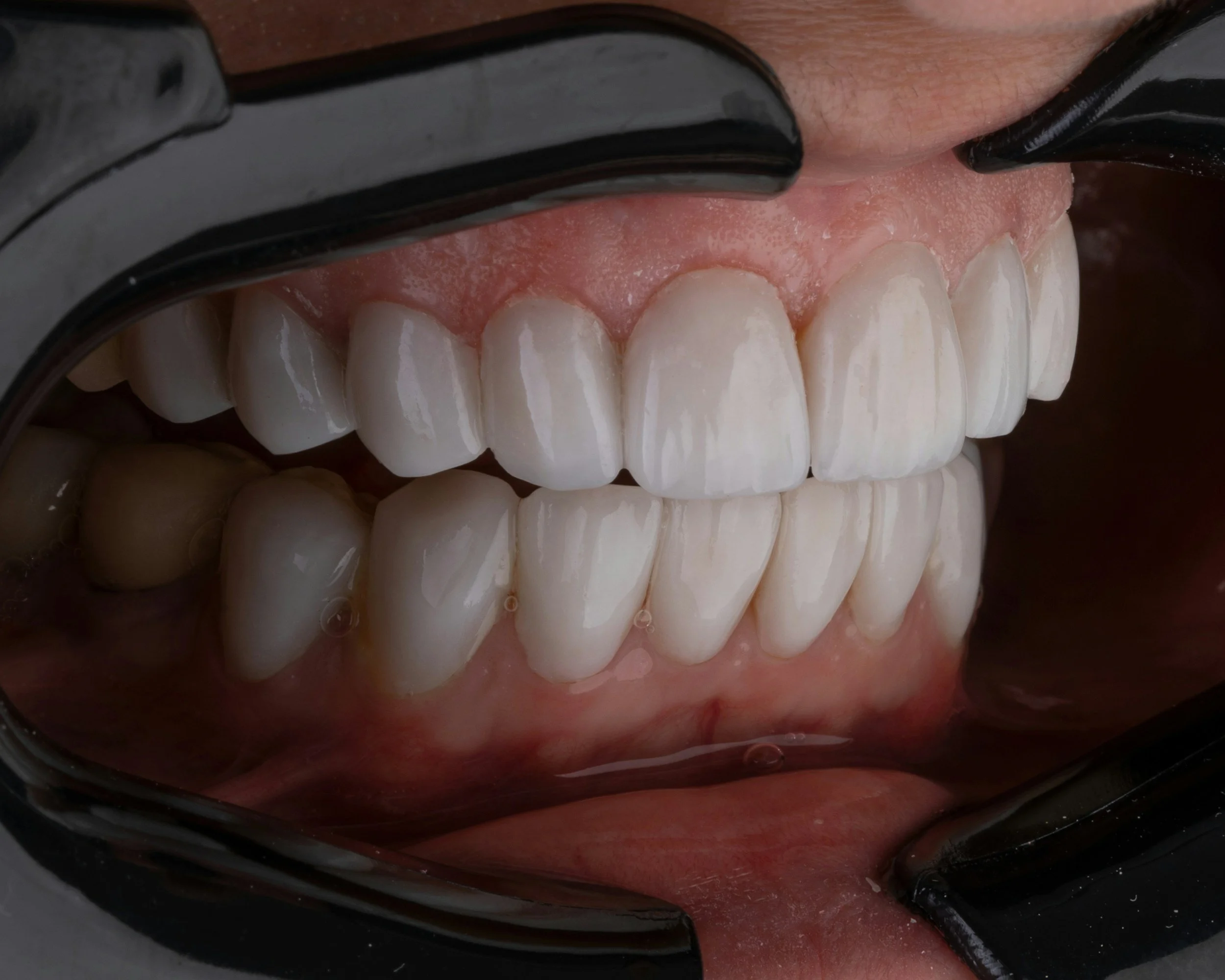
Composite bonding uses tooth-colored resin to repair chips, close small gaps and even out edges, usually in one visit and often with little or no drilling. It suits subtle to moderate changes. For large color changes or teeth that need full coverage, veneers or crowns are usually the better fit.
Most people who ask me about cosmetic dentistry aren't looking for something dramatic. They want to fix a chip, a dark edge or a gap they've always noticed in photographs. Done carefully, bonding refines what's already there instead of covering it up.
What is composite bonding used for?
I use bonding to:
Repair chipped or broken edges
Close small gaps
Even out worn or uneven edges
Improve symmetry between teeth
Cover small areas of discoloration
Finish details after orthodontic treatment
When bonding is done well, it should look like your tooth rather than like dental work.
How do I make bonding look natural?
Natural-looking bonding comes from planning, materials and time spent on details. Here is how I approach it.
You're involved from the start. We talk about the shape and how much change you want before I begin.
Materials chosen for appearance and durability. I use Filtek Supreme composite for its shade range and translucency, and Scotchbond Universal adhesive.
Contours that look like teeth. A Bioclear matrix helps shape smooth contours where the tooth meets the gum.
A final cure under glycerin. This removes the soft surface layer that oxygen leaves behind, which helps the surface resist staining.
Texture and polish that imitate natural enamel.
No rushing. To keep quality high, I usually limit a visit to six teeth or fewer.
For larger changes, I often make a quick mock-up on your teeth so you can see the shape, size and symmetry before we commit.
Is bonding better than veneers?
They solve different problems.
Bonding works best for subtle to moderate changes. It is easier to repair or adjust, and usually removes little or no enamel.
Veneers suit larger changes in shape or color and resist staining longer. Porcelain veneers usually require some enamel to be removed.
The right choice depends on your goals, your bite, your budget and what you want your teeth to need in ten years.
I don't recommend one over the other by default. My job is to explain the trade-offs so you can choose with clear expectations.
How long does composite bonding last?
With good care, bonding can last many years. It is softer than porcelain, so it can chip or pick up stain over time, and it usually needs polishing or a small touch-up along the way. To help it last:
Don't bite nails, pens or other hard objects with bonded teeth.
Keep up with brushing, cleaning between teeth and regular checkups.
Come in for polishing as needed.
Wear a guard if you grind your teeth at night.
Call if something feels rough, sharp or different.
If something doesn't feel right after treatment, you can reach me directly. Your care doesn't stop when you leave the office.
Bonding cases from our office
These cases were treated in our office. Results depend on each patient's teeth, bite and goals.
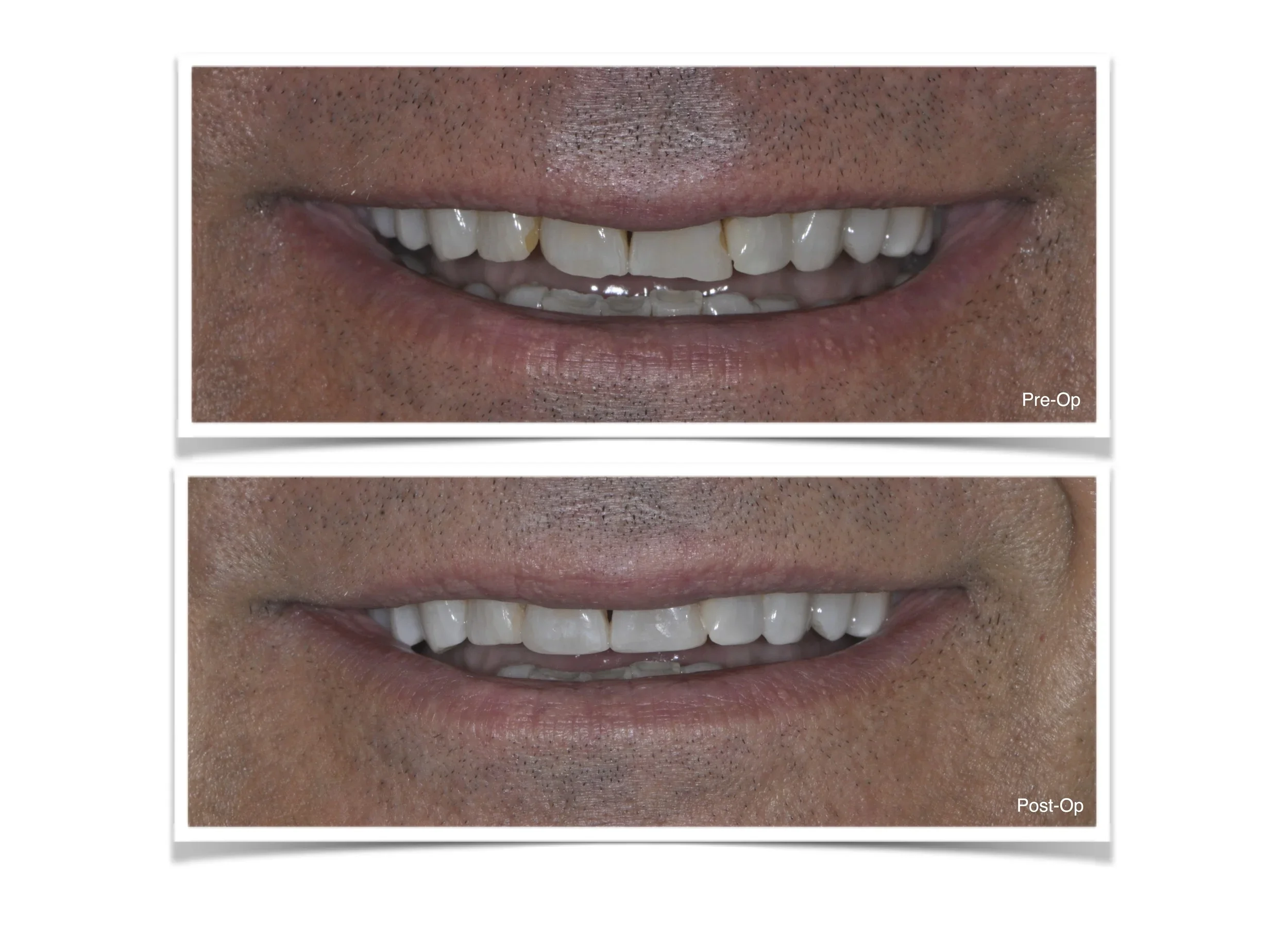
Case 1: Closing spaces and refreshing the smile using composite bonding.
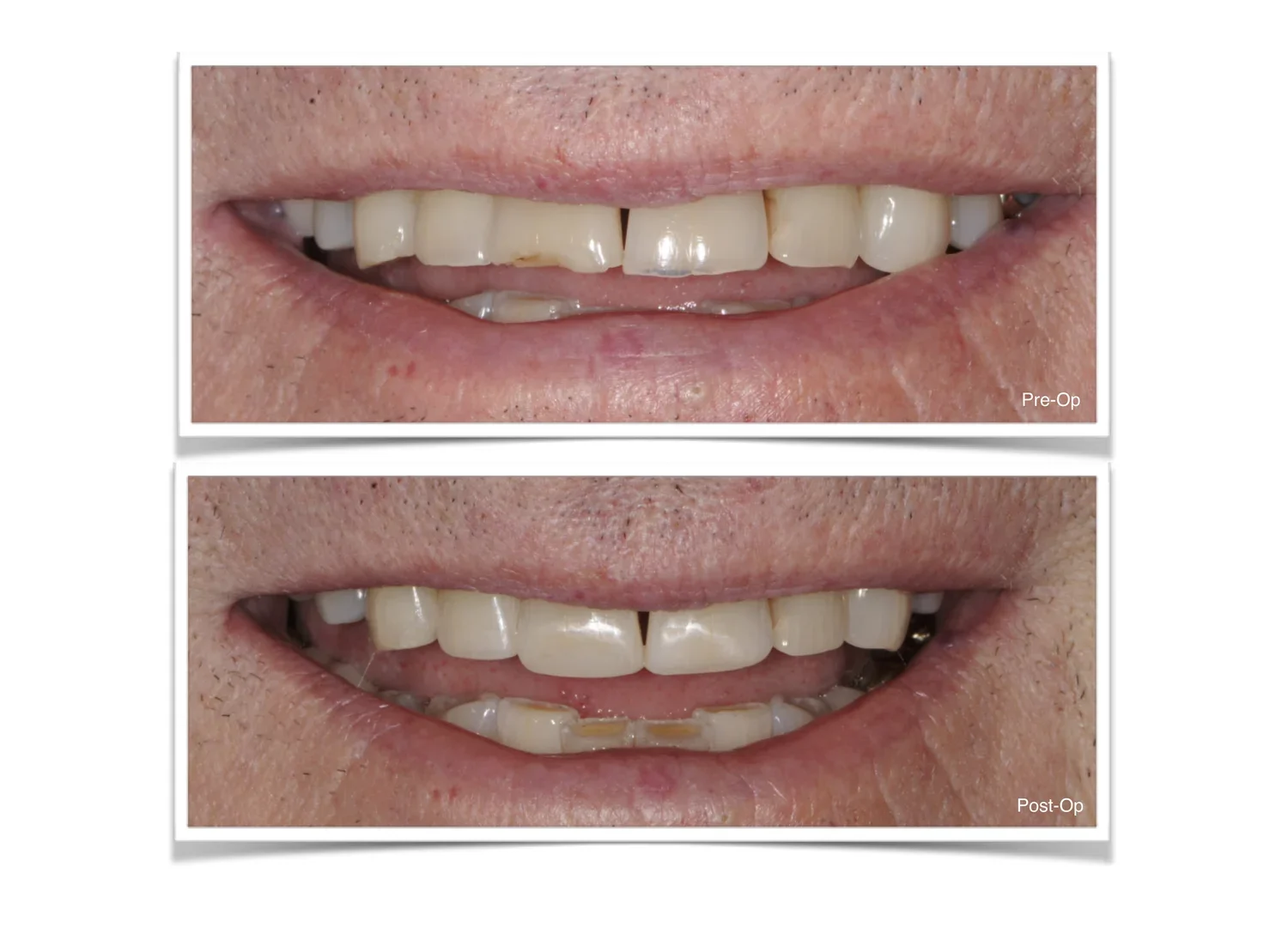
Case 2: Improving shape and symmetry using composite bonding.
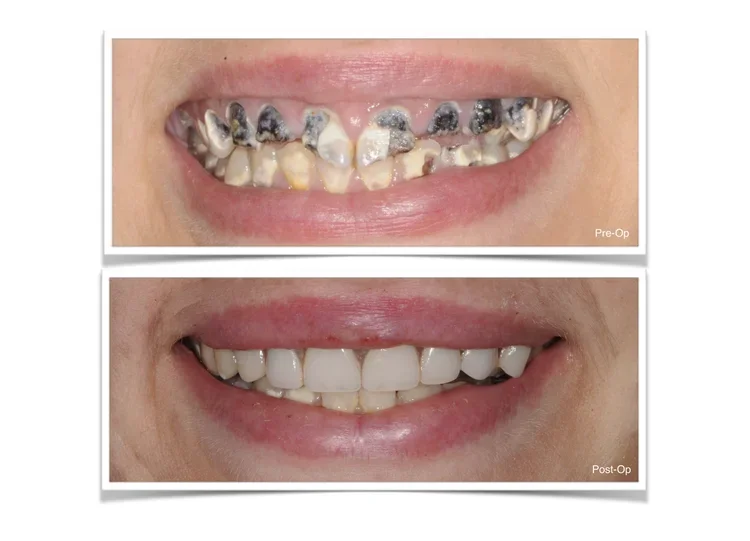
Case 3: Budget-friendly full-mouth rehabilitation with selective extractions, composite restorations, and a flexible partial
Case 1: Closing spaces and refreshing the smile with composite bonding.
Case 2: Improving shape and symmetry with composite bonding.
Case 3: A budget-conscious full-mouth plan using selective extractions, composite restorations and a flexible partial denture.
See more in our before and after gallery and case studies.
Common questions about composite bonding
How long does bonding last? Many years with good care. Expect periodic polishing and occasional touch-ups.
Is composite bonding reversible? Often, because many bonding cases need little or no enamel removed. If enamel has to be shaped to get a good result, that part isn't reversible. I'll tell you which applies before we start.
Does bonding stain? It can stain more than porcelain. Good polishing and habits reduce it.
How many teeth can be bonded at once? I usually limit a visit to six teeth so each one gets the time it needs.
Does bonding hurt? It is usually comfortable, and many cases need no numbing.
Discuss composite bonding in Jacksonville
If you're thinking about a small cosmetic change, our office is at 3675 Hendricks Avenue near San Marco. Read about our full range of cosmetic dentistry, see how bonding can close a gap between front teeth, or contact the office at 904-398-1549.
Sources
American Dental Association, MouthHealthy. Bonding.
About the author. CJ Henley, DMD, is a general dentist in Jacksonville whose practice focuses on cosmetic and restorative dentistry, dental implants and dental care around head and neck cancer. Membership in the American Academy of Cosmetic Dentistry is not a specialty credential; Florida does not recognize cosmetic dentistry as a dental specialty. Meet Dr. Henley.
CJ Henley, DMD, PA · 3675 Hendricks Avenue, Jacksonville, FL 32207 · 904-398-1549
Updated October 2026.

What Toothpaste Do Dentists Use? My Personal Picks
Jacksonville dentist Dr. CJ Henley, DMD shares what dentists actually use at home. Learn how to choose the best toothpaste for sensitivity, whitening, and long-term oral health.
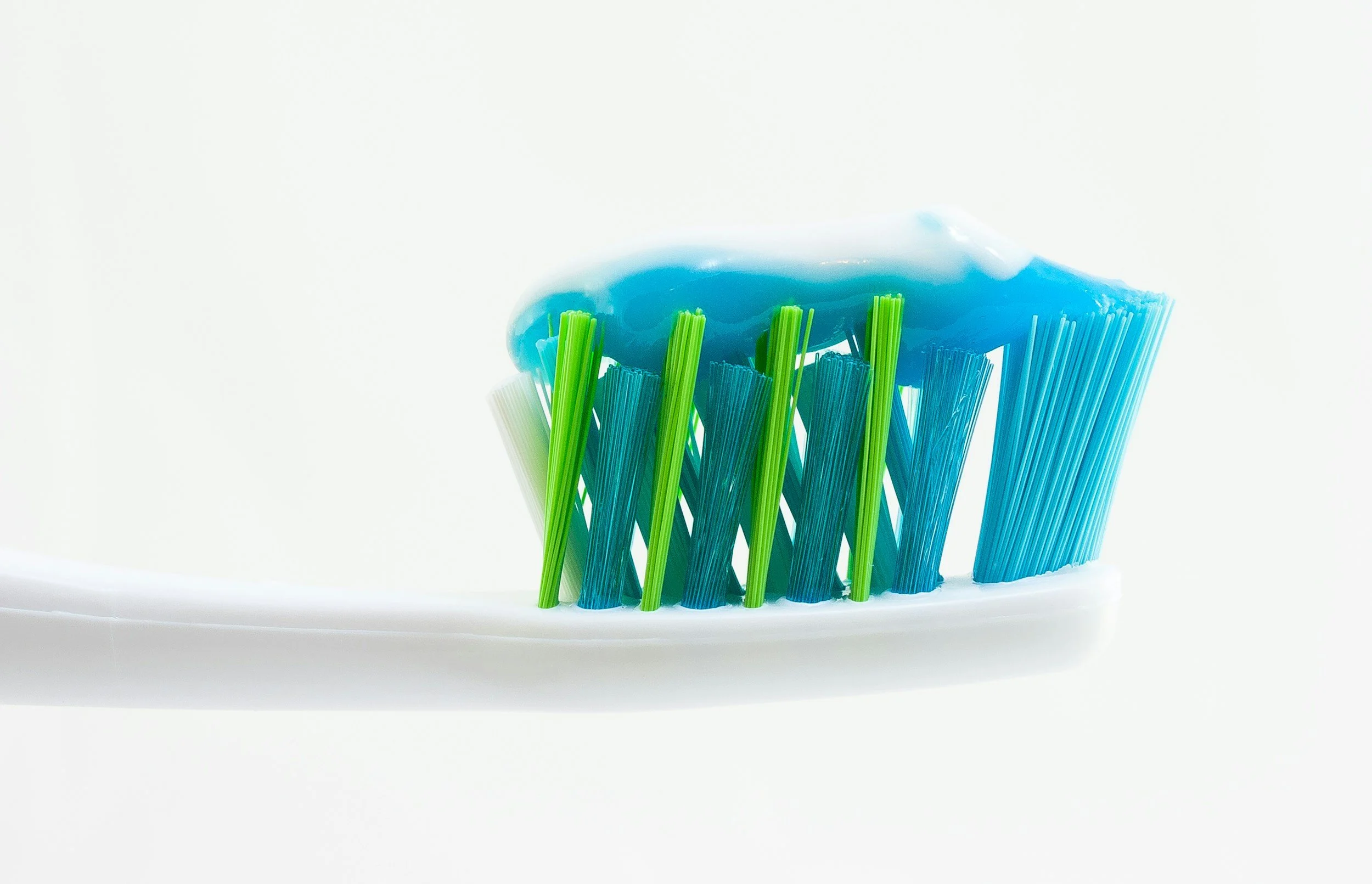
At home I use a fluoride toothpaste with low abrasion, and I switch to a desensitizing fluoride toothpaste when my teeth are sensitive. That's what I recommend for most adults too. The brand matters less than three things: fluoride, gentle abrasives and an active ingredient that fits your needs. For the full ingredient breakdown, see our toothpaste guide. This post is the short, personal version.
Is there one perfect toothpaste?
No. The right choice depends on your mouth: your enamel, your diet, your habits and your medical history. Toothpaste matters more than most people think, though. The right one can reduce sensitivity, help prevent cavities and protect dental work over the years.
What do I look for on the label?
Fluoride. This is the ingredient I won't skip. It strengthens enamel and can help reverse early decay before a cavity forms. Sodium fluoride and stannous fluoride are both good choices.
Low abrasiveness. Abrasives remove surface stains, but they can also wear enamel, exposed roots and restorations. My own rule of thumb is to stay under about 100 on the RDA scale (relative dentin abrasivity) for most people. Most labels don't list RDA, so I usually point patients toward pastes made for sensitive teeth or enamel protection, which tend to be gentler.
An active ingredient for your need. Potassium nitrate helps with sensitivity. Stannous fluoride helps with gum health as well as cavities. Nano-hydroxyapatite is a fluoride alternative some patients ask about. The research on it is growing, but for most of my patients I still recommend fluoride.
What you can skip. Charcoal, "natural" whitening ingredients and oil pulling trends sound appealing, but they don't have good evidence behind them, and some charcoal pastes are quite abrasive.
What do I actually use at home?
People often ask me which toothpaste I use. Here's my honest rotation:
Everyday: a fluoride toothpaste with mild abrasiveness, such as Pronamel or Colgate Total.
When my teeth are sensitive: a desensitizing option such as Sensodyne Repair & Protect.
For a dry mouth: an SLS-free fluoride toothpaste, such as Biotène's fluoride toothpaste. SLS is the foaming detergent in most toothpastes, and some people with a dry or tender mouth find it irritating.
For whitening: I don't rely on whitening toothpaste.
These are my own preferences, not a recommendation for everyone. A different paste may fit your mouth better.
Does whitening toothpaste change the color of your teeth?
Not much. Whitening toothpastes work mainly by polishing off surface stains from coffee, tea and similar foods. They don't significantly change the color inside the tooth.
Changing the tooth's underlying color takes a peroxide bleaching product. That can be an over-the-counter strip or gel, or a professional treatment in the office or with custom trays at home. Both kinds bleach the tooth. A dental exam first is still worthwhile, because whitening won't change crowns, veneers or fillings, it can make sensitivity worse, and discoloration sometimes has a cause that needs treatment. Our teeth whitening page covers the options.
What if I've had radiation to the head and neck?
Radiation to the head and neck can sharply reduce saliva and raise the risk of decay. An SLS-free fluoride toothpaste helps with comfort, but most patients also need a stronger, prescription fluoride plan that we tailor to them. If you're facing or have finished treatment, see our head and neck cancer and dry mouth pages.
When isn't toothpaste enough?
Even a good toothpaste can't make up for missed brushing. Brush twice a day for two minutes with a soft brush, and clean between your teeth daily with floss or small brushes. If you still have bleeding gums, lasting sensitivity or new discoloration, come see me. Sometimes your mouth is telling you something toothpaste can't fix.
A few toothpaste tips
Less is more. A pea-sized amount is plenty for adults. More foam doesn't mean more cleaning.
Spit, don't rinse. Leaving a thin film of fluoride on your teeth helps it work longer. Our post on why orange juice tastes bad after brushing explains this and the role of SLS.
Match your situation. Enamel wear, gum recession, dental implants and cancer treatment can each change what works for you.
Want help choosing?
If you're not sure which toothpaste fits your mouth, ask at your next visit and we'll build it into your home care plan. Contact our office at 3675 Hendricks Avenue in Jacksonville or call 904-398-1549.
Sources
American Dental Association. Whitening (Oral Health Topics).
American Dental Association, MouthHealthy. Fluoride.
About the author. CJ Henley, DMD, is a general dentist in Jacksonville whose practice focuses on cosmetic and restorative dentistry, dental implants and dental care around head and neck cancer. Meet Dr. Henley.
CJ Henley, DMD, PA · 3675 Hendricks Avenue, Jacksonville, FL 32207 · 904-398-1549
Updated October 2026.