
BLOG: A PLACE TO FIND THE MOST UP-TO-DATE INFORMATION ABOUT DENTISTRY IN JACKSONVILLE

Is Sparkling Water Bad for My Teeth?
Is the satisfying fizz of your favorite sparkling water putting you at risk for tooth decay? Because any drink with carbonation—including sparkling water—has a higher acid level, some reports have questioned whether sipping sparkling water will weaken your tooth enamel (the hard outer shell of your teeth where cavities first form).
Is the satisfying fizz of your favorite sparkling water putting you at risk for tooth decay? Because any drink with carbonation—including sparkling water—has a higher acid level, some reports have questioned whether sipping sparkling water will weaken your tooth enamel (the hard outer shell of your teeth where cavities first form).
So, Is Sparkling Water Affecting My Teeth?
According to available research, sparkling water is generally fine for your teeth—and here's why. In a study using teeth that were removed as a part of treatment and donated for research, researchers tested to see whether sparkling water would attack tooth enamel more aggressively than regular lab water. The result? The two forms of water were about the same in their effects on tooth enamel. This finding suggests that, even though sparkling water is slightly more acidic than ordinary water, it's all just water to your teeth.
Tips for Enjoying Sparkling Water—and Protecting Your Teeth
- Sparkling water is far better for your teeth than sugary drinks. In addition, be sure to drink plenty of regular, fluoridated water, too—it’s the best beverage for your teeth. Water with fluoride naturally helps fight cavities, washes away the leftover food cavity-causing bacteria feast on and keeps your mouth from becoming dry (which can put you at a higher risk of cavities).
- Be mindful of what’s in your sparkling water. Citrus-flavored waters often have higher acid levels that does increase the risk of damage to your enamel. Plan to enjoy these in one sitting or with meals. This way, you aren’t sipping it throughout the day and exposing your teeth over and over again to the slightly higher level of acid it contains.
- Sparkling water brands with added sugar can no longer be considered just sparkling water. They are a sugar-sweetened beverage, which can contribute to your risk of developing cavities. So remember—sparkling or not—plain water is always the best choice.

What You Don't Know About Your Mouth
The mouth is an interesting place. Here are some interesting facts you probably don't know!
Did you know that a sore jaw, when combined with chest pain, can signal a heart attack – especially in women.
32% of Americans cite bad breath as the least attractive trait of their co-workers.
38.5 = the total days an average American spends brushing their teeth over a lifetime.
73% of Americans would rather go grocery shopping than floss.
Dentists have recommended that a toothbrush be kept at least six feet away from a toilet to avoid airborne particles resulting from the flush.
A toothpick is the object most often choked on by Americans.
Every year, kids in North America spend close to half a billion dollars on chewing gum.
The number of cavities in the average mouth is down and people are keeping their teeth longer. People, on average, have healthier mouths than even 10 years ago. Specifically:
—The decline in tooth decay was greatest among kids but holds across every age group.
—Only 40% of young people age 6 to 19 had ever had cavities. That’s down from 50% a decade ago.
—Over the last ten years the proportion of people age 60 who’d lost all their teeth had decreased from 33% to 25%.
—Use of dental sealants, which block tooth decay on the chewing surfaces of kids’ vulnerable molars, was up 64%. 30% of kids had had at least one sealed tooth.
—Adults with post high school degrees had an average of three more teeth than those without a high school diploma.
—Smokers remain three times more likely than non-smokers to lose all their teeth. This figure has not changed from a decade ago.
—Socio-economic status plays a definite role in one’s general and dental health; 33% of low-income adults have untreated decay. This is compared with 16% of middle- and higher-income adults. 19% of kids living in poverty have untreated decay compared with 8% of wealthier kids.
More people use blue toothbrushes than red ones.
Like fingerprints, everyone’s tongue print is different.
The average toothbrush contains about 2,500 bristles grouped into about 40 tufts per toothbrush. The tufts are folded over a metal staple and forced into pre-cored holes in the head and fused into the head with heat. The handle is made of at least two materials, usually plastic and rubber. The grips used for the handle is: precision, power, spoon, oblique and distal oblique.
The average woman smiles about 62 times a day! A man? Only 8!
Kids laugh around 400 times a day. Grown-ups laugh about 15 times.

Happy Thanksgiving from Henley & Kelly
Thanksgiving one of the few holidays that gives us the opportunity to reflect on the past year and consider our blessings. It is a time of togetherness and gratitude. Thanksgiving Day summons all of us to pause in the midst of activity, however necessary and valuable, to give simple and humble thanks.
Everyone here at Henley & Kelly is grateful to serve you, our patients. We are honored to be a part of your health care team.
We hope that you all have a wonderful Thanksgiving holiday. Enjoy your friends and family
Thank you,
Dr. Henley, Dr. Kelly, Angel, Barbara, Cheryl, Pam, PJ, Rose, and Sheila
Thanksgiving one of the few holidays that gives us the opportunity to reflect on the past year and consider our blessings. It is a time of togetherness and gratitude. Thanksgiving Day summons all of us to pause in the midst of activity, however necessary and valuable, to give simple and humble thanks.
Everyone here at Henley & Kelly is grateful to serve you, our patients. We are honored to be a part of your health care team.
We hope that you all have a wonderful Thanksgiving holiday. Enjoy your friends and family
Thank you,
Dr. Henley, Dr. Kelly, Angel, Barbara, Cathy, Cheryl, Pam, PJ, Rose, and Sheila

Jacksonville's Top Doctors 2017
Congratulations to both Dr. Henley and Dr. Kelly for being voted one of Jacksonville's Top Doctors, again!
Congratulations to both Dr. Henley and Dr. Kelly for being voted one of Jacksonville's Top Doctors, again!
At Henley & Kelly it is our goal to form life-long relationships with our patients, providing them with the best in cosmetic dentistry, family dentistry, and oral medicine. Dr. Henley, Dr. Kelly and their staff pride themselves on being a patient-focused practice and strive to spend as much time as needed with each and every patient.
Both Dr. Henley and Dr. Kelly believe that the integration of technology in dentistry is important to excellent clinical outcomes, however that is no substitute for diagnostic expertise and clinical mastery. The focus should not be on how quickly the work is completed, but how long the work lasts. Excellent dentistry should stand the test of time.
Dr. Henley earned his Bachelor of Science in Integrative Biology and his Doctorate of Dental Medicine from the University of Florida. During his time at the University of Florida College of Dentistry, Dr. Henley received awards for ethics and cosmetic dentistry.
Dr. Kelly earned his Bachelor of Science in Chemistry from the University of Georgia and is Doctorate of Dental Surgery from Emory University, where he was invited to join the prestigious National Dental Honor Society, Omicron Kappa Upsilon. He has been in private practice in Jacksonville for more than 45 years.
Dr. Henley is dedicated to legislation that helps preserve the highest clinical standards in dentistry. He serves as the Secretary of the the Northeast District Dental Association and as an Alternate Delegate to the Florida Dental Association. While in private practice Dr. Henley continues his educational commitment by serving as faculty in the department of Oral and Maxillofacial Surgery at the University of Florida College of Dentistry.
As a commitment to our patients and our community Dr. Henley serves as member of the Head and Neck Tumor Board at Baptist MD Anderson. The tumor board is a multi-specialty group that works together using the latest in both dentistry and medicine to ensure that cancer patients have the best possible outcomes.

History of Gum Disease Increases Cancer Risk in Older Women
Postmenopausal women who have a history of gum disease also have a higher risk of cancer, according to a new study of more than 65,000 women.
Postmenopausal women who have a history of gum disease also have a higher risk of cancer, according to a new study of more than 65,000 women.
The study, led by researchers at the University at Buffalo, is the first national study of its kind involving U.S. women, and the first to focus specifically on older women. It's also the first study to find an association between periodontal disease and gallbladder cancer risk in women or men. The findings were published today (Aug. 1) in the journal Cancer Epidemiology, Biomarkers & Prevention.
"This study is the first national study focused on women, particularly older women," said Jean Wactawski-Wende, the study's senior author.
"Our study was sufficiently large and detailed enough to examine not just overall risk of cancer among older women with periodontal disease, but also to provide useful information on a number of cancer-specific sites," added Wactawski-Wende, dean of UB's School of Public Health and Health Professions and a professor of epidemiology and environmental health.

Your old dental fillings probably contain mercury — are they dangerous?
Fox News (9/11) carries an article originally published on Rodale’s Organic Life discussing the safety of mercury in amalgam fillings. The article reports that “large-scale reviews of all the existing research have not found strong evidence of amalgam-filling-related mercury dangers.” The article notes the ADA states that “amalgam is a valuable, viable and safe choice for dental patients,” and the FDA and other national organizations support this position.
Fox News (9/11) carries an article originally published on Rodale’s Organic Life discussing the safety of mercury in amalgam fillings. The article reports that “large-scale reviews of all the existing research have not found strong evidence of amalgam-filling-related mercury dangers.” The article notes the ADA states that “amalgam is a valuable, viable and safe choice for dental patients,” and the FDA and other national organizations support this position. “Looking at the existing body of evidence, studies don’t support the belief that there would be negative health effects,” says Stefanie Russell, DDS, PhD, a clinical associate professor of epidemiology and health promotion at New York University. “People should not be worried.”
The ADA released a statement last year reaffirming its position that “dental amalgam is a durable, safe and effective cavity-filling option.” MouthHealthy.org provides information for patients about restorative materials.
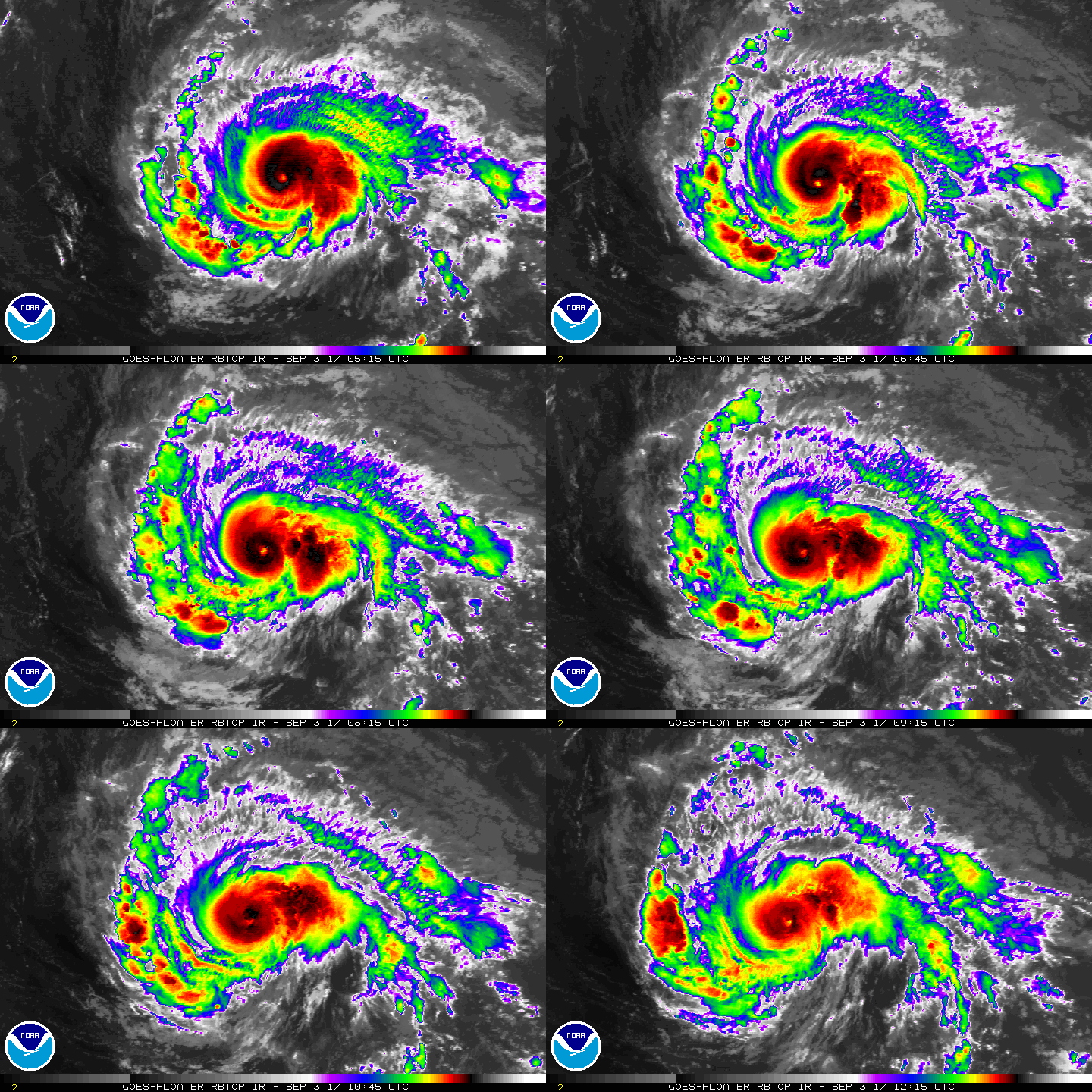
Hurricane Irma - Office Closed
Due to the upcoming hurricane, we will close our office temporarily. We be closed starting Monday (September 11, 2017) and Tuesday (September 12, 2017). Depending on the storm's path we may be closed on Wednesday (September 13, 2017) as well.
Please be safe and know that we are always available even if the office is closed. Please call the office at 904.398.1549. The on call doctor number is on the voicemail.
For More information about the storm please click the links below.
Florida Division of Emergency Management
Due to the upcoming hurricane, we will close our office temporarily. We be closed Monday (September 11, 2017) and Tuesday (September 12, 2017). We anticipate to reopen Wednesday (September 13, 2017).
Please be safe and know that A DOCTOR IS ALWAYS AVAILABLE EVEN IF THE OFFICE IS CLOSED. If you need a doctor please call the office at 904.398.1549 Both Dr. Henley's and Dr. Kelly's phone numbers are AT THE END of the voicemail.
For More information about the storm please click the links below.
Florida Division of Emergency Management

Cool Street Art!
This really cool American street artist @tombobnyc brightens the streets of New York with his unique creations, using benches, man hole covers, poles or electrical boxes to create colorful and cool characters.
We at Henley & Kelly especially like this one!
The American street artist @tombobnyc brightens the streets of New York with his unique creations, using benches, man hole covers, poles or electrical boxes to create colorful and cool characters.
We at Henley & Kelly especially like this one!
Exposure to specific toxins and nutrients during late pregnancy and early life correlate with autism risk
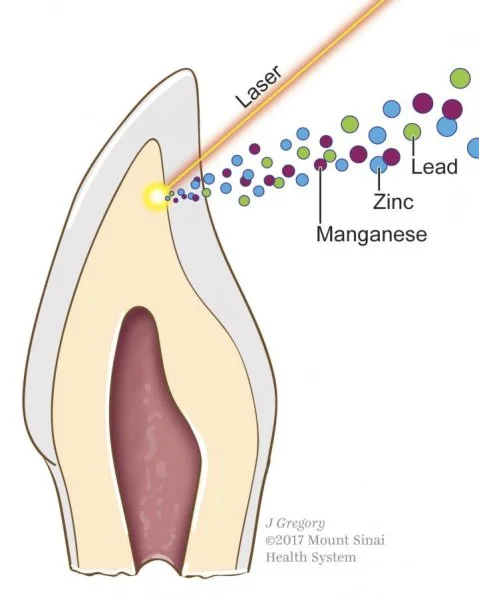
Using evidence found in baby teeth, researchers at Mount Sinai Hospital found that differences in the uptake of multiple toxic and essential elements over the second and third trimesters and early postnatal periods are associated with the risk of developing autism spectrum disorders (ASD), according to a study published June 1 in the journal Nature Communications.
Using evidence found in baby teeth, researchers from The Senator Frank R. Lautenberg Environmental Health Sciences Laboratory and The Seaver Autism Center for Research and Treatment at Mount Sinai found that differences in the uptake of multiple toxic and essential elements over the second and third trimesters and early postnatal periods are associated with the risk of developing autism spectrum disorders (ASD), according to a study published June 1 in the journal Nature Communications.
The critical developmental windows for the observed discrepancies varied for each element, suggesting that systemic dysregulation of environmental pollutants and dietary elements may serve an important role in ASD. In addition to identifying specific environmental factors that influence risk, the study also pinpointed developmental time periods when elemental dysregulation poses the biggest risk for autism later in life.
According to the U.S. Centers for Disease Control and Prevention, ASD occurs in 1 of every 68 children in the United States. The exact causes are unknown, but previous research indicates that both environmental and genetic causes are likely involved. While the genetic component has been intensively studied, specific environmental factors and the stages of life when such exposures may have the biggest impact on the risk of developing autism are poorly understood. Previous research indicates that fetal and early childhood exposure to toxic metals and deficiencies of nutritional elements are linked with several adverse developmental outcomes, including intellectual disability and language, attentional, and behavioral problems.
Source: The Mount Sinai Hospital / Mount Sinai School of Medicine. "Exposure to specific toxins and nutrients during late pregnancy and early life correlate with autism risk." ScienceDaily. ScienceDaily, 1 June 2017. <www.sciencedaily.com/releases/2017/06/170601082239.htm>.
3D Printing and Dentistry
3D Printing and Dentistry
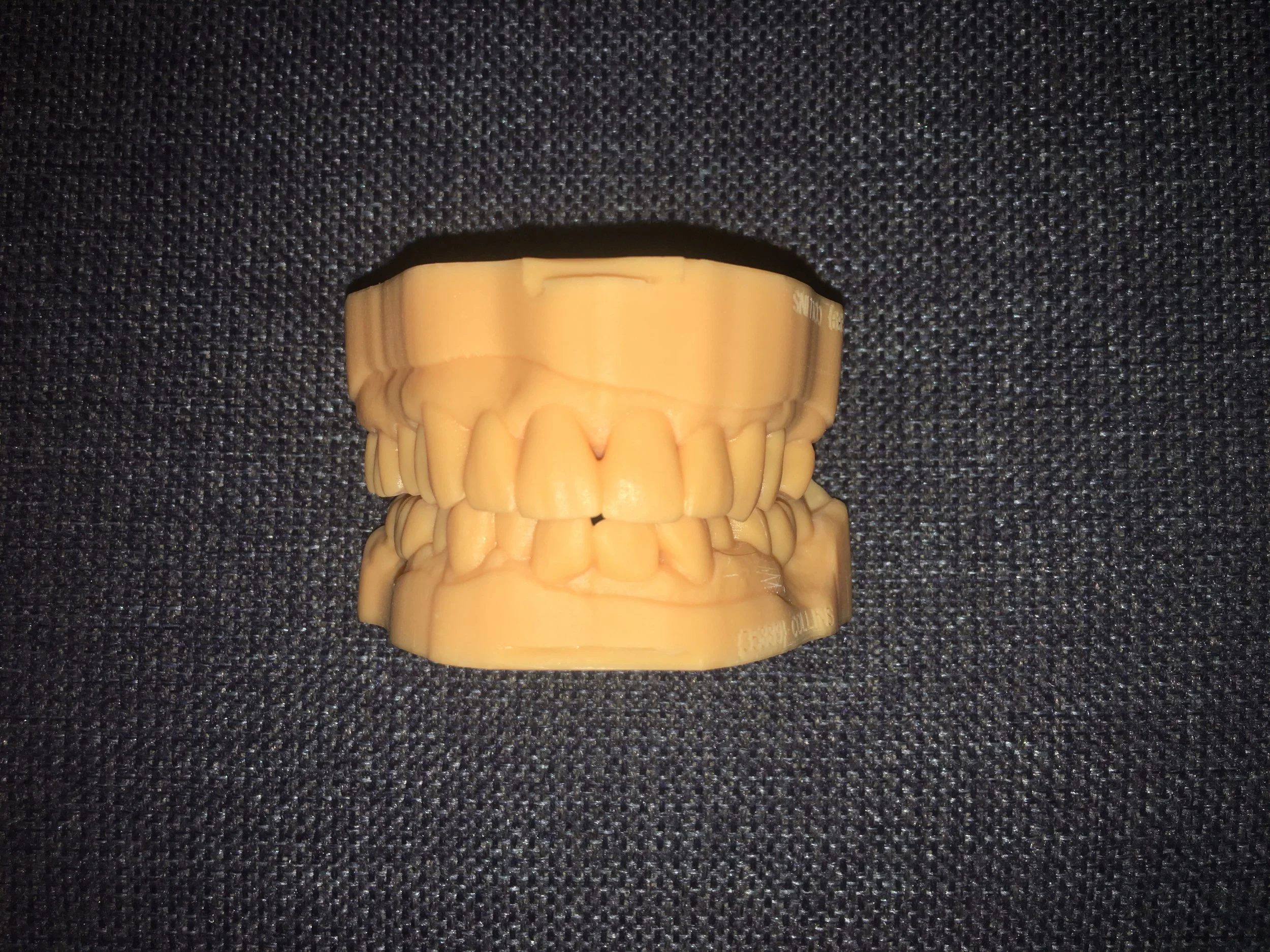
We recently had a patient that simply could not tolerate dental impressions, however it had to be done to complete her treatment. So we used a digital 3D scanner to scan her mouth and had her models 3D be printed. Technology in dentistry today is amazing!
3D Printing and Dentistry
We recently had a patient that simply could not tolerate dental impressions, however it had to be done to complete her treatment. So we used a digital 3D scanner to scan her mouth and had her models to be printed. Technology in dentistry today is amazing!