
Behçet's Mouth Ulcers (Oral Ulcers of Behçet's Disease)
Behçet's mouth ulcers look almost exactly like ordinary canker sores. The difference is the pattern. They come back again and again, often several at a time, and new ones tend to show up before the old ones have healed. For most people with Behçet's disease, these sores are the very first sign, sometimes years before anything else happens.
Behçet's mouth ulcers are painful, canker-sore-like ulcers that keep coming back. They're usually the first sign of Behçet's disease, a rare inflammatory condition of the blood vessels. They're not contagious. Each sore usually heals in 1 to 3 weeks. Steroid gels and rinses ease them. A rheumatologist makes the diagnosis. See a doctor soon if mouth sores come with genital sores, skin lumps, or a red, painful eye.
Not sure this is what you have? Answer five quick questions in our mouth spot checker. It compares what you see with more than 40 common conditions and tells you how soon to have it looked at.
- What is Behçet's disease?
- What Behçet's mouth ulcers look like
- Behçet's disease vs. canker sores
- Other look-alikes
- Behçet's syndrome symptoms beyond the mouth
- What causes Behçet's disease?
- How is Behçet's diagnosed?
- How long the ulcers last
- Mouth care at home
- Over-the-counter options and Behçet's mouthwash
- What a dentist can do
- Medical treatment
- Fewer flares
- Dental visit tips
- Kids, pregnancy, and weakened immunity
- Doctor or dentist?
- FAQ
What is Behçet's disease?
Behçet's disease (also called Behçet's syndrome) is a long-term inflammatory condition that affects blood vessels throughout the body. Doctors classify it as a type of vasculitis. It isn't an infection, and it isn't cancer. It tends to flare and settle over months and years.
It can involve the mouth, genitals, skin, eyes, joints, veins and arteries, gut, and nervous system. Few people get all of that. Many have mainly mouth, skin, and genital sores. A smaller group has eye or blood vessel problems, and those need close care from a physician.
It's rare in the United States. It's far more common along the old Silk Road trade routes, from Turkey through the Middle East and Central Asia to Korea and Japan. Turkey has the highest rates in the world. It usually starts in the 20s or 30s and affects both men and women, though it often runs a rougher course in young men.
Behçet's is one of several conditions that show up in the mouth. Our guide to autoimmune and systemic mouth signs covers the others.
What do Behçet's mouth ulcers look like?
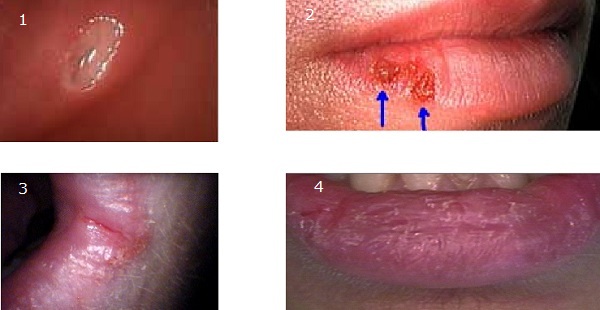
A single Behçet's ulcer looks like a classic canker sore:
- A round or oval, shallow sore with a white, gray, or yellow base
- A red ring around the edge
- Pain that's out of proportion to the size, worse with eating, talking, and brushing
- It starts as an open sore, not a blister
Most are small (under about 1 cm). Some people also get large ulcers that go deeper, last for weeks, and can leave a scar. Others get crops of many tiny pinpoint ulcers. The sores show up on the inside of the lips and cheeks, the tongue, the gums, the soft palate, and sometimes the throat, where swallowing hurts.
No photo can tell a Behçet's ulcer from an ordinary one. We haven't found freely licensed Behçet's mouth ulcer pictures we can share, so the photos below show everyday canker sores. A Behçet's ulcer usually looks just like the first one. What sets Behçet's apart is how often the ulcers come, how many there are, and the other symptoms around them.

Behçet's disease vs. canker sores: how to tell the difference
Ordinary canker sores are very common. Behçet's is rare. So if you get canker sores, the odds are strongly in favor of plain canker sores. Some people get canker sores so often that they're almost never sore-free, without any other problems. Doctors call that complex aphthosis, and it isn't Behçet's either. The questions that matter are about pattern and about the rest of the body.
| Ordinary canker sores | Behçet's mouth ulcers | |
|---|---|---|
| How often | A few times a year for most people | Frequent. Older criteria required at least 3 bouts in 12 months, and many people have sores most months. |
| How many at once | Usually 1 to 3 | Often several, sometimes crops of many |
| Size | Mostly small | Mostly small, but large, scarring ulcers are more common |
| Where | Soft lining of lips, cheeks, tongue, soft palate | The same places, and sometimes the gums or throat |
| Other symptoms | None. You feel well. | Genital sores, skin bumps, eye inflammation, joint pain, and others |
| Contagious? | No | No |
| Who diagnoses | Your dentist or physician, by exam | A rheumatologist, by the overall pattern of symptoms |
| Mouth treatment | Home care, topical steroids | Topical steroids, plus medicine by mouth from a physician for frequent or severe ulcers |
Other things that can look like Behçet's mouth sores
Recurring mouth ulcers have a fairly short list of causes. Your doctor will think through these before settling on Behçet's.
| Condition | How it's similar | How it differs |
|---|---|---|
| Herpes (cold sores) | Painful mouth sores that come back; genital herpes can cause genital sores too | Starts as clusters of tiny blisters, often on the lip, gums, or hard palate. Contagious. A swab test can confirm it. |
| Crohn's disease and ulcerative colitis | Canker-like mouth ulcers, belly pain, diarrhea, joint pain, eye inflammation | Gut workup (colonoscopy and biopsy) usually separates them. Intestinal Behçet's can look very much like Crohn's. |
| Lupus | Mouth sores plus joint and skin problems | Lupus sores are often painless and on the hard palate. Blood antibody tests (ANA) are usually positive. |
| Celiac disease | Recurring canker-like ulcers | Blood test for celiac antibodies; enamel defects and gut symptoms are clues |
| Low iron, B12, or folate | Recurring ulcers, sore tongue | Simple blood tests find it, and the sores often improve with treatment |
| PFAPA (young children) | Mouth ulcers that come back | Regular fevers every few weeks with sore throat and swollen neck glands |
Any single ulcer that doesn't heal in two weeks needs a look no matter what the cause seems to be. Most turn out to be harmless. Our page on mouth ulcers covers the full range of causes.
Behçet's syndrome symptoms beyond the mouth
Behçet's disease symptoms come and go, and they don't all show up at once. Mouth ulcers often come years before anything else. Other signs include:
- Genital ulcers. Painful sores on the scrotum, vulva, or nearby skin. They look like mouth ulcers, tend to be deeper, and often scar.
- Skin problems. Acne-like spots in unusual places (arms, legs, back), or tender red lumps on the shins (erythema nodosum).
- Eye inflammation (uveitis). A red, painful eye, blurry vision, floaters, or light sensitivity. This can threaten sight and needs an eye doctor the same day.
- Pathergy. A small red bump or pimple that forms a day or two after a needle stick or minor skin injury.
- Joint pain or swelling, usually in the knees, ankles, or wrists, without lasting damage.
- Blood vessel problems. Blood clots in leg veins and, less often, in other veins or arteries.
- Gut symptoms. Belly pain, diarrhea, or bleeding from ulcers in the intestines.
- Nervous system symptoms. Less common. Severe headaches, weakness, or trouble with balance or speech.
What causes Behçet's disease?
No one knows the exact cause. The most widely accepted idea is that people with certain genes have an immune system that overreacts to a trigger, possibly an infection or bacteria in the mouth, and that sets off inflammation in blood vessels.
- Genes. A gene variant called HLA-B*51 is the strongest known risk factor, but many people with it never get Behçet's, and many people with Behçet's don't carry it.
- Ancestry. Families from Turkey, the Middle East, Central Asia, and East Asia have higher rates.
- Mouth bacteria and injury. Researchers think mouth bacteria may play a part. Many people with Behçet's notice new ulcers after minor mouth injuries, such as a cheek bite or dental work.
Behçet's is not contagious. You can't catch it or pass it on through kissing, sharing drinks, or sex.
How is Behçet's diagnosed?
There's no blood test that says yes or no. A rheumatologist makes the diagnosis by putting together the symptoms over time, an exam, and tests that rule out look-alikes. A dentist can notice that your ulcers don't fit the usual canker sore pattern, but a dentist doesn't diagnose Behçet's disease.
The scoring system doctors use
Many doctors use the International Criteria for Behçet's Disease. Each sign earns points, and a total of 4 or more points supports the diagnosis.
| Sign | Points |
|---|---|
| Eye inflammation | 2 |
| Mouth ulcers (oral aphthosis) | 2 |
| Genital ulcers | 2 |
| Skin lesions | 1 |
| Nervous system involvement | 1 |
| Blood vessel problems (clots, aneurysms) | 1 |
| Positive pathergy test (optional) | 1 |
Mouth ulcers alone score 2, so they can never make the diagnosis by themselves. That's why your doctor will ask about the rest of your body, sometimes over several visits.
Tests you might have
- Pathergy test. A small, sterile needle prick on the forearm, checked 1 to 2 days later for a red bump. It's more often positive in people from the Middle East and East Asia than in people of European descent, so a negative test doesn't rule Behçet's out.
- Eye exam by an ophthalmologist, even if your eyes feel fine.
- Blood tests to rule out other causes: blood counts, iron, B12, folate, celiac antibodies, and sometimes lupus antibodies. HLA-B*51 testing is sometimes done, but it can't confirm or rule out Behçet's.
- A swab of a sore to check for herpes, if the sores could be viral.
- Other tests depending on symptoms, such as a colonoscopy for gut symptoms or imaging for clots.
Because ulcers may have healed by the time you see the rheumatologist, photos help a lot. Take a clear picture of each bout with the date, and keep a simple log of mouth sores, genital sores, skin bumps, and eye symptoms.
How long Behçet's mouth ulcers last
Most small Behçet's ulcers heal in about 1 to 2 weeks without a scar. Larger ulcers can take several weeks and may scar. The bigger problem is the overlap. New sores often appear before the last ones are gone, so some people are rarely completely sore-free during an active stretch.
Over the long run, Behçet's often calms down. Mouth and skin symptoms tend to be most active in the first several years and frequently ease with time, though they can still flare. Treatment can cut down both how often ulcers come and how much they hurt.
Behçet's mouth ulcer treatment at home
Home care won't stop Behçet's itself, but it makes a real difference to how a bout of ulcers feels.
When a bout starts
- Use your prescription gel or rinse right away if you have one. Topical steroids work better when started early.
- Take a photo and jot the date. Your rheumatologist will want to see it.
- Ice chips held against the sore numb it and calm swelling.
While the sores are open
- Rinse 3 to 4 times a day with warm salt water (½ teaspoon salt in a cup of water) or baking soda (1 teaspoon in ½ cup of water). Swish and spit.
- Numb before meals. An over-the-counter numbing gel 10 to 15 minutes before eating makes food much easier.
- Cover sores you keep rubbing with a protective paste or patch.
- Eat soft, cool, bland food. Yogurt, eggs, oatmeal, pasta, mashed potatoes, smoothies without citrus. Drink through a straw.
- Skip what stings. Citrus, tomato, pineapple, vinegar, spicy food, chips, crusty bread, and alcohol-based mouthwash. Some people with Behçet's also notice flares after nuts or certain cheeses, so note anything that seems to set yours off.
- Keep brushing gently. Use an extra-soft brush and an SLS-free toothpaste. Plaque and gum inflammation make the mouth more irritable, so don't let brushing slide just because it's uncomfortable.
For more on gentle routines, see our home care instructions.
Over-the-counter options and Behçet's mouthwash
These won't change the disease, but they help with comfort between doctor visits.
| Type | What it does | Things to know |
|---|---|---|
| Numbing gels and liquids (benzocaine, lidocaine) | Short-term pain relief, good before meals | Use as the label directs. Never use benzocaine in children under 2. The FDA warns it can cause a rare, dangerous blood problem (methemoglobinemia). |
| Protective pastes, patches, and films | Shield the sore from food and teeth | Dry the spot with a cotton swab first so it sticks |
| Oxygenating rinses (about 1.5% hydrogen peroxide) | Clean the sores, may ease soreness | Swish and spit. Short-term use only. |
| Alcohol-free antiseptic rinses | Keep the mouth clean when brushing hurts | Avoid alcohol rinses. They sting open sores. |
| Pain relievers (acetaminophen, ibuprofen) | Overall pain control | Follow the label. Ask your physician before using ibuprofen if you have gut involvement, take blood thinners, or are pregnant. Never hold a pill against a sore. |
Is there a Behçet's mouthwash?
There's no single product called a Behçet's mouthwash. When people use that phrase, they usually mean a prescription rinse. The common ones are a steroid rinse you swish and spit (dexamethasone is often used), a compounded rinse that mixes a numbing medicine with other ingredients, or a chlorhexidine antiseptic rinse to keep sores clean (it can stain teeth brown with regular use). Your dentist or physician picks one based on how many sores you have and where they are.
What a dentist can do for Behçet's mouth ulcers
We don't diagnose Behçet's disease. We do see a lot of mouth sores, and we can help in some concrete ways:
- Notice the pattern. If your "canker sores" are frequent, numerous, or large, or you mention genital sores, skin bumps, or eye trouble, we'll say so plainly and point you to your physician. A thorough dental exam includes the soft tissues, not just the teeth.
- Document it. We measure and photograph ulcers so your rheumatologist can see what a bout looks like, even after it heals.
- Rule out local causes. We check for sharp teeth, rough fillings, or appliances that keep injuring the same spot, and fix them.
- Treat the mouth. Prescription steroid gels and rinses, numbing rinses, and protective pastes. We also treat oral thrush, which can follow steroid rinses or immune-suppressing medicine.
- Keep your gums healthy. Gum inflammation makes the mouth more irritable, and regular, gentle cleanings help.
- Biopsy or refer. If a sore doesn't heal or doesn't behave like a Behçet's ulcer, we can take a small sample or refer you to an oral surgeon. Learn about diagnosing mouth conditions.
- Coordinate. With your permission, we share findings and photos with your physicians and plan dental work around your medicines. Our page on care for medically complex patients explains how.
Medical treatment for Behçet's mouth ulcers
When ulcers are frequent or severe, or other organs are involved, your rheumatologist leads treatment. Medicines they may use include:
- Topical corticosteroids (gels, pastes, and rinses). The usual first step for mouth and genital ulcers.
- Colchicine. A pill often tried first to prevent repeat mouth and skin sores, especially when genital ulcers or red skin lumps are part of the picture.
- Apremilast (Otezla). A pill approved by the FDA for mouth ulcers of Behçet's disease. In a large trial, people taking it had fewer mouth ulcers and less pain than those on placebo. Diarrhea, nausea, and headache were the most common side effects.
- Immune-suppressing medicines such as azathioprine, or biologics such as TNF inhibitors (infliximab, adalimumab), for eye, blood vessel, gut, or nervous system involvement, or ulcers that don't respond to other treatment.
Your physician chooses the medicine and dose. Let us know about any changes, because several of these affect dental care.
How to have fewer Behçet's mouth ulcer flares
You can't prevent Behçet's, but many people cut down how often ulcers show up.
- Stick with the prevention medicine your rheumatologist prescribes, even when your mouth is clear.
- Protect the lining of your mouth. Extra-soft brush, SLS-free toothpaste, and getting sharp tooth edges or poking wires fixed.
- Keep plaque low. Daily cleaning between teeth and regular dental cleanings keep the gums calm.
- Track your triggers. Stress, poor sleep, certain foods, and hormonal changes set off flares in some people.
- Keep a steroid gel or rinse on hand so you can start it at the first sign of a sore.
Dental visit tips for people with Behçet's
- Bring your medication list, including biologics, steroids, and blood thinners. Some raise infection or bleeding risk, and long-term steroids may need your physician's input before surgery.
- Book routine work during a quieter stretch when you can. If you're in the middle of a bad flare, call us and we'll talk through whether to wait.
- Ask for gentle handling. We use lip lubricant, numbing gel on sore spots, and breaks during longer visits.
- Plan for a flare afterward. Dental work can set off new ulcers in some people, so have your steroid gel or rinse ready.
- Tell us about clots or eye flares, and let us know if you've been in the hospital or started a new medicine since your last visit.
Behçet's in kids, pregnancy, and weakened immunity
Children
Behçet's can start in childhood, but it's uncommon. In kids, frequent mouth sores are far more often ordinary canker sores, a first herpes infection, hand, foot, and mouth disease, or PFAPA (sores with regular fevers). A pediatrician should look at any child with recurring sores plus fever, eye redness, or genital sores. Avoid benzocaine products in children under 2.
Pregnancy
Behçet's symptoms can get better or worse during pregnancy. Some Behçet's medicines aren't safe in pregnancy, so talk with your rheumatologist and obstetrician before you try to conceive, and before using any new medicine, including over-the-counter pain relievers. Salt-water rinses and protective pastes are reasonable comfort measures. Dental cleanings and needed treatment are safe during pregnancy.
People on immune-suppressing medicine
Biologics, azathioprine, and long-term steroids make thrush and other mouth infections more likely. Fever, sores that change in look, or a sore that's spreading should get a call to your physician the same day.
Doctor or dentist? When to get help for Behçet's mouth ulcers
Make an appointment if:
- You get mouth sores 3 or more times a year, or new ones come before the old ones heal
- Any sore hasn't healed in 2 weeks, or is larger than about 1 cm (⅜ inch)
- You started getting frequent mouth sores as an adult
- A sharp tooth, filling, or appliance keeps rubbing the same spot
- You have Behçet's and need help with mouth pain, thrush, or planning dental work
See your physician or rheumatologist if:
- Mouth sores come with genital sores, acne-like spots, tender red lumps on the shins, or joint pain
- You have belly pain, diarrhea, or blood in your stool along with mouth ulcers
- You already have Behçet's and your flares are getting more frequent or severe
Get care today if:
- Your eye is red, painful, blurry, or sensitive to light. See an eye doctor or go to the ER the same day.
- One leg is swollen, warm, and painful, or you have chest pain or trouble breathing. Call 911 or go to the ER.
- You have a sudden severe headache, weakness, confusion, or trouble speaking
- Pain is so bad you can't drink enough fluids
- You have a fever while taking immune-suppressing medicine
Behçet's mouth ulcers FAQ
What is Behçet's disease?
Behçet's disease is a rare, long-term condition that causes inflammation in blood vessels throughout the body. Its most common sign is recurring mouth ulcers. It can also cause genital sores, skin bumps, eye inflammation, joint pain, and blood clots. It flares and settles over time, and a rheumatologist usually manages it.
Is Behçet's contagious?
No. Behçet's disease is not an infection, and you can't catch it or spread it through kissing, sharing food, or sex. The mouth ulcers aren't contagious either. Cold sores, which can look similar inside the mouth, are contagious, so it's worth knowing which one you have.
How is Behçet's different from canker sores?
A single Behçet's ulcer looks just like a canker sore. The difference is the pattern: Behçet's ulcers come more often, usually several at a time, and come with other signs like genital sores, skin bumps, or eye inflammation. Ordinary canker sores happen a few times a year in otherwise healthy people. Most people with frequent canker sores don't have Behçet's.
What does a Behçet's mouth ulcer look like?
It's a round or oval, shallow sore with a white, gray, or yellow base and a red border, the same as a canker sore. Most are small, but some are larger and deeper and can leave a scar. They show up on the lips, cheeks, tongue, gums, soft palate, and sometimes the throat, often several at a time.
How is Behçet's diagnosed?
There's no single test. A rheumatologist diagnoses Behçet's from the pattern of symptoms over time, often using the International Criteria for Behçet's Disease, which score mouth ulcers, genital ulcers, eye inflammation, skin, nerve, and blood vessel signs. Blood tests, an eye exam, and sometimes a needle-prick pathergy test help rule other conditions in or out. Photos of your ulcers are very helpful.
Can a dentist tell if you have Behçet's?
A dentist can't diagnose Behçet's, but can notice that your mouth ulcers are more frequent, numerous, or severe than ordinary canker sores. If so, we'll document them with photos, ask about symptoms elsewhere, and recommend you see your physician, who can refer you to a rheumatologist. We also treat the mouth sores themselves.
What helps Behçet's mouth ulcers heal?
Prescription steroid gels, pastes, or rinses started early are the usual first treatment. Salt-water rinses, numbing gel before meals, protective pastes, soft bland foods, and an SLS-free toothpaste help with comfort. For frequent or severe ulcers, a rheumatologist may prescribe colchicine or apremilast (Otezla), which can reduce how often ulcers come back.
Is there a Behçet's mouthwash?
There's no single product by that name. Most people mean a prescription rinse, such as a steroid rinse you swish and spit, a compounded numbing rinse, or a chlorhexidine antiseptic rinse. Over the counter, choose alcohol-free rinses and plain salt water. Ask your dentist or physician which prescription rinse fits your sores.
What causes Behçet's disease?
The exact cause isn't known. It seems to happen when people with certain genes, especially HLA-B*51, have an immune system that overreacts to a trigger such as bacteria. It's more common in people with roots in Turkey, the Middle East, and East Asia. It isn't caused by anything you did, and it isn't contagious.
Can you have Behçet's with only mouth ulcers?
Mouth ulcers alone aren't enough for a diagnosis. Many people with frequent mouth ulcers simply have recurring canker sores. Some people do have mouth ulcers for years before other Behçet's signs appear, which is why doctors keep asking about genital sores, skin changes, and eye symptoms over time.
Is Behçet's disease serious?
It ranges from mild to serious. Many people mainly have mouth, skin, and genital sores that are painful but manageable. Eye inflammation, blood clots, and nervous system involvement are serious and need prompt treatment. With modern care, most people do well, and symptoms often ease over the years.
Do Behçet's mouth ulcers leave scars?
Small ulcers usually heal without a scar in 1 to 2 weeks. Larger, deeper ulcers can take several weeks and may leave a scar. Genital ulcers scar more often than mouth ulcers. Starting prescription treatment early can help ulcers heal faster.
Who gets Behçet's disease?
It usually starts between the ages of 20 and 40 and affects both men and women. It's most common along the old Silk Road, in Turkey, the Middle East, Central Asia, Korea, and Japan, and it's rare in the United States. Young men tend to have a more serious course.
Mouth ulcers that keep coming back?
If you're in the Jacksonville area and you're dealing with frequent or painful mouth ulcers, with or without a Behçet's diagnosis, we're glad to help. We'll treat the sores, document what we see, and work with your physician or rheumatologist on the bigger picture.
Related conditions
Sources
- International Team for the Revision of the International Criteria for Behçet's Disease (ITR-ICBD). The International Criteria for Behçet's Disease (ICBD): a collaborative study of 27 countries on the sensitivity and specificity of the new criteria. J Eur Acad Dermatol Venereol. 2014;28(3):338–347.
- Hatemi G, Christensen R, Bang D, et al. 2018 update of the EULAR recommendations for the management of Behçet's syndrome. Ann Rheum Dis. 2018;77(6):808–818.
- Hatemi G, Mahr A, Ishigatsubo Y, et al. Trial of apremilast for oral ulcers in Behçet's syndrome. N Engl J Med. 2019;381(20):1918–1928.
- Taylor J, Glenny AM, Walsh T, et al. Interventions for the management of oral ulcers in Behçet's disease. Cochrane Database Syst Rev. 2014;(9):CD011018.
- Yazici Y, Hatemi G, Bodaghi B, et al. Behçet syndrome. Nat Rev Dis Primers. 2021;7(1):67.
- Mumcu G, Fortune F. Oral health and its aetiological role in Behçet's disease. Front Med (Lausanne). 2021;8:613419.
This page is for general education and isn't a diagnosis. Every mouth is different. If you have a sore you're worried about, see your dentist or physician. Photos marked Wikimedia Commons are used under their listed licenses and may have been cropped or resized.