
Angular Cheilitis (Cracked Corners of the Mouth)
Angular cheilitis is the medical name for sore, red, cracked corners of the mouth. It stings when you open wide, it splits again every time you yawn, and lip balm alone never seems to fix it. It's common, it isn't dangerous, and once you know what's keeping it going, it usually clears up.
Angular cheilitis is inflammation at one or both corners of the mouth, causing redness, cracks, and soreness. Saliva pooling in the corner lets yeast (Candida) or Staph bacteria take hold. It's not contagious the way a cold sore is. With a barrier ointment and the right antifungal or antibacterial cream, most cases improve in 1 to 2 weeks. See us if it lasts longer or keeps coming back.
Not sure this is what you have? Answer five quick questions in our mouth spot checker. It compares what you see with more than 40 common conditions and tells you how soon to have it looked at.

What does angular cheilitis look like?
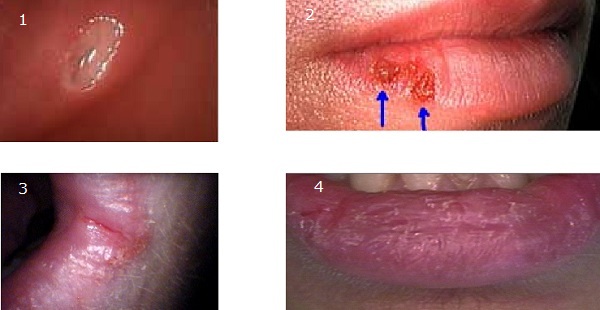
It shows up right at the corner where the upper and lower lips meet, on one side or both. You'll usually notice:
- Redness and puffiness in the corner, sometimes spreading a little onto the skin.
- Cracks or splits that open when you smile, yawn, or take a big bite.
- Skin that looks moist and whitish in the fold, or dry and crusty on the edges.
- Burning or stinging, especially with salty or acidic food.
Unlike a cold sore, it doesn't start with a tingle and it doesn't form a cluster of blisters.


What causes angular cheilitis?
Almost every case starts with moisture. Saliva sits in the corner of the mouth, softens the skin, and lets it crack. Then germs that normally live on the skin and in the mouth move into the crack. In one clinical study, most cases grew Staphylococcus aureus, Candida yeast, or both. Often there's more than one thing going on, which is why it can be stubborn.
Things that keep the corners wet
- Deep folds at the corners from worn dentures, missing back teeth, or a bite that has collapsed over time (more on this below).
- Lip licking, especially in cold, dry, or windy weather. It feels like it helps, then makes things worse.
- Drooling during sleep, thumb sucking, or pacifier use.
- Braces and orthodontic elastics, which stretch the corners and make it harder to close the lips.
- Face masks worn for long hours, which trap warm, damp air against the skin.
- Aging skin that sags and forms creases at the corners.
Things that make you more prone to it
- Nutritional deficiencies, mainly iron and B vitamins (B2, B3, B6, B12, folate). These are less common causes in the U.S. but worth checking if it keeps coming back.
- Diabetes, especially when blood sugar runs high, which feeds yeast.
- Isotretinoin (formerly sold as Accutane) and other retinoids, which dry and crack the lips.
- A weakened immune system from HIV, chemotherapy, or transplant medicines.
- Inhaled or swallowed steroids and recent antibiotics, which can tip the balance toward yeast.
- Dry mouth, which raises the risk of yeast infections in the mouth. Read about dry mouth.
- Oral thrush or denture stomatitis inside the mouth, which can seed the corners with yeast. Read about oral thrush.
- Allergy or irritation from lip products, toothpaste flavorings, or nickel in orthodontic wires.
Dentures, lost teeth, and bite height
This is where dentistry comes in. Your back teeth hold your jaws a certain distance apart. Dentists call it the vertical dimension, or bite height. When back teeth are lost, worn flat, or replaced by dentures that have worn down over the years, the jaws close farther than they should. The lower face gets a little shorter, the lips roll in, and the corners of the mouth fold down into deep creases.
Those creases stay wet. Saliva wicks into them all day and all night, and the skin never gets a chance to dry out. Creams help for a while, but if the fold is still there, the problem tends to come back.
Teeth worn down from years of grinding can do the same thing, more slowly. Read about tooth grinding.
Angular cheilitis vs. cold sore
People often ask whether angular cheilitis is herpes. It isn't. A cold sore is caused by the herpes simplex virus, while angular cheilitis is skin irritation and infection in a moist corner. Cold sores sometimes land near the corner, so here's how to tell them apart.
| Angular cheilitis | Cold sore | |
|---|---|---|
| Where | Right in the corner of the mouth, often both sides | On the lip border or skin nearby, usually one spot |
| First sign | Redness and a crack or split | Tingling or burning, then blisters |
| Blisters? | No | Yes, a cluster of tiny fluid-filled bumps |
| Cause | Moisture plus yeast (Candida) or bacteria (Staph) | Herpes simplex virus (HSV-1) |
| Contagious? | Not in the usual sense | Yes, until healed |
| How long | Lingers for weeks until the cause is treated | Heals in 7–12 days on its own |
| What helps | Barrier ointment, antifungal or antibacterial cream, fixing the cause | Antiviral medicine at the first tingle |
Other things that can look like angular cheilitis
- Chapped lips. Dryness and peeling across the whole lip, not just the corners.
- Impetigo. A bacterial skin infection with honey-colored crusts that spread beyond the corner, mostly in kids. It needs a physician or pediatrician.
- Perioral dermatitis. Small red bumps around the mouth, often leaving a narrow clear band right at the lip border.
- Contact allergy. Itchy, scaly lips after a new lip balm, lipstick, or toothpaste.
- Actinic cheilitis. Sun damage on the lower lip that looks dry, scaly, or blurred at the border. It can be precancerous, so we like to see it. Learn about oral cancer screening.
How long does angular cheilitis last?
Left alone, it can come and go for months. With a barrier ointment and the right cream, most people feel better within a few days and see the corners heal in 1 to 2 weeks. If it hasn't improved by then, something is still feeding it: the wrong cream, a fold that won't stay dry, a denture problem, or a medical cause like low iron or high blood sugar.
Angular cheilitis self-care, step by step
Let's be straight about one thing first. There's no overnight cure for angular cheilitis, whatever the internet promises. Cracked skin takes days to knit back together. You can get real relief quickly, though, and most cases heal with simple care.
- Keep the corners dry and clean. Gently pat them dry after eating and drinking. Wash with mild soap and water once or twice a day.
- Put a barrier on it. A thin layer of plain petroleum jelly or a zinc oxide ointment keeps saliva off the skin. Reapply after meals and at bedtime. This is the single most useful habit.
- Use an antifungal cream if it isn't clearing with a barrier alone. Clotrimazole or miconazole cream, sold for athlete's foot and other skin yeast infections, is often used on the corners, though the label is written for other skin. Ask your pharmacist if you're unsure. Apply the antifungal first, then the barrier on top.
- Stop licking your lips. Easier said than done. Keep a barrier ointment handy to use instead.
- Take care of your dentures. Take them out at night, brush them, and soak them in a denture cleanser. Yeast living on a denture can keep reinfecting the corners.
- Use a new lip balm once it heals, and skip flavored or scented ones for a while.
Skip these
- Don't use strong steroid creams on your face without a prescription. They can thin the skin and make a yeast infection worse.
- Don't rely on toothpaste, rubbing alcohol, or hydrogen peroxide. They dry and irritate the corner.
- Don't pick at the crust. It reopens the crack.
Angular cheilitis treatment: creams and ointments
The right cream depends on what's growing in the corner. Often it's yeast, sometimes Staph, sometimes both.
| Option | What it does | Things to know |
|---|---|---|
| Petroleum jelly or zinc oxide ointment | Barrier that keeps saliva off the skin | Over the counter. Safe for kids. Use with any other treatment. |
| Clotrimazole 1% or miconazole 2% cream | Antifungal for Candida yeast | Over the counter. Use as the label directs. Give it about a week before judging. Ask your pharmacist or doctor before using it on young children. |
| Hydrocortisone 1% cream | Calms redness and itching | Over the counter. Short-term only, a few days. Best paired with an antifungal, since a steroid alone can feed yeast. |
| Prescription antifungal and mild steroid combination cream | Treats yeast and calms inflammation together | Prescribed when the corners are very inflamed. Used for a limited time. |
| Mupirocin ointment (prescription) | Antibiotic for Staph bacteria | Used when there's crusting or signs of a bacterial infection, or when antifungals alone don't work. |
| Treating thrush inside the mouth | Clears the yeast source | Prescription antifungal rinses, lozenges, or pills when there's also oral thrush or denture stomatitis. |
Which antifungal cream is best for angular cheilitis?
There's no single winner. Plain clotrimazole and miconazole creams are inexpensive, widely available, and work well for yeast. If you've used one faithfully for a week or two with a barrier on top and it isn't better, the cause may be bacterial, mixed, or something else entirely. That's the point to get it looked at rather than switching creams again.
What a dentist can do for angular cheilitis
A lot of angular cheilitis is a dental problem wearing a skin disguise. Here's what we can do:
- Confirm what it is. We'll look at the corners and the rest of your mouth, and rule out cold sores, allergy, and sun damage on the lip.
- Check your bite height. We measure how your teeth or dentures hold your jaws apart and whether the corners are folding.
- Reline, adjust, or remake dentures. Restoring lost bite height can flatten the folds and stop the cycle. Learn about dentures at our office.
- Replace missing back teeth so your bite is properly supported. Options include partial dentures, bridges, and dental implants.
- Treat yeast inside the mouth, including oral thrush and denture stomatitis, which often go hand in hand with cracked corners.
- Prescribe creams such as a combination antifungal and steroid or mupirocin when they're appropriate.
- Look for a medical cause. If it keeps coming back, we'll talk with your physician about checking iron, B vitamins, and blood sugar.
- Help with braces and appliances. We can suggest ways to protect the corners and coordinate with your orthodontist.
A comprehensive dental exam is a good place to start if your corners keep cracking and you wear dentures or are missing teeth.
How to prevent cracked corners of the mouth
Angular cheilitis tends to feed itself. A sore corner makes you lick it, licking keeps it wet, and the wet skin cracks again. Prevention is mostly about stopping that loop before it starts.
- Use a barrier ointment at bedtime if you drool in your sleep or have deep corner folds.
- Keep dentures clean and well-fitting. Take them out at night. Most dentures need a reline every few years as the jaw changes, and eventually need replacing.
- Break the lip-licking habit with a plain, unflavored balm.
- Change damp masks during the day and wash reusable ones often.
- Keep blood sugar in range if you have diabetes.
- Use a gentle moisturizer and SPF lip balm if you take isotretinoin.
- Eat a balanced diet and ask your physician about iron and B12 if you're vegan, pregnant, have heavy periods, or have had weight-loss surgery.
Who gets angular cheilitis most
Denture wearers and older adults
This is the group we see most often. Worn dentures, sagging skin, and yeast living on the denture surface all add up. Fixing the denture is usually the key.
Kids and teens
Lip licking, thumb sucking, drooling, and braces are the usual culprits. A barrier ointment and breaking the habit fix most cases. If crusts are honey-colored or spreading across the face, see your pediatrician, since that may be impetigo.
People with diabetes or weakened immunity
High blood sugar and immune problems make yeast infections more likely and slower to clear. Angular cheilitis that keeps returning can be an early clue that blood sugar isn't well controlled.
People in cancer treatment
Chemotherapy and head and neck radiation often cause dry mouth and yeast infections, and cracked corners come with them. We work closely with cancer care teams on mouth problems like these. Read about dental care during head and neck cancer treatment, or see how we handle care for medically complex patients.
Pregnancy
Pregnancy can lower iron levels and change skin. A barrier ointment is safe. Check with your OB before using any medicated cream.
When to see a dentist about angular cheilitis
Make an appointment if:
- It hasn't improved after 2 weeks of home care
- It keeps coming back
- You wear dentures, especially if they're more than about 5 years old or feel loose
- You have white patches or soreness inside your mouth too
- You've lost back teeth and notice deep creases at your corners
- A spot on your lip is scaly, crusted, or not healing
Get care quickly if:
- Redness and swelling are spreading across your face, or you have a fever
- There's pus, thick honey-colored crusting, or the area is getting more painful every day
- Your immune system is weakened and it's getting worse
Angular cheilitis FAQ
What is angular cheilitis?
Angular cheilitis is inflammation at the corners of the mouth that causes redness, cracking, and soreness. It's usually caused by saliva keeping the corners wet, which lets Candida yeast or Staph bacteria grow in the cracked skin. It's also called perleche or angular stomatitis.
How do I get rid of angular cheilitis fast?
Keep the corners dry, cover them with petroleum jelly or zinc oxide ointment several times a day, and use an over-the-counter antifungal cream like clotrimazole or miconazole as the label directs. Stop licking your lips, and clean your dentures well if you wear them. Most people feel better within a few days and heal in 1 to 2 weeks.
Is there an overnight cure for angular cheilitis?
No. Cracked skin needs several days to heal, and nothing closes it overnight. A barrier ointment can make it feel better quickly, though, and treating the underlying yeast or bacteria usually clears it within 1 to 2 weeks.
Is angular cheilitis contagious?
Not in the way a cold sore is. The yeast and bacteria involved already live on most people's skin and in their mouths, and the problem is really the moist corner that lets them overgrow. It's still sensible not to share lip balm, towels, or utensils while it's active.
What causes angular cheilitis?
Saliva pooling in the corners of the mouth is the main cause. Deep folds from worn dentures or lost teeth, lip licking, drooling, braces, and masks all keep the corners wet. Iron or B vitamin deficiency, diabetes, isotretinoin, and a weakened immune system make it more likely.
Is angular cheilitis herpes or a cold sore?
No. Angular cheilitis is caused by moisture plus yeast or bacteria, not the herpes virus. A cold sore starts with tingling and forms a cluster of small blisters, usually on the lip border. Angular cheilitis is a red crack right in the corner, with no blisters.
What antifungal cream is best for angular cheilitis?
Over-the-counter clotrimazole 1% or miconazole 2% cream works well when yeast is the cause, applied as the label directs with a barrier ointment on top. If it isn't better after a week or two, see a dentist or doctor. You may need a prescription combination cream or an antibiotic ointment such as mupirocin.
Does angular cheilitis go away on its own?
Mild cases sometimes clear on their own, especially if the cause was temporary, like a cold-weather lip-licking habit. Many cases linger or come back until the moisture and infection are treated. If yours has lasted more than 2 weeks, it's unlikely to resolve without help.
How long does angular cheilitis last?
With proper treatment, most cases improve in a few days and heal in 1 to 2 weeks. Without treatment, it can last for weeks or months. If it keeps returning, look for a cause that hasn't been fixed, such as dentures that have lost bite height or a vitamin deficiency.
Is petroleum jelly good for angular cheilitis?
Yes. Plain petroleum jelly is one of the most useful things you can put on it, because it keeps saliva off the skin so the cracks can heal. Apply a thin layer after meals and at bedtime. If yeast is involved, put the antifungal cream on first and the petroleum jelly on top.
Can dentures cause angular cheilitis?
Yes, and it's one of the most common causes in older adults. Dentures wear down over time, so the jaws close farther and the corners of the mouth fold into deep, wet creases. Yeast living on the denture can also reinfect the corners. Cleaning dentures nightly and having us reline or remake worn ones often solves it.
Can a vitamin deficiency cause cracked corners of the mouth?
It can. Low iron and low B vitamins, including B2, B12, and folate, are linked to angular cheilitis. Deficiency is a less common cause than moisture and yeast, but it's worth checking with simple bloodwork if your corners keep cracking despite good care.
Corners of your mouth still cracking?
If you're in the Jacksonville area and angular cheilitis keeps coming back, especially if you wear dentures, we'd like to take a look. Dr. Henley can check your bite height and denture fit, treat yeast in and around the mouth, and coordinate with your physician when there's a medical piece to it.
Related conditions
Sources
- Park KK, Brodell RT, Helms SE. Angular cheilitis, part 1: local etiologies. Cutis. 2011;87(6):289–295.
- Park KK, Brodell RT, Helms SE. Angular cheilitis, part 2: nutritional, systemic, and drug-related causes and treatment. Cutis. 2011;88(1):27–32.
- Oza N, Doshi JJ. Angular cheilitis: a clinical and microbial study. Indian J Dent Res. 2017;28(6):661–665.
- Sharon V, Fazel N. Oral candidiasis and angular cheilitis. Dermatol Ther. 2010;23(3):230–242.
This page is for general education and isn't a diagnosis. Every mouth is different. If you have a sore you're worried about, see your dentist or physician. Photos marked Wikimedia Commons are used under their listed licenses and may have been cropped or resized.