
Bumps on the Back of the Tongue (Circumvallate Papillae and Other Normal Bumps)
Most people who find bumps on the back of the tongue spot them by accident, usually while checking a sore throat in the mirror. You stick your tongue way out, and there's a row of big round bumps in a V that you never noticed before. That's almost always normal anatomy. Everyone has them, and they've been there your whole life.
The bumps on the back of the tongue are usually circumvallate papillae, a V-shaped row of 8 to 12 large taste bumps, plus the lumpy lingual tonsil behind them. Both are normal and not contagious. They can swell for a few days after hot food, a cold, or reflux. Get a bump checked if it's on one side only, feels firm, or lasts longer than 2 to 3 weeks.
Not sure this is what you have? Answer five quick questions in our mouth spot checker. It compares what you see with more than 40 common conditions and tells you how soon to have it looked at.
- What the bumps on the back of your tongue are
- Swollen or enlarged papillae
- Normal bumps vs. look-alikes
- Are bumps on the back of the tongue normal?
- What makes them swell or hurt
- Why the back of your tongue hurts
- Why the back of your tongue is white
- How long swelling lasts
- Home care, step by step
- Over-the-counter options
- What a dentist can do
- Keeping them calm
- Kids, dentures, and cancer survivors
- When to call us
- FAQ
What are the bumps on the back of my tongue?
Your tongue is covered with small structures called papillae. Some carry taste buds and some just give the surface grip. The ones toward the back are bigger, fewer, and easier to see, which is why they surprise people. These are the ones you're most likely looking at, from front to back.
Circumvallate papillae: the V-shaped row
These are the largest papillae on the tongue. Most people have about 8 to 12 of them lined up in a V, with the point aimed toward the throat. Each one is a round, flat-topped bump a few millimeters wide, sitting in its own little trench. The walls of that trench are packed with taste buds, and small glands underneath keep it rinsed out.
The circumvallate papillae sit right at the border between the mouth part of the tongue and the base of the tongue. When you stick your tongue all the way out, they're about as far back as you can see. That's exactly why so many people notice them for the first time and assume something new has grown there.
Lingual tonsils: the lumpy area behind the V
Behind the V, the base of the tongue is covered with bumpy lymph tissue called the lingual tonsil. It's part of the same ring of infection-fighting tissue as the tonsils on the sides of your throat and the adenoids. The surface looks pebbly or cobblestoned. You usually can't see much of it in a mirror, but you might catch the front edge when you gag or say "ahh," and it can swell when you're sick.
Foliate papillae: the bumps on the side of the tongue near the back
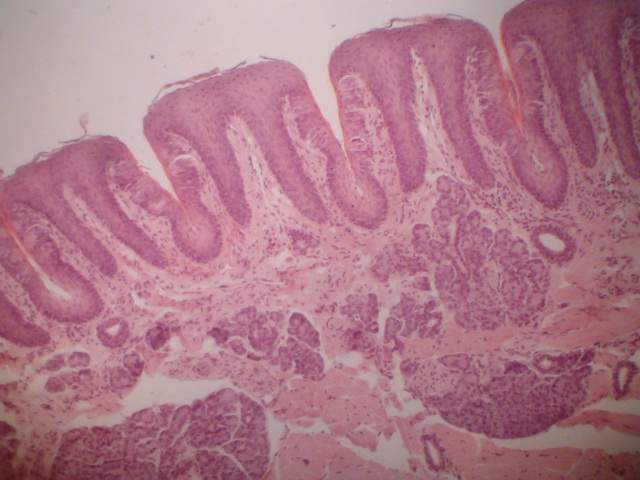
On both side edges of the tongue, near the back, there's a short stretch of red, vertical folds that look like the gills of a mushroom or a row of little leaves. These are the foliate papillae. They also carry taste buds and have lymph tissue underneath, so they can puff up and get sore. They're the most common answer to "what are these bumps on the side of my tongue?" The tell is that they're on both sides, in about the same spot.
Fungiform and filiform papillae: the rest of the surface
The front two-thirds of the tongue is covered with thousands of tiny, velvety filiform papillae, which give it a rough feel and can hold onto a white coating. Scattered among them are small red dots called fungiform papillae, most crowded at the tip and sides. Fungiform papillae carry taste buds too. When one of them gets inflamed, you get the small, painful white or red bump people call a lie bump.
The two photos below show foliate papillae. Circumvallate papillae look like a larger, rounder version of the same pink tissue, lined up in the V on the map above.

Swollen or enlarged papillae: why the bumps can look bigger
Normal papillae can change how they look from week to week. Enlarged papillae are usually just irritated papillae. The surface gets puffier and redder, the bump sits a little higher, and the trench around a circumvallate papilla can trap food. When circumvallate papillae are swollen, they're easier to see and easier to feel with your tongue, and that's often the first time people notice them at all.
The same thing happens with the foliate papillae on the sides, and with the lingual tonsil at the base. The lingual tonsil is lymph tissue, so it reacts the way the tonsils in your throat do. A cold, strep throat, or allergies can make it bigger for a while. Studies have also linked a larger lingual tonsil with reflux that reaches the throat, and with having had your regular tonsils removed. If the swelling is on both sides and you can name a likely trigger, it's very likely to settle on its own.
Bumps on the back of the tongue vs. look-alikes
A handful of other things can show up in the same area. Most are harmless too. This table covers the ones we see people confuse most often.
| What it looks like | Where | How long | What to do | |
|---|---|---|---|---|
| Circumvallate papillae | 8 to 12 round, flat-topped bumps in a V, each with a ring around it | Across the back of the tongue, both sides | Permanent, normal anatomy | Nothing, unless they stay swollen and sore |
| Foliate papillae | Red, vertical, leaf-like folds | Back edges of the tongue, both sides | Permanent; swelling comes and goes | Nothing, or smooth a sharp tooth rubbing them |
| Lingual tonsil | Pebbly, lumpy pink tissue | Base of the tongue, behind the V | Permanent; can swell with a cold | Nothing, unless one side is bigger or it won't go down |
| Lie bumps (transient lingual papillitis) | One or a few small, tender white or red bumps | Usually the tip or sides of the front of the tongue | A few days | Home care. They clear up on their own. |
| Tonsil stones | Small white or yellow lumps that can be squeezed out, often with bad breath | In the tonsils on the sides of the throat, less often the lingual tonsil | Come and go | Gargling, gentle irrigation. See tonsil stones. |
| Oral papilloma (HPV wart) | A single white or pink bump with a bumpy, cauliflower-like surface | Tongue, soft palate, uvula, anywhere | Stays until removed | Have it looked at. Usually removed and checked. See oral papilloma. |
| Swollen lingual tonsil from a cold | Lumpy base of tongue that feels bigger, sore throat, sometimes a lump-in-the-throat feeling | Base of the tongue, both sides | Usually 1 to 2 weeks, with the cold | Fluids, rest, salt-water gargles. See a doctor for high fever or trouble breathing. |
| Base-of-tongue cancer | Often not visible. May be a firm lump on one side, or just symptoms. | One side of the base of the tongue or tonsil | Persistent and gets worse | Ear pain, trouble swallowing, hoarseness, or a neck lump for more than 2 to 3 weeks: get checked |
Two other common worries are worth a sentence each. A coated, white tongue makes the back of the tongue look fuzzier and the bumps more obvious, but the bumps themselves haven't changed. And a canker sore near the back of the tongue is an open, painful sore with a yellow-white center, not a bump.
Are bumps on the back of the tongue normal?
Yes, in the large majority of cases. What makes a bump look normal is mostly symmetry. Anatomy comes in matched pairs, so the V has two even arms and the foliate folds show up on both sides in about the same place. Normal papillae are soft and about the same color as the rest of the tongue. Once you've noticed them, they'll still be there next month and next year, looking the same.
One honest caveat. The side of the tongue toward the back, where the foliate papillae live, is also the most common spot in the mouth for oral cancer. And the base of the tongue is one of the places where HPV-related throat cancer starts. That doesn't mean your bump is cancer. It means a lump that's only on one side, feels firm, bleeds, or doesn't heal deserves a look from a professional, not a wait-and-see. Our page on the signs of oral cancer explains what we look for, and a biopsy is the only way to know for sure what a spot is.
What makes the bumps on the back of the tongue swell or hurt
Normal bumps don't need a cause. They're just there. When they get bigger, redder, or sore, there's usually an irritant, and it often isn't hard to find.
- Hot, spicy, sour, or acidic food. Scalding coffee, hot pizza, sour candy, citrus, vinegar, and cinnamon-flavored gum or candy are common culprits.
- A cold, the flu, strep, or other throat infection. The lingual tonsil and the foliate papillae both have lymph tissue that swells along with your throat.
- Reflux. Stomach acid that reaches the throat can irritate the base of the tongue. Some people never feel heartburn, just throat clearing and a sore or lumpy feeling. See acid reflux and your mouth.
- Rubbing. A sharp or broken back tooth, a rough filling, or a denture edge can rub the foliate papillae on one side.
- Poking at them. Once people find the bumps, they tend to check them over and over with a finger, toothbrush, or tongue scraper. That alone can keep them irritated.
- Dry mouth, smoking, vaping, and alcohol. All of them dry and irritate the tongue's surface. Dry mouth is also a common side effect of medications.
- Allergies and postnasal drip. Mucus running down the back of the throat can keep the base of the tongue inflamed and coated.
Why does the back of my tongue hurt?
When the back of the tongue hurts, the most common reasons are irritated papillae, a sore throat from a virus or strep, a canker sore you can't quite see, or reflux. Typical symptoms with swollen papillae include:
- Bumps that look bigger, redder, or whiter on top than usual
- Soreness or burning, especially with hot, spicy, or acidic food
- A feeling that something is stuck at the back of your tongue or in your throat
- Mild changes in taste for a few days
Pain that's mostly in the throat, comes with fever and swollen neck glands, or makes swallowing hard sounds more like a throat infection, and that's a call to your physician. A burning feeling over much of the tongue that goes on for months, with nothing visible, can be burning mouth syndrome. One-sided pain at the back of the tongue that spreads to the ear and doesn't go away should be checked.
Why is the back of my tongue white?
The back of the tongue is the easiest place for a white coating to build up. The filiform papillae there are long and dense, the area doesn't get scrubbed much by eating or brushing, and it dries out when you breathe through your mouth or sleep. Dead cells, food, and bacteria collect between the papillae and look white or yellowish. Gentle tongue cleaning usually takes care of it.
A white coating that wipes off and leaves red, sore spots underneath can be oral thrush, especially after antibiotics or with an inhaled steroid, diabetes, or dentures. A white patch that won't wipe or scrape off is a different thing and should be looked at.
How long do swollen papillae last?
Papillae that are swollen from a burn, food, or a minor injury usually calm down within a few days, and nearly always within 2 weeks. A lingual tonsil swollen from a cold tends to settle as the cold goes away. If reflux is the cause, it can hang on until the reflux is under control.
The bumps themselves won't go away, because they're supposed to be there. What should go away is the swelling, the soreness, and any change from how they normally look. If a bump is still bigger, sore, or different after 2 to 3 weeks, have it checked.
How to calm swollen papillae at home
For irritated papillae, the goal is to stop irritating them and let them settle. Most people feel better within a few days.
- Leave them alone. Stop checking them in the mirror and poking them with your finger or tongue. Never try to cut, burn, or pick off a papilla. It's normal tissue with nerves and taste buds, and you'll end up with a painful wound.
- Rinse with warm salt water. About ½ teaspoon of salt in a cup of warm water, 3 or 4 times a day. Gargle gently so it reaches the back of the tongue, then spit.
- Cool it down. Cold water, ice chips, or a popsicle can ease soreness and swelling.
- Skip the triggers for a week. Very hot drinks, spicy and sour foods, citrus, cinnamon, alcohol, and alcohol-based mouthwash.
- Keep cleaning, gently. Brush your teeth as usual. Clean the tongue with a soft brush or scraper using light pressure, and don't scrape the bumps themselves.
- Drink plenty of water and treat a dry mouth if you have one. If you suspect reflux, avoid eating within a few hours of bed and talk with your physician about treatment.
What not to do
- Don't try to remove the bumps. People really do try with tweezers, nail clippers, and razor blades. These are normal parts of the tongue.
- Don't put aspirin, hydrogen peroxide at full strength, or rubbing alcohol on them. They burn the tissue.
- Don't take leftover antibiotics. Swollen papillae aren't a bacterial infection.
Over-the-counter options
Nothing over the counter shrinks normal papillae, and nothing needs to. These can make sore ones more comfortable while they settle. Follow the label for dosing.
| Type | What it does | Things to know |
|---|---|---|
| Pain relievers (acetaminophen, ibuprofen) | Ease soreness and swelling | Use children's versions dosed by weight for kids. If you're pregnant, ask your OB first; ibuprofen and similar drugs are generally avoided, especially later in pregnancy. |
| Numbing gels or sprays (benzocaine, lidocaine, phenol throat sprays) | Short-term numbing before meals | No benzocaine for children under 2. The FDA warns of a rare but serious blood problem. Numbing the very back of the tongue can make swallowing feel odd, so eat and drink carefully. |
| Throat lozenges | Soothe the throat and base of the tongue | Not for young children, who can choke on them. Skip menthol or cinnamon types if they sting. |
| Alcohol-free mouth rinse | Keeps the area clean without stinging | Choose alcohol-free. Swish and gargle, don't swallow. |
| Antacids or acid reducers | Help if reflux is irritating the throat and tongue | Use as the label directs. Check with your physician or pharmacist if you're pregnant, take other medicines, or need them for more than 2 weeks. |
What a dentist can do about a bump on the back of the tongue
A lot of our visits about the back of the tongue end with "that's normal, and here's what it is." We're glad to have that conversation. If you're worried about a bump, this is what a visit with us looks like.
- A careful look and feel. We gently hold the tongue with gauze so we can see both sides all the way back, compare one side to the other, and feel for anything firm. We check the neck for swollen lymph nodes too.
- A photo for comparison. If something looks a little off but probably irritated, a photo now and a recheck in about 2 weeks tells us a lot.
- Fix what's rubbing. We can smooth a sharp tooth, repair a broken filling, or adjust a denture that's irritating the side of the tongue.
- Look for other causes. Dry mouth, thrush, reflux, and medication side effects all show up on the tongue. We treat what's in the mouth and coordinate with your physician on the rest.
- Biopsy or referral. If a bump doesn't fit normal anatomy or doesn't settle, we biopsy it or refer you for a biopsy so you have a real answer. Our oral medicine and diagnosis page explains how we work up spots that are harder to pin down.
- Referral to an ENT. Much of the base of the tongue can't be seen with a mirror. When symptoms point there, an ear, nose, and throat doctor can look with a small camera.
Every regular checkup with us includes an oral cancer screening, which means we look at the sides and base of your tongue whether or not you've noticed anything.
Keeping the bumps calm
You can't prevent normal anatomy, and you don't need to. You can cut down on the flare-ups that make the bumps sore.
- Let hot drinks and food cool for a minute, especially pizza and coffee.
- Notice whether sour candy, cinnamon, or certain foods set off soreness, and go easy on them.
- Clean your tongue gently each day so coating doesn't build up at the back.
- Get sharp or broken teeth fixed and keep dentures fitting well.
- Stay hydrated, and talk with us about dry mouth if your medications cause it.
- Don't smoke or vape. Both irritate the tongue and raise the risk of mouth and throat cancer.
- Ask your physician about the HPV vaccine for your kids, or for yourself if you're eligible. The CDC estimates HPV causes most oropharyngeal cancers in the US.
Kids, denture wearers, and people treated for head and neck cancer
Children
Kids find these bumps all the time, often during a sore throat when a parent finally gets a good look. If the bumps are on both sides and your child is otherwise well, it's normal anatomy. A child with fever, drooling, trouble swallowing, or many small sores at the back of the mouth should see a pediatrician. For comfort, offer cold drinks and soft foods and use children's pain relievers as the label directs. Don't use benzocaine products in children under 2.
Denture wearers
The edge of a lower denture can rub the foliate papillae and make one side red and puffy. That's an irritation spot, and it should settle once the denture is adjusted. If it doesn't, we want to see it. Read more about dentures and denture fit.
People treated for head and neck cancer
After radiation or surgery, the back of the tongue can look and feel different for good. Scar tissue, dryness, and changes in taste are common. Keep up with your cancer team's follow-up schedule, and let them or us know about any new lump, sore, or pain. We work alongside oncology teams on dental care before, during, and after treatment. Our head and neck cancer dental care page has more.
When to see a dentist about bumps on the back of your tongue
Make an appointment if:
- A bump is on one side only and doesn't match the other side
- It feels firm or hard, or seems to be growing
- A bump, sore, or white or red patch hasn't gone away in 2 to 3 weeks
- A sharp tooth, filling, or denture is rubbing the side of your tongue
- You've looked at it, you aren't sure, and it's bothering you. That's a fine reason too.
Get care quickly if:
- You have trouble swallowing or breathing, or can't keep fluids down
- Your tongue or the floor of your mouth is swelling quickly
- You have a high fever with a very sore throat
- You have ear pain on one side, hoarseness, a lump in the neck, or unexplained weight loss lasting more than 2 to 3 weeks
Bumps on the back of the tongue FAQ
What are the bumps on the back of my tongue?
They're most likely circumvallate papillae, a V-shaped row of about 8 to 12 large taste bumps across the back of the tongue. Behind them is the lingual tonsil, a patch of lumpy lymph tissue at the base of the tongue. Both are normal parts of everyone's tongue. People usually notice them for the first time while looking in a mirror for a sore throat.
Are bumps on the back of the tongue normal?
Yes, almost always. Normal bumps are on both sides, soft, about the same color as the rest of the tongue, and they don't change much over time. A bump that's only on one side, feels firm, bleeds, or hasn't gone away in 2 to 3 weeks should be checked by a dentist or doctor.
Why are there bumps on the back of my tongue all of a sudden?
In most cases the bumps were always there and you've just noticed them. They can also look bigger for a while when they're irritated by hot or spicy food, a cold or sore throat, reflux, or poking at them. That kind of swelling usually settles within a few days to 2 weeks.
Can circumvallate papillae get swollen?
Yes. Swollen circumvallate papillae look bigger, redder, or whiter on top and can feel sore, especially with hot or acidic food. The usual causes are burns, irritating foods, a cold, reflux, or repeated poking. Salt-water rinses, cool drinks, and avoiding triggers usually calm them down within a week or two.
What are the bumps on the side of my tongue near the back?
Those are usually foliate papillae, a set of red, leaf-like folds on the back edge of each side of the tongue. They carry taste buds and can swell when irritated. The key sign that they're normal is that there's a matching set on the other side. A lump on only one side that's firm or doesn't heal should be looked at.
What are lingual tonsils?
The lingual tonsils are lymph tissue on the base of the tongue, behind the V-shaped row of large papillae. They're part of the same infection-fighting ring as the tonsils in your throat and the adenoids. They look lumpy or pebbly and can swell with colds, allergies, or reflux. Most people never see them because they're too far back to view in a mirror.
Why does the back of my tongue hurt?
The most common reasons are irritated papillae from hot or acidic food, a sore throat from a virus or strep, a canker sore, or reflux. Pain with fever and swollen neck glands points to a throat infection, so call your physician. Pain on one side that spreads to the ear or lasts more than 2 to 3 weeks should be checked.
Why is the back of my tongue white?
The back of the tongue collects a coating of dead cells, food, and bacteria more easily than the front, especially with dry mouth, mouth breathing, smoking, or illness. Gentle tongue cleaning and drinking more water usually clear it. A white coating that wipes off to leave sore red spots may be thrush, and a white patch that won't wipe off should be examined.
Are bumps on the back of the tongue a sign of HPV or cancer?
Usually not. The bumps most people find are normal anatomy. HPV can cause wart-like growths called papillomas, which are single bumps with a cauliflower-like surface, and it can cause some throat cancers at the base of the tongue. Warning signs are a firm lump on one side, a sore that won't heal, ear pain, trouble swallowing, hoarseness, or a neck lump lasting more than 2 to 3 weeks. Only a biopsy can say for sure what a suspicious spot is.
Can I remove or scrape off the bumps on the back of my tongue?
No, and please don't try. The papillae and lingual tonsil are normal tissue with nerves, blood vessels, and taste buds. Cutting, picking, or hard scraping causes bleeding, pain, and infection risk without making them go away. Gentle tongue cleaning is fine.
Are lie bumps the same as the bumps on the back of the tongue?
No. Lie bumps (transient lingual papillitis) are small, tender, inflamed papillae that usually pop up on the tip or sides of the front of the tongue and go away in a few days. The bumps at the back are large papillae and lymph tissue that are always there. Both are harmless.
Are bumps on the back of the tongue contagious?
No. Normal papillae and lingual tonsils are part of your anatomy, so there's nothing to catch or spread. If the bumps are swollen because of a cold or strep throat, the infection itself can be contagious, but the bumps aren't.
When should I see a dentist about a bump on my tongue?
Come in if a bump is only on one side, feels firm, is growing, bleeds, or hasn't gone away in 2 to 3 weeks. Also come in if a sharp tooth or denture is rubbing it, or if you just aren't sure what it is. Getting it checked is quick, and most of the time the answer is reassuring.
Found a bump you're not sure about?
If you're in the Jacksonville area and something on the back or side of your tongue doesn't look right to you, we're happy to take a look and tell you what it is. Most of the time it's normal anatomy, and if it isn't, we'll make sure it gets the right attention.
Related conditions
Sources
- Kalogirou EM, Tosios KI, Nikitakis NG, Kamperos G, Sklavounou A. Transient lingual papillitis: a retrospective study of 11 cases and review of the literature. J Clin Exp Dent. 2017;9(1):e157–e162.
- Lopes-Santos G, Cardoso CL, Oliveira DT. Subgemmal neurogenous plaque of posterolateral region in tongue: a case report and review of literature. Int J Surg Case Rep. 2022;94:107086.
- Galli J, Settimi S, Salonna G, Mele DA, De Corso E, Paludetti G. Narrow Band Imaging for lingual tonsil hypertrophy and inflammation, in laryngo-pharyngeal reflux disease. Eur Arch Otorhinolaryngol. 2020;277(3):819–825.
- Riestra-Ayora J, Vaduva C, López Riolobos C, et al. Lingual tonsil hypertrophy in OSA: the role of prior tonsillectomy and associated clinical risk factors. Ann Otol Rhinol Laryngol. 2026;135(2):108–114.
- Centers for Disease Control and Prevention. HPV and oropharyngeal cancer.
- U.S. Food and Drug Administration. Risk of serious and potentially fatal blood disorder prompts FDA action on oral over-the-counter benzocaine products. 2018.
This page is for general education and isn't a diagnosis. Every mouth is different. If you have a sore you're worried about, see your dentist or physician. Photos marked Wikimedia Commons are used under their listed licenses and may have been cropped or resized.