
White Tongue (Coated Tongue)
A white tongue usually shows up first thing in the morning: you catch it in the mirror while brushing, and the top of your tongue looks pale, furry, or covered in a white film. It's one of the most common things people ask us about, and nearly always it's a coating, not a disease. It tends to clear up once you know what's feeding it.
A white tongue is usually a harmless coating of dead cells, bacteria and food debris caught between the tiny bumps on top of the tongue. Dry mouth, mouth breathing, smoking and skipping tongue cleaning are usual causes. It isn't contagious. Brushing or scraping your tongue and drinking more water clear most cases within days. See a dentist if a white patch won't wipe off or lasts 2 weeks.
Not sure this is what you have? Answer five quick questions in our mouth spot checker. It compares what you see with more than 40 common conditions and tells you how soon to have it looked at.

- What a white tongue looks like
- Why is my tongue white?
- White tongue causes
- What a white tongue means for your health
- Why the back of the tongue is whiter
- Does it wipe off? Coating vs. patch
- White tongue vs. thrush and other look-alikes
- Symptoms that can come with it
- How long it lasts
- How to get rid of white tongue
- Over-the-counter products
- What a dentist can do
- Keeping it from coming back
- Babies, kids and other special cases
- When to see a dentist
- FAQ
What does a white tongue look like?
A coated white tongue usually has a few things in common:
- A white, off-white, or slightly yellow film over the top of the tongue, often thickest in the middle and toward the back.
- A velvety or furry look, because the coating clings to tiny hair-like bumps on the surface.
- The sides and tip often stay pinker, since they rub against your teeth and cheeks all day.
- It comes off, at least partly, with a toothbrush or tongue scraper, and the tongue underneath looks normal.
That last point matters most. A coating that brushes away is a very different thing from a white patch that stays put. The photos below show some conditions that also make a tongue look white but aren't simple coating. Comparing them with the coated tongue above is a good way to see the differences.


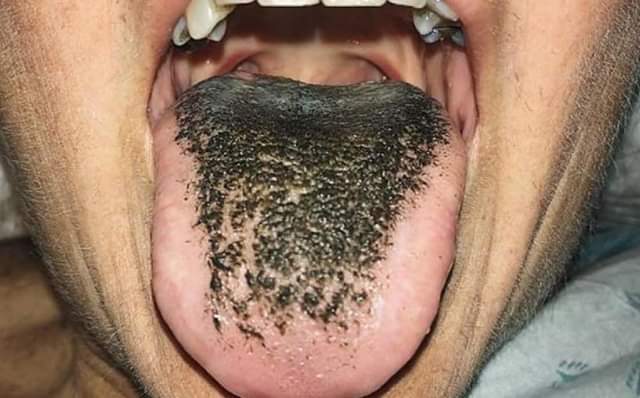
Why is my tongue white? How the coating forms
The top of your tongue isn't smooth. It's covered with thousands of tiny, hair-like bumps called filiform papillae. Their tips are made of keratin, the same tough protein in your skin, and they normally wear down and shed as you eat, talk and swallow.
When that normal wear slows down, the papillae get a little longer and the spaces between them fill up with dead cells, bacteria, food particles and dried saliva. Light bounces off that layer and the tongue looks white. Nothing is "growing" on your tongue in most cases. It's simply holding on to more than usual.
White tongue causes
Most white tongue causes come down to two things: less saliva washing the tongue, and less friction wearing the coating off. In a study of patients at a bad-breath clinic, oral hygiene was the strongest factor tied to how much coating people had, with smoking, dentures, gum disease and diet also playing a part.
Everyday causes (the common ones)
- Not cleaning your tongue. Brushing teeth alone leaves the tongue alone. A quick brush or scrape of the tongue each day makes a visible difference for most people.
- Dry mouth. Saliva is your mouth's rinse cycle. Less of it means more buildup. Medications are the most common reason; antihistamines, antidepressants, blood pressure pills, and many others reduce saliva. See our page on dry mouth causes and relief.
- Mouth breathing and snoring. Breathing through your mouth at night dries the tongue, which is why the coating is worst in the morning. A stuffy nose from a cold or allergies does the same thing.
- Not drinking enough water, or being run down with a fever, a stomach bug or a cold.
- A soft diet or not eating much. Chewing firmer foods scrubs the tongue. When you're sick, on a liquid diet, or recovering from surgery, the coating builds up fast.
- Smoking, vaping and chewing tobacco. These dry the mouth and irritate the surface of the tongue.
- Alcohol, including alcohol-based mouthwash, which can dry the tissue.
- Dentures, especially an upper denture that covers the palate and keeps the tongue from rubbing against it.
Medical causes that can make a tongue white
- Oral thrush, a yeast overgrowth. It's more likely after antibiotics, with inhaled steroid inhalers, with dentures, with diabetes, and in babies, older adults and people with weakened immune systems.
- Leukoplakia, a white patch that can't be rubbed off and has no other obvious cause. It's linked to tobacco and some patches can change over time, so it always needs a professional look.
- Oral lichen planus, an immune condition that causes lacy white lines or white patches, sometimes with sore red areas.
- Geographic tongue, where smooth red patches with white borders move around the tongue.
- Hairy leukoplakia, ridged white patches on the sides of the tongue caused by the Epstein-Barr virus, seen mostly in people with weakened immune systems.
- Infections such as strep throat with scarlet fever in children, which can cause a white-coated tongue early on before it turns red and bumpy.
What does a white tongue mean for your health?
For most people, a white tongue means the tongue needs cleaning, the mouth is dry, or you've been sick for a few days. That's about it.
You'll find a lot online claiming that a white tongue reveals gut problems, "toxins," candida overgrowth throughout the body, or a vitamin imbalance. Honestly, a coated tongue isn't a reliable sign of any of those. Tongue coating does vary with illness, fever and dehydration, but it's too common and too changeable to diagnose anything from on its own. If you feel well and the coating brushes off, it's very unlikely to point to a hidden problem.
A white tongue is worth more attention when:
- The white area won't come off with gentle brushing.
- It's a defined patch, especially on the side or underside of the tongue, rather than an even film on top.
- It hurts, burns, or bleeds, or the tongue under it is raw.
- It comes with fever, trouble swallowing, or weight loss, or keeps coming back despite good cleaning.
Our older blog post on the causes of a white tongue covers some of the everyday triggers in a shorter format.
Why is the back of my tongue white?
The back third of the tongue is almost always the whitest part, and that's normal. The papillae there are dense, the area doesn't rub against your teeth or palate much, and it's hard to reach with a toothbrush without gagging. Saliva flow also drops at night, so debris settles there while you sleep.
Two things at the very back of the tongue sometimes worry people. The first is a row of larger round bumps in a V shape. Those are normal taste structures, and our guide to bumps on the back of the tongue explains them. The second is white specks coming from the throat area, which can be tonsil stones rather than tongue coating.
Does it wipe off? White coating vs. white spots on the tongue
The most useful thing you can do at home is a gentle wipe test. Use a soft toothbrush or a clean, damp gauze pad and lightly brush the white area. Don't scrub hard enough to make it bleed.
If you have white spots on the tongue rather than an even film, think of them as patches until proven otherwise. A spot that wipes away and leaves a red, tender area points toward thrush. A spot that won't budge could be leukoplakia, lichen planus, a bite injury that's healing, or something else, and that's what we want to see if it lasts.
White tongue vs. oral thrush, leukoplakia and other look-alikes
A plain coated tongue is by far the most likely reason your tongue is white. These are the conditions people most often confuse it with.
| Coated white tongue | Oral thrush | Leukoplakia | |
|---|---|---|---|
| What it looks like | Even white or off-white film on top, thickest at the back | Creamy, cottage-cheese-like plaques; can also be on cheeks, palate, throat | Flat or slightly raised white patch with defined edges |
| Wipes off? | Yes, mostly, with pink tongue underneath | Often, leaving red or raw tissue | No |
| Where | Top of the tongue | Anywhere in the mouth | Often sides or underside of tongue, floor of mouth, cheeks, gums |
| Hurts? | No. May come with bad breath or a dull taste. | Often sore or burning, cottony feeling, taste changes | Usually painless |
| Cause | Debris trapped on papillae; dry mouth, mouth breathing, smoking | Candida yeast overgrowth | Often tobacco-related; sometimes no clear cause |
| Treatment | Tongue cleaning, water, fixing dry mouth | Prescription antifungal | Exam, removal of irritants, usually a biopsy |
| Serious? | No | Usually not, but can signal an underlying problem | Needs monitoring; a small share can become cancerous |
| Geographic tongue | Oral lichen planus | Hairy leukoplakia | Black hairy tongue | |
|---|---|---|---|---|
| Looks like | Smooth red patches with white or yellow borders that move | Lacy white lines or white plaques; sometimes red, sore areas | White, ridged or "corrugated" patches | Dark brown or black furry coating |
| Where | Top and sides of the tongue | Cheeks most often, also tongue and gums, often both sides | Sides of the tongue | Top of the tongue, mid to back |
| Wipes off? | No | No | No | Partly, with scraping |
| Cause | Unknown; linked to psoriasis and fissured tongue | Immune-mediated | Epstein-Barr virus, usually with a weakened immune system | Overgrown papillae plus staining |
| Learn more | Geographic tongue | Oral lichen planus | Mouth signs of HIV | Black hairy tongue |
Symptoms that can come with a white tongue
A simple coated tongue usually causes few symptoms beyond the look of it. People commonly notice:
- Bad breath, especially in the morning. The coating on the back of the tongue is one of the main sources of mouth odor.
- A dull, stale or metallic taste, or food tasting flat.
- A dry, sticky or "furry" feeling in the mouth.
Symptoms that suggest something other than plain coating include burning or soreness, a cottony feeling with redness (thrush), a patch that feels rough or thick, cracks at the corners of the mouth (angular cheilitis often travels with thrush), or pain when swallowing. A tongue that burns but looks completely normal may be burning mouth syndrome.
How long does a white tongue last?
It depends on the cause:
- Coating from illness, dehydration or a few days of mouth breathing: usually improves within a few days of drinking more and cleaning the tongue, and is gone once you're well.
- Coating from daily habits (smoking, dry mouth from medication, skipping tongue cleaning): it keeps coming back until the habit changes. Daily cleaning keeps it down, but it returns within a day or two if you stop.
- Thrush: usually clears within about 1 to 2 weeks once antifungal treatment starts. It rarely goes away on its own in adults.
- A patch that won't wipe off: doesn't fade with brushing. If it's still there after 2 weeks, have it examined.
How to get rid of white tongue
For a coated tongue, the fix is mostly mechanical: take the coating off, and make the tongue a less friendly place for it to rebuild.
Step by step
- Clean your tongue once or twice a day. After brushing your teeth, gently brush or scrape the top of your tongue from back to front. A review of controlled trials found that tongue brushing or scraping, on top of toothbrushing, reduced both tongue coating and breath odor.
- Rinse afterward with water to flush out what you loosened.
- Drink water through the day. Sipping often helps more than drinking a lot at once.
- Breathe through your nose when you can. If you wake with a dry mouth, treat nasal congestion, try a bedside humidifier, and mention snoring to your physician.
- Eat some firm, fibrous foods like apples, carrots or celery if you can. Chewing scrubs the tongue naturally.
- Cut back on tobacco and alcohol, and switch to an alcohol-free mouthwash if you use one.
- Give it a week. A coated tongue should look clearly better within about a week of daily cleaning. If it doesn't, or if it won't come off at all, it's time to have it checked.
How to use a tongue scraper
A tongue scraper is a simple U-shaped strip of plastic or metal. Any basic one works; you don't need anything fancy. A soft toothbrush works too if you'd rather not buy another tool.
- Stick your tongue out and relax it. Breathe through your nose to help with gagging.
- Place the scraper as far back as is comfortable and pull it forward with light pressure. Rinse it and repeat a few times, covering the left, middle and right.
- Go gently. Scraping should never hurt or make the tongue bleed. Pressing hard can irritate the papillae.
- Rinse the scraper and let it dry. Replace plastic ones when they get worn or rough.
Scrapers aren't for patches that won't come off. If you find yourself scraping the same white spot every day and it stays, stop scraping and get it looked at.
Skip these
- Don't scrub until it bleeds. Damaging the surface can make it more irritated, not less.
- Don't use straight hydrogen peroxide or other oxidizing rinses every day. Long-term use is one of the things linked to black hairy tongue.
- Don't start a "candida cleanse" or anti-yeast diet for a tongue that brushes clean. If thrush is the problem, it needs real antifungal medicine.
- Don't take leftover antibiotics. Antibiotics can actually trigger thrush.
Over-the-counter products for a white coating on the tongue
You don't need much. These are all at any pharmacy, and our home care instructions cover daily brushing and flossing.
| Product | What it does | Things to know |
|---|---|---|
| Tongue scraper or tongue brush | Physically removes the coating | Use gently once or twice a day. A soft toothbrush also works. |
| Alcohol-free antiseptic mouthwash (for example, cetylpyridinium chloride) | Reduces bacteria and odor for a while | Helps alongside cleaning, not instead of it. Alcohol-based rinses can dry the mouth. Not for young children who might swallow it. |
| Dry mouth products (saliva substitutes, moisturizing gels and sprays, xylitol gum or mints) | Keep the tongue moist so debris doesn't stick | Especially useful at night. Choose sugar-free. |
| Toothpaste | Brushing the tongue with a little toothpaste is fine | If your tongue stings, try a milder, flavor-light paste. |
| Numbing gels (benzocaine, lidocaine) | Temporary relief if the tongue is sore | A sore tongue isn't a simple coating, so get it checked. Do not use benzocaine in children under 2. The FDA warns it can cause a rare but dangerous blood condition. |
Antifungal medicines for oral thrush, such as nystatin, clotrimazole troches and fluconazole, need a prescription in the US. If you're pregnant or breastfeeding, check with your obstetrician, midwife or pharmacist before using new medicated rinses.
What a dentist can do for a white tongue
If the coating brushes off and you feel fine, you probably don't need a special visit. Mention it at your next checkup. If it won't clear, keeps coming back, or looks like a patch, here's how we help:
- Tell coating from patch. We look at where the white is, whether it wipes off, what's underneath, and the rest of your mouth, as part of a careful dental exam.
- Treat thrush. If it looks like a yeast infection, we can prescribe an antifungal rinse, troche or pill and look for the reason it happened, such as a denture that needs attention or an inhaler routine that needs a tweak.
- Work on dry mouth. We review your medications, recommend saliva products, and coordinate with your physician if a medication change makes sense.
- Clean up sources of buildup. Gum disease, heavy tartar, and poorly fitting or poorly cleaned dentures all add to the coating.
- Remove irritation. We can smooth a sharp tooth or rough filling rubbing the side of your tongue.
- Look closely at a patch that won't wipe off. If a white patch doesn't go away after we remove possible causes, we'll biopsy it or refer you for one. A biopsy is the only way to know what a persistent patch is. Our oral medicine and diagnosis page explains how we evaluate mouth sores and patches.
- Coordinate care. If your mouth suggests a medical issue, such as uncontrolled diabetes or a weakened immune system, we'll talk with you and your physician.
How to get rid of white tongue permanently (or close to it)
A coated tongue tends to come back, because the tongue's surface is built to collect things. You can keep it under control with small daily habits:
- Clean your tongue every day as part of brushing. It takes 10 seconds.
- Stay hydrated and keep water by the bed if you wake up dry.
- Treat the cause of dry mouth, whether that's a medication, mouth breathing, or a condition like Sjögren's.
- Quit tobacco, including vaping. Your tongue, gums and odds of oral cancer all benefit.
- Clean dentures daily and take them out at night unless your dentist has told you otherwise. Our denture page has more on fit and care.
- Rinse with water after using a steroid inhaler to lower the chance of thrush.
- Keep up with dental cleanings so gum disease and tartar don't add to the bacterial load.
White tongue in babies, kids and other special cases
Babies
A white tongue in a baby is usually milk residue. It wipes off easily with a soft, damp cloth and doesn't appear on the cheeks or gums. Thrush is more stubborn: white patches on the tongue, inner cheeks, gums or lips that don't wipe off easily, sometimes with fussiness during feeding. If you think your baby has thrush, call your pediatrician. A breastfeeding parent may need treatment at the same time. Don't use benzocaine teething or numbing products on a child under 2.
Children
Kids get coated tongues for the same reasons adults do, especially when they're sick, mouth breathing from a stuffy nose, or not drinking much. A white tongue with fever and a sore throat can be an early sign of strep throat or scarlet fever, so call your child's doctor.
Pregnancy
Morning sickness, dehydration and nasal congestion can all make the tongue coat more easily. The same gentle cleaning works. If thrush is suspected, tell whoever prescribes that you're pregnant, because some antifungal pills aren't a first choice during pregnancy.
Denture wearers
An upper denture keeps the tongue from rubbing the palate, and a denture that isn't cleaned well can harbor yeast. Denture-related thrush is common and very treatable. Clean the denture daily, leave it out overnight, and let us check the fit.
Cancer treatment, diabetes and weakened immunity
Chemotherapy, radiation to the head and neck, poorly controlled diabetes, HIV, transplant medicines and long-term steroids all raise the chance of thrush and dry mouth. A white tongue in these situations deserves a prompt look rather than a wait-and-see approach. If you're going through cancer treatment, our head and neck cancer dental care page explains how we help keep the mouth comfortable.
When to see a dentist about a white tongue
Make an appointment if:
- The white area doesn't brush or wipe off
- A white patch or spot is still there after 2 weeks
- The coating hasn't improved after a week of daily tongue cleaning
- Wiping it off leaves red, raw or sore tissue (possible thrush)
- It keeps coming back after antibiotics, with a denture, or with an inhaler
- You use tobacco and notice a new white patch anywhere in your mouth
Get care quickly if:
- You have a white or red patch with a lump, ulcer, bleeding or numbness
- It hurts to swallow, or you can't eat or drink enough
- You have a high fever or feel very sick
- Your immune system is weakened (chemotherapy, radiation, transplant medicines, HIV) and white patches appear
- A baby with white patches isn't feeding well
Most white spots turn out to be harmless, but if you want to know what changes are worth watching, read about the early signs of oral cancer.
White tongue FAQ
Why is my tongue white?
Most often, your tongue is white because dead cells, bacteria and food debris are trapped between the tiny bumps (papillae) on its surface. Dry mouth, mouth breathing, dehydration, smoking, being sick and not cleaning the tongue all make this coating build up. It's usually harmless and improves within days of brushing or scraping the tongue and drinking more water.
How do I get rid of a white tongue?
Gently brush or scrape your tongue from back to front once or twice a day, then rinse. Drink water through the day, breathe through your nose when you can, and cut back on tobacco and alcohol. Most coated tongues look clearly better within about a week. If the white won't come off or keeps returning, see a dentist.
What does a white tongue mean?
Usually it means the tongue's surface is holding on to more debris than normal, often because of dry mouth, mouth breathing or not cleaning the tongue. It isn't a reliable sign of gut problems or "toxins." A white patch that won't wipe off, hurts, or lasts 2 weeks is different and should be examined.
Is a white tongue a sign of illness?
It can be a side effect of being sick, because fever, dehydration and eating less all let coating build up. On its own, though, a white tongue doesn't point to any particular disease. If you feel well and the coating brushes off, it's very unlikely to be a sign of something serious.
Why is the back of my tongue white?
The back of the tongue has dense papillae, gets very little friction from teeth or the palate, and is hard to clean without gagging, so coating collects there first. Some whiteness at the back is normal, especially in the morning. Larger round bumps in a V shape at the very back are normal taste structures, not a problem.
Is a white tongue oral thrush?
Usually not. Thrush is a yeast infection that tends to look thicker and creamier, may appear on the cheeks or palate too, and often leaves red, sore tissue when wiped off. It's more likely after antibiotics, with dentures or inhaled steroids, in babies, and in people with diabetes or weakened immunity. A plain coated tongue brushes off and the tongue underneath looks normal.
Is a white tongue contagious?
No. A coated tongue can't be passed to someone else. Thrush isn't usually spread between healthy adults either, though a baby and a breastfeeding parent can pass it back and forth, which is why both are sometimes treated.
Can dehydration cause a white tongue?
Yes. When you're dehydrated, you make less saliva, and saliva normally helps wash debris off the tongue. Drinking more water, along with gentle tongue cleaning, usually brings the color back to normal within a day or two.
Do tongue scrapers work?
Yes, for a coated tongue. Studies show tongue scraping or brushing, added to toothbrushing, reduces tongue coating and breath odor. A soft toothbrush works too. Be gentle; scraping should never hurt or cause bleeding.
Can antibiotics cause a white tongue?
They can. Antibiotics reduce the normal bacteria that keep yeast in check, so thrush sometimes appears during or after a course. If your tongue turns white and sore while on antibiotics, contact your dentist or doctor; it usually needs an antifungal medicine.
What does a white spot on the tongue mean?
A single white spot can be a healing bite or burn, a patch of thrush, or a patch such as leukoplakia or lichen planus. If it wipes off and leaves a red area, thrush is likely. If it won't wipe off and is still there after 2 weeks, have a dentist examine it, since a biopsy may be needed to know what it is.
Can a white tongue be cancer?
A white coating that brushes off is not cancer. Oral cancer can sometimes start as a white or red patch that doesn't wipe away, most often on the sides or underside of the tongue or the floor of the mouth. Most such patches are harmless, but any patch lasting 2 weeks should be checked, and a biopsy is the only way to know for sure.
Is a white tongue in a baby normal?
Often, yes. Milk residue makes many babies' tongues look white, and it wipes off easily with a damp cloth. White patches that don't wipe off easily, or that also show up on the cheeks or gums, may be thrush, and you should call your pediatrician.
White tongue that won't go away?
If you're in the Jacksonville area and a white patch won't wipe off, keeps coming back, or just doesn't look right to you, we're glad to take a look. Dr. Henley sees patients with all kinds of tongue and mouth changes, from simple coating to patches that need a closer look.
Related conditions
Sources
- Van Tornout M, Dadamio J, Coucke W, Quirynen M. Tongue coating: related factors. J Clin Periodontol. 2013;40(2):180–185.
- Van der Sleen MI, Slot DE, Van Trijffel E, Winkel EG, Van der Weijden GA. Effectiveness of mechanical tongue cleaning on breath odour and tongue coating: a systematic review. Int J Dent Hyg. 2010;8(4):258–268.
- Kumbargere Nagraj S, Eachempati P, Uma E, et al. Interventions for managing halitosis. Cochrane Database Syst Rev. 2019;12:CD012213.
- Vila T, Sultan AS, Montelongo-Jauregui D, Jabra-Rizk MA. Oral candidiasis: a disease of opportunity. J Fungi (Basel). 2020;6(1):15.
- Warnakulasuriya S, et al. Oral potentially malignant disorders: a consensus report from an international seminar on nomenclature and classification, convened by the WHO Collaborating Centre for Oral Cancer. Oral Dis. 2021;27(8):1862–1880.
- U.S. Food and Drug Administration. Risk of serious and potentially fatal blood disorder prompts FDA action on oral over-the-counter benzocaine products. 2018.
This page is for general education and isn't a diagnosis. Every mouth is different. If you have a sore you're worried about, see your dentist or physician. Photos marked Wikimedia Commons are used under their listed licenses and may have been cropped or resized.