


Why Cavemen Needed No Braces
Crooked teeth are a modern phenomenon and a telltale sign of an underlying epidemic.
Modern industrialized societies are plagued by crowded, ill-aligned teeth, a condition that the dental profession refers to as “malocclusion”—which translates literally to “bad bite.” Survey data from 1998 suggests that as much as a fifth of the U.S. population has significant malocclusion, over half of which require at least some degree of orthodontic intervention. Braces, tooth extractions, and retainers are the bread and butter for all the dentists and orthodontists tasked with setting straight our dental deviations. Having braces as a child has become so common in the Western world that it can seem a rite of passage—today, an estimated 50 to 70 percent of U.S. children will wear braces before adulthood. But what did humans do to fix their teeth before modern dentistry, before Novocain, gauze, and rubber spacers?
As it turns out, our ancestors did not suffer from crooked teeth to the same extent that we do today. Our species’ fossil record reveals a telling story: the epidemic of crooked teeth developed in humans over time. Evolutionary biologist, Daniel Lieberman, notes the pattern in his book, The Story of the Human Body:
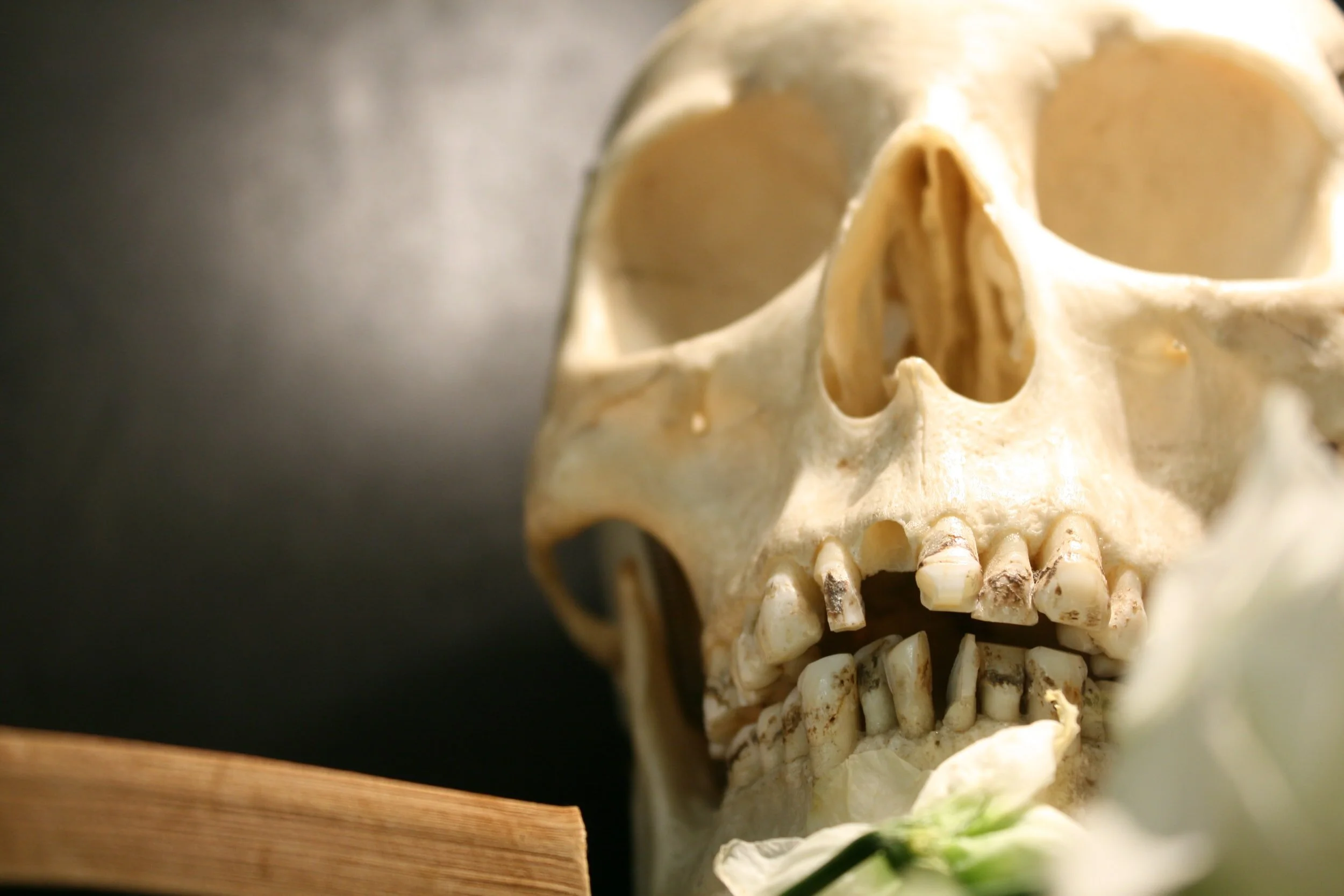
Ample evidence abounds in support of Lieberman’s observations. A comparison of 146 medieval skulls from abandoned Norwegian graveyards with modern skulls indicated a trend toward bad bite in our more recent forebears. The skulls of people scored as being in “great” or “obvious” need of orthodontic treatment made up 36 percent of the medieval sample and 65 percent of the modern sample. And evidence of malocclusion in still earlier human fossils is vanishingly rare. The jaws of hunter-gatherers nearly uniformly reveal roomy, perfect arches of well aligned teeth, with no impacted wisdom teeth—a movie star’s dream smile, 15,000 years before the movies!
A tiny jaw from Greenland sheds light on the origin of complex teeth
Scientists have described the earliest known example of dentary bone with two rows of cusps on molars and double-rooted teeth. The new findings offer insight into mammal tooth evolution, particularly the development of double-rooted teeth.
A team of scientists led from Uppsala University have described the earliest known example of dentary bone with two rows of cusps on molars and double-rooted teeth. The new findings offer insight into mammal tooth evolution, particularly the development of double-rooted teeth. The results are published in the scientific journal PNAS.
The first mammals originated in the latest Triassic period, around 205 million years ago. An ancestor to mammals were the therapsids, "mammal-like reptiles" referred to as stem mammals or proto-mammals, which originated about 320-300 million years ago. One unique characteristic of the lineage that included mammals and animals related to mammals (synapsids) was that they developed complex occlusion. Close ancestors to mammals, called mammaliaforms, developed rows of cusps on molar-like teeth adapted for more omnivorous feeding. The origin of this multicusped pattern and double-rooted tooth has thus far remained unclear.
A team of scientists led by Grzegorz Niedzwiedzki from Uppsala University have investigated the jaw anatomy and tooth structure of a recently described new mammaliaform species named Kalaallitkigun jenkinsi. It was discovered on the eastern coast of Greenland and was a very small, shrew-like animal, probably covered with fur. It would have been the size of a large mouse and lived during the Late Triassic, around 215 million years ago.
A tiny jaw from Greenland sheds light on the origin of complex teeth
Scientists have described the earliest known example of dentary bone with two rows of cusps on molars and double-rooted teeth. The new findings offer insight into mammal tooth evolution, particularly the development of double-rooted teeth.
A team of scientists led from Uppsala University have described the earliest known example of dentary bone with two rows of cusps on molars and double-rooted teeth. The new findings offer insight into mammal tooth evolution, particularly the development of double-rooted teeth. The results are published in the scientific journal PNAS.
The first mammals originated in the latest Triassic period, around 205 million years ago. An ancestor to mammals were the therapsids, "mammal-like reptiles" referred to as stem mammals or proto-mammals, which originated about 320-300 million years ago. One unique characteristic of the lineage that included mammals and animals related to mammals (synapsids) was that they developed complex occlusion. Close ancestors to mammals, called mammaliaforms, developed rows of cusps on molar-like teeth adapted for more omnivorous feeding. The origin of this multicusped pattern and double-rooted tooth has thus far remained unclear.
A team of scientists led by Grzegorz Niedzwiedzki from Uppsala University have investigated the jaw anatomy and tooth structure of a recently described new mammaliaform species named Kalaallitkigun jenkinsi. It was discovered on the eastern coast of Greenland and was a very small, shrew-like animal, probably covered with fur. It would have been the size of a large mouse and lived during the Late Triassic, around 215 million years ago.
"I knew it was important from the moment I took this 20 mm specimen off the ground," says Niedzwiedzki, researcher at Uppsala University and the corresponding author of the publication.
Kalaallitkigun jenkinsi exhibits the earliest known dentary with two rows of cusps on molars and double-rooted teeth. The anatomical features place Kalaallitkigun jenkinsi as an intermediate between the mammals and the insectivorous morganucodontans, another type of mammaliaform.
The researchers believe that the structural changes in the teeth are related to changed feeding habits. In this case study, the animals were switching to a more omnivorous/herbivorous diet and the tooth crown was expanding laterally. Broader teeth with "basins" on the top surface are better for grinding food. This development also forced changes in the structure of the base of the tooth.
The biomechanical analysis that was carried out within the study found that multi-rooted teeth are better able to withstand mechanical stresses, including those of upper and lower tooth contact during biting, compared to single-rooted teeth. Human teeth, for instance, have this characteristic. The results suggest that the development of molar-like teeth with complex crowns may have developed together with biomechanically optimised dual roots.
"The early evolution of mammals is a particularly interesting topic in evolutionary studies. This tiny jaw from Greenland shows us how complex mammalian teeth arose and why they appeared," says Niedzwiedzki.
"Our discovery of the oldest mammalian ancestor with double-rooted molars shows how important the role of teeth was in the origin of mammals. I had this idea to look at the biomechanics and the collaboration with the engineers turned out great," says Tomasz Sulej, researcher at the Polish Academy of Sciences, first author of the publication.
"It seems that the fossils of close mammalian ancestors must be looked for in even older rocks," says Sulej.

Shark Teeth and Human Dental Biology
What shark research can—and cannot—tell us about human teeth, tooth replacement, and preventive dental care.
Shark teeth are interesting models for studying biology, but they are not a guide to treating human teeth. Research into tooth development does not mean people can replace lost adult teeth naturally or skip ordinary preventive care.
Updated October 1, 2026.
Can shark research explain how human teeth developed?
It can help researchers ask questions, but comparisons need care. A 2021 study summarized by the University of Bristol found that living shark relatives do not represent the ancestral dentition of all jawed vertebrates. Complex arrangements of teeth have changed repeatedly through evolutionary history.
Does this mean tooth regeneration is a treatment option?
The evolutionary study does not establish a treatment for patients. If you have a missing or damaged tooth, decisions should start with an examination and the options appropriate for your mouth. Our guide to dental implants explains one replacement option; a crown may be considered for some damaged teeth.
What is the practical lesson for dental care in Jacksonville?
Focus on protecting the teeth you have. Use fluoride toothpaste appropriate for your needs, clean between teeth, and arrange regular dental examinations. Biology research can improve understanding without changing what an individual patient needs today.
At our San Marco office, an examination connects your symptoms, medical history, and dental findings to a treatment plan. Contact CJ Henley, DMD if you have a tooth concern.
Research source
University of Bristol: the origins of a human smile (2021). This article consolidates the earlier shark-teeth and vertebrate-dentition posts.