


Does a Lower Radiation Dose Protect Your Mouth After HPV Throat Cancer?
New research suggests some HPV throat cancer patients can get less radiation and keep more of their saliva, swallowing and voice. Here's what that means for your teeth.
Possibly, for a specific group of patients. In a 2026 analysis of patients with HPV-related throat cancer, people whose tumors responded completely to chemotherapy and then received a lower radiation dose reported less dry mouth, easier swallowing and fewer voice problems six months after treatment than people who received the standard dose. The comparison was small and not randomized, so it does not yet change standard care.
I care for patients before, during and after head and neck cancer treatment, and saliva is one of the things I worry about most. Here is what the study found and what it means for your teeth.
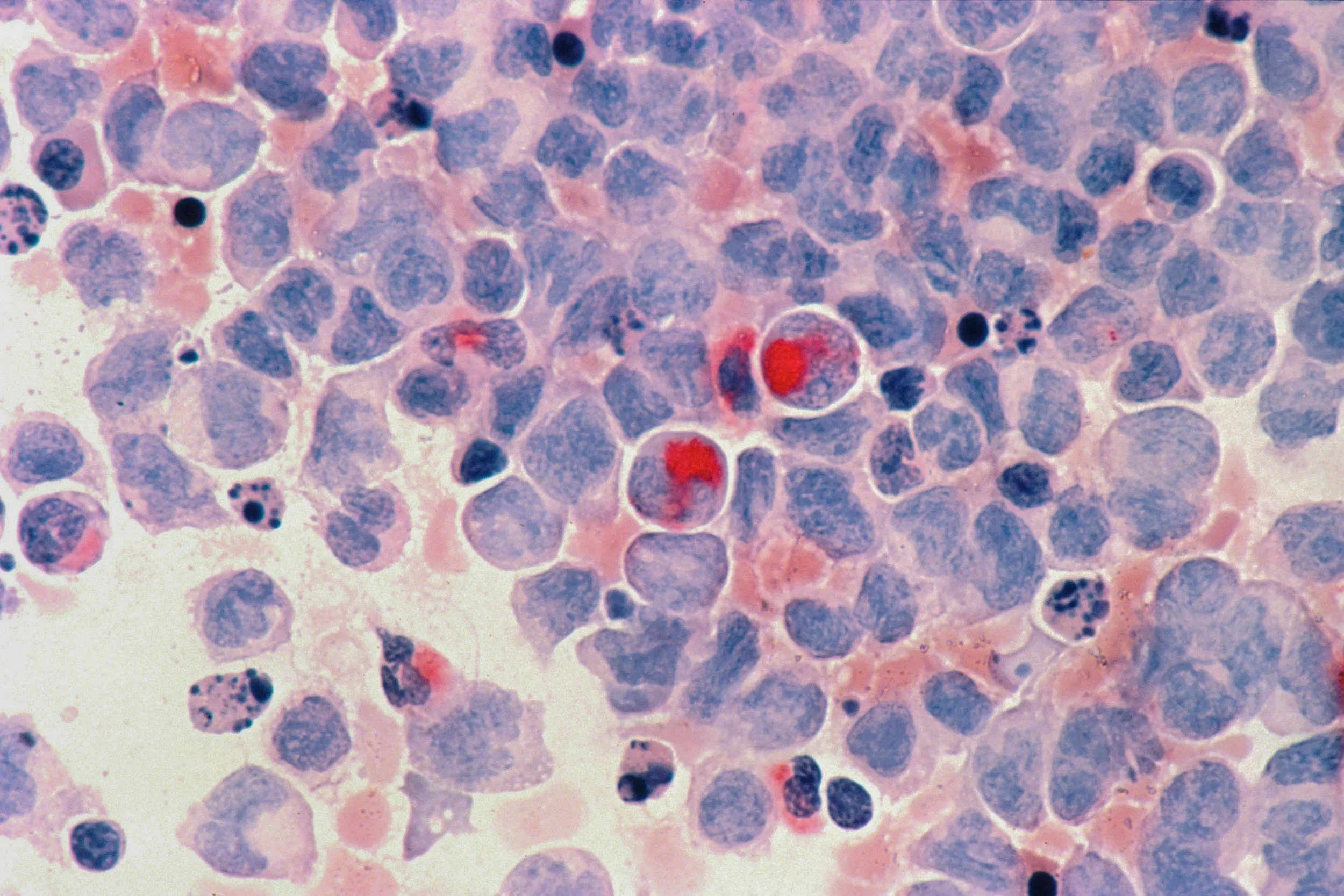
What did the study find?
The analysis was published September 29, 2026, in JCO Oncology Advances by the ECOG-ACRIN Cancer Research Group. It drew on two earlier trials, E1308 and E2399, of patients with stage 3 to 4b HPV-associated oropharyngeal cancer. That is cancer in the middle of the throat, including the tonsils and the base of the tongue.
In E1308, every patient received chemotherapy first. Those whose tumors were no longer visible on examination afterward (62 of 80 patients) received 54 Gy of radiation instead of the standard 69.3 Gy, about 23 percent less. Fifty-one patients completed the symptom surveys: 42 in the lower-dose group and 9 in the standard-dose group.
Six months after treatment, the lower-dose group reported:
Less dry mouth: an average score of 3.5 compared with 5.1 on a 0 to 10 scale.
Easier swallowing of solid food: scores worsened by 1.38 points compared with 3.31 points.
No measurable change in voice, compared with a 1-point worsening.
Fewer severe mouth sores during treatment: 30 percent compared with 47 percent.
Two years after treatment, 81 percent of the lower-dose group were alive without their cancer growing or spreading.
Why does dry mouth matter so much for your teeth?
Saliva neutralizes acid, rinses away food and bacteria, and helps early enamel damage repair itself. Radiation to the head and neck often damages the salivary glands, sometimes permanently. When saliva drops, a mouth that has been healthy for decades can change quickly.
Radiation-related decay. Cavities can form fast along the gumline and the biting edges of teeth.
Jawbone healing problems. Radiation reduces blood flow to the jaw. Removing a tooth afterward can lead to bone that does not heal, called osteoradionecrosis. The risk is linked to the radiation dose the jaw received.
Everyday function. A dry mouth makes chewing, swallowing, speaking, tasting and wearing a denture harder, and it raises the risk of yeast infections.
The study did not measure cavities or jawbone problems directly. Less radiation and less dry mouth are encouraging for long-term dental health, but that link still needs to be measured.
What should you do before radiation starts?
Whatever dose your oncology team recommends, the best time to protect your mouth is before treatment begins.
See a dentist soon after diagnosis. Teeth that cannot be kept healthy are usually best removed before radiation, ideally with time to heal before treatment starts. Your dentist and radiation oncologist decide the timing together.
Ask about prescription fluoride. Daily high-strength fluoride, often in custom trays, is a central part of preventing radiation-related decay. For many patients it becomes a lifelong habit.
Plan closer follow-up. Cleanings and examinations are commonly scheduled more often in the first years after treatment.
Manage dry mouth. Sip water often. Sugar-free gum or lozenges and saliva substitutes can help. Avoid sugary drinks and alcohol-based mouthwash.
Tell every dentist about your radiation history before any dental work, especially an extraction.
HPV vaccination helps prevent the infections linked to most HPV-related throat cancers. Ask your physician whether it applies to you or your family.
Is lower-dose radiation right for everyone?
Not at this point. The lower dose was given only to patients whose tumors disappeared after chemotherapy. Patients were not randomly assigned, and only nine standard-dose patients completed the surveys, so the comparison is limited. The researchers say larger randomized trials are needed.
Your radiation oncologist is the right person to ask whether a reduced-dose approach or a clinical trial fits your situation. My role is to get your mouth ready either way and to stay involved afterward.
Facing head and neck cancer treatment in Jacksonville?
Our office is at 3675 Hendricks Avenue, near San Marco. Call 904-398-1549 or contact the office to arrange a dental evaluation before treatment. You can also read how we approach dental care around head and neck cancer and what to expect before cancer treatment.
Physicians can use our physician referral page to refer a patient for a pre-radiation dental evaluation.
Sources
Cmelak AJ, et al. Patient-reported toxicity with radiation deintensification in human papillomavirus-associated oropharynx cancer: ECOG-ACRIN E2399 and E1308. JCO Oncology Advances. September 29, 2026.
CURE. Lower radiation dose tied to less trouble swallowing in HPV throat cancer. Retrieved October 6, 2026.
National Institute of Dental and Craniofacial Research. Cancer treatments and oral health.
This article is general education and is not a substitute for advice from your own medical and dental team.
About the author. CJ Henley, DMD, is a general dentist in Jacksonville whose practice focuses on cosmetic and restorative dentistry, dental implants and dental care around head and neck cancer treatment. He works with oncology teams to prepare patients' mouths for treatment and to care for them afterward. Meet Dr. Henley.
CJ Henley, DMD, PA · 3675 Hendricks Avenue, Jacksonville, FL 32207 · 904-398-1549
Updated October 2026.
The 7 Warning Signs of Mouth Cancer
Oral cancer often develops quietly, appearing as nothing more than a stubborn sore or a faint patch of color. However, early detection is the single most important factor in successful treatment. From persistent mouth sores to subtle changes in your voice, recognizing these 7 warning signs can save your life. Learn what to look for during your monthly self-exam and when it’s time to seek a professional evaluation.
The most common warning signs of mouth cancer are a sore that doesn't heal, a red or white patch, and a new lump or thickening. Early mouth cancer is often painless, which is why changes get overlooked. Most of these changes turn out to be something harmless, but any of them lasting more than two weeks should be examined by a dentist or physician, who can refer you for further tests if needed.
1. A mouth sore that won't heal
Canker sores and bites usually heal within one to two weeks. A sore or ulcer that is still there after two weeks needs to be looked at, especially if it doesn't hurt. Read about evaluation of mouth sores and patches.
2. Red or white patches
A white patch (leukoplakia) or red patch (erythroplakia) on the gums, tongue, cheeks or floor of the mouth can be precancerous. A patch that doesn't wipe off and doesn't go away should be examined.
3. A lump or thickening
A new lump, rough spot or area of thickened tissue in the mouth, or a lump in the neck, deserves an exam. Your dentist or physician will examine it and refer you for further testing if it needs it.
4. A sore throat or hoarseness that lasts
A sore throat that doesn't clear up, a feeling that something is stuck in your throat, or a change in your voice that lasts more than a couple of weeks can be a sign of a problem in the throat. These are worth raising with your physician.
5. Trouble chewing, swallowing or moving the tongue or jaw
New difficulty chewing, swallowing, speaking or moving your tongue or jaw, without a clear cause such as an injury, should be checked.
6. Numbness or pain
Numbness of the tongue, lip or another part of the mouth, mouth pain that doesn't go away, or ongoing pain in one ear can all be signs worth investigating. [1] [2]
7. Loose teeth or dentures that stop fitting
Gum disease is the most common reason teeth loosen. Teeth that loosen without an obvious cause, or dentures that suddenly stop fitting, can also signal a change in the jaw underneath and should be examined. [2]
How do you check your own mouth?
Once a month, in good light and in front of a mirror:
Remove any dentures.
Look at and feel your lips and the inside of your cheeks.
Stick out your tongue and look at the upper surface, sides and underneath. Lift it and look at the floor of your mouth.
Tilt your head back and look at the roof of your mouth.
Feel along both sides of your neck and under your jaw for lumps.
If you notice a change, note the date. If it is still there in two weeks, call your dentist or physician.
What happens at an oral cancer exam?
The dentist looks at and feels the tissues of your lips, mouth, tongue and throat, and feels your neck and jaw for lumps. It is painless and takes a few minutes. If something needs a closer look, the next step may be a recheck or a biopsy. Only a biopsy can confirm or rule out cancer. Learn how oral cancer screening works at our office. It is part of every comprehensive exam.
Where can you have a mouth change checked in Jacksonville?
If you have noticed any of these signs for more than two weeks, don't wait for your next routine cleaning. Contact our office or call 904-398-1549, and tell the staff what you have noticed so we can schedule you appropriately.
Sources
National Institute of Dental and Craniofacial Research. Oral cancer. Retrieved October 6, 2026.
American Cancer Society. Signs and symptoms of oral cavity and oropharyngeal cancers. Last revised March 23, 2026.
About the author. CJ Henley, DMD, is a general dentist in Jacksonville whose practice focuses on cosmetic and restorative dentistry, dental implants and dental care around head and neck cancer. His role is dental care and coordination with your medical team. He does not provide cancer treatment. Meet Dr. Henley.
CJ Henley, DMD, PA · 3675 Hendricks Avenue, Jacksonville, FL 32207 · 904-398-1549
Updated October 2026.