

Why Do My Veneers Look Fake? Can They Be Redone?
Why veneers can look bulky, opaque or mismatched, when repair or replacement may help, and what to expect at a second-opinion visit in Jacksonville.
Veneers can look unnatural because of their color, opacity, thickness, shape or relationship to the gums and lips. Some concerns can be improved with polishing, repair or treatment of the surrounding teeth or gums. Others may require replacement. Before recommending new veneers, a dentist should assess the existing restorations, the remaining tooth structure, the bite and gum health.
I am CJ Henley, DMD, a general dentist in San Marco, Jacksonville. Patients sometimes come to me unhappy with how their veneers, crowns or bonding look. Below I explain what can make veneers look unnatural, when repair or replacement may help, and what a second-opinion visit involves, with examples from our office.
Key points
- Several factors can make veneers look unnatural. The most common are opacity, thickness, surface texture, shade, the line of the biting edges and the gumline. The list below is a guide, not a diagnosis.
- Whitening does not predictably change the shade of porcelain. Surface stain can sometimes be polished away, but changing the ceramic's own color means replacing the veneer.
- Veneers can be removed and replaced. Removal usually costs some additional tooth structure, so the cause should be understood first.
- Replacement may improve appearance when the underlying cause can be addressed. Sometimes a smaller step, such as polishing, repair or treating the gums, is enough.
Why do my veneers look fake?
People rarely describe a problem with their veneers in technical terms. They say the teeth look too white, too big, too flat, or not like their own teeth. Each of those concerns has a few possible explanations, and an examination is what tells them apart.
The veneers look opaque, flat or chalky
Natural enamel is partly translucent. Light passes into the tooth, reflects off the dentin underneath and comes back out, which gives a natural tooth depth. A veneer that is more opaque stops more light at the surface, so the tooth can look flat even when the shade number is right.
Greater opacity is sometimes chosen on purpose, for example to cover a darkened tooth. That is a reasonable trade-off, and how well it blends depends on the starting color of the tooth, the space available and the ceramic used. Opacity is part of the ceramic itself, so it cannot be polished out.
The veneers look bulky or too big
Veneers can look large when they add thickness to a tooth that was already well positioned, or when extra thickness was needed to cover color or to correct crowding without moving the teeth. The teeth can then sit forward of the natural arch or push the lip out.
The way a tooth rises out of the gum is called its emergence profile. When a restoration is fuller than the natural tooth right at the gumline, it can look artificial and can make that gum tissue harder to keep clean.
The surface looks too smooth or uniform
Natural teeth have fine ridges, faint lines, rounded corners and small differences from one tooth to the next. Dentists call this secondary anatomy and surface texture. It scatters light in a way that looks like enamel. Very smooth, identical veneers can look less natural, especially in photographs.
The shade looks too white or no longer matches
Shade concerns take a few forms.
- Too bright for the face. A very light shade suits some people and not others. Skin tone, the whites of the eyes and age all affect how a shade reads.
- Mismatch over time. Dental porcelain is relatively stain-resistant, but natural teeth can darken or be whitened. Surface deposits, the margins, the bonding cement and the tooth underneath can also change how a veneer looks. If only some teeth were veneered, the difference can become more noticeable over the years.
- A gray or blue tint. A dark tooth underneath, including one that has darkened after a root canal, can show through a thin, translucent veneer. Very translucent biting edges can also look gray or blue in some light.
- Yellow edges. This usually comes from stain at the margins or changes in the bonding cement. Veneers made from composite resin pick up stain more readily than porcelain.
The edges do not follow the smile
When you smile, the edges of the upper front teeth usually follow the curve of the lower lip. This is called the smile arc. Edges that run flat across, or teeth that are noticeably shorter or longer than suits the face, can make a smile look less natural even when each tooth looks fine on its own.
The gumline frames the teeth unevenly
Gum tissue that sits at uneven heights, or covers more of the teeth than usual, can make well-made veneers look short or square. The right treatment depends on the cause, including how the gum tissue, the tooth and the underlying bone relate to each other. Some cases call for gum contouring, some for a different approach, and some for no gum treatment at all.
A quick reference
| What you notice | Possible explanations | What an examination may establish |
|---|---|---|
| Teeth look flat or chalky | Opaque ceramic, thickness chosen to mask a dark tooth | Whether a different material or layering could work for your tooth color |
| Teeth look too big or stick out | Added thickness, crowding, emergence at the gumline | Whether tooth position, gum health or tooth preparation limit a thinner result |
| Teeth look too uniform | Little surface texture or individual character | Whether the shape could be refined or needs a remake |
| Too white, or no longer matches | Natural teeth changed color, shade choice, margin stain | Whether polishing, whitening natural teeth or replacement is the better step |
| Gray or blue tint | Dark tooth showing through, very translucent edges | The color of the underlying tooth and whether it needs treatment |
| Yellow edges | Margin stain, cement changes, composite material | Whether margins are sealed and whether polishing is enough |
| Teeth look short or gummy | Gum position, tooth wear, bone level | Whether gum treatment, restoration changes or both would help |
| Repeated chipping | Bite forces, grinding, material choice, bonding, tooth problems | Bite and wear patterns and whether a night guard or other material is needed |
Examples from our office
These cases are from our before and after gallery. One involves veneers. The other two involve a bridge and bonding, and they are included because they show the same appearance concerns.
e.max veneers and crowns for mismatched front teeth and a gap
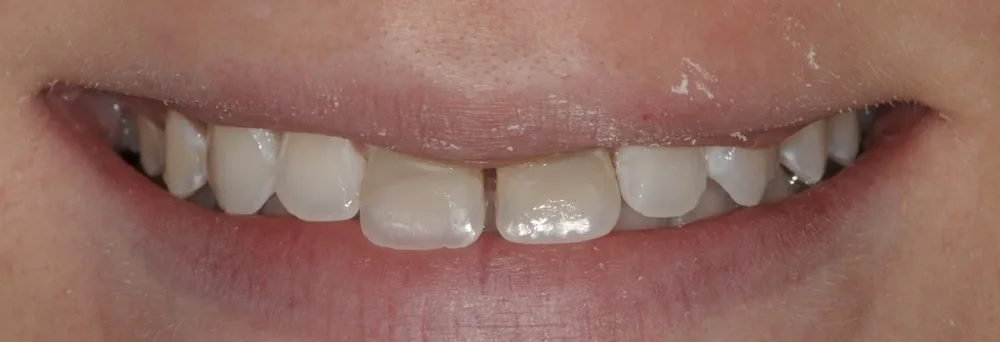
Before
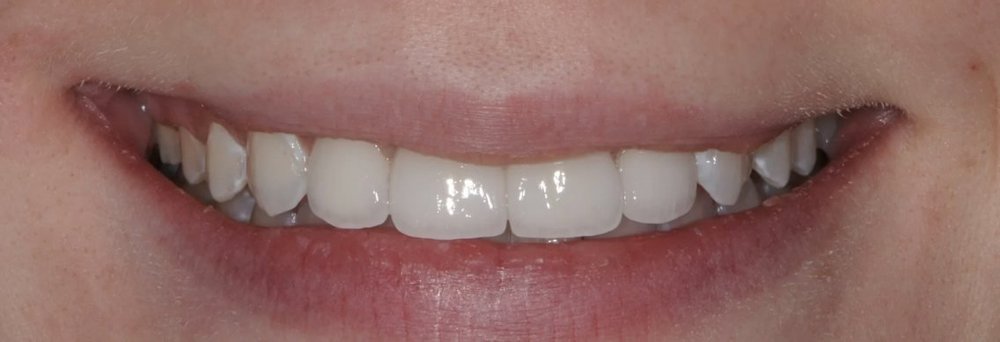
After
Childhood trauma had left the front teeth discolored and mismatched, with a gap. The two front teeth needed more coverage than a veneer provides, so they received crowns. The neighboring teeth received porcelain veneers. Using the same ceramic for both helped keep color and translucency consistent, which is a common challenge when crowns and veneers sit side by side. The restorations also closed the gap between the front teeth. View this case.
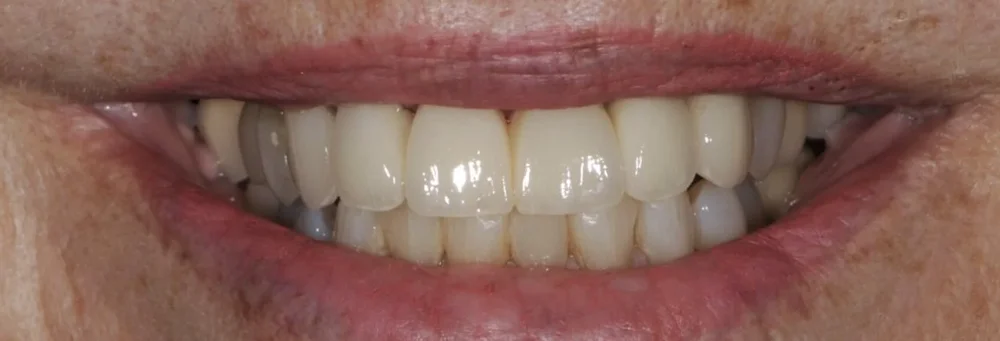
A second opinion on bulky front restorations
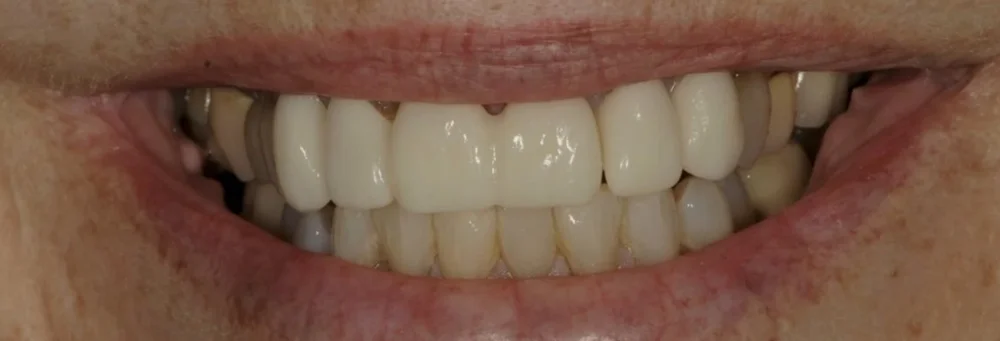
Before
After
The patient was unhappy with how her existing front restorations looked and had been told they could not be improved. Her concerns were bulk and opacity. In planning the replacement, we paid attention to emergence from the gums, translucency, surface texture and the shape of the spaces between the teeth. Those same details affect how natural veneers look. View this case.
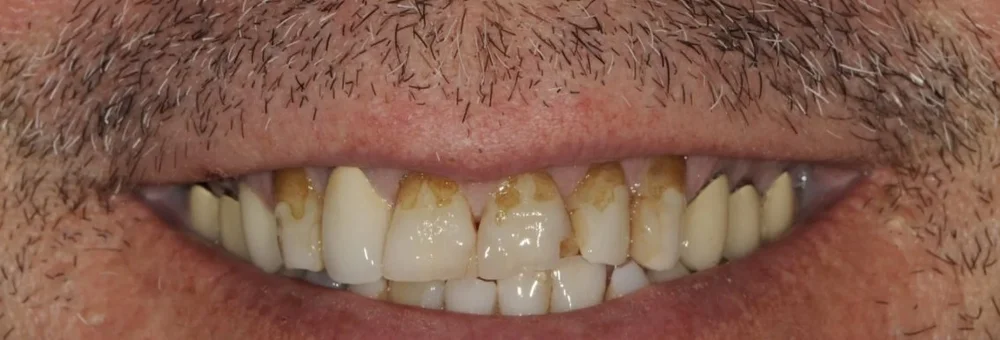
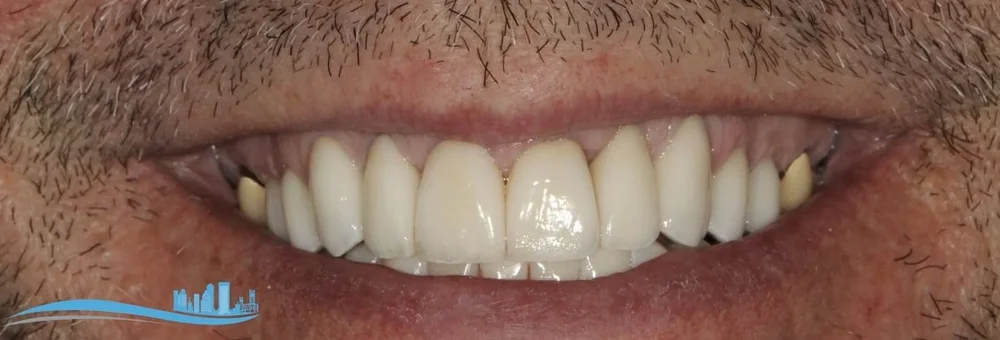
When rebonding alone would not have helped
Before
After
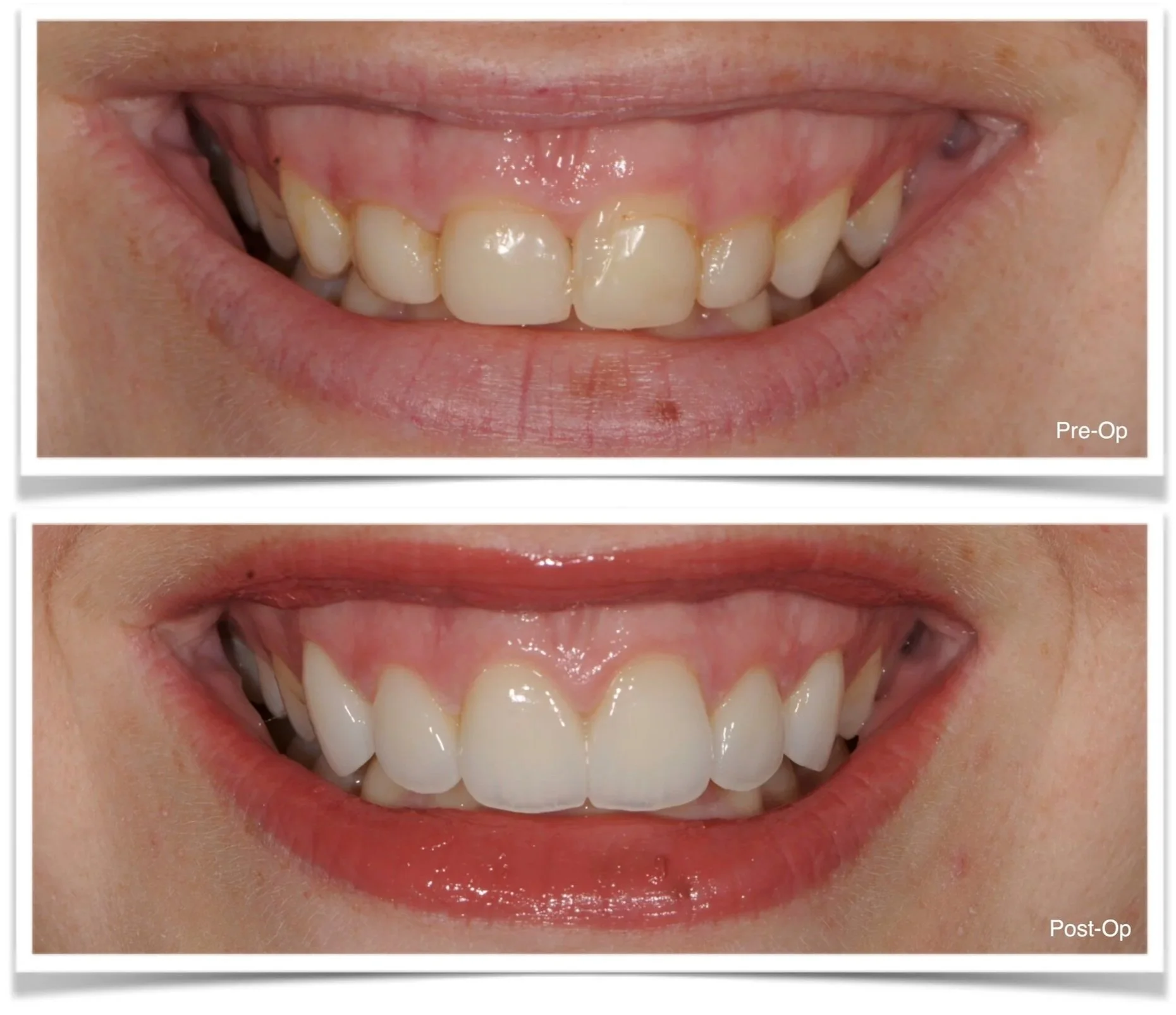
The patient expected to have her composite bonding redone. On examination, more of each tooth was covered by gum tissue than suited her smile, so new bonding alone would not have changed the short appearance. In her case, the gum tissue could be reshaped. She wore temporaries while it healed, then received e.max restorations. View this case.
More examples, including a gummy smile case and a case where simple bonding and reshaping was enough without veneers, are in the gallery.
Can veneers be redone?
Usually, yes. Porcelain veneers can be removed and new ones made. Before that decision, a few points are worth understanding.
Removal usually costs some tooth structure. Old veneers are generally cut away, and some additional enamel is often lost. That is a real trade-off and should be part of the discussion before you decide.
The cause matters more than the new design. If the concern comes partly from the bite, grinding or gum health, replacing the appearance alone may leave the original risk unresolved. An evaluation usually includes photographs, a digital scan, a bite assessment and, when justified, 3D imaging.
Order of treatment matters. If whitening, gum treatment or tooth movement is part of the plan, it generally comes before the final veneers. Clear aligners can sometimes improve tooth position so that new veneers can be thinner. If you want your natural teeth lighter, teeth whitening should happen before a new shade is chosen.
A preview helps. Temporary restorations are placed the same day the old veneers are removed, and you wear them until the final veneers are ready. The temporary stage is a chance to evaluate shape, length and the smile line before the final veneers are made. Temporaries are made from a different material and usually do not look as natural as the final restorations.
Material is chosen for the situation. For front teeth with enough healthy enamel, I typically use layered e.max (lithium disilicate) for its translucency and strength. A dark underlying tooth, heavy grinding or limited enamel can change that choice. If you clench or grind, a night guard is often part of protecting the new work.
What the process usually involves
- Consultation and records. Photographs, a scan, a bite check and a discussion of what concerns you.
- Treatment options. What is likely contributing to the problem, what could improve it, and the trade-offs of each option, including doing less or nothing.
- Preliminary care if needed. For example whitening, gum treatment or aligners.
- Removal and temporaries. The existing veneers are removed and temporaries are placed the same day.
- Final veneers. Made from the approved design, bonded and checked against the bite.
- Protection and follow-up. A night guard when indicated, and regular checkups.
A simple replacement may take a few visits. Cases that need gum treatment or tooth movement first take longer.
Can veneers be repaired instead of replaced?
Sometimes. A small chip may be smoothed or repaired with composite. A veneer that comes off intact can sometimes be cleaned and rebonded. Stain at the edges can sometimes be polished. Repair makes most sense when the veneer is otherwise sound and you are happy with how it looks. It does not change the veneer's opacity, thickness, ceramic shade or overall shape.
Can veneers be whitened?
Whitening does not predictably change the shade of porcelain. Surface stain may be removed with professional polishing. If veneers are lighter than the surrounding natural teeth, whitening the natural teeth may bring them closer. If the veneers themselves are the wrong shade, replacement is usually the way to change it.
Should veneers be replaced with veneers, crowns or bonding?
It depends on the condition of each tooth, not on one factor alone.
- New veneers may suit teeth with enough healthy enamel when the concern is mainly appearance.
- Crowns may be considered when a tooth has large existing restorations, cracks, limited remaining structure or heavy biting forces. A root canal alone does not decide this. See why a tooth may need a crown.
- Bonding may suit smaller concerns when a more conservative, lower-cost option is preferred. Bonding stains and chips more readily than porcelain and needs more maintenance.
How long do veneers last?
Research on ceramic veneers reports high survival rates. A systematic review of 25 clinical studies including 6,500 porcelain veneers estimated 95.5 percent survival at 10 years (Alenezi et al., 2021). An earlier meta-analysis reported 89 percent overall survival over a median of 9 years (Morimoto et al., 2016). In both, fracture or chipping was the most common complication.
Survival in these studies means the veneer was still in place. It does not mean the veneer was free of complications or that the patient was satisfied with how it looked. These are research figures, not a prediction for any individual or for replacement veneers. There is no fixed schedule for replacing veneers. People replace them for many reasons, including gum recession, margin stain, chipping or a wish to change their appearance.
What affects the cost of redoing veneers?
Cost depends on the number of teeth, the materials and whether other care, such as whitening, gum treatment or aligners, is needed first. You receive a written treatment plan with fees before treatment begins. Why dental crown costs vary in Jacksonville explains many of the same factors.
Dental plans often do not cover replacement done only for appearance, though coverage can differ when a tooth needs treatment for another reason. We are an out-of-network practice. We can help you understand how to use your benefits. You are responsible for amounts your plan does not pay. See what patients should know about out-of-network dental insurance.
When to consider a second opinion
A second-opinion visit may be worthwhile if:
- Your veneers look whiter, flatter or larger than your natural teeth
- They have developed a gray, blue or yellow appearance at the edges
- The shade no longer matches the neighboring teeth
- They have chipped more than once, or one has come off
- You can feel a ledge at the gumline, or the gums there stay red or bleed
- Your bite feels different since they were placed
You do not need to have decided anything before you come in. The visit is meant to explain what is there, what may be contributing to your concern, and the realistic options, including leaving the veneers as they are. Sometimes the existing veneers are sound and the concern has another cause.
Second opinions on veneers in Jacksonville
Our office is at 3675 Hendricks Avenue in San Marco, Jacksonville. We welcome patients from nearby Miramar and Riverside and throughout Jacksonville. New patients begin with a comprehensive dental exam, and the new patient page explains the first visit.
To ask about veneers you are unhappy with, call 904-398-1549, book online or contact our office. You can see more completed treatment in our before and after gallery, our case studies and our overview of cosmetic dentistry.
Frequently asked questions
Why do my veneers look fake?
Common reasons include opacity, added thickness, a very smooth surface, a shade that does not suit the face or no longer matches, edges that do not follow the smile, or an uneven gumline. An examination is needed to tell which apply.
Can veneers be removed and replaced?
Usually, yes. Removal often costs some additional enamel, so the cause of the concern should be understood before new veneers are made.
Why do my veneers look gray?
A dark tooth underneath may be showing through a thin veneer, or the edges may be very translucent. The color of the underlying tooth affects which options can help.
Why do my veneers look so big?
Veneers can look large when they add thickness to a tooth that was already well positioned, or when thickness was used to cover color or crowding. Tooth position and gum health affect whether a thinner result is possible.
Can veneers be whitened?
Whitening does not predictably change porcelain. Surface stain may polish off, but changing the ceramic's shade usually means replacing the veneer.
Will I have temporary teeth while veneers are redone?
Yes. Temporaries are placed the same day the old veneers are removed, and they let you evaluate the new shape and length before the final veneers are made.
How long do porcelain veneers last?
A 2021 review of 6,500 veneers estimated 95.5 percent survival at 10 years. Survival is not the same as being complication-free or looking right, and individual results vary with bite, grinding and gum health.
Sources
- Alenezi A, Alsweed M, Alsidrani S, Chrcanovic BR. Long-term survival and complication rates of porcelain laminate veneers in clinical studies: a systematic review. J Clin Med. 2021;10(5):1074. https://doi.org/10.3390/jcm10051074
- Morimoto S, Albanesi RB, Sesma N, Agra CM, Braga MM. Main clinical outcomes of feldspathic porcelain and glass-ceramic laminate veneers: a systematic review and meta-analysis of survival and complication rates. Int J Prosthodont. 2016;29(1):38-49. https://doi.org/10.11607/ijp.4315
About the author. CJ Henley, DMD, is a general dentist in Jacksonville whose practice focuses on cosmetic and restorative dentistry, dental implants and dental care around head and neck cancer. Meet Dr. Henley.
CJ Henley, DMD, PA · 3675 Hendricks Avenue, Jacksonville, FL 32207 · 904-398-1549
Written by CJ Henley, DMD. Updated October 2026.