


Full-Contour Zirconia for a Heavy Bite: Why We Chose It
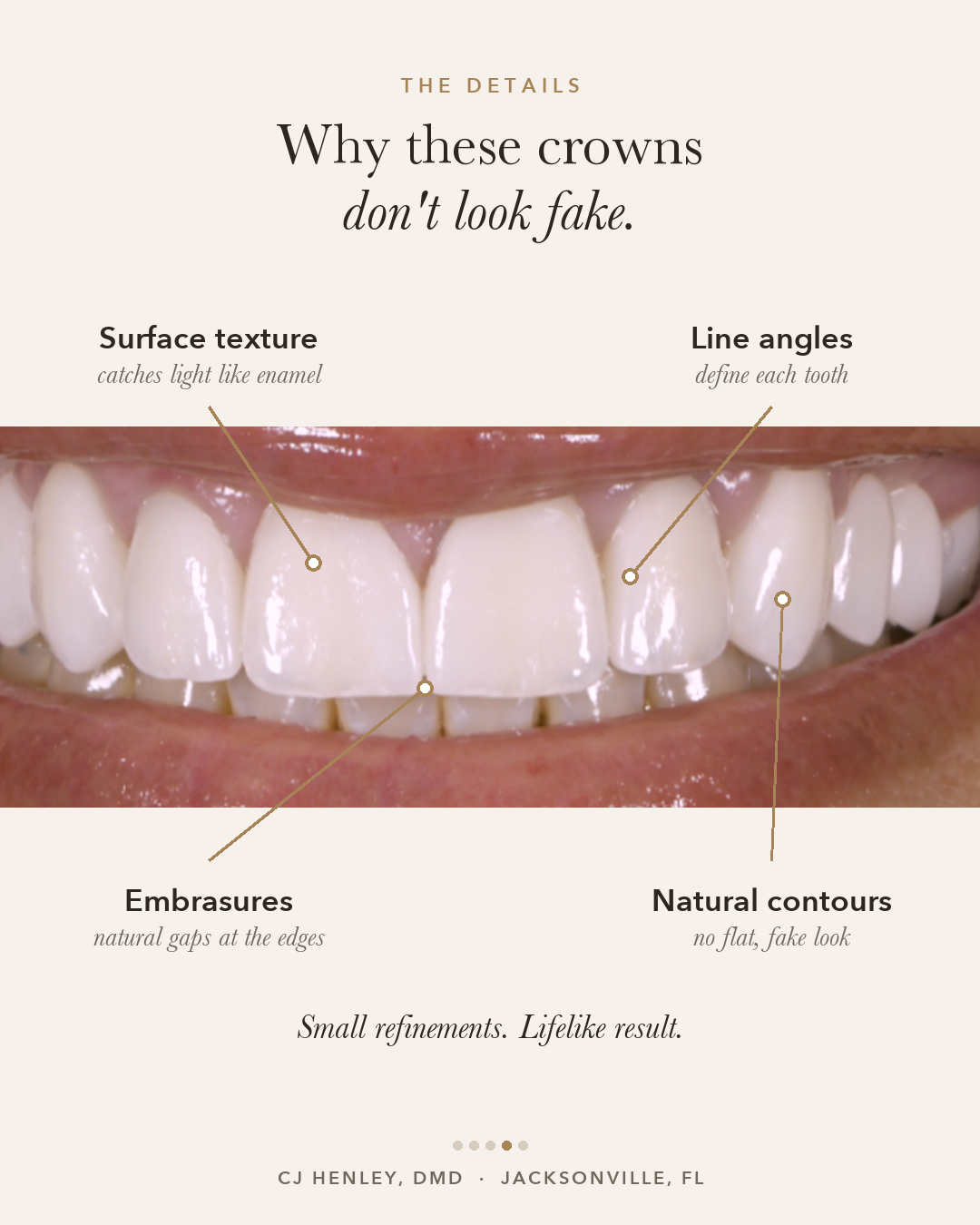
The secret to making zirconia look real is in the details 👇
✨ Secondary anatomy and subtle surface texture
✨ Line angles that define each tooth
✨ Embrasures and natural contours that catch light like enamel
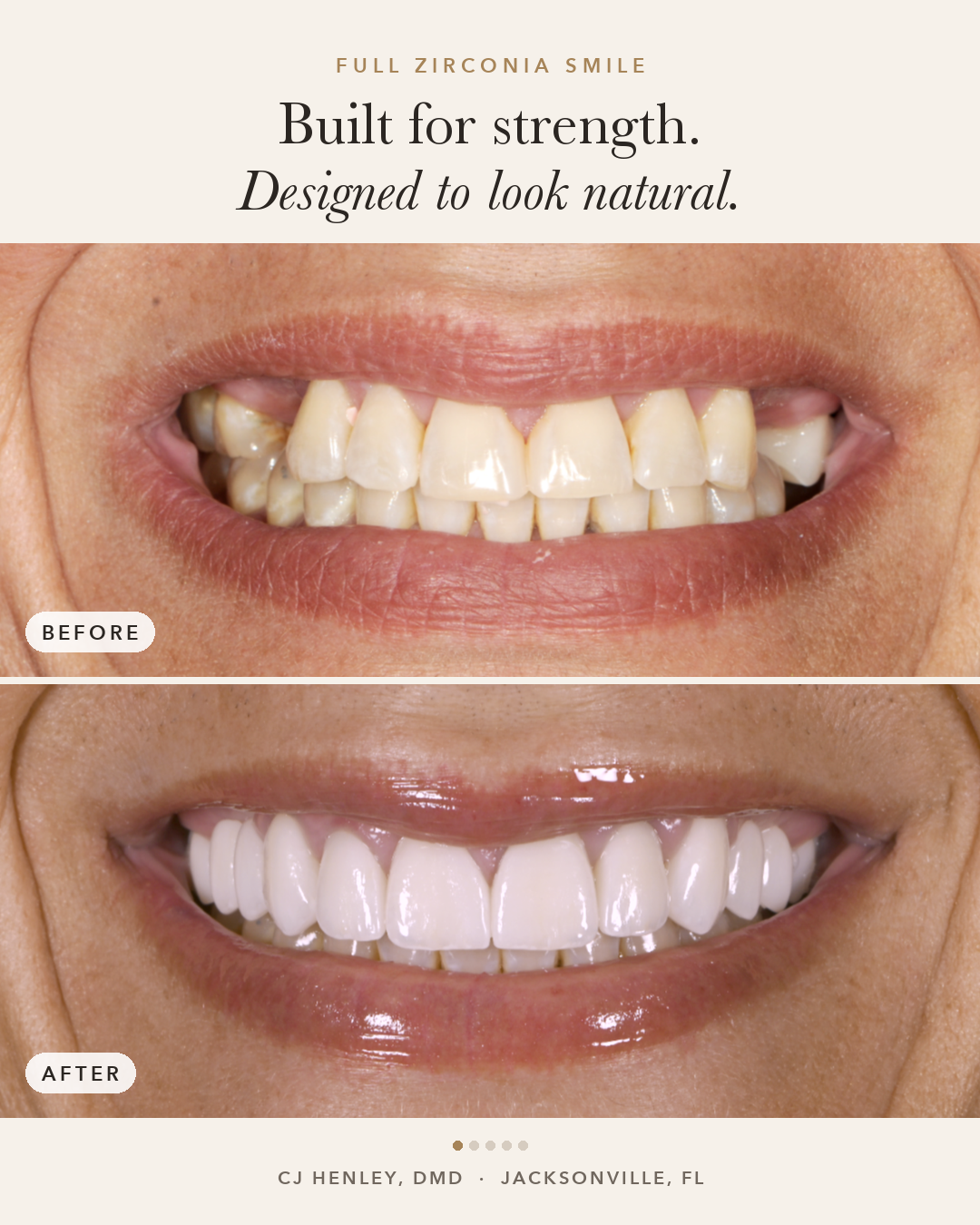
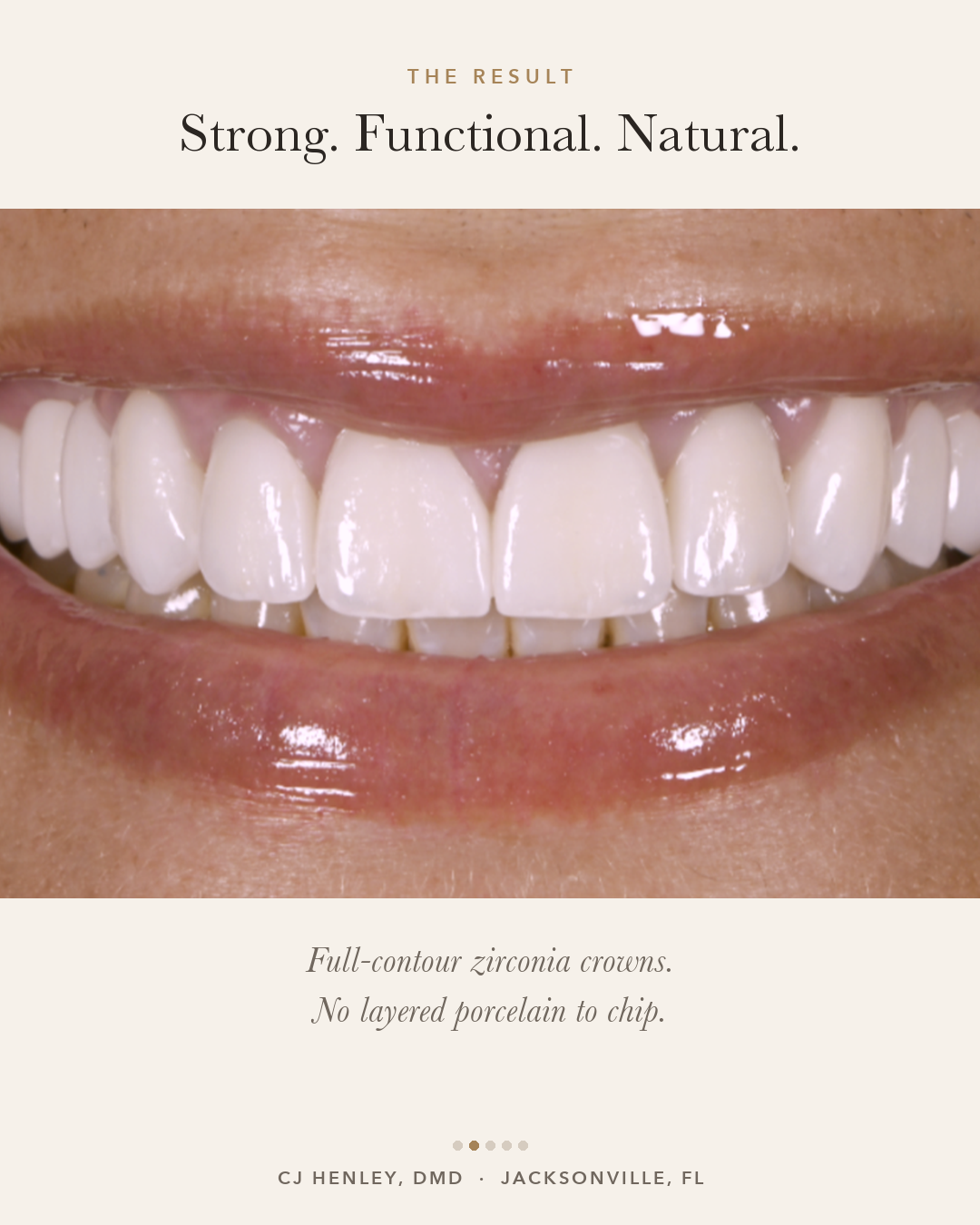
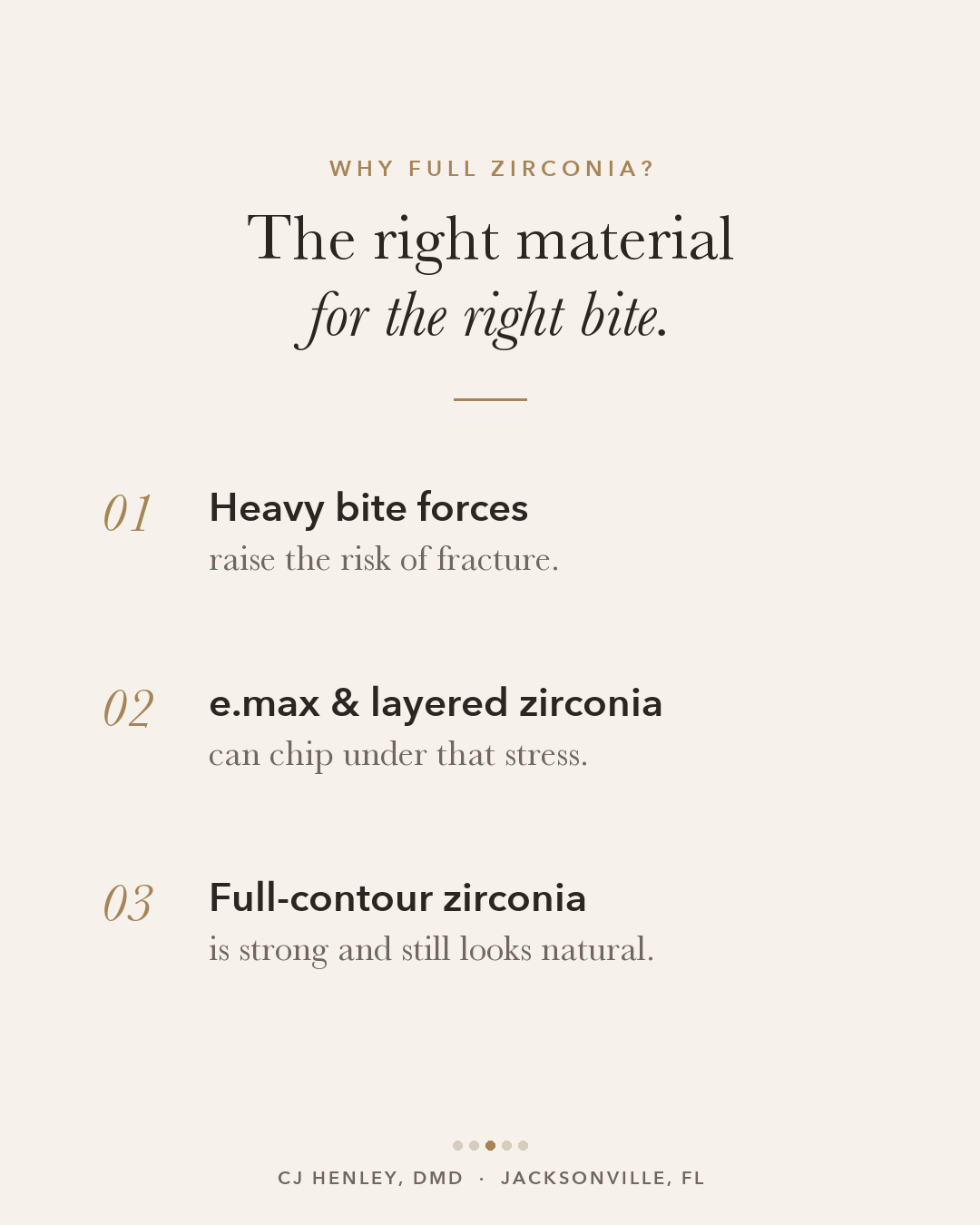
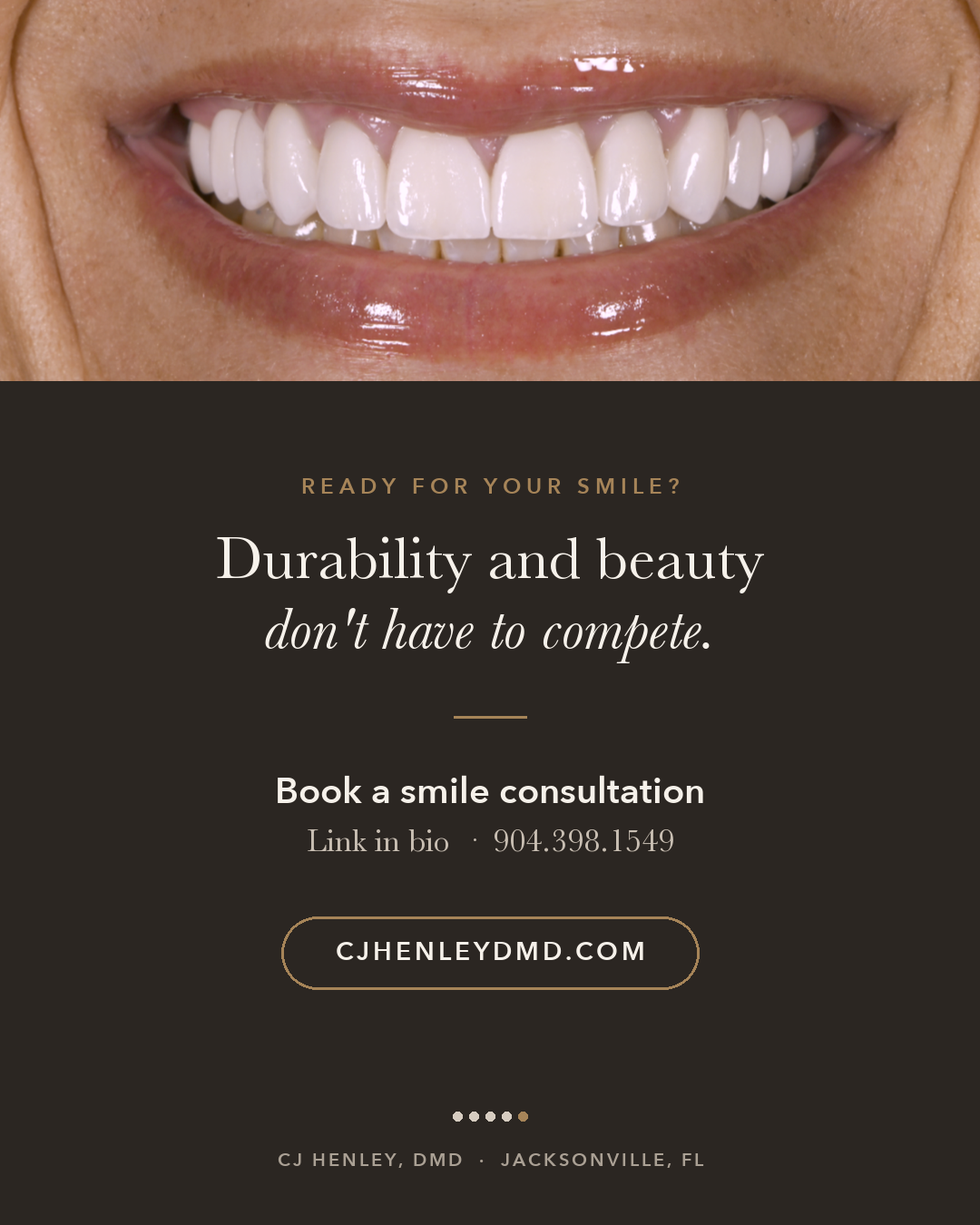
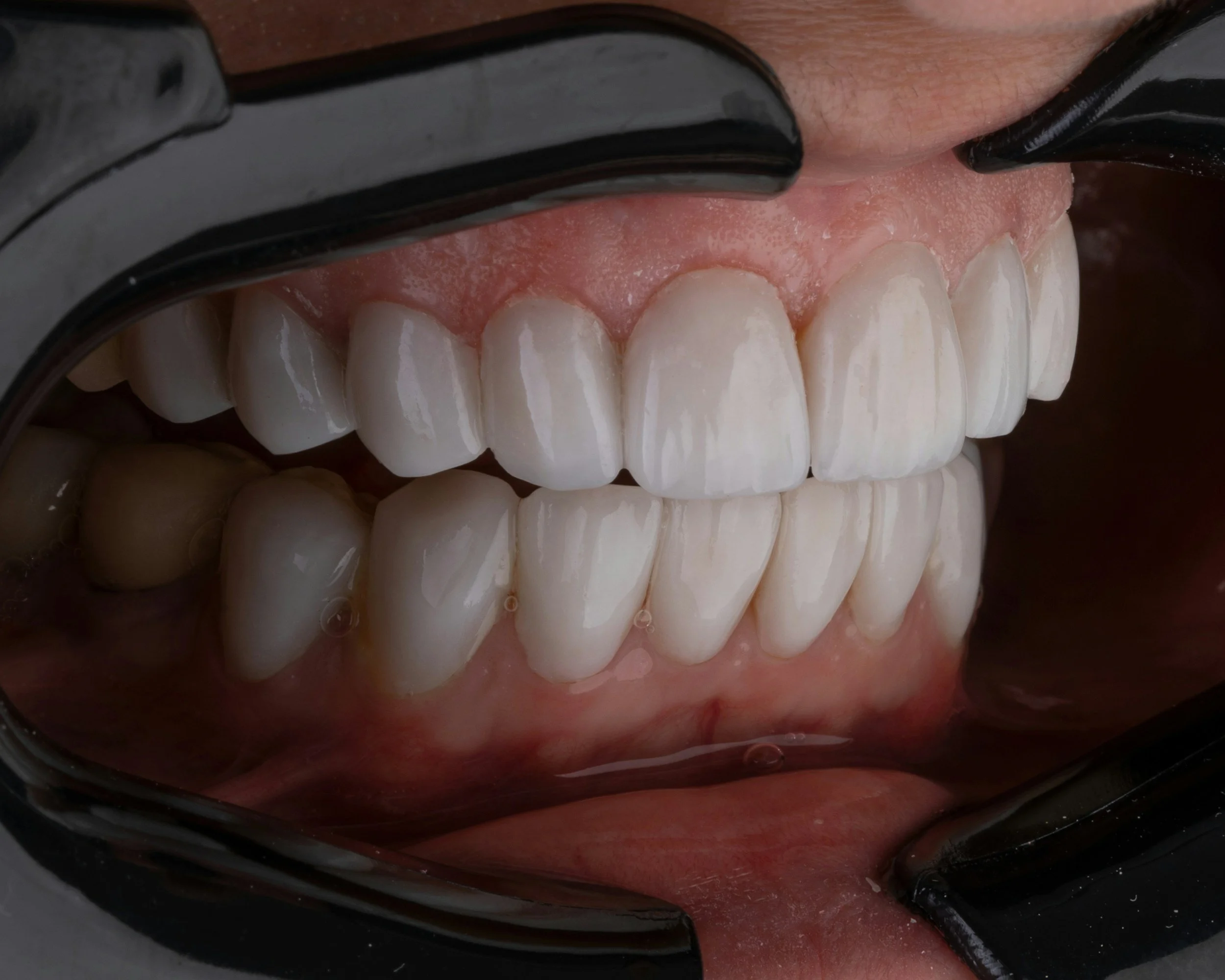
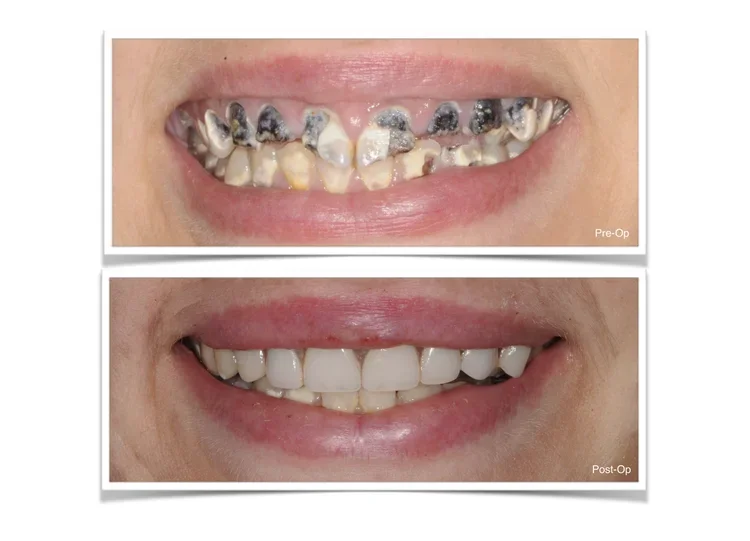
We chose full-contour zirconia for the smile shown here because this patient's bite puts heavy force on the teeth, and resistance to chipping was a priority. Full-contour zirconia is made as one solid piece without a separate porcelain layer that can chip. The photographs show the finished restorations and the surface details that help them look natural.
Why did we choose full-contour zirconia?
Material choice is part of the treatment plan, alongside the condition of the teeth, the available space, appearance and the bite. In this case the plan put strength first.
Earlier zirconia crowns were usually covered with a layer of porcelain for appearance, and that layer was prone to chipping. A large review of crown studies found that zirconia crowns were lost more often than metal-ceramic crowns because the porcelain layer fractured. Full-contour zirconia avoids that weak point because the crown is zirconia all the way through.
That doesn't make zirconia the right choice for every tooth or every patient. Zirconia is generally more opaque than glass ceramics such as e.max, so matching translucency on front teeth takes extra care. When appearance is the main concern and the bite allows it, a glass ceramic may be the better fit, as in our e.max front teeth case. Our dental crown guide explains how a tooth is evaluated and restored.
What makes these restorations look natural?
This case shows secondary anatomy, subtle surface texture, line angles and embrasures, which are the small spaces and contours between teeth. These details help the restorations reflect light the way natural teeth do and avoid a flat, uniform look. Compare the full smile with the closer views in the photographs.
How does a heavy bite affect planning?
The bite belongs in the discussion before a material is chosen. Heavy biting forces, clenching or grinding can chip or wear restorations and natural teeth. A strong material is only part of the answer. Many people with a heavy bite also benefit from a night guard to protect their teeth and restorations while they sleep.
If you're concerned about wear or clenching, read our tooth grinding and bruxism page. An examination is needed to find the cause of wear and which protective or restorative options fit.
Discuss crown options in Jacksonville
At CJ Henley, DMD, on Hendricks Avenue near San Marco, a consultation can connect your concerns about strength and appearance with a treatment plan. See other restorative cases, contact our office or call 904-398-1549. These photographs show one case. Treatment needs and results vary.
Sources
Sailer I, Makarov NA, Thoma DS, Zwahlen M, Pjetursson BE. All-ceramic or metal-ceramic tooth-supported fixed dental prostheses (FDPs)? A systematic review of the survival and complication rates. Part I: Single crowns (SCs). Dent Mater. 2015;31(6):603-623. doi:10.1016/j.dental.2015.02.011 (retrieved via PubMed)
About the author. CJ Henley, DMD, is a general dentist in Jacksonville whose practice focuses on cosmetic and restorative dentistry, dental implants and dental care around head and neck cancer. Meet Dr. Henley.
CJ Henley, DMD, PA · 3675 Hendricks Avenue, Jacksonville, FL 32207 · 904-398-1549
Updated October 2026.
Composite Bonding in Jacksonville: Small Changes You Notice
Composite bonding is a conservative cosmetic treatment designed to make subtle, meaningful improvements — repairing chips, refining edges, closing small gaps, and improving symmetry while preserving natural tooth structure. When planned carefully and executed with precision, bonding enhances what’s already there rather than covering it up. In this practice, the process is collaborative, unhurried, and focused on achieving natural results that feel like your own teeth.
Composite bonding uses tooth-colored resin to repair chips, close small gaps and even out edges, usually in one visit and often with little or no drilling. It suits subtle to moderate changes. For large color changes or teeth that need full coverage, veneers or crowns are usually the better fit.
Most people who ask me about cosmetic dentistry aren't looking for something dramatic. They want to fix a chip, a dark edge or a gap they've always noticed in photographs. Done carefully, bonding refines what's already there instead of covering it up.
What is composite bonding used for?
I use bonding to:
Repair chipped or broken edges
Close small gaps
Even out worn or uneven edges
Improve symmetry between teeth
Cover small areas of discoloration
Finish details after orthodontic treatment
When bonding is done well, it should look like your tooth rather than like dental work.
How do I make bonding look natural?
Natural-looking bonding comes from planning, materials and time spent on details. Here is how I approach it.
You're involved from the start. We talk about the shape and how much change you want before I begin.
Materials chosen for appearance and durability. I use Filtek Supreme composite for its shade range and translucency, and Scotchbond Universal adhesive.
Contours that look like teeth. A Bioclear matrix helps shape smooth contours where the tooth meets the gum.
A final cure under glycerin. This removes the soft surface layer that oxygen leaves behind, which helps the surface resist staining.
Texture and polish that imitate natural enamel.
No rushing. To keep quality high, I usually limit a visit to six teeth or fewer.
For larger changes, I often make a quick mock-up on your teeth so you can see the shape, size and symmetry before we commit.
Is bonding better than veneers?
They solve different problems.
Bonding works best for subtle to moderate changes. It is easier to repair or adjust, and usually removes little or no enamel.
Veneers suit larger changes in shape or color and resist staining longer. Porcelain veneers usually require some enamel to be removed.
The right choice depends on your goals, your bite, your budget and what you want your teeth to need in ten years.
I don't recommend one over the other by default. My job is to explain the trade-offs so you can choose with clear expectations.
How long does composite bonding last?
With good care, bonding can last many years. It is softer than porcelain, so it can chip or pick up stain over time, and it usually needs polishing or a small touch-up along the way. To help it last:
Don't bite nails, pens or other hard objects with bonded teeth.
Keep up with brushing, cleaning between teeth and regular checkups.
Come in for polishing as needed.
Wear a guard if you grind your teeth at night.
Call if something feels rough, sharp or different.
If something doesn't feel right after treatment, you can reach me directly. Your care doesn't stop when you leave the office.
Bonding cases from our office
These cases were treated in our office. Results depend on each patient's teeth, bite and goals.
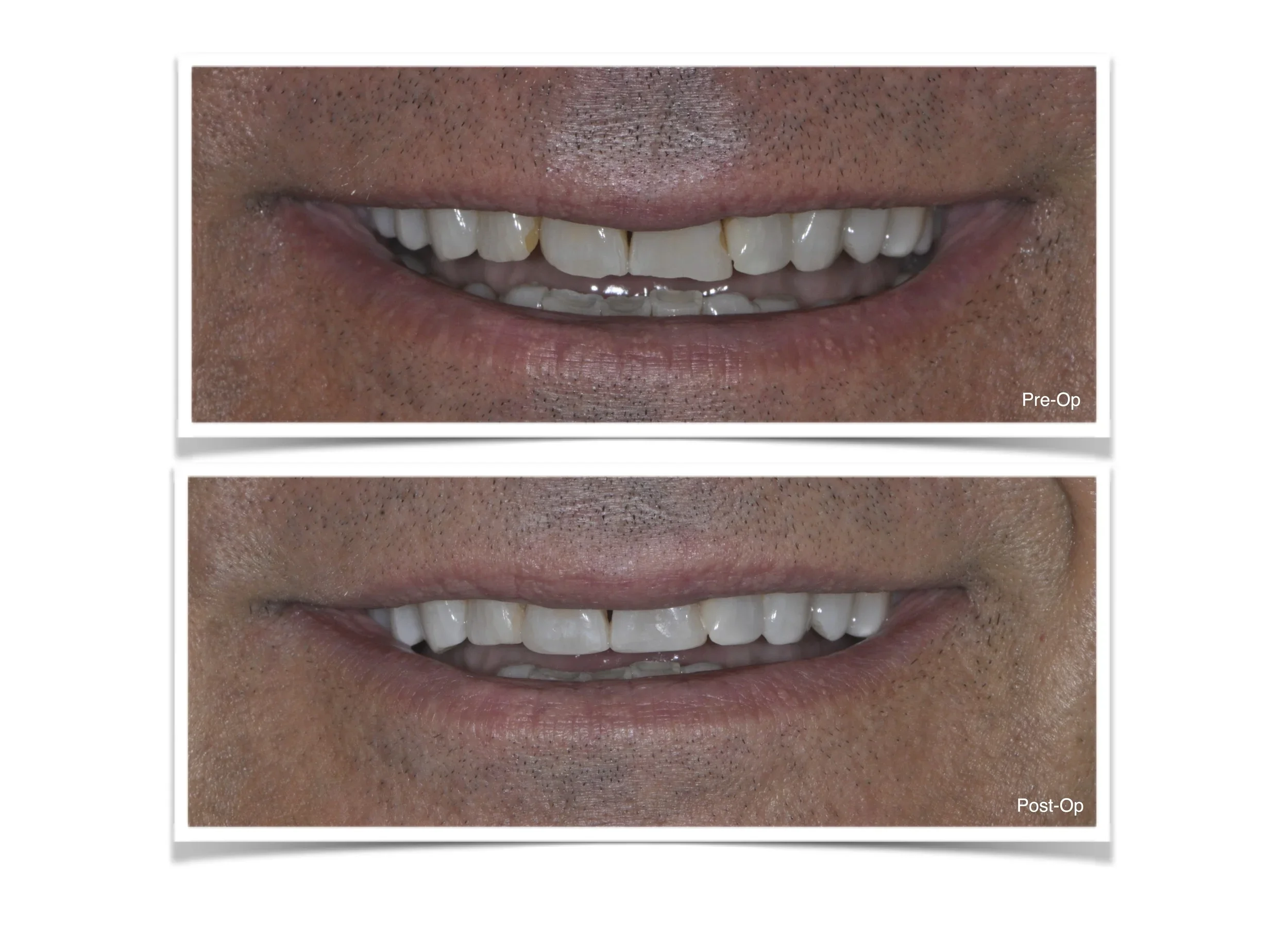
Case 1: Closing spaces and refreshing the smile using composite bonding.
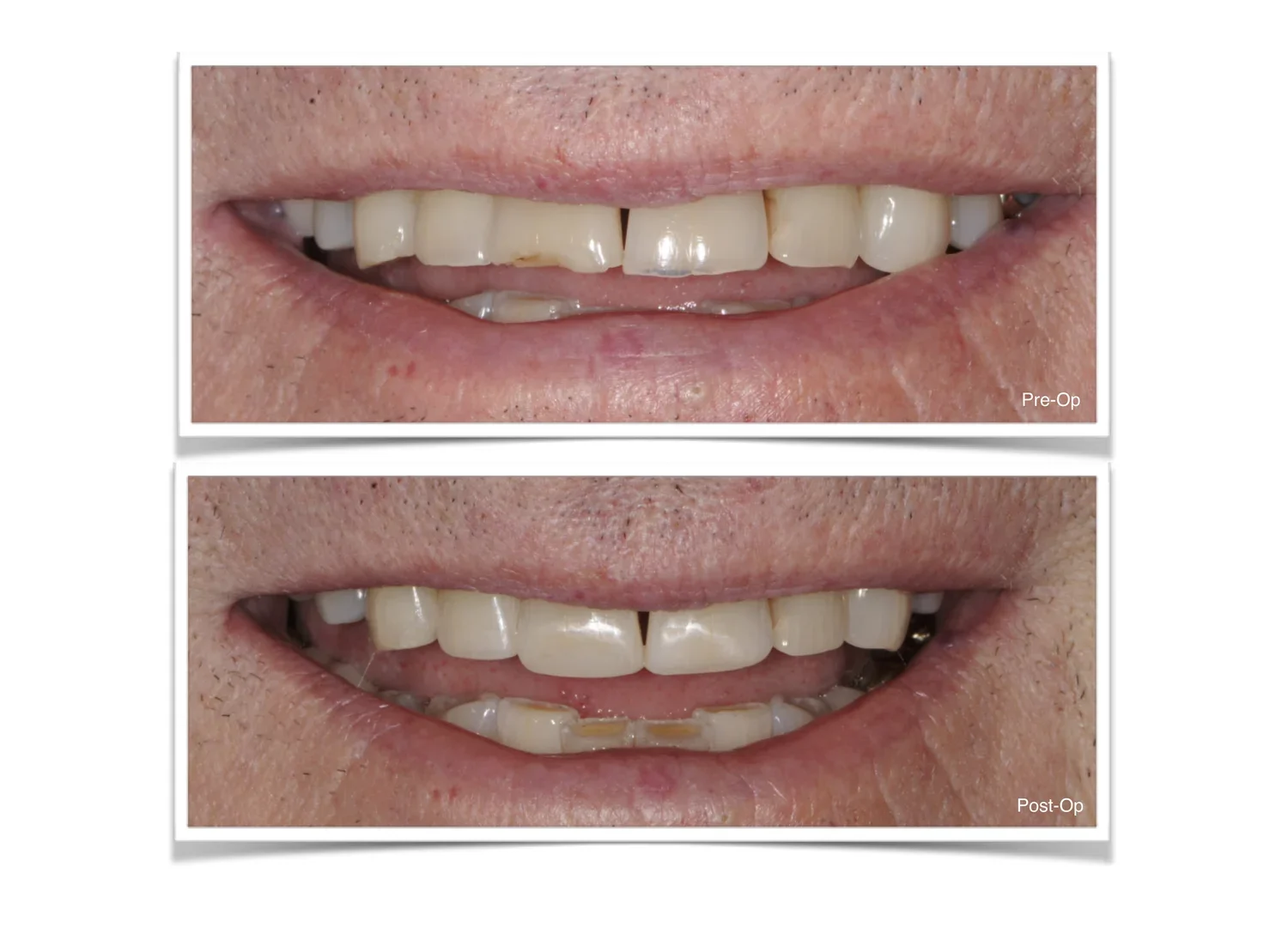
Case 2: Improving shape and symmetry using composite bonding.
Case 3: Budget-friendly full-mouth rehabilitation with selective extractions, composite restorations, and a flexible partial
Case 1: Closing spaces and refreshing the smile with composite bonding.
Case 2: Improving shape and symmetry with composite bonding.
Case 3: A budget-conscious full-mouth plan using selective extractions, composite restorations and a flexible partial denture.
See more in our before and after gallery and case studies.
Common questions about composite bonding
How long does bonding last? Many years with good care. Expect periodic polishing and occasional touch-ups.
Is composite bonding reversible? Often, because many bonding cases need little or no enamel removed. If enamel has to be shaped to get a good result, that part isn't reversible. I'll tell you which applies before we start.
Does bonding stain? It can stain more than porcelain. Good polishing and habits reduce it.
How many teeth can be bonded at once? I usually limit a visit to six teeth so each one gets the time it needs.
Does bonding hurt? It is usually comfortable, and many cases need no numbing.
Discuss composite bonding in Jacksonville
If you're thinking about a small cosmetic change, our office is at 3675 Hendricks Avenue near San Marco. Read about our full range of cosmetic dentistry, see how bonding can close a gap between front teeth, or contact the office at 904-398-1549.
Sources
American Dental Association, MouthHealthy. Bonding.
About the author. CJ Henley, DMD, is a general dentist in Jacksonville whose practice focuses on cosmetic and restorative dentistry, dental implants and dental care around head and neck cancer. Membership in the American Academy of Cosmetic Dentistry is not a specialty credential; Florida does not recognize cosmetic dentistry as a dental specialty. Meet Dr. Henley.
CJ Henley, DMD, PA · 3675 Hendricks Avenue, Jacksonville, FL 32207 · 904-398-1549
Updated October 2026.