
CJ Henley, DMD, PA / San Marco, Jacksonville, Florida
Children’s dentistry in Jacksonville.
A kids dentist your whole family can grow up with.
We see children from age 2, teens, parents, and grandparents in the same San Marco office, often on the same afternoon. Dr. CJ Henley sees every patient himself, so your child gets to know one dentist from their first checkup into adulthood. Gentle pacing, a friendly dental dog named Snapper, and Spanish spoken in the office help kids feel at home.
- 2–102the ages we see, so the whole family can come to one office
- 80%of cavities in back teeth prevented by sealants, according to the CDC1
- 1 in 2children ages 6 to 8 have had a cavity in a baby tooth1
- Same daycare for children’s dental injuries during office hours
Top-rated on Google: 4.9 stars from more than 225 patient reviews. Se habla español.
A family dentist for kids
A children’s dentist and family dentist your kids can grow up with.
At our office your child sees the same dentist at every visit, from their first checkup at age 2 through the teen years and beyond. Parents and siblings can book back to back, so one trip to San Marco covers the family. Continuity matters with kids: a dentist who has watched a child’s teeth come in notices small changes early.
Children’s dentistry at our office is part of our general and family dentistry. New to the practice? See what to expect as a new patient.
Family dentist or pediatric dentist?
Family dentist or pediatric dentist: which does your child need?
Most children do well with a family dentist for checkups, cleanings, sealants, and small fillings. A pediatric dentist is a specialist with two to three extra years of training who sees only children2. Dr. Henley is a general dentist, and we’ll tell you honestly when a child would be better served by a pediatric dentist, such as a baby under 2 or a child who needs extensive treatment.
| Question | Family dentist (our office) | Pediatric dentist |
|---|---|---|
| Who they see | Children from age 2, teens, and adults | Infants, children, and teens only |
| Training | Dental degree (DMD or DDS) and general practice | Dental degree plus 2 to 3 years of specialty training2 |
| Whole family in one visit | ✓ Parents and kids back to back | ✗ Parents go elsewhere |
| Same dentist into adulthood | ✓ No transfer at 18 | Transfer to an adult dentist later |
| Babies under 2, extensive decay, or treatment under sedation | We refer | ✓ Usually the better fit |
Your child’s first visit
Your child’s first visit with our children’s dentist.
National dental groups recommend a first dental checkup by a child’s first birthday1,2. We begin seeing children at age 2. Until then, your pediatrician can check your baby’s teeth and apply fluoride varnish at well-child visits3. A first visit with us is short, unhurried, and built around getting your child comfortable.
Meet and explore
You’re welcome to come back with your child. Your child meets Dr. Henley, rides the chair up and down, and sees the tools before anything touches a tooth. We tell, show, then do.
A gentle look and count
We count teeth, check the bite and gums, and look for early cavities and habits like thumb sucking.
Cleaning and fluoride
A light polish and fluoride if your child is ready. If not, we try again next time. There’s no forcing.
Parent talk
Brushing tips for your child’s age, toothpaste amounts, snacks and drinks, and when to come back.
Tips for the day before: read how to prepare your child for a dental visit.
Nervous kids
Nervous kids, a gentle pace, and a dog named Snapper.
Children who are scared of the dentist relax more with no surprises, a slower pace, and breaks when they need them. We explain each step in kid language, let them hold the mirror, and stop when they raise a hand. Many kids also relax with Snapper, our dental therapy dog.
Snapper is a five-year-old Australian Labradoodle who has earned the AKC Canine Good Citizen title. He can lie beside the chair or wait in the hallway, and families can opt out for allergies or a fear of dogs. Meet him on our therapy dogs in dentistry page.
The ceiling TVs help too. If a child needs more help than a calm visit can give, we’ll talk with you about referral to a pediatric dentist.

Kids’ checkups and X-rays
Kids’ checkups, cleanings, and dental X-rays.
Most children should have a checkup and cleaning every six months, sometimes more often if they get cavities easily2. Dental X-rays are taken only when they’re needed to find cavities between teeth or check how adult teeth are developing, and modern digital X-rays use a very low dose2,4.
Are dental X-rays safe for kids?
Yes. The risk from dental X-rays is very small, and we keep it smaller by taking them only when the answer will change what we do. The ADA no longer considers lead aprons necessary4, but we have them if you’d like one for your child. Cavities between baby molars are often invisible without them. See our digital imaging.
Do baby teeth need fillings?
Often, yes. Back baby molars stay until about age 10 to 12, and a cavity left alone can cause pain, infection, and early tooth loss that crowds the adult teeth. Small early cavities can sometimes be slowed with fluoride and watched. See tooth-colored fillings.
Sealants and fluoride
Sealants and fluoride: the two best cavity blockers for kids.
Sealants are a thin coating painted into the grooves of the back teeth, where most children’s cavities start. The CDC reports they prevent about 80% of cavities in those teeth, and fluoride varnish prevents about a third of cavities in baby teeth1. Both are quick and easy for kids: no numbing, no drilling.
When kids get sealants
Usually soon after the first permanent molars come in, around age 6, and again for the second molars around age 12. Read more in the value of sealants.
Fluoride and Jacksonville water
Since July 2025, Florida law bars adding fluoride to public water. JEA reports it never added fluoride, and its water contains only natural fluoride5. That makes fluoride toothpaste and varnish more important. See fluoride toothpaste and Jacksonville water.
How much fluoride toothpaste for kids?
-
Under age 3
A rice-grain smear
Brush twice a day from the first tooth. You put the toothpaste on and do the brushing6.
-
Ages 3 to 6
A pea-size amount
Teach them to spit, not rinse, so the fluoride stays on the teeth6.
Illustration: CJ Henley, DMD, based on American Academy of Pediatrics and ADA guidance6.
Children’s teeth by age
Ages and stages: from teething to teens.
Children get 20 baby teeth, usually starting around 6 months, and start losing them around age 6, beginning with the lower front teeth7,8. Most adult teeth are in by about 13, with wisdom teeth arriving later. Here is what to expect, and what to watch for, at each stage.
6 to 12 months
Teething
First teeth arrive. Skip teething necklaces and numbing gels; a chilled teething ring is safer7.
Age 2
First visit with us
Checkups every six months from here. Bedtime bottles should be water only.
Ages 2 to 4
Thumb sucking fades
Most kids stop on their own. Past age 4 it can start to shape the teeth and bite9.
Age 3
All 20 baby teeth
Time to move from a smear to a pea-size dab of toothpaste.
Around 6
First loose tooth
Lower front teeth go first. The 6-year molars come in behind the baby teeth: sealant time.
By age 7
Orthodontic check
The orthodontists’ association suggests a first check by 7. Most kids don’t need braces yet10.
10 to 12
Last baby molars go
The 12-year molars arrive. Sealants again, and a sports guard if they play.
Teens
Wisdom teeth and aligners
We watch wisdom teeth on X-rays and talk about straightening options.
For more on toddler and preschool issues, read a parent’s guide to early childhood dental issues and childhood stress and early molars.
Brushing at home
Brushing, flossing, and snacks at home.
Brush your child’s teeth twice a day with fluoride toothpaste and help until they can do it well on their own, usually around age 6 to 8. Start flossing once two teeth touch. Limit juice and sticky snacks between meals, and keep bedtime bottles and sippy cups to water.
- Brush for them, then with them: young kids lack the hand control to clean every surface. Let them go first, then you finish.
- Spit, don’t rinse: leaving a little toothpaste on the teeth gives fluoride more time to work.
- Water at bedtime: milk or juice in a bedtime bottle bathes the teeth in sugar all night11.
- Snacks with meals: how often kids snack matters more than how much.
- Don’t share spoons: cavity-causing bacteria pass from parent to baby.
See how to brush correctly, and if brushing has become a nightly battle, read parent well-being and child toothbrushing.
Sports mouthguards
Sports mouthguards for young Jacksonville athletes.
A mouthguard prevents most chipped and knocked-out front teeth in sports. The ADA recommends one as standard equipment from an early age, including for non-contact sports like skateboarding and gymnastics. A custom mouthguard made by a dentist gives the closest fit, and a boil-and-bite guard comes next12.
We make custom sports mouthguards in our office, fitted to your child’s teeth. Kids with braces especially need one. If your child already chipped a tooth, see cracked or chipped tooth repair.
Emergency dental care for kids
Knocked-out or broken tooth? What to do first.
For a knocked-out adult tooth, act within 30 minutes: hold it by the crown, rinse it gently if dirty, and put it back in the socket or keep it in milk, then call us13. Never put a knocked-out baby tooth back in, because it can damage the adult tooth underneath. We see children’s dental injuries the same day during office hours.
Do
- Call 904.398.1549 right away.
- Keep a knocked-out adult tooth moist in milk or the child’s cheek.
- Save any broken piece of tooth in milk.
- Press gently on bleeding gums with clean gauze.
Avoid
- Putting a baby tooth back in its socket
- Scrubbing the root of a knocked-out tooth
- Storing a tooth in tap water
- Waiting if your child hit their head: see a doctor first
your child lost consciousness, vomits, seems confused, has trouble breathing, or has a deep cut that won’t stop bleeding. Our children’s dental emergencies and knocked-out tooth guides have the full steps.
Dental checkups for teens
Teens: wisdom teeth, clear aligners, and whitening.
Teens keep the same checkup schedule as younger kids, and new questions come up. We track wisdom teeth on X-rays and refer to an oral surgeon when they need to come out. For crooked teeth, we offer clear aligners for suitable older teens and refer growing jaws to an orthodontist.
Wisdom teeth
Not every wisdom tooth needs removal. We watch how they develop and explain the options. Read our wisdom teeth guide.
Straightening teeth
Clear aligners similar to Invisalign can straighten mild to moderate crowding once the jaws have mostly finished growing. See clear aligners.
Cost and insurance
Insurance for children’s checkups.
Most dental plans cover children’s checkups, cleanings, and often sealants and fluoride. We do not accept Medicaid. We give you the fee before treatment begins.
We are an out-of-network practice. Some dental plans cover part of children’s preventive care, often with frequency limits. We can help you understand how to use your benefits; you are responsible for amounts your plan does not pay. Call our team with your plan details to ask about fees and payment arrangements. See dental insurance and payment.
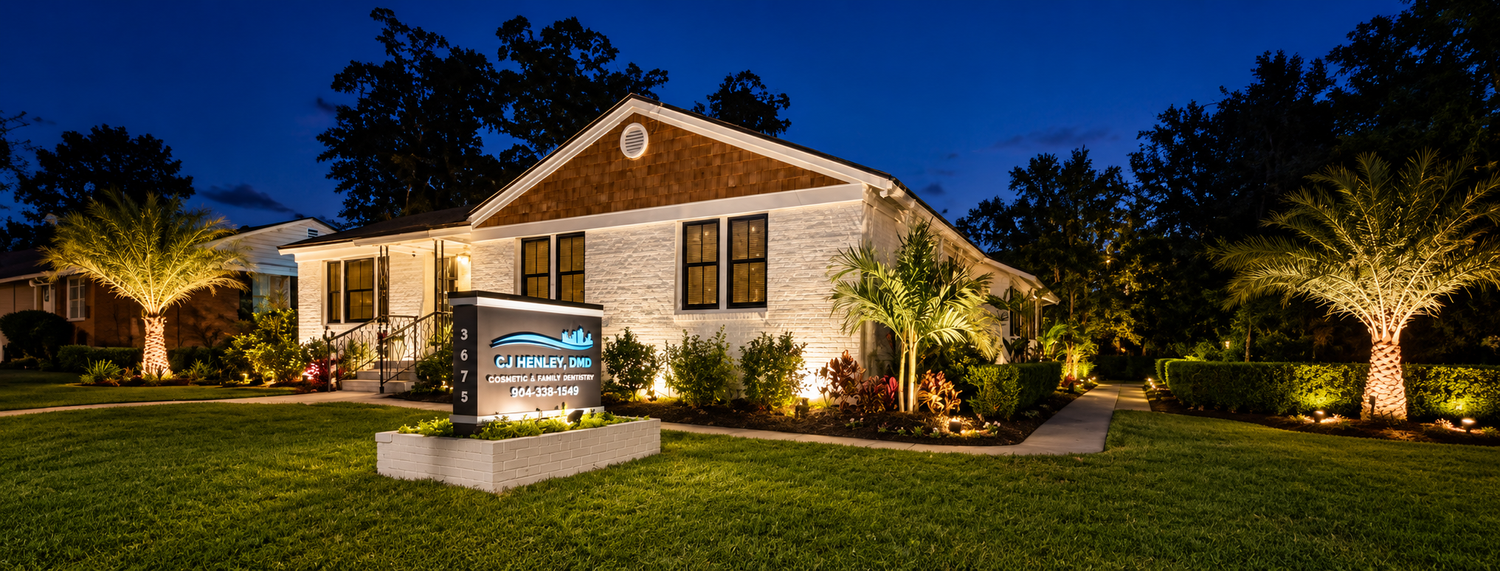
Children’s dentistry near you
A kids dentist in San Marco, for families across Jacksonville.
Dr. CJ Henley is a general dentist in Jacksonville who earned his DMD at the University of Florida. He cares for patients from age 2 to 102, which makes our office a natural fit for families who want one dentist for everyone.
Our office on Hendricks Avenue is easy to reach from San Marco, Southbank, San Jose, Riverside, Avondale, Ortega, St. Nicholas, Downtown, and Mandarin, and an easy stop before or after school. See what parents say in our reviews, or learn more about our San Marco dental office.
San Marco
On Hendricks Avenue, in the neighborhood
Close to San Marco schools for an after-school checkup.
Downtown and Southbank
Southbank borders us; Downtown is across the Main Street Bridge
Pick up the kids and come straight over.
Riverside, Avondale, and Ortega
Across the St. Johns River on the Fuller Warren Bridge
See our Riverside and Avondale dentist page.
San Jose and Mandarin
North on San Jose Boulevard, which becomes Hendricks Avenue
See our Mandarin dentist page.
Jacksonville Beach, Neptune Beach, and Atlantic Beach
West on Atlantic Boulevard or Beach Boulevard
Book the family together to make the trip count; see our Jacksonville Beach dentist page.
Ponte Vedra and Nocatee
West on J. Turner Butler Boulevard, then north on I-95
See our Ponte Vedra dentist page.
Orange Park, Fleming Island, and St. Augustine
North on US-17 or I-95
See our Orange Park and St. Augustine pages.
Frequently asked questions
Questions parents ask about children’s dentistry in Jacksonville.
What age should a child first see the dentist?
National dental groups recommend a first visit by the first birthday or when the first tooth appears. We see children from age 2. Before then, your pediatrician can check the teeth and apply fluoride varnish, or a pediatric dentist can see your baby.
Is a family dentist or a pediatric dentist better for my child?
For most healthy children, a family dentist is a good fit for checkups, cleanings, sealants, and small fillings, and the whole family can come together. A pediatric dentist is a specialist who is often the better choice for babies under 2, children who need extensive treatment, or treatment under sedation. We’ll tell you if we think your child needs one.
Can my child see the same dentist as me?
Yes. We see patients from age 2 to 102, and Dr. Henley sees every patient himself. Many families book their visits back to back.
How often should kids see the dentist?
Every six months for most children. Kids who get cavities easily, wear braces, or have special health needs may need visits more often.
Are dental X-rays safe for children?
Yes. Modern digital dental X-rays use a very low dose, and we take them only when they’ll change what we do, such as checking for cavities between back teeth or how adult teeth are developing. Lead aprons are no longer considered necessary, but we have them if you’d like one.
Do baby teeth really need fillings if they fall out anyway?
Often, yes. Back baby teeth stay until about age 10 to 12. An untreated cavity can cause pain, infection, and early tooth loss that crowds the adult teeth. Small early cavities can sometimes be slowed with fluoride and watched instead.
Do kids need sealants?
Sealants are one of the most effective ways to prevent cavities in the back teeth. They’re usually placed on the permanent molars soon after they come in, around ages 6 and 12. No numbing or drilling is needed.
Is fluoride safe for kids?
Yes, in the right amount. Use a rice-grain smear of fluoride toothpaste under age 3 and a pea-size amount from 3 to 6, and supervise brushing. Fluoride varnish at checkups adds protection, which matters more now that Florida no longer allows fluoride to be added to public water.
My child is scared of the dentist. What do you do?
We go slowly, explain each step before we do it, let your child take breaks, and never force anything at a first visit. Snapper, our dental therapy dog, helps many kids relax. If a child needs more help than that, we’ll talk with you about seeing a pediatric dentist.
When should my child stop thumb sucking?
Most children stop on their own between ages 2 and 4. If the habit continues as the adult front teeth come in, it can affect how the teeth and bite develop, and we can talk about ways to help.
What do I do if my child knocks out a tooth?
If it’s an adult tooth, hold it by the crown, rinse gently if dirty, put it back in the socket or keep it in milk, and call us within 30 minutes. Never put a baby tooth back in. If your child hit their head, see a doctor first.
Does my child need a mouthguard for sports?
Yes, for any sport where a fall or a hit to the mouth is possible, including skateboarding and gymnastics. A custom mouthguard gives the closest fit, and we make them in our office. A boil-and-bite guard comes next.
When should my child see an orthodontist?
The American Association of Orthodontists suggests a first orthodontic check by age 7. Most children don’t need treatment that early. We watch the bite at every checkup and refer when it’s time.
Can I stay in the room with my child?
Yes. Parents are welcome to come back with their child. Many young children are calmer with a parent nearby.
Do you accept Medicaid?
No, we don’t accept Medicaid. We are an out-of-network practice and can help you understand how to use other dental benefits. Call our team with your plan details to ask about fees before scheduling.
Do you speak Spanish?
Yes. Spanish is spoken in our office. Sí, se habla español.
Where can I find a kids dentist in Jacksonville?
Dr. CJ Henley is a family and children’s dentist who sees kids from age 2 at 3675 Hendricks Avenue, Jacksonville, FL 32207, in San Marco. Call 904.398.1549 or request an appointment online.
More reading: Preparing your child for a dental visit · Hand, foot and mouth disease · Dental FAQ
Your next step
Book your child’s first visit.
Call and tell us your child’s age and anything they’re nervous about. We’ll find a time, and if you’re due for a cleaning yourself, we can book you back to back. If your child has a dental injury, call right away; see emergency dental care.
CJ Henley, DMD, PA3675 Hendricks Avenue
Jacksonville, FL 32207
Prefer a nonurgent text? 904.762.5616 is our practice on-call and text line. Please don’t send sensitive health information by text, and call for anything urgent.
Related pages
Sources
- Centers for Disease Control and Prevention. Oral health tips for children. Accessed October 2026.
- American Academy of Pediatric Dentistry. Parent FAQ. Accessed October 2026.
- U.S. Preventive Services Task Force. Prevention of dental caries in children younger than 5 years. 2021.
- American Dental Association. ADA releases updated recommendations to enhance radiography safety in dentistry. February 2024.
- News4JAX. Florida’s fluoride ban will go into effect on July 1, but not much will change locally. May 2025.
- Clark MB, Keels MA, Slayton RL. Fluoride use in caries prevention in the primary care setting. Pediatrics. 2020;146(6):e2020034637.
- American Dental Association, MouthHealthy. Teething and tooth eruption charts. Accessed October 2026.
- American Academy of Pediatrics, HealthyChildren.org. When children begin to lose their baby teeth. Accessed October 2026.
- American Dental Association, MouthHealthy. Thumbsucking. Accessed October 2026.
- American Association of Orthodontists. Child orthodontics FAQ. Accessed October 2026.
- American Dental Association, MouthHealthy. Baby bottle tooth decay. Accessed October 2026.
- American Dental Association, MouthHealthy. Mouthguards. Accessed October 2026.
- American Association of Endodontists. Knocked-out teeth. Accessed October 2026.